Quick answer for procurement teams
For an outdoor touch display, do not buy “AG glass” from a short catalogue description. Specify the display environment, viewing distance, target haze range, gloss value, glass thickness and size, coating side, coating stack, touch integration method, durability tests and cosmetic acceptance criteria. A useful starting point is often 20–40% haze and a controlled low-gloss surface, but the final choice must be validated on your own display under real sunlight. For high-brightness outdoor kiosks, AR+AG can improve readability further, while AG+AF is suitable for touch panels that receive frequent finger contact.
AG anti-glare coated glass for outdoor touch displays solves a problem that ordinary clear glass cannot solve: it changes how sunlight and ambient light reflect from the display surface. On a normal glass panel, a bright sky, streetlamp or building facade can become a sharp mirror image that competes with the image on the screen. On AG glass, the reflected light is diffused across the surface, so the display remains readable without the viewer seeing a hard reflection. For systems used in direct sun, this can reduce the need for extreme backlight brightness and helps protect contrast, colour perception and user comfort.
The important point is that AG is not a single product. Haze, gloss, transmission, surface texture, substrate strength, coating durability and cosmetic quality can all vary. A buyer comparing quotations should ask for measured values and a physical sample, not only for photographs. This is especially important for outdoor touch displays, where the glass must combine optical performance with impact resistance, touch sensitivity, environmental durability and reliable assembly.
What AG anti-glare glass actually does in an outdoor touch display
AG anti-glare treatment works by scattering reflected light. A controlled surface structure, an etched surface or an anti-glare coating breaks up the mirror-like reflection and turns it into a softer, lower-intensity glow. The result is not zero reflection. The result is a surface that is easier to read because the reflection is spread across a larger area and no longer masks the display content behind it.
Two measurements matter most in a purchase specification. Haze describes how much light is scattered through the glass. Higher haze usually produces stronger glare diffusion, but it can also reduce perceived clarity if taken too far. Gloss describes how shiny the surface appears under a defined measurement angle. A gloss value expressed in GU helps a buyer compare surface finishes objectively, especially when two suppliers both describe their glass as “matte” or “anti-glare.”
For outdoor touch displays, AG glass is normally supplied as a processed cover glass rather than a simple sheet. That means the substrate can be cut to size, CNC-machined, drilled, edge-polished, silk-screen printed, tempered or chemically strengthened, curved into 2.5D or 3D shapes, coated with AG, and bonded with 3M adhesive. If the display uses a separate touch sensor, the cover glass must integrate with the sensor stack; if the touch sensor is on the same glass, ITO or FTO conductive glass may be part of the project. Huizhou KELO Glass Co., Ltd. produces both the cover glass and the conductive glass so that the optical, mechanical and electrical requirements can be reviewed together.

How to specify AG anti-glare coated glass for an outdoor touch display
A good RFQ gives a supplier enough information to recommend a manufacturable stack. Vague requirements such as “anti-glare, high quality” usually lead to samples that cannot be compared. The following table shows the main purchasing parameters and how they affect the final display. The values shown are practical KELO working windows; the final specification is confirmed against the drawing and application.
| Parameter | Why it matters | Practical specification window |
|---|---|---|
| Haze | Controls how strongly the AG surface diffuses reflections. Too little haze may leave visible glare; too much can soften fine image detail. | Controllable from 5–60%. Ask for a target range, tolerance and test method, not a single nominal value. |
| Gloss | Defines the apparent shine of the surface. A low GU surface is more matte and usually less mirror-like. | Available from 0.5–8 GU. Agree on the gloss meter angle and measurement positions. |
| Substrate and thickness | Affects strength, weight, touch integration and assembly. Tempered or chemically strengthened glass is common for exterior surfaces. | Thickness from 0.1–19 mm. Common cover glass thicknesses are selected according to display size, enclosure design and impact requirements. |
| Coating stack | AG alone is not always the best solution. AR can increase transmission and reduce reflection; AF can improve fingerprint resistance. | AG, AR+AG or AG+AF. Combined stacks can be specified with cosmetic grade per the 60/40 scratch-dig standard where required. |
| Transmission and appearance | Outdoor displays must retain contrast and colour. Coating stack, glass colour and printing all influence the final look. | AR performance can reach reflectance <1.0% per side and transmittance >99% at 400–700 nm on suitable AR designs; AG stacks are confirmed by sample. |
| Surface durability | Outdoor and public touch devices face cleaning, abrasion, moisture and pollution. | Agree on adhesion, abrasion and salt spray tests. AF options can provide contact angle >110°, pencil hardness >3H and durability over 10,000 cycles. |
| Processing | Outdoor displays often require holes, printed borders, curved edges, unique shapes and an adhesive layer for assembly. | CNC cutting, drilling, edge polishing, laser engraving, silk-screen printing, sandblasting, frosting, flat or curved tempering, 2.5D/3D forming and 3M adhesive bonding are available. |
| Touch integration | AG is a surface treatment. The touch sensor and controller determine electrical performance. | Specify sensor bonding, ITO/FTO glass or optical bonding requirements. Request touch validation on the assembled stack. |
| Packing | Large coated panels can be damaged in transit even when the coating itself is correct. | Custom honeycomb cartons, blister trays and partition packing are recommended for export shipments. |
AG vs AR vs AF: which coating stack should you choose?
The fastest way to choose the wrong coating is to treat AG, AR and AF as interchangeable. They solve different problems. AG controls glare by scattering reflection. AR reduces reflection and increases light transmission. AF changes surface energy to resist fingerprints, oil and smudges and to make cleaning easier. Many outdoor touch displays use more than one function on the same glass, but the order and surface orientation must be engineered correctly.
Buyer note: ask for a sample under your own light
AG appearance changes with light source, viewing angle, display brightness, image content and viewing distance. A sample that looks good in a supplier’s office may look different in direct sun. Always test the candidate stack with your own display and, where possible, with the final enclosure, printed border and touch module.
Outdoor touch display procurement trends buyers should plan for
Global procurement teams are moving away from decorative or generic glass descriptions. The direction is towards measurable optical performance, verified process control and application-specific supply. For the next purchasing cycle, these trends are worth building into your sourcing strategy.
1. Sunlight readability becomes a basic requirement
Outdoor digital signage, EV charging stations, smart-city kiosks, industrial terminals, ticketing machines and outdoor HMI enclosures continue to grow. Buyers increasingly ask for a readable image under direct sunlight rather than only asking for “anti-glare glass.” This pushes AG suppliers to provide haze and gloss data, compare AR+AG options, and support display-level evaluation.
2. Specifications shift from adjectives to measured data
Terms such as “matte,” “frosted,” “anti-glare” and “non-reflective” are not precise enough for international procurement. A stronger RFQ now includes a target haze range, a gloss range, transmission or colour requirements, cosmetic limits, test methods and sample approval criteria. This trend favours manufacturers that can control the coating process in-house and repeat the approved surface from batch to batch.
3. Multi-function stacks replace single-purpose coatings
Outdoor touch displays are expected to be readable, cleanable and durable. That is why AR+AG and AG+AF requests are increasing. Buyers want fewer suppliers and fewer assembly risks, so a manufacturer that can combine cover glass, AG coating, AR coating, AF coating, printing, tempering and bonding can shorten the supply chain.
4. Larger, curved and custom formats become more common
Outdoor terminals often require wide formats, rounded corners, holes for cameras or sensors, printed borders and curved edges that fit a sealed enclosure. The purchasing conversation therefore moves beyond the coating itself to include flat or curved tempering, CNC tolerances, edge quality, 2.5D/3D forming and adhesive selection.
5. Supplier verification and batch traceability matter more
When a coated glass panel fails in the field, replacing it can cost far more than the glass. Buyers are therefore checking factory capability, coating control, inspection records, packaging and response speed before releasing mass production. A verified manufacturer with documented inspection gates is generally easier to audit than a trading company that subcontracts coating and processing.
6. Total landed cost replaces piece price alone
For outdoor touch displays, breakage, rework, delayed assembly and field returns can outweigh a lower quotation. Procurement teams increasingly consider packing design, sample validation, lead-time stability and technical response as part of total cost. A supplier that catches tolerance problems during drawing review is often more valuable than one that only quotes a lower square-metre price.
Product development trends in AG coated glass
AG technology is developing around better clarity, better durability and better integration with modern display stacks. These trends matter to buyers because they affect what to request in the next RFQ.
- Lower sparkle and better image clarity: As outdoor displays move to higher pixel density, buyers pay more attention to surface texture and sparkle. A good AG finish should control glare without making fine text or graphics appear grainy at the intended viewing distance.
- Multi-layer optical designs: AR+AG stacks allow outdoor systems to reduce specular reflection while preserving glare diffusion. Multi-layer AR coating can achieve reflectance below 1.0% per side and transmittance above 99% on suitable designs, while the AG layer controls remaining ambient reflection.
- Easy-clean and anti-fingerprint combinations: AG+AF is becoming more common for public touch interfaces. AF coatings with contact angle above 110° help resist oil and make wiping easier, while AG keeps the panel readable outdoors.
- Thinner, stronger and curved cover glass: Enclosure designers want slimmer front panels and edge-to-edge appearance. Chemically strengthened glass, flat or curved tempering, 2.5D/3D forming and precise CNC processing support these designs.
- Coating and processing under one quality system: More buyers ask whether AG coating, printing, tempering and bonding are performed in-house. Integrated control reduces handling damage and makes it easier to trace optical defects to the correct process step.
- Application-specific validation: Instead of one universal AG glass, suppliers increasingly recommend different haze and gloss windows for indoor kiosks, outdoor terminals, automotive displays and industrial HMI. The final choice is validated with the display, enclosure and touch module.
Recommended products for outdoor touch display projects
For a complete outdoor touch display front panel, the most common KELO product paths are AG anti-glare glass, AR+AG coated glass, AG+AF coated glass and custom touch screen cover glass. The right choice depends on the light environment, cleaning frequency, touch integration and enclosure design.
 Core product
AG Anti-Glare Coated Glass
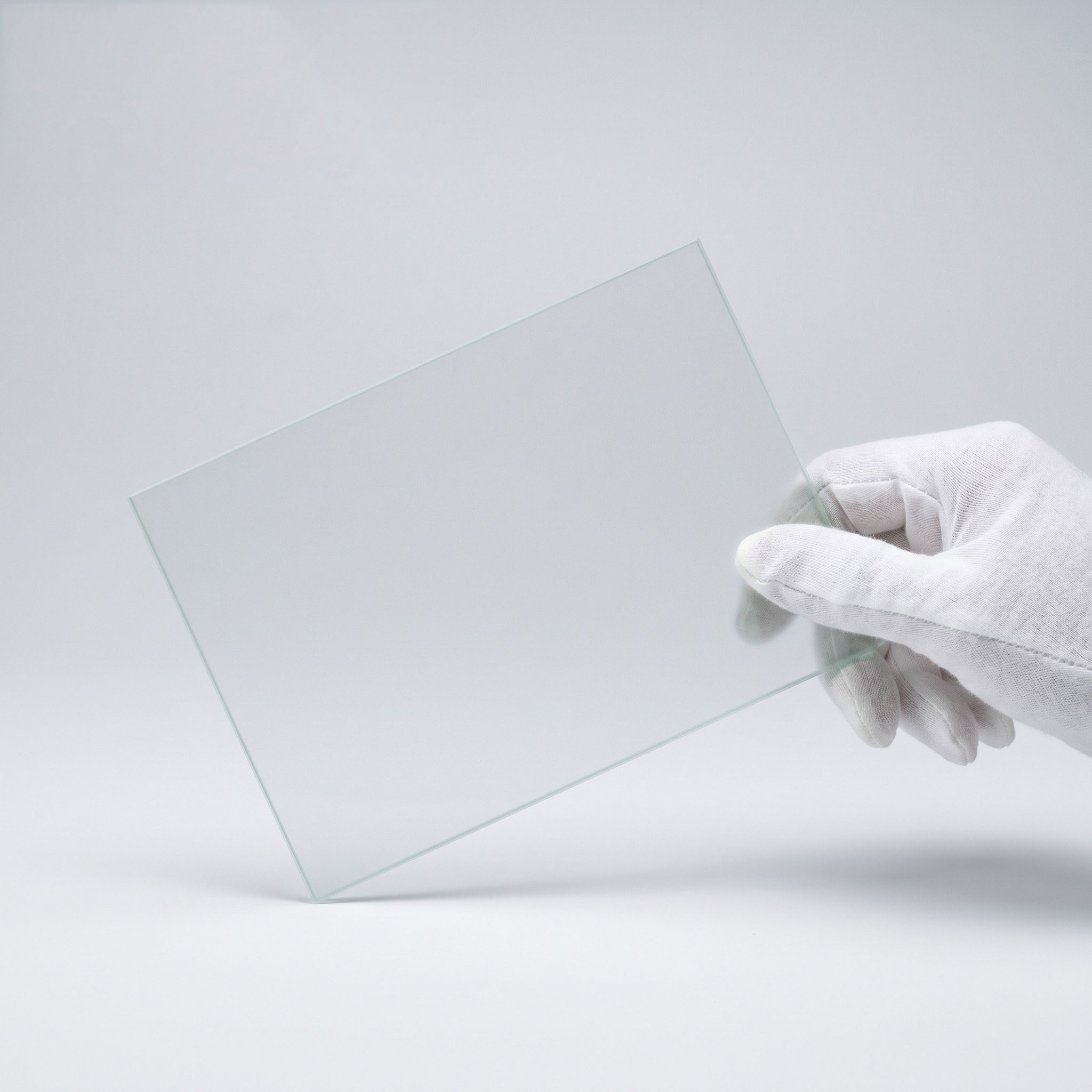
Controllable haze 5–60% and gloss 0.5–8 GU for outdoor kiosks, industrial HMI, EV chargers and sunlight-readable displays. Can be combined with tempered or chemically strengthened cover glass.
View AG Glass High clarity
AR + AG Combined Coating
For high-brightness outdoor displays where both glare diffusion and lower specular reflection are required. AR performance can reach reflectance below 1.0% per side on suitable designs.
View AR Glass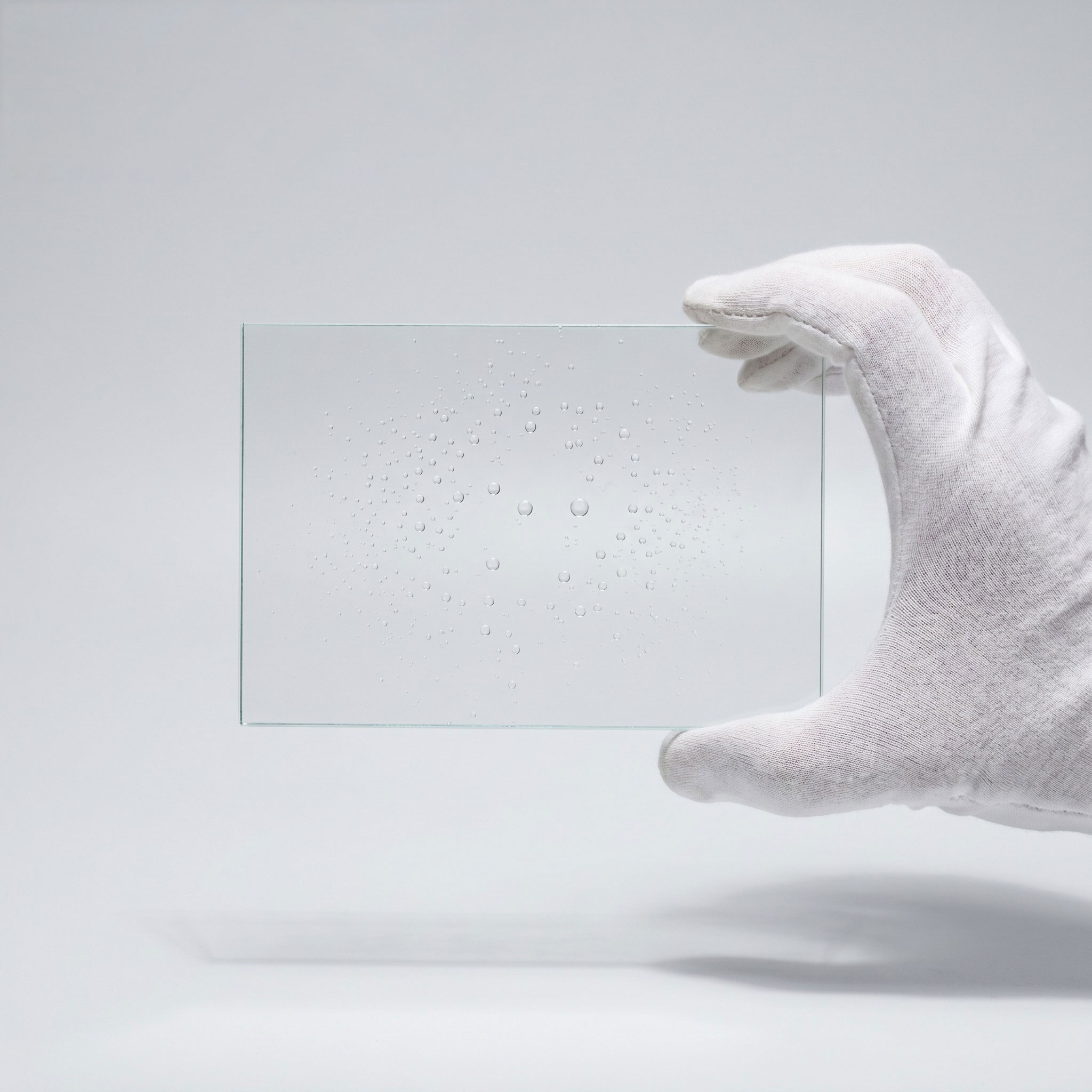 Touch friendly
AG + AF Coated Glass
Combines anti-glare readability with easy-clean performance for public touch interfaces. AF options can provide contact angle above 110° and durability over 10,000 cycles.
View AF Glass Custom build
Touch Screen Cover Glass
Custom size, thickness, holes, printed borders, 2.5D/3D edges, tempered glass and 3M adhesive bonding for outdoor touch panel assembly.
View Cover GlassWhy Huizhou KELO Glass Co., Ltd. for AG coated glass
Huizhou KELO Glass Co., Ltd. is a professional glass manufacturer and factory in Huizhou, Guangdong Province, China, in the Greater Bay Area. The company specializes in cover glass, touch screen glass and optical coated glass, with advanced glass surface treatment as its core technology. As a factory-direct supplier, KELO provides competitive prices, stable quality and direct technical support, combining optical performance, surface durability and electrical functionality in every solution.
The product range covers touch screen cover glass, display cover glass, tempered glass panels, AR anti-reflective coated glass, AG anti-glare coated glass, AF anti-fingerprint coated glass, ITO conductive glass, FTO conductive glass, curved glass, 2.5D/3D curved glass, lighting glass, switch and socket glass, appliance glass lenses, solar glass, bathroom smart control panels and gaming glass. KELO also processes specialty materials such as Gorilla glass, borosilicate glass, quartz glass, sapphire glass, ceramic glass, lead shielding glass and laminated safety glass. Thickness ranges from 0.1 mm to 19 mm, with sizes, shapes, colours and logos customizable per drawing or sample.

For international buyers, KELO is a flexible OEM and ODM partner. Custom size, thickness, shape, colour, logo printing, CNC holes, 2.5D/3D curved forming and 3M adhesive bonding are supported. Sample orders can start from as low as 1–2 pieces, and bulk lead time is typically 21–31 days. Trade terms include FOB, CFR, CIF, EXW and DDP, with payment through T/T, L/C, PayPal and Western Union. Eligible orders can be protected by Alibaba Trade Assurance for safe payment and on-time delivery.
The store rates 4.9/5, with an average response under 2 hours and a 98.18% reply rate. Products mainly export to Europe and North America, including Eastern Europe 20%, Northern Europe 20%, North America 20%, Southern Europe 15%, Western Europe 15% and South America 10%. Buyers, distributors and brand owners are welcome to contact info@keloglass.com for samples, quotations and custom solutions.

Engineering and drawing review
Send a drawing, a sample or a target specification. KELO reviews thickness, tolerance, coating, printing, curvature and packing before quoting.

Inspection before shipment
Appearance, dimensions, coating condition and packing are checked before release. The agreed sample defines the standard for mass production.
RFQ checklist for AG anti-glare coated glass
To receive a fast and comparable quotation, include the following details in your inquiry:
- Application: outdoor kiosk, EV charger, industrial HMI, digital signage, ticketing machine, smart-city terminal or another outdoor touch product.
- Display size, glass outline drawing, corner radius, holes, cut-outs and tolerance requirements.
- Glass thickness, substrate preference and whether tempered or chemically strengthened glass is required.
- Target haze range and gloss range, including tolerance and test method if available.
- Transmission, colour, reflection or optical appearance requirements; whether AR+AG is needed.
- Coating side and surface orientation, especially for AR+AG or AG+AF stacks.
- AF durability, cleaning chemical compatibility and abrasion test requirements if the panel is a public touch interface.
- Printed border colour, logo, silk-screen design, step height and cosmetic limits.
- Flat, 2.5D or 3D shape; edge finish; whether curved tempered glass is required.
- Touch sensor, ITO/FTO glass, optical bonding or 3M adhesive requirements.
- Annual volume, sample quantity, target production lead time and destination country.
- Trade term preference: EXW, FOB, CFR, CIF or DDP, plus packaging and labelling requirements.