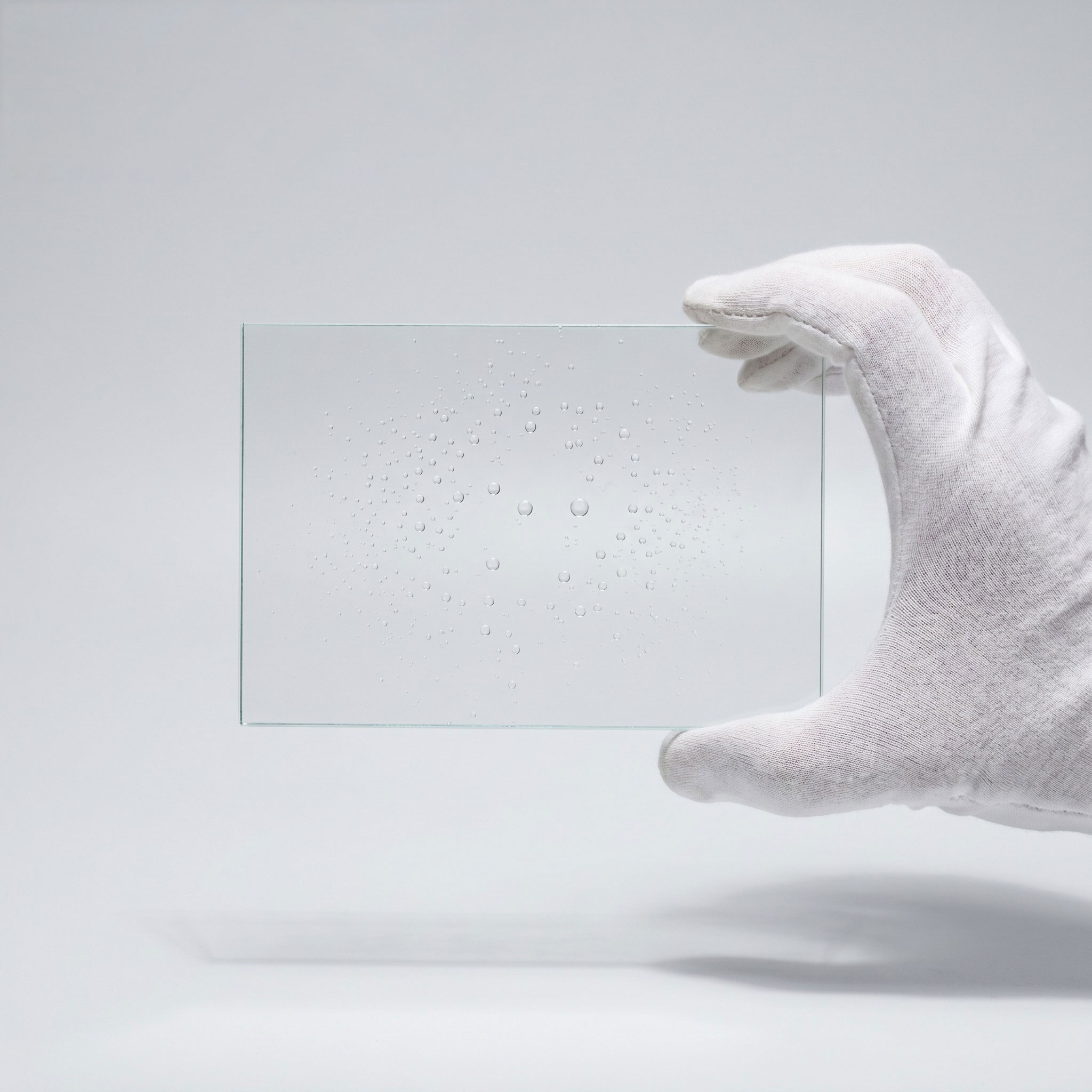
Borosilicate Glass Panel for Smart Home Appliance Displays
Engineered for smart ovens, refrigerators, coffee machines, air-quality monitors, thermostat panels and connected home interfaces. Factory-direct cutting, CNC, printing, tempering, AR/AG/AF coating and inspection by Huizhou KELO Glass Co., Ltd.
Optical & Surface Engineering
Clear, Readable Touch Displays in Every Home Environment
AR anti-reflective glass, AG anti-glare glass and AF anti-fingerprint treatments can be combined to meet your display, touch and durability requirements.
Procurement-Ready Supply
From Drawing to Packed Panels in 21–31 Days
Samples from 1–2 pcs · 0.1–19 mm thickness · custom sizes, holes, printed graphics and 2.5D/3D forming · export packing for global buyers.
A Borosilicate Glass Panel Built for Smart Home Displays
Borosilicate glass is increasingly specified for smart home appliance displays because it combines optical clarity with thermal stability and chemical durability. Compared with conventional soda-lime display glass, borosilicate glass can be a better fit where the panel is exposed to heat, steam, repeated cleaning and temperature changes. It is frequently considered for smart ovens, steam ovens, coffee machines, refrigerators, air-quality monitors, thermostat control panels and other connected home interfaces.
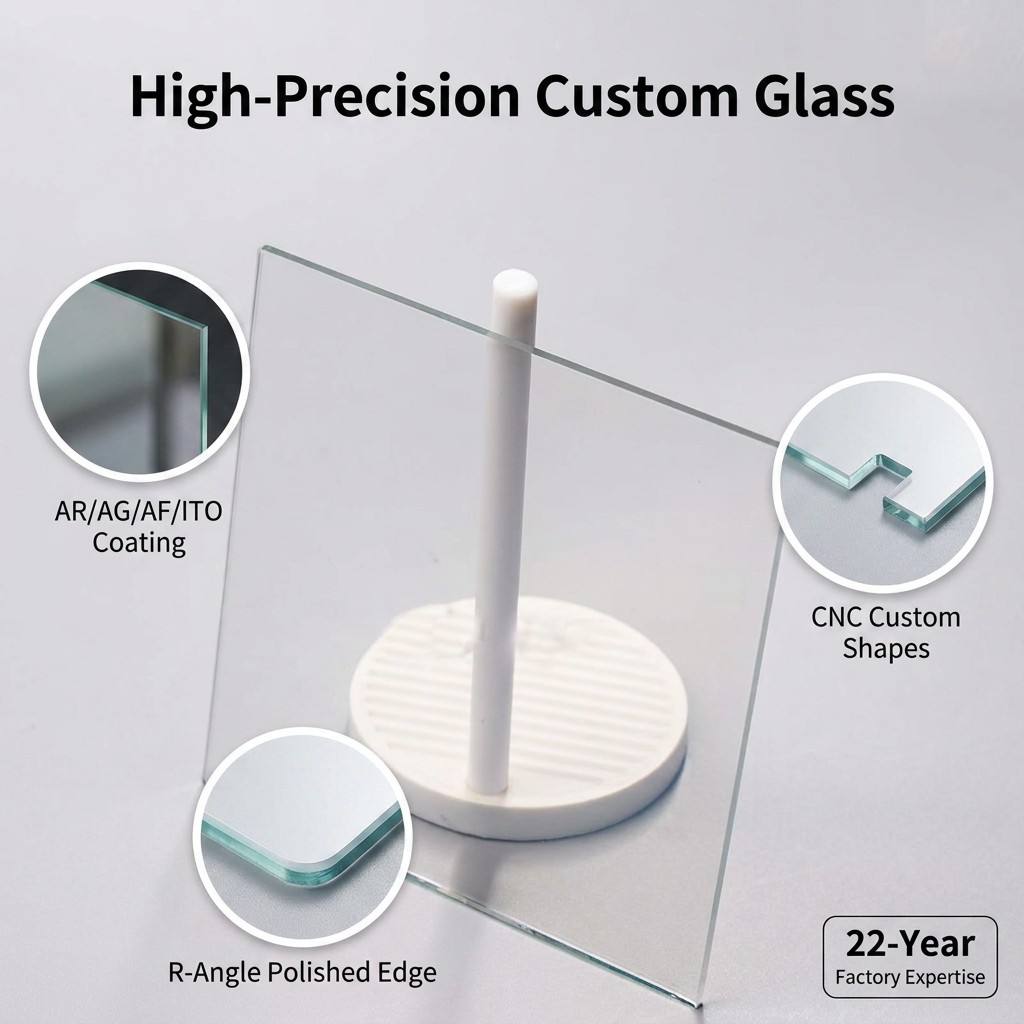
For a smart appliance, the glass panel is more than a transparent cover. It is part of the user interface. The panel may need to hide internal electronics, show illuminated icons, support touch sensing, reduce reflections, resist fingerprints and withstand daily cleaning. Huizhou KELO Glass Co., Ltd. reviews your drawing and helps select the substrate, thickness, printing sequence, tempering condition and coating stack. We can combine AR, AG and AF functions on one panel, and we can add ITO or FTO conductive coatings where transparent conductivity is required.
As a factory-direct glass manufacturer in Huizhou, Guangdong, we keep critical processes in-house: cutting, water-jet cutting, CNC machining, drilling, edge polishing, silk-screen printing, sandblasting, frosting, flat and curved tempering, coating and 3M adhesive bonding. That vertical integration supports stable tolerances, consistent appearance and a more accountable supply chain for global buyers.
Borosilicate, quartz, Gorilla, sapphire and ceramic glass
AR / AG / AF and ITO/FTO coating options
Custom printing, holes, edges and 2.5D/3D forming
Engineering drawing review and rapid prototyping
4.9/5 store rating98.18% reply rateTrade Assurance supported
Recommended Product Configurations
Borosilicate Glass Panel Options for Smart Home Appliance Displays
For global buyers, the most effective RFQ is based on the appliance environment, display function and assembly method. These configurations are a practical starting point for smart home appliance projects.
What Global Buyers Will Look for in Borosilicate Glass Panels
Smart home appliance buyers are moving beyond price-only sourcing. They are increasingly evaluating the total technical and commercial risk of each glass panel, especially when the display is part of a connected user interface.
Documented thermal and safety performance
Procurement teams increasingly ask for material data, tempering records, coating performance and inspection reports before approving a glass panel for a smart oven, coffee machine or other heat-exposed appliance.
Buyer action: define the operating temperature window early
Optical specifications tied to user experience
AR, AG and AF are no longer vague decorative options. Buyers are specifying reflectance, haze, gloss, contact angle and abrasion cycles so that the display remains readable and easy to clean over the product lifecycle.
Buyer action: request coated samples for evaluation
Faster sampling and lower initial risk
Brand owners want to validate fit, light transmission, printing and touch performance without committing to large inventory. Sample orders from 1–2 pcs help shorten the design cycle and reduce upfront procurement risk.
Buyer action: send a 2D/3D drawing and target spec
Factory-direct transparency
International buyers are reducing supply-chain uncertainty by working directly with factories that control cutting, printing, tempering, coating and inspection. Traceability from raw glass to packed carton is becoming a procurement priority.
Buyer action: verify in-house processes and QC gates
Customization without sacrificing repeatability
Smart home brands need unique printed interfaces, touch windows and curved shapes. At the same time, they need repeatable dimensional accuracy and color consistency across production lots.
Buyer action: lock the drawing and color standard before量产
Packaging and delivery performance
Glass panels can be damaged by poor packing. Honeycomb cartons, blister trays and partition packing are increasingly reviewed together with lead time, incoterms and order protection.
Buyer action: review packaging and damage history
Product Development Trends
How Borosilicate Glass Panels Are Evolving for Smart Appliances
Smart home design is moving toward seamless surfaces, larger displays, integrated touch and longer service life. Glass panels are following the same direction, with new combinations of material, coating, printing and forming.
Thinner and stronger panels
Appliance designers want thinner glass that still meets drop, impact and handling requirements. Chemical strengthening and controlled tempering help balance weight, strength and optical quality.
Development focus: strength-to-thickness ratio
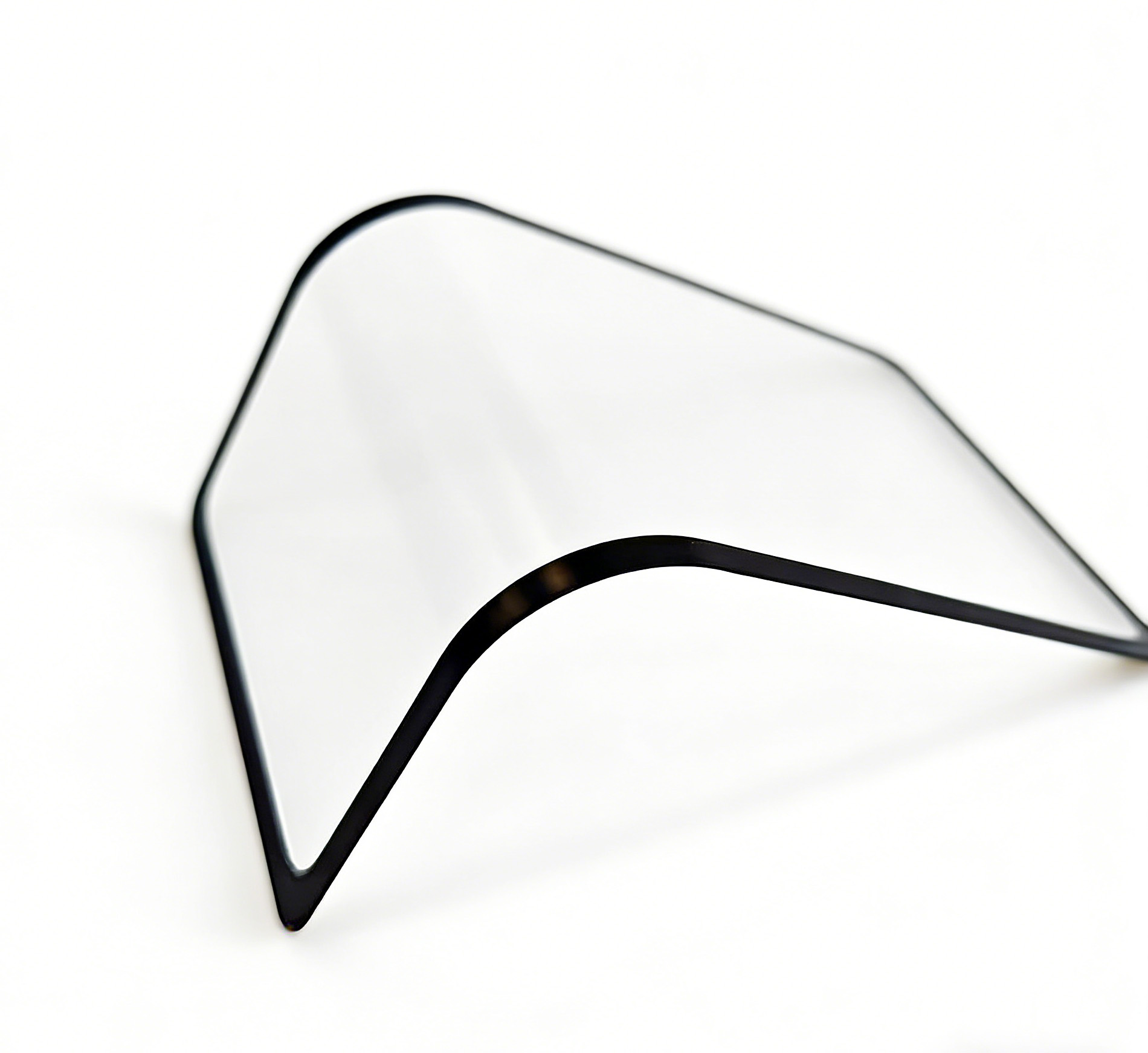
2.5D and 3D curved edges
Curved glass creates a more integrated appearance on refrigerators, ovens and smart control panels. The challenge is achieving smooth edges, consistent fit and reliable bonding to the appliance housing.
Development focus: forming accuracy and edge quality
Integrated touch and optical bonding
Touch sensors, display modules and glass panels are being designed as a more integrated stack. Optical bonding and transparent conductive layers can reduce air gaps, improve readability and support a sleek front face.
Development focus: glass + sensor + bonding compatibility
Multi-layer AR / AG / AF stacks
Rather than choosing one treatment, buyers are combining functions. A panel may need anti-glare for daylight readability, anti-fingerprint for touch cleaning and anti-reflective performance for display contrast.
Development focus: balanced optical and durability targets
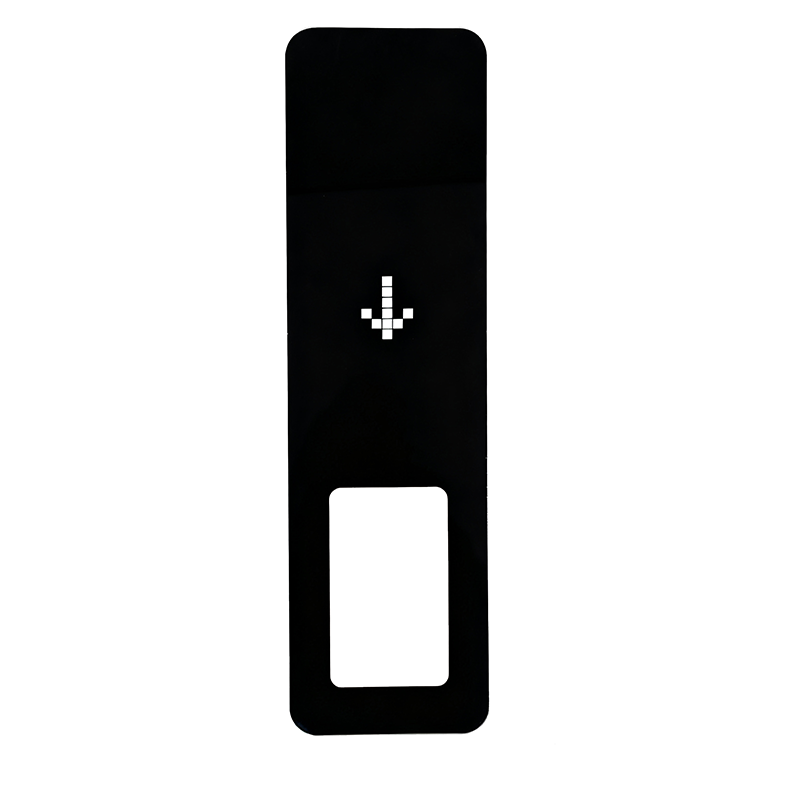
Printed graphics with hidden displays
Hidden-until-lit icons and dark printed borders allow appliance displays to look like a single glass surface when off, then reveal controls and indicators when powered on. This design trend requires precise printing and coating control.
Development focus: print alignment and light-blocking accuracy
Material efficiency and packaging sustainability
Appliance brands are reviewing glass yield, recyclability and packaging waste. Custom cutting layouts, durable protective packing and right-sized cartons can support both cost control and environmental goals.
Development focus: yield, transport protection and recyclability
Applications
Where Borosilicate Glass Panels Are Used in Smart Homes
From kitchen appliances to connected bathroom controls, borosilicate glass can deliver a durable, premium interface surface when the specification matches the environment.
Smart Ovens
Control panels and display windows exposed to heat, steam and cleaning.
Refrigerators
Touch display covers, temperature panels and decorative glass fronts.
Coffee Machines
Display glass and control interfaces requiring clarity and easy cleaning.
Air-Quality Monitors
Readable display covers with optional AR or AG treatment.
Thermostat Panels
Touch glass covers with anti-fingerprint and anti-glare surfaces.
Washing Machines
Display windows and control panels for wet, high-touch environments.
Bathroom Controls
Smart mirror and shower control panels with durable glass surfaces.
Connected Home Hubs
Central control displays and smart home interface glass.
Why Huizhou KELO Glass Co., Ltd.
Factory-Direct Glass Manufacturing with In-House Surface Engineering
Huizhou KELO Glass Co., Ltd. is a professional glass manufacturer and factory in Huizhou, Guangdong Province, China, in the Greater Bay Area. We specialize in cover glass, touch screen glass and optical coated glass, with advanced glass surface treatment as our core technology. As a factory-direct supplier, we provide competitive prices, stable quality and direct technical support.
Our factory covers 10,000–30,000 square meters and employs 101–200 people, including 21–30 R&D engineers. Annual capacity reaches 20–25 million pieces of touch cover glass, with USD 50–100 million output. Key processes are completed in-house: cutting, water-jet cutting, CNC machining, laser engraving, edge polishing, drilling, silk-screen printing, sandblasting, frosting, flat and curved tempering, and bonding. This vertical integration supports quality control at every step, stable lead times and factory-direct pricing.
Our product range includes touch screen cover glass, display cover glass, tempered glass panels, AR anti-reflective coating glass, AG anti-glare coating glass, AF anti-fingerprint coating glass, ITO/FTO conductive glass, curved glass, 2.5D/3D curved glass, lighting glass, switch and socket glass, appliance glass lenses, solar glass, bathroom smart control panels and gaming application glass. We also process specialty materials such as borosilicate glass, Gorilla glass, quartz glass, sapphire glass, ceramic glass, lead shielding glass and laminated safety glass.
10,000–30,000 m² factory
101–200 employees and 21–30 R&D engineers
20–25 million pcs annual touch cover glass capacity
AR, AG, AF and ITO/FTO coating in-house
Samples from 1–2 pcs; bulk lead time 21–31 days
FOB, CFR, CIF, EXW and DDP support
4.9/5 store rating≤1h typical responseAlibaba Trade Assurance
E-E-A-T Quality Assurance
From Incoming Glass to Packed Panel
For smart home appliance programs, appearance, dimensional accuracy and coating reliability must be controlled before mass production. Our quality system uses incoming, in-process and final inspection gates.
Incoming Inspection
Raw glass and consumables are verified before production begins.
Thickness and flatness checks
Surface defect screening
Ink and coating material verification
In-Process Control
Critical dimensions and coating results are checked at each station.
CNC dimensions and hole positions
Tempering and strength tests
Coating adhesion and abrasion checks
Final Inspection and Packing
Finished panels are inspected before protective packing and shipment.
100% appearance inspection
Salt spray and reliability testing
Honeycomb cartons, blister trays and partition packing
Procurement FAQ
Questions Global Buyers Ask About Borosilicate Glass Panels
These are the practical questions procurement teams, brand owners and engineers usually ask before requesting a sample or quotation.
What is a borosilicate glass panel for smart home appliance displays?
It is a custom glass cover or control panel manufactured from borosilicate glass and used on smart home appliances such as ovens, refrigerators, coffee machines, thermostats, washing machines and air-quality monitors. A finished panel may include cut-outs, holes, personalized printing, touch windows, anti-reflective coating, anti-glare treatment, anti-fingerprint treatment and tempering. The geometry and coating stack are usually defined by the appliance housing, display module and user-interface requirements.
Why choose borosilicate glass instead of soda-lime glass for smart home displays?
Borosilicate glass is often selected for its thermal stability, chemical durability and optical clarity. It can be a better fit where the panel sees heat, steam, repeated cleaning or temperature changes. However, material selection should be based on the actual appliance specification, including impact requirements, weight limits, display optics and safety standards. Huizhou KELO Glass Co., Ltd. can review your application and recommend whether borosilicate, tempered soda-lime glass or another specialty glass is the more practical option.
What thickness and sizes can Huizhou KELO Glass Co., Ltd. produce?
Borosilicate glass panels can be processed from 0.1 mm to 19 mm. Sizes, shapes, holes, edge profiles, colors and logos are customized to your drawing or sample. We support cutting, CNC machining, drilling, edge polishing, silk-screen printing, sandblasting, frosting, flat and curved tempering, and 2.5D or 3D forming. For a new display program, send the 2D/3D drawing, target thickness, tolerance and annual volume so we can recommend a manufacturable specification.
Which coatings are recommended for smart home appliance display panels?
AR anti-reflective coating improves clarity and reduces reflection, AG anti-glare coating reduces harsh reflections and glare, and AF anti-fingerprint coating makes touch surfaces easier to clean. These functions can be supplied separately or combined. A smart appliance panel in bright light may benefit from AG or AR+AG, while a frequently touched control panel may benefit from AF or AG+AF. The final choice depends on the display module, brightness, ambient light and cleaning expectations.
Can you custom-print logos, icons and touch windows on borosilicate glass?
Yes. We support silk-screen printing, laser engraving, hidden-until-lit graphics, dark borders and custom touch-window layouts. Printing can be aligned with CNC holes and touch sensors to support straightforward assembly. Our team reviews the artwork, color standard and printing sequence before sampling, and appearance is checked during in-process and final inspection.
What is the minimum order quantity and sample policy?
Sample orders can start from 1–2 pieces so you can validate fit, optics, printing, coating and touch performance before committing to volume production. Bulk quantities are quoted according to size, thickness, process complexity and annual demand. For the fastest quotation, include drawings, target performance, surface finish, packing requirements and estimated order quantity.
What is the typical lead time for mass production?
Bulk lead time is typically 21–31 days after sample approval. The exact schedule depends on size, coating stack, curved forming, printing complexity and order quantity. Projects requiring new tooling, special colors or combined AR/AG/AF coatings may require an extended validation period. Our team confirms the production plan after the sample and drawing are approved.
How do you control quality and packaging?
Quality is controlled through incoming, in-process and final inspection. The process includes 100% appearance checking and tests such as tempering, adhesion, abrasion and salt spray. Custom packaging options include honeycomb cartons, blister trays and partition packing to minimize shipping damage. We can also discuss your own packaging artwork, labeling and pallet requirements for different export markets.
Which trade terms and payment methods do you support?
We support FOB, CFR, CIF, EXW and DDP trade terms. Payment methods include T/T, L/C, PayPal and Western Union. Orders placed through Alibaba.com can be protected by Trade Assurance for safe payment and on-time delivery. For global buyers, we recommend confirming the incoterm, shipping method, packaging standard and destination requirements before order placement.
Can you support 2.5D or 3D curved and tempered borosilicate glass panels?
Yes. We support flat and curved tempering, 2.5D and 3D curved forming, CNC holes, edge polishing and 3M adhesive bonding. Curved borosilicate glass requires careful process review because forming temperature, edge quality, residual stress and dimensional tolerances can affect the final fit. Our engineering team reviews the drawing and recommends the most practical forming and strengthening process for your appliance design.
Have a Smart Home Display Project? Let's Engineer the Glass Panel.
Send your drawing, target thickness, coating requirements, printing artwork and annual demand. Our team at Huizhou KELO Glass Co., Ltd. will review feasibility and recommend a practical borosilicate glass panel solution for your appliance.