AR Anti-Reflective Coated Glass for Automotive Touch Displays
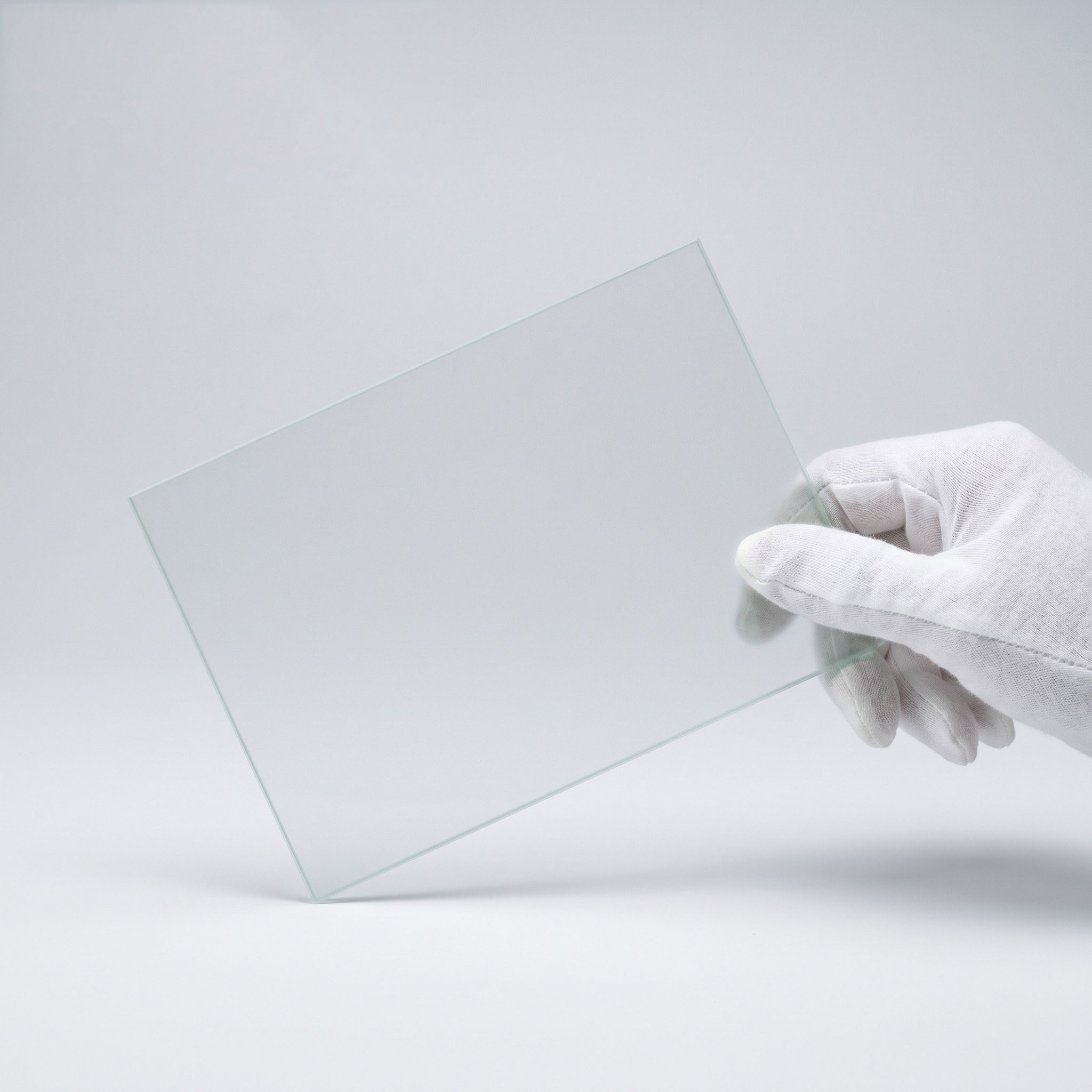
A specialized cover-glass solution for center stacks, dashboard touch panels, rear-seat displays and in-vehicle control surfaces. Multi-layer AR coating reduces reflections while preserving touch response, color fidelity and readability under harsh sunlight.
Optical Performance You Can Specify
Reflectance Below 1.0% per Side, Transmittance Above 99%
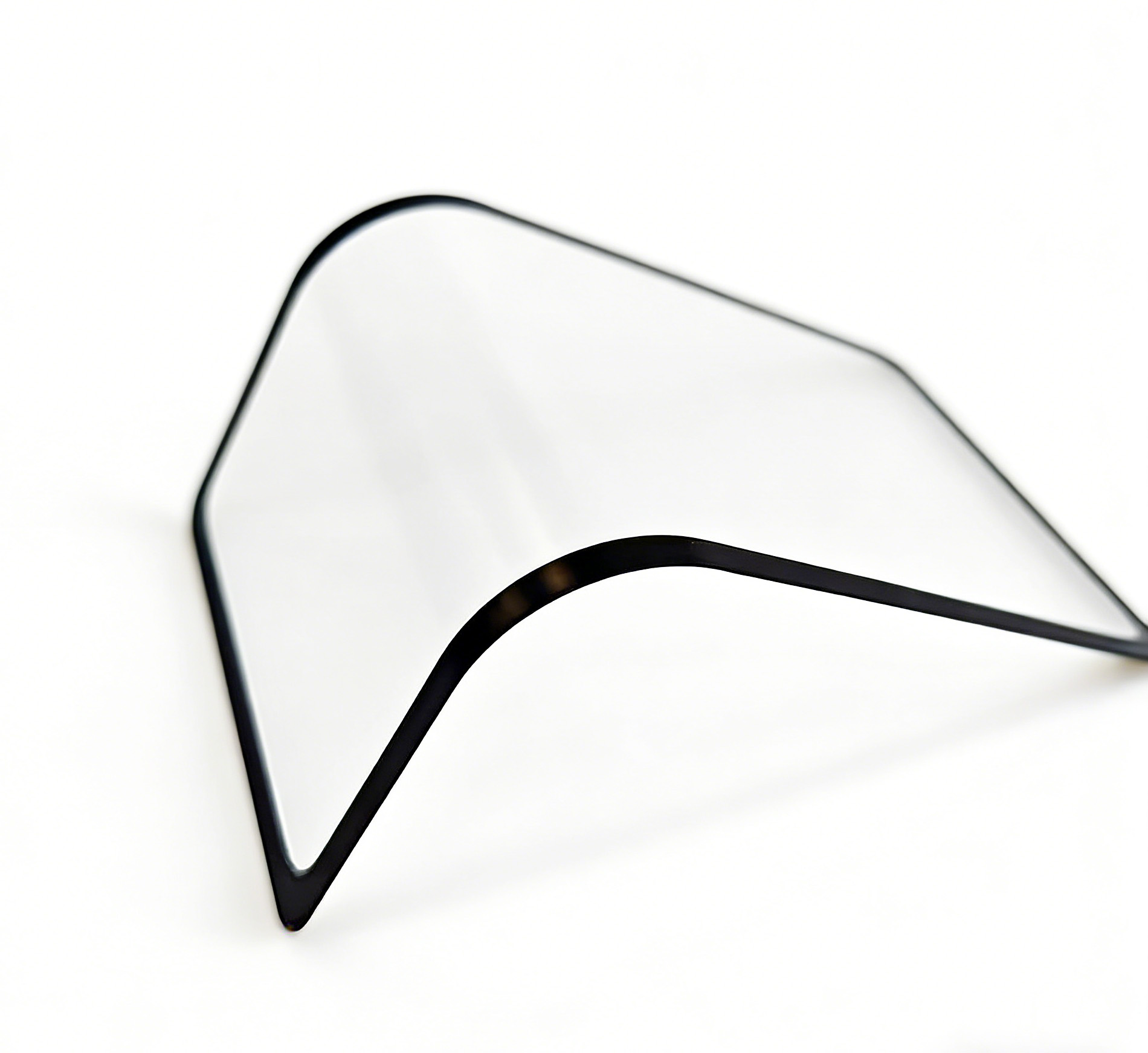
Single-layer and multi-layer AR designs; optional AR+AG for glare diffusion and AR+AF for fingerprint resistance; chemically strengthened or tempered glass; 2.5D/3D forming; silk-printed borders; 3M adhesive bonding.
OEM & ODM Partner
From 1-2 Sample Pieces to 20-25 Million Pieces Annual Capacity
Engineering drawing review, rapid prototypes, 21-31 day mass-production lead times, 100% appearance inspection, and export packing for Europe, North America and South America.
What Is AR Anti-Reflective Coated Glass for Automotive Touch Displays?
AR anti-reflective coated glass for automotive touch displays is a display cover glass treated with one or more thin optical layers that reduce surface reflections. In a vehicle cockpit, the glass is not just a protective window. It is a critical optical interface between the driver, the touch sensor, the display stack and the cabin environment. Sunlight from the windshield, dashboard reflections, streetlights and interior lighting all compete with the information on the screen. AR coating lowers the amount of light reflected back to the user, improving contrast and readability without simply increasing display brightness, power consumption and heat.
For automotive touch displays, AR glass is usually combined with chemically strengthened or tempered glass, edge polishing, optional silk-screen printing, optional AG anti-glare treatment, optional AF anti-fingerprint treatment, and reliable bonding. The right specification depends on display position, size, curvature, touch technology, optical bonding method, cleaning frequency and target service life. Huizhou KELO Glass Co., Ltd. produces AR coated cover glass with reflectance below 1.0% per side, transmittance above 99% across 400-700 nm, custom thickness from 0.1 mm to 19 mm, 2.5D/3D forming, CNC holes, printed borders and 3M adhesive bonding.
AR, AR+AG, AR+AF and combined coating stacks
Measured reflectance, transmittance and haze targets
Tempered, chemically strengthened and curved glass
Factory-direct samples from 1-2 pieces
4.9/5 store rating98.18% reply rateTrade Assurance supported
Product Recommendations
Recommended AR Coated Glass Solutions for Automotive Touch Displays
For most automotive HMI projects, start from the operating condition: sun load, touch frequency, display size, curvature, bonding method and annual volume. The six options below cover the most common buyer requests.
AR Coated Glass Performance for Automotive Touch Displays
These production windows are useful for RFQ discussions, drawing notes and supplier comparison. Final values are confirmed against your drawing, stack design and reliability plan.
AR anti-reflective coated glass specifications for automotive touch displays
Property
Typical Capability
Automotive Relevance
AR opticalAnti-reflective
Reflectance <1.0% per side · Transmittance >99% (400-700 nm) · single or multi-layer
Improves contrast and readability under sunlight without adding backlight power.
AG optionAnti-glare
Haze 5-60% · Gloss 0.5-8 GU
Diffuses reflections from windows, streetlights and cabin lighting.
Supports capacitive touch sensors, displays and EMI shielding.
BondingAssembly
3M adhesive bonding and custom assembly support
Helps reduce handling risk and simplifies display-stack integration.
Every coated batch is measured and visually inspected before release. Coatings are processed in-house for consistency and traceability.
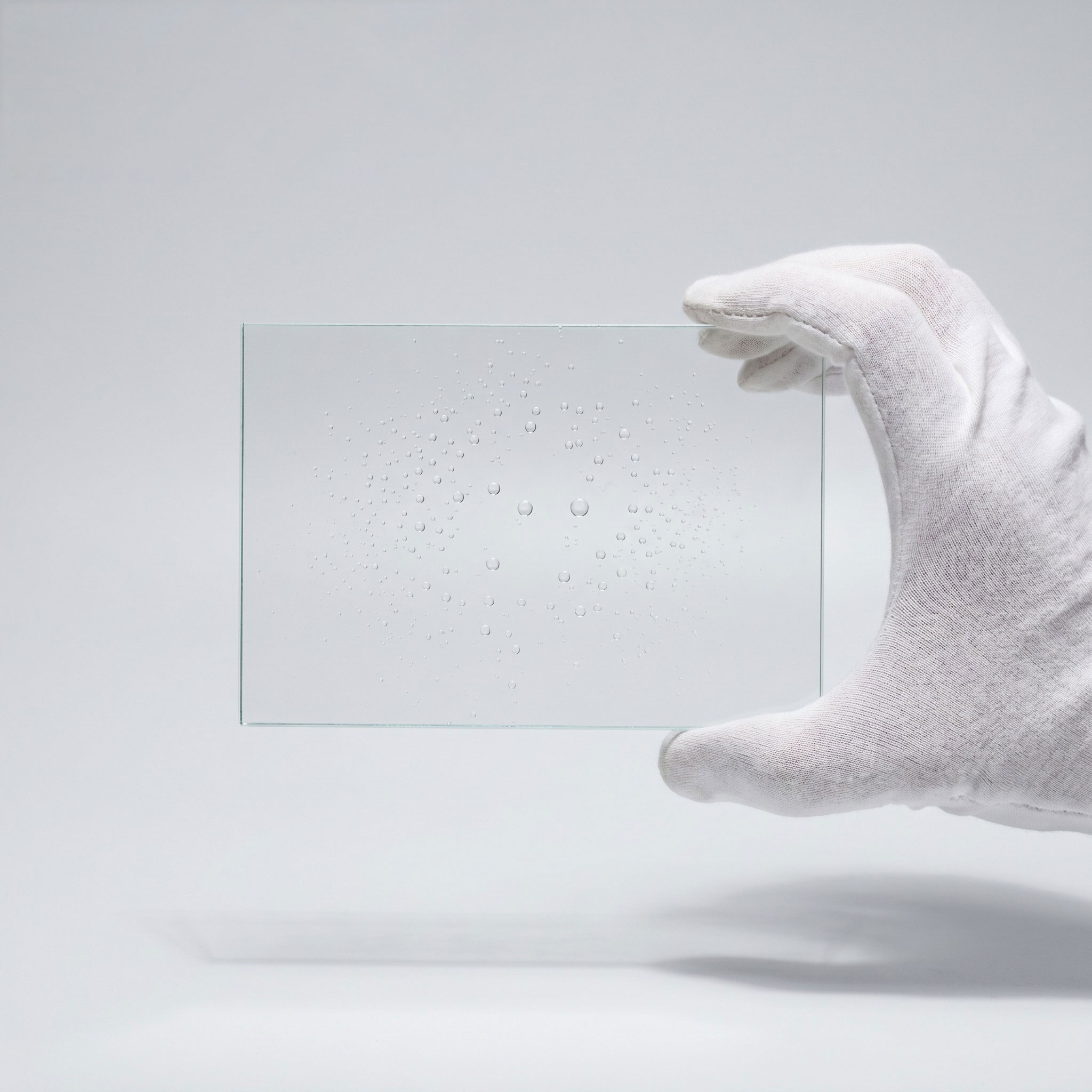
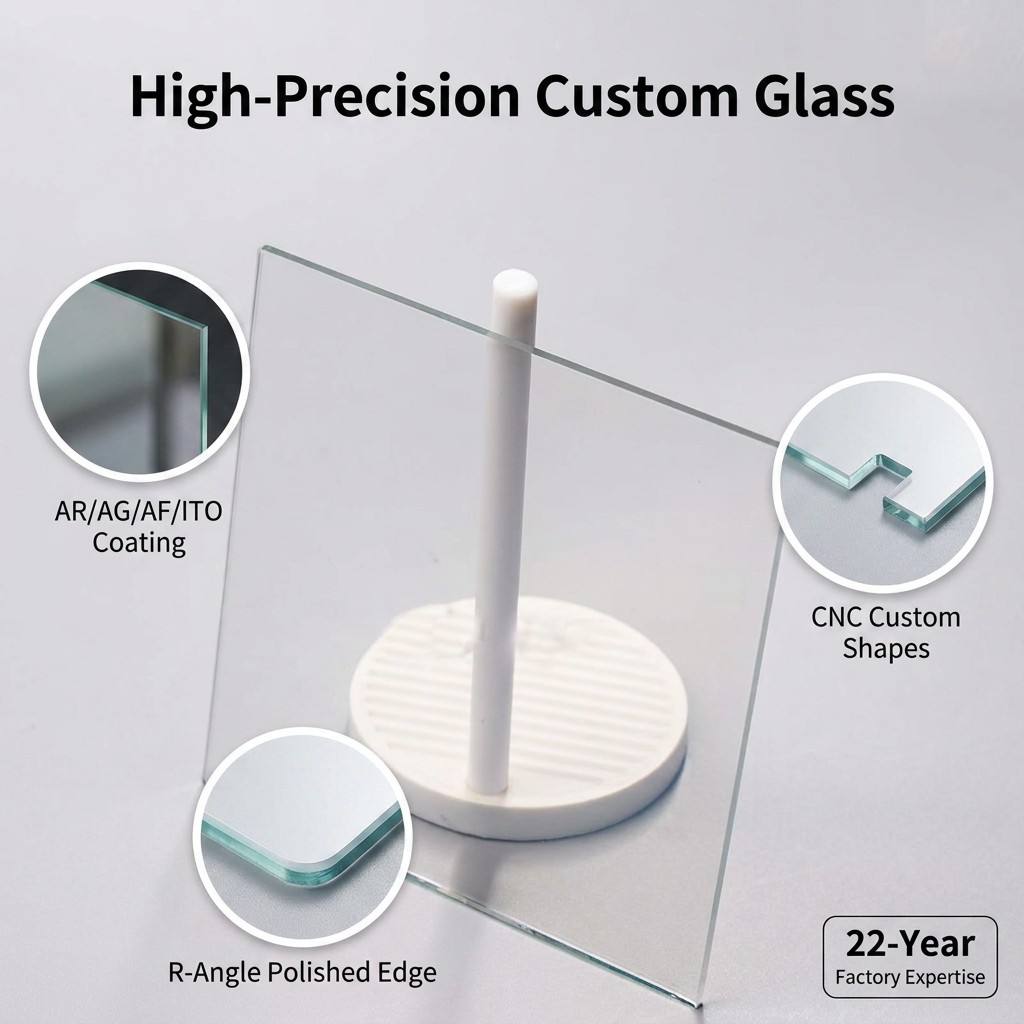
AR, AG and AF coating samples produced by Huizhou KELO Glass Co., Ltd. The right combination depends on display position, sun load and touch frequency.
Global Buyer Intent
What Global Buyers Are Asking About AR Glass for Automotive Touch Displays
Procurement teams increasingly search with detailed questions, not only product names. They want optical data, reliability evidence, bonding compatibility and a supplier who can support a low-risk first order.
Sunlight readability is now a specification
Buyers ask for measurable reflectance and transmittance targets instead of a general “clear glass” request. They want contrast data under high ambient light and a finish that does not haze the display.
Common target: AR <1.0% per side
Larger and curved HMI surfaces
Center-stack and integrated cockpit designs push cover glass toward wider formats, tighter edges and 2.5D/3D forming. Buyers ask whether optics, printing, forming and bonding can be controlled by one supplier.
Look for: in-house forming and coating
Optical bonding and 3M adhesive questions
Purchasing teams want to know whether the AR coating is compatible with their bonding process, cover-glass flatness, printed border step height and handling requirements. Early DFM review prevents costly rework.
Ask for: bonding review and sample validation
Fingerprint and cleaning durability
High-touch automotive controls need AF performance that survives real cleaning. Buyers ask about contact angle, abrasion cycles and appearance after repeated wiping, not only the initial water-repellency result.
Useful target: >110° contact angle
Lower-risk first orders
Project teams want samples or small validation lots before tooling and volume commitments. A supplier that can produce from 1-2 pieces helps engineering and procurement complete internal approvals faster.
KELO sample start: 1-2 pieces
Traceability and transparent quality data
Automotive buyers ask for inspection records, packaging protection, complaint handling and a clear production route. They value a factory that can explain how incoming, in-process and final checks are performed.
Review: IQC, IPQC and FQC records
Product Development Direction
Where AR Coated Automotive Display Glass Is Heading
The next generation of automotive touch displays asks one cover glass to solve several jobs at once: reduce reflection, control glare, resist fingerprints, support touch and survive real-world use.
Multi-layer AR stacks
More demanding display specs push suppliers toward multi-layer AR designs with low reflection and high transmission.
AR+AG+AF combinations
Buyers want one surface for clarity, glare diffusion and fingerprint resistance, especially on shared touch controls.
Curved and seamless styling
2.5D/3D glass supports integrated cockpits and edge-to-edge touch panels with smoother transitions.
Controlled haze, not heavy haze
Haze must diffuse reflections without making touch content appear milky. Precision AG control matters more than ever.
Durability validation
Adhesion, abrasion, salt spray and cleaning-cycle tests are becoming part of the purchase discussion, not an afterthought.
Thin, strengthened glass
Lightweight interior designs require impact resistance without bulk, supported by chemical strengthening and edge quality.
Bonding-ready surfaces
Coating, printing and flatness must work with optical bonding and 3M adhesive processes to reduce assembly risk.
Supply chain transparency
Global buyers increasingly prefer factory-direct communication, documented process control and export-ready packing.
Factory Advantage
Why Automotive Buyers Work With Huizhou KELO Glass Co., Ltd.
Huizhou KELO Glass Co., Ltd. is a factory-direct glass manufacturer in Huizhou, Guangdong, inside the Greater Bay Area electronics supply chain. We specialize in cover glass, touch screen glass and optical coated glass, with advanced surface treatment as our core technology. For automotive touch display projects, this means one supplier can support glass cutting, CNC machining, edge polishing, printing, tempering, curved forming, AR/AG/AF coating, ITO/FTO coating and 3M adhesive bonding.
Our factory covers 10,000-30,000 square meters and employs 101-200 people, including 21-30 R&D engineers. Annual capacity reaches 20-25 million pieces of touch cover glass, with USD 50-100 million output. Keeping key processes in-house helps control optical performance, surface durability and electrical functionality in every solution.
Quality Gates for AR Coated Automotive Display Glass
Quality is built into the process, not inspected in at the end. For AR glass, the most important checks are optical performance, coating adhesion, surface appearance, dimensional accuracy and packing protection.
Incoming Inspection
Raw glass, coating materials and adhesives are verified before production enters the line.
Thickness and flatness checks
Surface defect screening
Ink, coating and adhesive verification
In-Process Control
Critical dimensions and coating results are checked at each production station.
CNC dimension and hole position
Reflectance, transmittance and haze
Tempering, adhesion and abrasion checks
Final Inspection
Every finished piece is checked before protective packing and shipment.
100% appearance inspection
Salt spray reliability testing
Honeycomb, blister and partition packing
Global Footprint
Export Experience for Europe and the Americas
Our export experience covers the documentation, packaging and Incoterms that international buyers expect. Current market distribution shows a balanced mix of European and American demand.
Eastern Europe20%
Northern Europe20%
North America20%
Southern Europe15%
Western Europe15%
South America10%
Packed to arrive intactCustom honeycomb cartons, blister trays and partition packing.
Verify Before You Specify
Review the Supplier Behind the AR Glass
Use third-party verified profile data, buyer feedback and trade records to support your supplier evaluation for Huizhou KELO Glass Co., Ltd.
AR Glass Questions Procurement Teams Ask Before Ordering
Clear answers for engineering, sourcing and quality teams evaluating AR anti-reflective coated glass for automotive touch displays.
What is AR anti-reflective coated glass for automotive touch displays?
It is a display cover glass with one or more thin optical layers that reduce surface reflections. In automotive touch displays, AR glass improves contrast and readability under sunlight without simply increasing display brightness, power consumption and heat. It is typically combined with strengthened or tempered glass, edge treatment, optional AG or AF coating, and a bonding method suitable for the display stack.
Why not just increase display brightness instead of using AR glass?
Higher brightness increases power use and heat, and it may still leave reflections that compete with the image. AR coating reduces the reflected light at the glass surface, so the display can achieve better perceived contrast under the same conditions. For automotive interiors, this can help improve readability while supporting thermal and power targets.
What optical performance can Huizhou KELO Glass Co., Ltd. achieve?
Our AR coating is produced to reflectance below 1.0% per side and transmittance above 99% across 400-700 nm, with single-layer or multi-layer designs. We also produce AG coatings with controllable haze from 5-60% and gloss from 0.5-8 GU, AF coatings with contact angle above 110° and durability beyond 10,000 cycles, and AR+AG or AR+AF combinations.
Should I choose AR, AG, AR+AG or AR+AF?
AR is for maximum clarity and low reflection. AG diffuses glare for sunlight-readable displays. AR+AG balances clarity and glare control, while AR+AF adds fingerprint resistance for high-touch automotive controls. The best choice depends on display position, sun load, cleaning frequency, target appearance and whether the glass will be optically bonded.
Can AR coated glass be curved or printed for automotive touch displays?
Yes. We process 2.5D and 3D curved cover glass, with CNC holes, edge polishing, silk-screen printing, laser engraving, sandblasting and frosting. Sizes, shapes, colors and logos are customized to drawings or samples, and we can coordinate coating, forming and bonding in one factory.
Does AR coating affect touch sensitivity or display clarity?
AR coating is an optical treatment on the glass surface. When specified correctly, it is designed to preserve transmittance and color fidelity while reducing reflection. Touch sensitivity depends mainly on the sensor stack, controller tuning and bonding method. For touch sensor integration, we also supply ITO conductive glass with sheet resistance from 1-20 Ω/sq, transmittance above 85% and haze below 2%.
Can the glass be optically bonded or supplied with 3M adhesive?
We support 3M adhesive bonding and custom assembly review. For optical bonding, the cover glass flatness, coating compatibility, printed border step height and handling method should be reviewed early. Providing your stack drawing and bonding process helps our engineers recommend a practical specification before sampling.
What thickness, sizes and shapes are available?
Glass thickness ranges from 0.1 mm to 19 mm. Size, shape, holes, color, logo printing, 2.5D/3D curved forming and 3M adhesive bonding are customized to your drawing or sample. Automotive touch display projects often require custom edge treatment, printed black borders and controlled surface appearance.
How do you test AR coating durability?
Quality control includes incoming, in-process and final inspection, with 100% appearance checking plus tempering, adhesion, abrasion and salt spray tests. AF durability is monitored with contact angle and wear cycles. Packing can use custom honeycomb cartons, blister trays and partition packing to reduce transit damage.
What is the minimum order quantity and lead time?
Sample orders can start from 1-2 pieces so you can validate fit, optics, coating appearance and bonding before volume production. Bulk lead time is typically 21-31 days after sample approval, depending on size, coating stack, curved forming, printing complexity and order quantity. We support FOB, CFR, CIF, EXW and DDP terms, and T/T, L/C, PayPal and Western Union payments.
How should I send an inquiry for AR automotive display glass?
Send your drawing or sample photo, display size, glass thickness, curvature, target reflectance and transmittance, AG haze or AF requirement, printed border details, bonding method and estimated annual volume. Our engineering team will review feasibility and recommend a practical glass and coating specification. You can contact Huizhou KELO Glass Co., Ltd. at info@keloglass.com.
Request an AR Glass Sample for Your Automotive Touch Display
Share your drawing, display size, curvature, reflectance target, transmittance requirement and annual volume. Huizhou KELO Glass Co., Ltd. will review the coating stack, glass thickness, edge treatment, printing and bonding route, then recommend a practical sample plan.