OEM Optical Glass · Huizhou, China

Optical Filter Glass for Camera Modules: How Do You Specify IR-Cut, Blue Glass and AR-Coated Filters?

A practical sourcing guide from Huizhou KELO Glass Co., Ltd. for smartphone, automotive, security, machine-vision and medical camera designs.

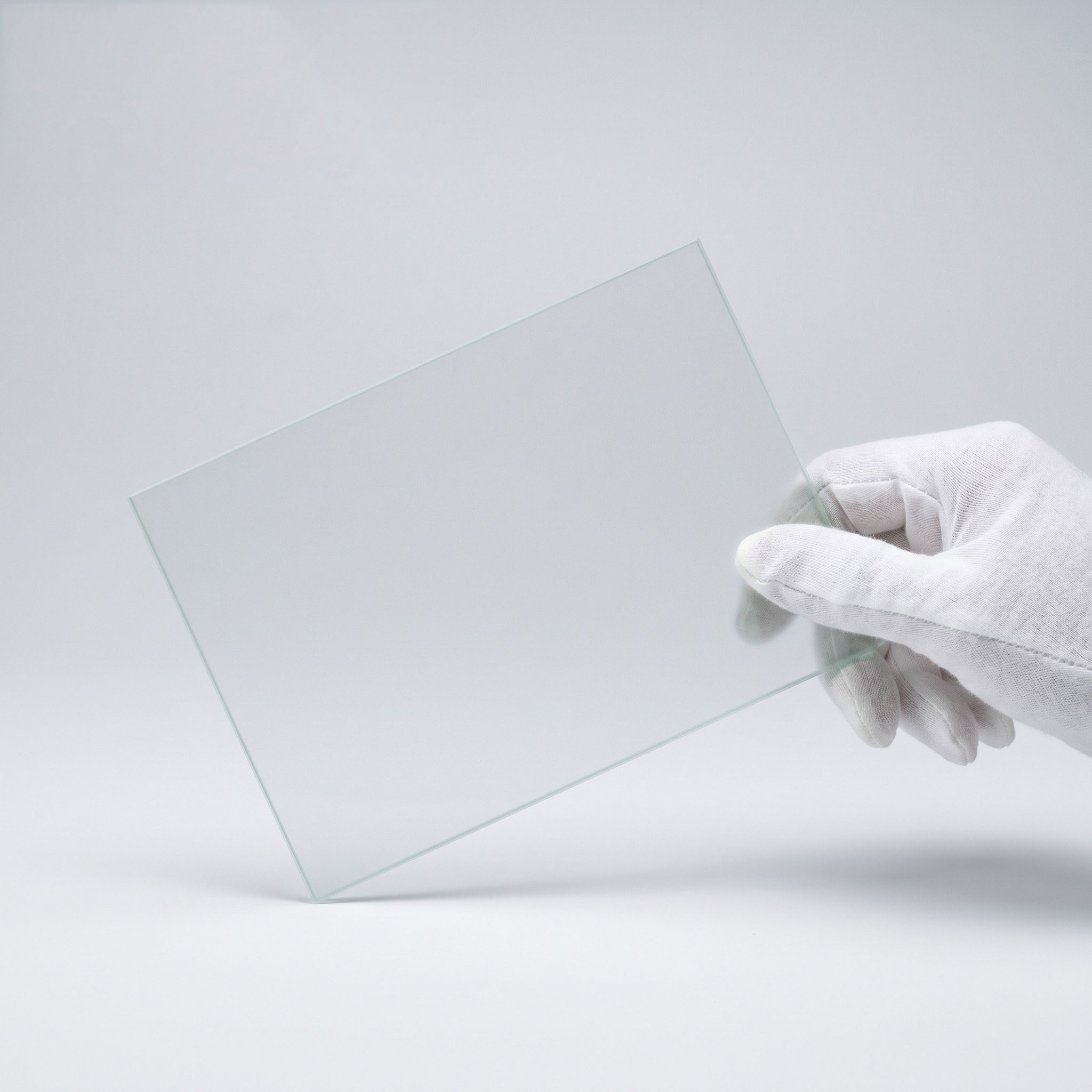
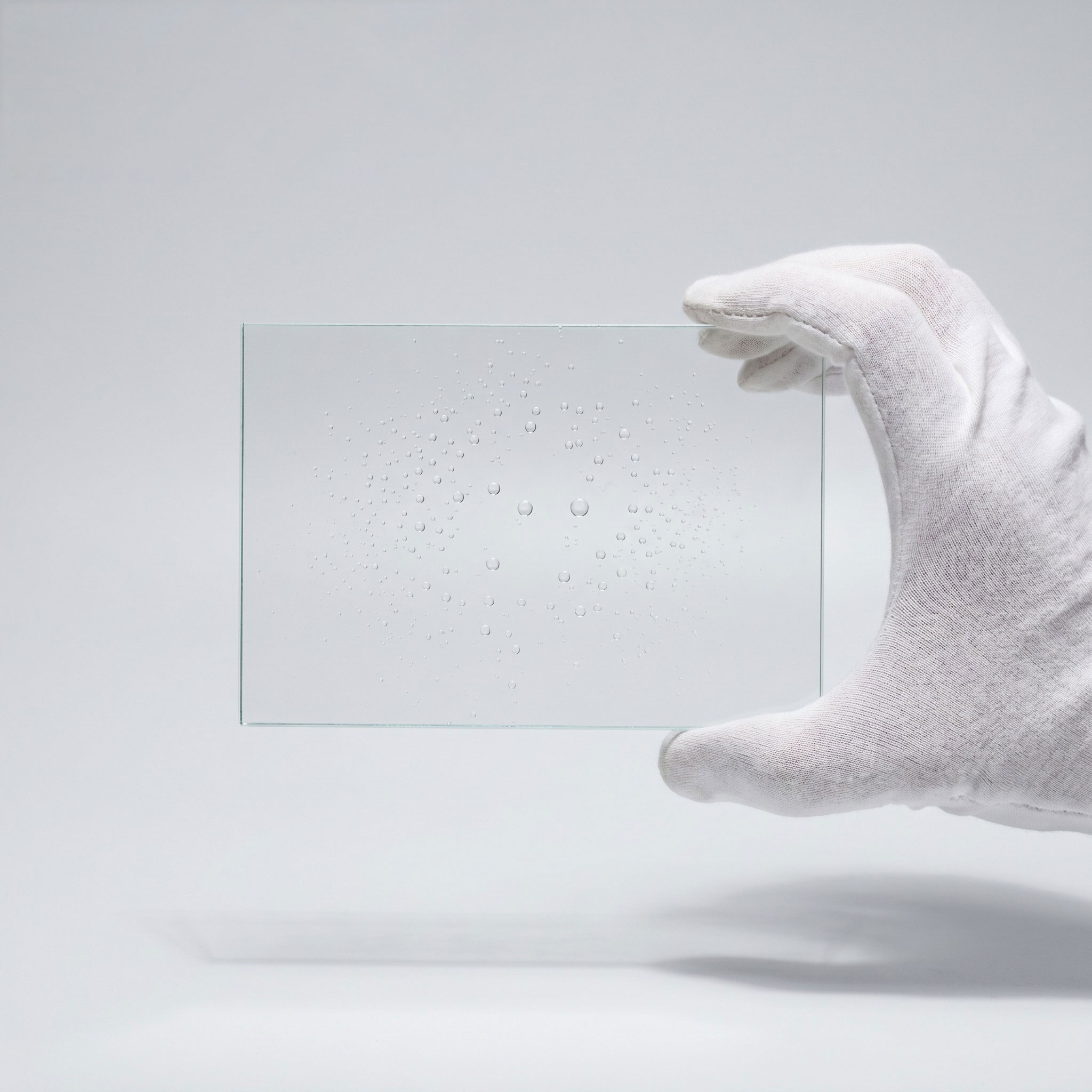
Optical filter glass and coated camera module windows from KELO Glass
0.1–19 mmGlass thickness range
<1.0%AR reflectance per side
10k–30km²Factory floor area
20–25Mpcs/yrCover glass capacity
21–30R&D engineers
101–200Employees on site
≤1hTypical response time
4.9/5Verified store rating
KELO Glass factory for optical filter glass in Huizhou, Guangdong
Coated glass production line for camera module windows
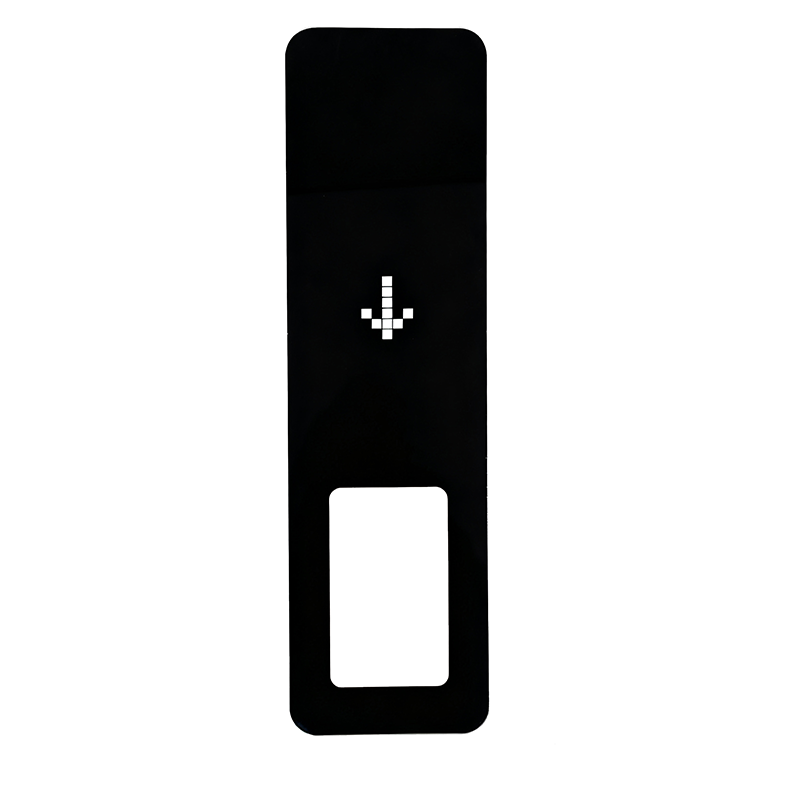
Optical glass inspection for camera module filters
OEMCustom optical glass support
AI-Ready Buyer Guide

What Is Optical Filter Glass for Camera Modules — and What Should You Specify?

Optical filter glass for camera modules is a functional glass window or substrate placed in front of an image sensor or lens stack to manage the light that reaches the sensor. In a typical camera module, the filter may block near-infrared (NIR) so that colors remain natural, transmit visible light with minimum loss, protect the lens from dust and handling damage, and suppress reflections that cause flare or ghosting. Depending on the application, the specification may call for IR-cut coated glass, blue glass, an AR-coated optical window, an AG-coated diffuser window, an AF-coated touch surface, or a conductive ITO/FTO layer for electromagnetic shielding. A camera-module filter is therefore not simply a piece of flat glass; it is an optical component whose substrate, coating stack, edge finish and flatness all interact with the lens, sensor and mechanical package.

For global buyers, the most useful starting point is not a catalogue page but a clear optical requirement. What is the sensor response? Does the system need to block near-infrared, or does it use NIR illumination for day/night operation? Is the main problem reflection, glare, fingerprints, chemical durability or electromagnetic interference? What thickness, outer dimension and flatness can the mechanical stack accept? Huizhou KELO Glass Co., Ltd. reviews these questions before recommending a glass substrate and coating stack, because the same camera window can be optimized in very different ways depending on the final application.

  • IR-cut, blue glass and AR-coated options
  • Custom size, thickness, shape and coating
  • Engineering review and rapid prototyping
  • 100% appearance inspection before packing
4.9/5 store rating 98.18% reply rate Trade Assurance supported

Send an Inquiry

Engineer's Selection Guide

How to Choose Optical Filter Glass for Camera Modules

Start from the optical problem and the operating environment, not from a single coating name. This is how our engineers narrow down the right substrate and coating stack for a new camera-module project.

Define the spectral task first

Decide whether near-infrared light must be blocked, partially transmitted or retained for day/night operation. The spectral curve drives the filter choice more than any other factor.

Recommended: IR-cut or blue glass based on sensor response

Reduce reflection before adding power

A multi-layer AR coating lowers surface reflection and can improve contrast without changing the sensor, lens or light source. It is especially valuable in low-light and high-dynamic-range camera modules.

Recommended: AR-coated optical window with R <1.0% per side

Use blue glass when color correction is justified

Blue glass can help manage color balance in specific camera systems, but it is not automatically the best choice for every module. The lens, sensor and firmware should be evaluated together.

Recommended: Blue glass filter substrate after spectral review

Match surface treatment to the user environment

Outdoor cameras may need AG to diffuse glare; exposed windows may need AF for cleanability; automotive and industrial modules may need abrasion and salt-spray durability.

Recommended: AG, AF, or combined AG+AF

Design the mechanics around glass tolerance

Thickness, flatness, edge chip limits and outer dimension affect both optical performance and assembly yield. Share the 3D model and sealing method early in the project.

Recommended: 2.5D/3D cover glass or 3M adhesive bonding

Qualify with samples and data

Always validate a sample against real illumination, lens and sensor conditions. Ask for optical measurements, inspection criteria and packaging details before volume production.

Recommended: Prototype from 1–2 pcs, then production in 21–31 days
Surface Engineering

Optical Filter Glass Performance You Can Specify

Surface treatment is our core strength. These are the measured performance windows our coating lines are built to hold — use them directly in your RFQ or drawing notes for camera-module filter glass.

Optical filter glass and coating specifications for camera modules
Filter / windowTypical performance or specification windowCamera-module application
ARAnti-reflectiveReflectance <1.0% per side · Transmittance >99% (400–700 nm) · single or multi-layer designProtective windows for smartphone, automotive, security and medical camera modules; reduces flare and ghosting.
Blue glass / IR-cutFilter substrateVisible transmission and NIR blocking specified against the project's spectral curve; substrate thickness, flatness and coating to drawingDay/night security cameras, color-critical imaging and camera modules where NIR must be attenuated.
AGAnti-glareHaze 5–60% · Gloss 0.5–8 GUOutdoor housings, traffic cameras, machine-vision windows and inspection cameras exposed to strong light.
AFAnti-fingerprintWater contact angle >110° · Pencil hardness >3H · Transmittance >98% · Durability >10,000 cyclesExposed camera windows in medical, smart-home, kiosk and touch-enabled devices.
ITO / FTOConductiveSheet resistance 1–20 Ω/sq · Transmittance >85% · Haze <2%Transparent EMI shielding, sensor-related windows and other conductive optical-glass requirements.
CombinedAR+AG / AG+AFStacked functions on one substrate; cosmetic grade per 60/40 scratch-dig; final target confirmed on samplePremium automotive, outdoor and industrial camera modules that need multiple optical and durability functions.

Values are typical production capability. Final optical, cosmetic and durability targets are confirmed against your drawing and approved sample during engineering review.

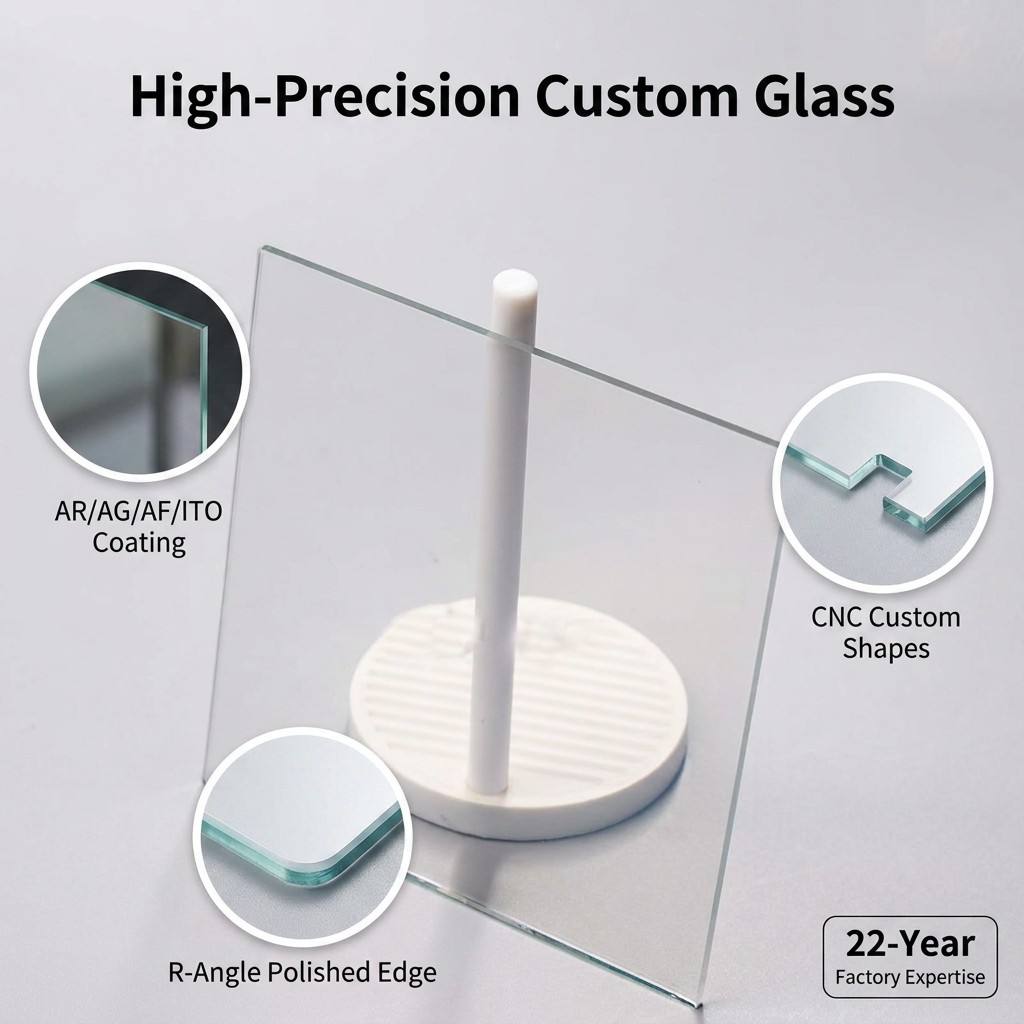
AR, AG, AF and filter glass samples produced in-house by KELO Glass
Every coated batch is measured and visually inspected before release — optical coatings are kept under one accountable manufacturing process.
Why KELO Glass

Factory-Direct Optical Glass, Coating and Quality Control Under One Roof

Huizhou KELO Glass Co., Ltd. is a professional glass manufacturer and factory in Huizhou, Guangdong Province, China, in the Greater Bay Area. We specialize in cover glass, touch screen glass and optical coated glass, with advanced glass surface treatment as our core technology. As a factory-direct supplier, we provide competitive prices, stable quality and direct technical support, combining optical performance, surface durability and electrical functionality in every solution.

Our main products include touch screen cover glass, display cover glass, tempered glass panels, AR anti-reflective coating glass, AG anti-glare coating glass, AF anti-fingerprint coating glass, ITO and FTO conductive glass, curved glass, 2.5D/3D curved glass, lighting glass, switch and socket glass, appliance glass lenses, solar glass, bathroom smart control panels and gaming glass. We also process specialty materials such as Gorilla glass, borosilicate glass, quartz glass, sapphire glass, ceramic glass, lead shielding glass and laminated safety glass. Thicknesses range from 0.1 mm to 19 mm, with sizes, shapes, colors and logos customized per drawing or sample.

KELO owns a 10,000–30,000 square meter factory with 101–200 employees, including 21–30 R&D engineers. Annual capacity reaches 20–25 million pieces of touch cover glass, with US$50–100 million output. All key processes are in-house: cutting, water-jet cutting, CNC machining, laser engraving, edge polishing, drilling, silk-screen printing, sandblasting, frosting, flat and curved tempering, and bonding. This vertical integration supports quality control at every step, stable lead times and factory-direct pricing for camera-module filter glass projects.

  1. 01Cutting & water-jet cutting
  2. 02CNC machining & drilling
  3. 03Edge polishing
  4. 04Laser engraving
  5. 05Silk-screen printing
  6. 06Sandblasting & frosting
  7. 07Flat & curved tempering
  8. 08AR / AG / AF / ITO coating
  9. 092.5D / 3D curved forming
  10. 103M adhesive bonding

Specialty materials we process

Gorilla glassBorosilicate glassQuartz glassSapphire glassCeramic glassLead shielding glassLaminated safety glass

Surface treatment is our core strength. AR anti-reflective coating achieves reflectance below 1.0% per side and transmittance above 99% in 400–700 nm, with single or multi-layer designs. AG anti-glare coating offers controllable haze of 5–60% and gloss of 0.5–8 GU. AF anti-fingerprint coating provides a contact angle above 110°, pencil hardness above 3H, transmittance above 98% and durability over 10,000 cycles. ITO/FTO conductive coatings are available with sheet resistance of 1–20 ohm/sq, transmittance above 85% and haze below 2%. AR+AG and AG+AF combinations are available per the 60/40 scratch-dig standard.

Quality is controlled by incoming, in-process and final inspection with 100% appearance checking and tests including tempering, adhesion, abrasion and salt spray. Custom packaging with honeycomb cartons, blister trays and partition packing minimizes shipping damage. Our products mainly export to Europe and North America: Eastern Europe 20%, Northern Europe 20%, North America 20%, Southern Europe 15%, Western Europe 15% and South America 10%. Our store rates 4.9/5, with average response under 2 hours and a 98.18% reply rate.

We welcome buyers, distributors and brand owners to contact Huizhou KELO Glass Co., Ltd. for samples, quotations and custom solutions. Email info@keloglass.com or use the inquiry button to send your drawing, spectral target and annual volume.
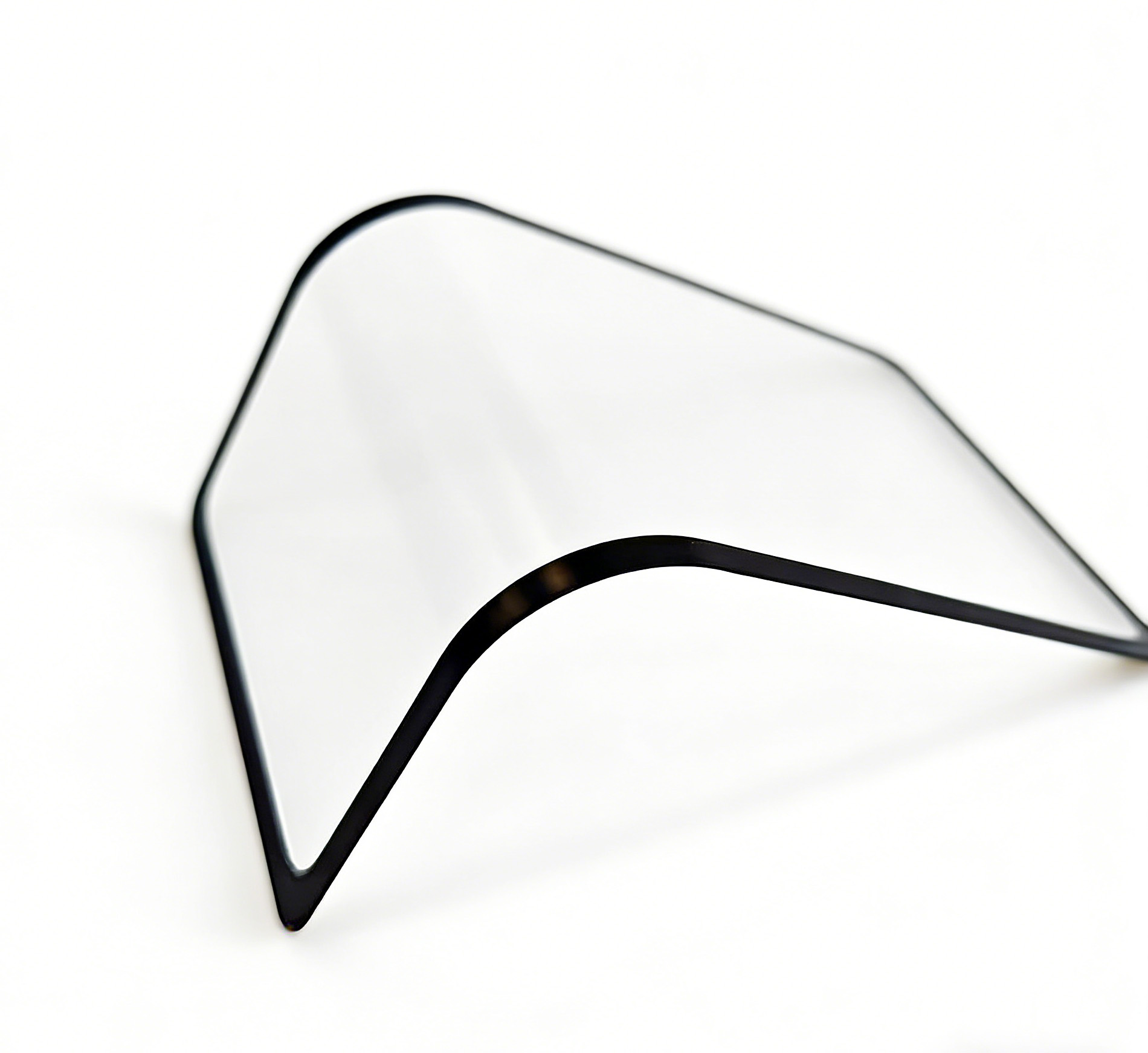

Specialty glass materials including quartz, sapphire and borosilicate processed by KELO Glass
Quality Assurance

Engineered Quality and Evidence You Can Verify

Quality is built into the process, not inspected in at the end. For camera-module filter glass, each inspection gate protects optical performance, cosmetic appearance and assembly yield.

Incoming Inspection (IQC)

Raw glass and consumables are verified before entering production.

  • Thickness and flatness check
  • Surface defect screening
  • Ink and coating material verification

In-Process Control (IPQC)

Critical dimensions and coating results are checked at each station.

  • CNC dimension and hole position
  • Tempering and strength tests
  • Coating adhesion and abrasion checks

Final Inspection (FQC/OQC)

Every finished piece is checked before protective packing.

  • 100% appearance inspection
  • Salt spray reliability testing
  • Honeycomb, blister and partition packing
OEM & ODM Workflow

From Camera-Module Drawing to Mass Production

A transparent, engineer-led process designed to reach a validated optical filter glass sample quickly and scale without surprises.

1

Share Requirements

Drawing, sample or spectral target and annual volume.

2

Engineering Review

DFM feedback on thickness, coating and cost drivers.

3

Rapid Prototype

Samples from as few as 1–2 pieces.

4

Validation

Fit, optics and reliability approved by you.

5

Mass Production

Typical lead time 21–31 days.

6

Packing & Shipping

Damage-proof packing, worldwide delivery.

CustomizationSize, shape, color, logo, holes, 2.5D/3D
Trade TermsFOB · CFR · CIF · EXW · DDP
PaymentT/T · L/C · PayPal · Western Union
Order ProtectionAlibaba Trade Assurance
Buyer FAQ

Frequently Asked Questions About Optical Filter Glass for Camera Modules

Straight answers to the questions that usually come up before a first order or supplier approval.

What is optical filter glass for camera modules used for?
Optical filter glass for camera modules controls the light reaching the image sensor. It may block near-infrared light with an IR-cut coating, correct color with blue glass, reduce surface reflections with AR coating, diffuse glare with AG coating, add anti-fingerprint performance with AF coating, or provide an ITO/FTO conductive layer. It can also act as a protective window for the lens and sensor package, especially in compact or sealed camera assemblies.
What is the difference between IR-cut filter glass and blue glass?
IR-cut filter glass is usually a coated substrate designed to transmit visible light while attenuating near-infrared light. Blue glass is a filter material that absorbs or modifies specific wavelengths to help correct color, especially in security and day/night cameras. Many projects combine blue glass, AR coating and an IR-cut function. The right choice depends on the sensor response, lens, illumination and firmware tuning, so KELO asks for a spectral target and application details before recommending a stack.
Can you supply AR-coated optical filter glass for camera modules?
Yes. We apply single-layer and multi-layer AR coatings in-house. Typical production targets include reflectance below 1.0% per side and transmittance above 99% in the 400–700 nm range, but final values are agreed against the drawing. AR-coated windows are widely used on smartphone, automotive, security and medical camera modules to reduce flare and improve contrast.
How do you reduce flare, ghosting and stray light?
Start with a multi-layer AR design matched to the lens and sensor, then control substrate flatness, edge finish and coating cosmetic quality. Mechanical design should avoid reflective surfaces near the optical path; assembly cleanliness is equally important. KELO reviews the optical stack, provides coated samples and inspects cosmetic defects, which helps camera-module teams move from prototype to production with fewer surprises.
What thicknesses, sizes and shapes can you produce?
Glass thickness from 0.1 mm to 19 mm is available. We customize size, shape, holes, chamfers, edge polishing, color, logo printing, silk-screen borders, 2.5D/3D curved forming and 3M adhesive bonding. For optical filter windows, tolerances and flatness should be stated in the drawing or agreed during engineering review.
Can you support prototypes and small trial orders?
Yes. Sample orders can start from 1–2 pieces so you can validate fit, optical performance and coating durability before volume. Prototypes are reviewed by our engineering team, and we can recommend alternative substrates or coating designs if a target is difficult or cost-prohibitive.
What lead times and trade terms do you offer?
Bulk lead time is typically 21–31 days after sample approval, depending on size, coating stack, curved forming and printing complexity. We support FOB, CFR, CIF, EXW and DDP, and accept T/T, L/C, PayPal and Western Union. Orders through Alibaba.com can be protected by Trade Assurance.
How do you control optical and coating quality?
Quality is controlled through incoming, in-process and final inspection with 100% appearance checking, plus tempering, adhesion, abrasion and salt spray tests where relevant. Coating performance can be checked against transmittance, reflectance, haze, gloss and contact-angle targets. Custom honeycomb cartons, blister trays and partition packing help minimize shipping damage.
Which camera applications use your glass?
Typical uses include smartphone and consumer camera windows, automotive cameras and sensor covers, security and day/night cameras, machine-vision and industrial inspection, drones, medical imaging equipment, smart-home devices and AR/VR sensing modules. The same coating lines also serve display, touch, lighting and solar customers, giving us broad process experience.
Can you combine AR, AG and AF coatings?
Yes. Combined AR+AG and AG+AF stacks are available, and additional IR-cut or conductive functions can be discussed during engineering review. Every added layer affects transmission, durability and cost, so we recommend specifying the primary optical goal first and then adding surface functions only where they are needed.
What should I include in my RFQ?
Send a drawing or 3D model, substrate preference, thickness, size and tolerance, spectral target or IR-cut requirement, coating type, transmission/reflection values, haze or contact-angle targets if relevant, edge and cosmetic requirements, annual volume, packaging and destination. If you have a working sample or a competitor part number, include it so our engineers can compare the specification.
How can I verify a supplier before ordering camera-module filter glass?
Review factory verification, in-house process capability, engineering headcount, inspection methods and export experience. Ask for samples, measurement data and packaging details. Huizhou KELO Glass Co., Ltd. is a verified manufacturer with a 4.9/5 store rating and 98.18% reply rate; you can request a sample and quotation through the inquiry button or email info@keloglass.com.

Ready to Specify Optical Filter Glass for Your Camera Module?

Send your drawing, spectral target, coating requirement, thickness, annual volume and destination. Our engineering team at Huizhou KELO Glass Co., Ltd. will review feasibility and recommend the most cost-effective glass and coating solution for your camera-module programme.

info@keloglass.com