A storefront speaks before anyone opens the door. Custom Glass can shape that first impression, bringing daylight into a room, highlighting products, and making a space feel more open. It can also support practical needs, from privacy and branding to partitions and display cases. The right choice depends on the business, the building, and how people use the space each day.
Architect Louis Kahn once observed, “The sun never knew how great it was until it hit the side of a building.” His words capture how glass can change a space through light. A café might use a clear street-facing façade to show its warm interior; a clinic may prefer frosted panels for discretion. Small details matter. Glass thickness, edge finish, hardware, and placement can affect both appearance and everyday use.
Custom solutions are not automatically better for every project. Still, glass is not a cure-all. Large panels need thoughtful planning, suitable installation, and regular care. Business owners should discuss safety requirements, maintenance, budget, and local building conditions with qualified professionals before choosing a design. Ask to see samples in the actual space, where daylight and nearby colors can change how glass looks. A sample may surprise you. The sections ahead explore the benefits, design options, practical considerations, and questions worth asking before investing in Custom Glass.
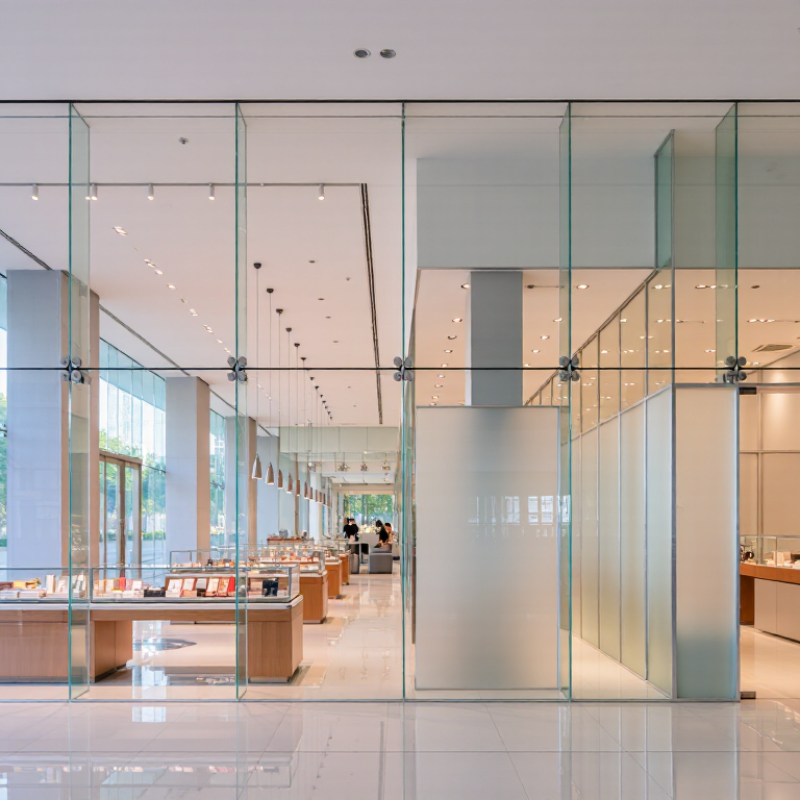
What Custom Glass Means in a Business Setting
Custom glass in a business setting is designed around a space, its daily use, and the people moving through it. It is more than a sheet cut to an unusual size. A café might use a clear partition to preserve sightlines, while a clinic may need patterned glass for privacy. A shop could choose fitted display panels that show products without bulky supports. Small details matter.
Measurements, glass type, thickness, edge finish, and fixing method should be considered together. A qualified glazier can check openings, nearby hardware, and how each panel will be supported. For doors or areas where impact is possible, ask which safety-glazing option suits the location and applicable building requirements. Glass can brighten a narrow room, but glare and fingerprints may become daily annoyances. Plans can look elegant on paper and feel awkward when a handle meets a wall. Measure twice.
Tips: Bring photos and rough measurements to the first discussion. Note cleaning routines, privacy needs, and busy walkways. Ask to see samples in similar lighting. Check final dimensions on site before fabrication.
| Business Dimension | What Custom Glass Means | Potential Business Value | Key Considerations |
|---|---|---|---|
| Fit and dimensions | Glass can be specified and fabricated to suit a project’s measured openings, layout, and design requirements. | Helps accommodate non-standard windows, partitions, display cases, doors, and other architectural features. | Accurate site measurements and coordination with the frame or supporting structure are important. |
| Safety requirements | Options may include safety glazing such as tempered or laminated glass, where appropriate for the application. | Can help a project meet applicable safety requirements when the correct glass type and installation are specified. | Tempered glass generally breaks into smaller pieces; laminated glass uses an interlayer that helps hold fragments together. Applicable codes depend on location and use. |
| Appearance and branding | Projects can specify features such as clear, tinted, patterned, frosted, or decorative glass. | Supports a chosen level of visibility, privacy, and visual consistency with a business interior or exterior. | Color, transparency, coatings, and lighting can affect how the finished glass looks in different conditions. |
| Privacy and separation | Glass partitions and privacy treatments can be selected to suit meeting rooms, offices, reception areas, or customer spaces. | Allows businesses to define spaces while maintaining a light, open appearance where desired. | Privacy depends on the glass finish, lighting, viewing angles, and whether additional blinds or coverings are needed. |
| Energy performance | Glazing can be specified with suitable insulating units, coatings, or other performance features for the building design. | May contribute to the building’s overall thermal and solar-control strategy. | Performance depends on the complete glazing system, including glass, coatings, frame, installation, and local climate. |
| Sound control | Glass make-up and glazing assemblies can be selected with acoustic goals in mind. | May help manage sound transmission between spaces or from outdoor areas. | Results depend on the full assembly, including thickness, air gaps, framing, seals, and installation—not glass alone. |
| Maintenance and durability | Glass type and finish can be chosen with the expected use and cleaning routine in mind. | Supports practical upkeep in settings such as storefronts, offices, hospitality spaces, and public areas. | Cleaning methods should be compatible with the glass, coatings, hardware, and manufacturer guidance. |
| Project coordination | Specifications can be coordinated with architects, contractors, glaziers, and other project teams. | Helps align appearance, performance, dimensions, and installation requirements before fabrication. | Confirm specifications, measurements, lead times, hardware, and installation responsibilities early in the project. |
| Custom glass is a project-specific solution. The appropriate glass type and specification depend on the intended use, design, local requirements, and installation conditions. | |||
FAQS
It is glass planned around a room, its daily use, and the people moving through it.
Confirm measurements, glass type, thickness, edge finish, and fixing method. Check nearby handles and walls, too.
Etched patterns, colored dividers, or fitted display panels can reflect a visual style without loud signs.
Clear panels can guide visitors and keep spaces open. A bright counter can make pastries easier to see.
It can offer privacy in fitting rooms or consultation areas while still letting light through.
Glare and fingerprints may become daily annoyances. A handle might meet a wall.
View them at the site in morning and evening light. Check reflections from customer eye level. Samples can fool you.
Bring photos and rough measurements, then confirm final dimensions on site. Measure twice.
They can review support, installation conditions, safety needs, and maintenance. Real spaces can surprise you.
Conclusion
Custom Glass gives businesses the flexibility to shape glass around their space, practical requirements, and design goals. Instead of relying on standard sizes and styles, businesses can choose suitable dimensions, finishes, levels of transparency, and configurations for features such as partitions, doors, displays, or windows. When making a selection, it is important to consider the intended use, durability, maintenance, safety needs, installation conditions, and overall budget.
A wide range of businesses, including offices, shops, restaurants, and hospitality venues, can benefit from glass solutions tailored to their environment. Thoughtfully designed glass can bring in natural light, create a more open atmosphere, guide movement through a space, or provide privacy where needed. It can also support branding and customer experience through cohesive design choices that reflect a business’s identity and make the space more welcoming, comfortable, and memorable.