0%

Choosing Tempered Glass can improve safety and durability in projects that face daily handling, temperature changes, or accidental impacts. The glass is heated and rapidly cooled, creating surface compression that makes it stronger than comparable ordinary glass. When it breaks, it typically fragments into smaller pieces rather than large, sharp shards. That matters. But it is not unbreakable, and its performance depends on correct design, processing, and installation.

Consider where the glass will be used. A shower enclosure, storefront, interior door, and tabletop each have different demands. Measure openings carefully, and discuss thickness, edge finish, hardware, and exposure with a qualified glass supplier. Tempered glass usually cannot be cut or drilled after treatment, so dimensions and hardware holes must be confirmed before production. Small planning errors can mean replacing the entire panel. Not ideal.

There are trade-offs worth weighing. Tempering can introduce slight optical distortion, which may be more noticeable across large panes or reflected lines. If a broken panel must remain in place, ask whether a laminated option is more suitable for the application. Confirm product documentation and relevant project requirements rather than relying on appearance alone. Tempered Glass is a strong choice when its properties match the actual conditions, not simply because “stronger” sounds better. A careful specification helps balance safety, cost, clarity, and long-term use.
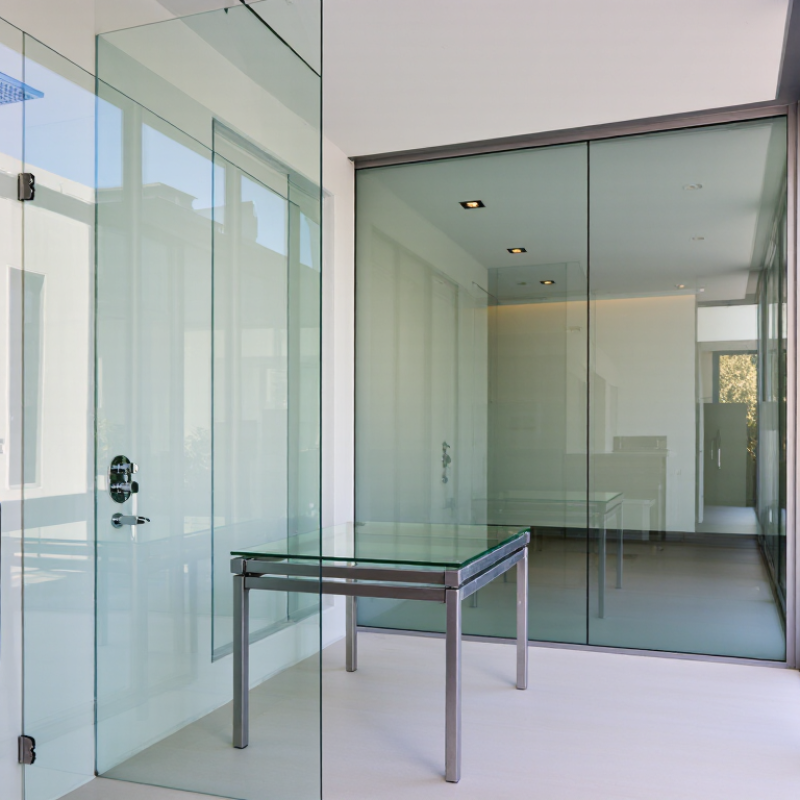
Why Choose Tempered Glass for Your Project?

What Tempered Glass Is and How It Is Made

Why Choose Tempered Glass for Your Project?

What Tempered Glass Is and How It Is Made

Tempered glass is ordinary glass strengthened through controlled heating and rapid cooling. This process creates compression at the surface and tension inside the pane. As a result, it generally resists impact and temperature changes better than annealed glass of similar thickness. Not unbreakable. If it fails, it usually breaks into many smaller pieces, though these can still cause injury. The term “safety glass” can sound more reassuring than it should.

Making tempered glass begins with cutting the pane to size and finishing its edges. Any holes or notches must also be made before tempering. The glass then passes through a furnace, often heated to around 620°C, before high-pressure air cools its surfaces quickly. Exact temperatures and timing vary with glass thickness and equipment. That detail matters: poor edge quality or uneven heating can affect performance. A common oversight is focusing on strength while overlooking fit, finish, and the intended application.

Tips: Confirm the required thickness and dimensions before ordering, and inspect edges for chips. Ask whether the glass suits its location and expected loads. After tempering, it cannot be cut or drilled without breaking. Check local building requirements with a qualified professional.

How Tempering Improves Strength and Breakage Safety

Tempered glass begins as ordinary glass, then undergoes controlled heating and rapid cooling. This process leaves its outer surfaces in compression and its inner layer in tension. The balance helps the pane resist impacts and temperature changes better than untreated glass of similar thickness. It is stronger, not unbreakable. That distinction matters when choosing glass for a shower enclosure, door, or tabletop.

If tempered glass breaks, it usually fractures into many small pieces rather than large, sharp shards. This can reduce the risk of severe cuts, but it does not make breakage harmless. Small fragments can still injure someone, and the whole pane may fail at once. One detail is easy to overlook: holes and edge work must be planned before tempering, because the glass cannot be cut afterward. I sometimes find that this limits late design changes.

Tips: Match the glass thickness and type to its location, support, and expected use. Ask a qualified glass professional to check measurements and edge details. Inspect installed panels for chips or damage; even a tiny flaw may deserve attention.

Key Performance Features of Tempered Glass

Tempered glass is valued for strength, heat resistance, and its breakage pattern. The National Glass Association’s technical guidance describes fully tempered glass as about four times stronger than comparable annealed glass. The exact result still depends on thickness, edge quality, and how the panel is supported.

ASTM C1048 specifies a minimum surface compression of 69 MPa for fully tempered glass. This compression helps it resist impact and temperature-related stress better than ordinary annealed glass. When it breaks, it typically crumbles into smaller pieces rather than long, sharp shards. That matters near doors and busy walkways. But smaller fragments can still cause injury.

Tempering also has a practical limit: glass must be cut, drilled, and edge-finished before heat treatment. A small measurement error can mean remaking the panel. It can fail. Deep scratches, damaged edges, or uneven support may weaken it, so careful inspection and installation remain important. For project specifications, check the applicable product standard and confirm the panel’s intended use with a qualified glazing professional.

Why Choose Tempered Glass for Your Project?

Key performance feature: greater bending strength than annealed glass.

Fully tempered glass is commonly described as having about four times the bending strength of comparable annealed glass. Actual performance depends on glass thickness, dimensions, edge quality, and processing; this relative index is illustrative, not a design rating.

Common Applications Across Project Types

Tempered glass appears in projects where people, movement, and exposed edges meet. In homes, it is commonly specified for shower doors, patio doors, and low-level glazing. In offices, it suits glazed partitions and door panels that take frequent daily contact. Retail façades and entrance systems also use it, where clear sightlines matter. It breaks into smaller fragments than ordinary annealed glass, but it is not unbreakable.

Good installation matters.

The application changes the specification. A shower enclosure needs carefully finished edges and hardware matched to the panel; a storefront may require different thickness, coating, or laminated construction. For railings and overhead glazing, designers must check the project’s safety requirements rather than assume tempered glass alone is suitable.

Energy performance also depends on the whole window assembly. The U.S. Department of Energy’s Energy Saver guidance estimates that windows account for 25–30% of residential heating and cooling energy use. That figure is a useful reminder: choosing a glass treatment does not, by itself, solve heat loss or solar gain.

A small oversight can be expensive. I would also ask how panels will be transported and installed, since edge damage can create problems later. The right choice is often less obvious than the sample suggests.

What to Consider When Selecting Tempered Glass

Choosing tempered glass starts with the project’s risks, not a blanket assumption that “stronger is better.” National Glass Association technical guidance states that fully tempered glass is roughly four times as strong as annealed glass of equal thickness under bending. That comparison is useful, but it does not guarantee resistance to every impact. Edge chips, cutouts, temperature differences, and support conditions all matter. Small details, real consequences.

Before fabrication, confirm the pane’s dimensions, thickness, edge finish, holes, and hardware. These details must be finalized before tempering; tempered glass generally cannot be cut or drilled afterward. For doors, shower enclosures, or low-level glazing, verify the required safety-glazing performance for the project’s location. In the United States, CPSC 16 CFR Part 1201 sets impact requirements for certain architectural glazing, while ASTM C1048 covers heat-treated flat glass. Ask for product documentation, not just a sales description. Where spontaneous breakage risk is a concern, heat-soak testing may reduce—but cannot eliminate—the risk associated with nickel sulfide inclusions. Is the added testing worthwhile? It depends on the application, and that judgment deserves careful review.

FAQS

What is tempered glass?

It is ordinary glass strengthened by controlled heating and rapid cooling. The process compresses its surface and creates tension inside.

How is tempered glass made?

The pane is cut, drilled, and edge-finished first. It is then heated, often to about 620°C, and rapidly cooled with high-pressure air.

Is tempered glass stronger than ordinary glass?

Fully tempered glass can be about four times stronger than comparable annealed glass. Thickness, edge quality, and support still matter.

How does tempered glass break?

It usually breaks into many smaller pieces instead of long, sharp shards. These pieces can still cause injury. Not harmless.

Can tempered glass resist heat and impact?

It generally handles impact and temperature changes better than similar annealed glass. It can still fail under damage or uneven support.

Can tempered glass be cut after tempering?

No. Cutting or drilling it afterward will usually cause it to break. Confirm measurements and openings before heat treatment.

What should I check before ordering?

Confirm the dimensions, thickness, intended use, and expected loads. Inspect the edges for chips. Measure twice.

What can weaken tempered glass?

Deep scratches, damaged edges, poor fit, and uneven support may reduce its performance. A small measurement error can mean remaking the pane.

Should I check local requirements before installation?

Yes. Ask a qualified glazing professional whether the glass suits its location and application. Requirements can vary.

Conclusion

Tempered Glass is produced by heating ordinary glass to a high temperature and then cooling it rapidly. This controlled process changes the glass’s structure, making it stronger than standard glass and better able to withstand impacts and temperature changes. If it breaks, it typically fractures into small, blunt pieces rather than large, sharp shards, helping reduce the risk of injury.

These qualities make Tempered Glass a practical choice for projects ranging from doors, windows, and partitions to shower enclosures and furniture. Its clarity, durability, and low-maintenance surface can suit both functional and decorative needs. When selecting it, consider the required dimensions, thickness, finish, exposure to heat or impact, and the demands of its intended location. Careful planning helps ensure the glass is appropriate for the project and performs reliably over time.

Amelia

Amelia

Amelia is a professional marketing specialist with a deep understanding of the company’s products, their features, and the needs they are designed to address. She regularly updates the company website with informative blog articles that turn product knowledge and industry insights into clear,......