0%

Why Is Cover Glass Used in Smartphones?

A smartphone’s front surface looks simple, but it faces a demanding mix of hazards. It meets fingertips, pocket grit, keys, and the occasional hard floor. Cover Glass protects the display beneath while keeping the screen visible and responsive. It is not merely a clear lid. Its thickness, surface treatment, edge shape, and fit all affect how a phone feels and performs.

John Bayne, former senior vice president and general manager of Corning Gorilla Glass, has discussed the need to balance device design with durability. In paraphrase, his point is: “Good cover glass must help a phone stay slim and attractive while better resisting everyday damage.” This is a summary, not a verbatim quotation. The distinction matters. A single material cannot make a phone unbreakable, and claims of perfect protection deserve skepticism.

So why is Cover Glass used in smartphones? The answer involves more than scratch resistance. The glass forms a barrier against routine contact, supports the touch interface, and helps preserve the display’s clean appearance. Engineers also consider optical clarity, glare, fingerprints, and how the glass behaves during impact. Small details matter. A raised edge, for example, can change which surface hits the floor first.

There are trade-offs. Thicker glass may improve some forms of protection, but it can add weight or affect design. Even carefully engineered glass can crack under an unlucky drop. Understanding these choices makes it easier to judge what Cover Glass can—and cannot—do for a smartphone.
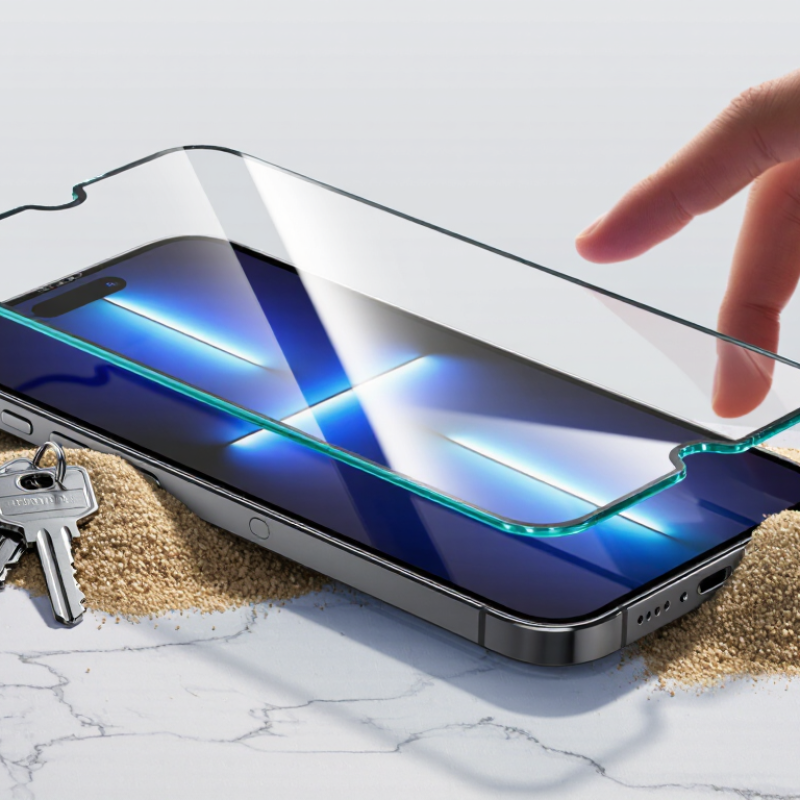
Why Is Cover Glass Used in Smartphones?

The Role of Cover Glass in Smartphone Design

Cover glass is the outer surface people see and touch, but its job is more than decoration. It protects the display from everyday scratches and knocks while letting light pass through with minimal distortion. Its smooth surface also helps finger movements register consistently. Curved edges and camera openings add complexity: each cut and contour must fit the phone’s structure without making the glass unnecessarily heavy. It is not armor.

Designers balance toughness, clarity, thickness, and touch feel. IDC’s Worldwide Quarterly Mobile Phone Tracker reported about 1.17 billion smartphone shipments worldwide in 2023. At that scale, small choices in glass performance and manufacturing can affect many devices. Strengthened glass can resist damage better than untreated glass, but performance depends on composition, processing, thickness, and the shape of the phone. A corner impact can still cause a crack.

The surface finish matters, too. A polished edge can look refined but feel slippery with damp fingers; a matte finish may reduce glare yet slightly soften the display’s crisp appearance. Coatings can limit fingerprints, though they wear with repeated contact and cleaning. These are real trade-offs, and no single glass design solves all of them. A thin cover may support a lighter profile, but designers must still consider impact protection and how the glass bonds to the display beneath it.

Key Properties That Make Glass Suitable for Phone Screens

Cover glass must stay clear while facing scratches, pocket grit, pressure, and repeated taps. Its stiffness helps the screen resist bending when a phone twists slightly in a pocket. Yet stiffness alone does not prevent cracks; impact energy and flaws at the edge matter too. Engineering material data sheets indexed in the MatWeb database commonly report aluminosilicate glass densities around 2.4–2.6 g/cm³ and elastic moduli near 70–80 GPa. These figures vary by composition and processing, so they describe a material range, not every phone screen.

Transparency is another practical advantage. Glass can transmit visible light with little distortion, keeping text sharp and colors consistent under indoor lighting. Its smooth surface also supports precise touch sensing and is easier to wipe clean than many soft coatings. Chemical strengthening adds surface compression, making small scratches less likely to grow into cracks. That helps, but it is not armor. A sharp drop onto a tile corner can still break the panel, especially around an exposed edge. There is a trade-off: stronger, harder glass may resist everyday wear, while a deep impact can defeat it quickly. Phone screens are engineered compromises, and real-world damage does not always follow tidy lab results.

How Cover Glass Protects the Display and Internal Components

Why Is Cover Glass Used in Smartphones?

A phone’s cover glass is the first barrier between the display and everyday hazards. It meets keys in a pocket, grit on a table, and fingerprints during use. Its hard surface helps resist fine scratches, while the layers beneath it support touch sensing and image clarity. Small details matter.

The glass also spreads some impact across a wider area instead of letting force strike one tiny point. That can reduce the chance of damage to the display panel underneath. In many phones, adhesive bonds the glass to the display stack, helping keep dust and small debris out. The front assembly may also work with frame seals to limit moisture entry. The glass alone is not a waterproof seal.

Protection has limits. A sharp edge, a hard fall, or pressure in a tight pocket can still crack the glass or harm the screen below. A crack may also weaken the barrier and let dust reach the display layers. It is easy to overestimate what “tough” glass can do; even careful users sometimes learn that the hard way. A case and prompt repair can help, but neither makes the screen indestructible.

How Glass Supports Touch Input and Clear Viewing

Cover glass is the phone’s first interface with a finger and the outside world. Beneath it, a capacitive sensor detects changes in the electrical field when a fingertip approaches or touches the screen. The glass lets that signal pass while keeping the display surface smooth and protected. A light tap registers cleanly because the sensor and glass are designed to work together, not because glass itself senses touch. Thickness matters. If the cover is too thick, damaged, or poorly fitted, touches may feel less precise, especially near an edge.

Clarity depends on more than transparency. Carefully finished glass reduces haze and helps text stay crisp in daylight, while coatings can limit reflections and make oily fingerprints easier to wipe away. They are not perfect. A bright window can still wash out the screen, and a greasy thumb leaves visible streaks. The surface tolerates daily rubbing better than many soft materials, but a hard drop or grit trapped against it can still cause cracks or scratches. In repair work, even a small gap or dust speck under replacement glass can distract the eye and affect touch response. That trade-off is easy to miss. A thin, clear layer feels almost absent, yet its fit and condition shape every swipe and glance.

Why Is Cover Glass Used in Smartphones? — How Glass Supports Touch Input and Clear Viewing

Display Area What the Glass Does How It Works Benefit to the User Important Design Note
Protective outer surface Forms the exposed front layer over the display and helps shield underlying components from everyday contact. The rigid glass surface acts as a physical barrier against handling, light impacts, and contact with objects. Helps protect the display assembly during normal use. Glass can still crack or chip if subjected to sufficient force; protection depends on the device design and the type of impact.
Clear viewing window Lets light from the display pass through to the viewer. Optical-quality glass is manufactured to limit haze and distortion so the image remains legible. Supports clear text, images, and video. Clarity also depends on glass thickness, surface condition, coatings, and the display beneath it.
Capacitive touch input Provides a smooth surface for fingers while allowing touch sensing to work through the front layer. In a common touchscreen design, sensors detect changes in the electrical capacitance near the screen when a finger approaches or touches it. Enables taps, swipes, and other touch gestures without a separate mechanical button for each action. The cover glass itself is not usually the touch sensor; the sensing electrodes are typically positioned beneath it.
Surface finish and coatings Can be treated to reduce reflections, fingerprints, or friction at the surface. Thin surface coatings modify how light or oils interact with the glass. May improve visibility in some lighting conditions and make the surface easier to wipe. Coatings can wear with use, and their effects vary by formulation and device construction.
Strengthened glass Can be processed to improve resistance to damage compared with untreated glass of similar design. Chemical strengthening commonly exchanges smaller alkali ions near the surface for larger ions, creating a compressive surface layer. Helps the cover tolerate some everyday stresses better. Strengthening does not make glass unbreakable; edge damage and severe impacts can still cause failure.
Integrated front assembly Works as part of a layered structure that may include touch sensors, optical adhesives, and the display panel. Bonding layers help hold components together and reduce air gaps between optical layers. Supports a slim front profile and a unified viewing and touch surface. Exact layer order and materials differ among device designs.

Limitations and Trade-Offs of Smartphone Cover Glass

Cover glass protects a phone’s display from keys, grit, and daily handling while keeping the image clear. But glass is a compromise, not armor. Hard surfaces resist scratches, yet a sharp impact can still start a crack. A phone dropped onto a tiled floor may survive, while one landing on a tiny stone may break at the corner. Small details matter.

Thicker glass can improve impact tolerance, but it adds weight and may affect touch response and optical clarity. Coatings reduce fingerprints, though repeated wiping gradually wears them down. Repair is another trade-off: the cover glass is often bonded closely to the display, making separation delicate and costly. I find this part easy to overlook. A cracked corner can turn an otherwise usable phone into a repair decision.

Scale makes that decision important. IDC’s Worldwide Quarterly Mobile Phone Tracker reported 1.24 billion smartphone shipments in 2024, up 6.4% year over year. More devices mean more screens exposed to damage, though shipment figures do not measure breakage rates. The Global E-waste Monitor 2024 reported 62 million tonnes of electronic waste worldwide in 2022; only 22.3% was formally collected and recycled. Cover glass is only one small part of that problem, but bonded construction can make repair and material recovery harder. A protective layer helps. It does not remove the trade-offs.

FAQS

What does smartphone cover glass do?

It helps shield the display from scratches, grit, and everyday knocks while letting light pass through clearly. It also provides a smooth surface for touch input. Not armor.

Can strengthened glass prevent every crack?

No. A corner hit on tile or a tiny stone can still crack it. I used to think “tough” meant nearly unbreakable; that was too simple.

How does cover glass help during an impact?

It can spread some force across a wider area, reducing pressure on one point of the display. The result depends on impact angle, thickness, and phone shape.

Does cover glass make a phone waterproof?

No. Adhesive and frame seals may help limit moisture entry, but the glass alone is not a waterproof seal. Small distinction, big one.

Do fingerprint-resistant coatings last forever?

No. They can wear with repeated touching and cleaning. A soft cloth seems harmless, but daily wiping adds up.

Is thicker cover glass always better?

Not necessarily. It may improve impact tolerance, but can add weight or affect touch response and image clarity. There is no perfect thickness.

Why can cracked cover glass be difficult to repair?

It is often bonded closely to the display, so separating the layers is delicate. A cracked corner may leave the phone usable, but repair becomes a decision.

Can a phone case prevent all screen damage?

No. A case can help, and prompt repair may limit further problems, but neither makes the screen indestructible. Easy to forget.

Conclusion

Cover Glass plays an important role in smartphone design by forming a clear, durable surface over the display. Its transparency lets light and colors pass through for comfortable viewing, while its smooth surface supports responsive touch input. Glass can also be made thin and shaped to fit modern phone designs without greatly affecting screen clarity.

Beyond appearance and usability, Cover Glass helps shield the display and nearby internal components from everyday contact, dust, and minor impacts. Its hardness can resist some scratches, though glass is not unbreakable and may crack if dropped or struck with enough force. It can also add weight and may require specialized processing to balance strength, thinness, and touch performance. These trade-offs mean that Cover Glass is a practical protective layer, but it cannot prevent every kind of damage.

Evelyn

Evelyn

Evelyn is a dedicated marketing professional who combines clear communication with a deep understanding of the company’s products and the needs of the people who use them. She regularly contributes expert articles to the company website, offering practical information, thoughtful guidance, and......