8 Precision Glass Products Built for CE-Ready Device Programs
The fastest way to evaluate a CE-ready precision glass factory is to examine what it can manufacture, document and repeat at volume. These eight products sit at the practical intersection of tempered safety glass, optical coating, silk-screen printing, conductive layers, adhesive bonding and high-mix customization. Each link below points to the original product specification; compare thickness, coating stack, printing, touch integration and packaging requirements against your own technical file.
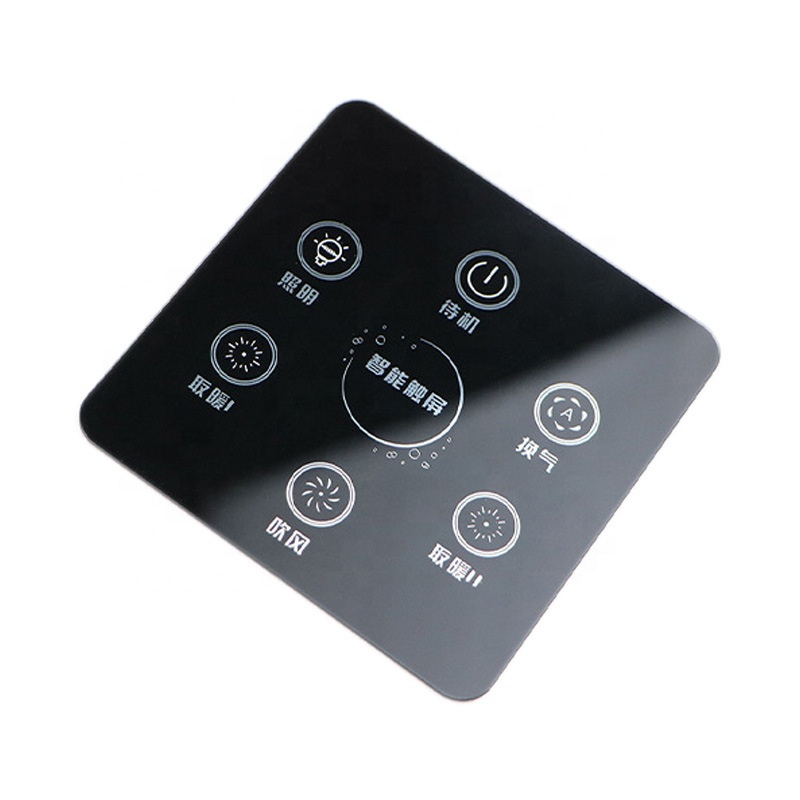
Bathroom Solid & Hollow Tempered Glass Intelligent Touch Shower Control Switch Panel Silk Screen Printed with 4-Year Warranty
A moisture-facing control panel that combines tempered glass, intelligent touch, silk-screen graphics and a four-year warranty. Recommended when user safety, cleaning chemicals and bathroom durability are primary design constraints.

Round Oval PTFE 3M Wear-resistant Smooth Mouse Feet Stickers Glass Pad Resin Pads
Low-friction PTFE stickers with 3M adhesive for mouse feet and glass pads. A high-volume consumable where adhesive consistency, smooth glide and cosmetic precision matter as much as unit price.

Custom Silk Screen Printed Tempered Glass Electronic Control Panel Cover for Smart Appliances
The glass is the interface: printed graphics, touch window, electrical insulation and decorative surface in one component. A strong choice for appliance platforms that need repeatable color and print registration.

Factory Customized Anti-fogging Anti Reflective Glass Ultra Thin Tempered Toughened Optical ITO FTO Conductive Glass for Lab
An optical-grade example that combines anti-fogging treatment, anti-reflective performance, ultra-thin tempered glass and ITO/FTO conductivity options for laboratory, sensor and display-window applications.
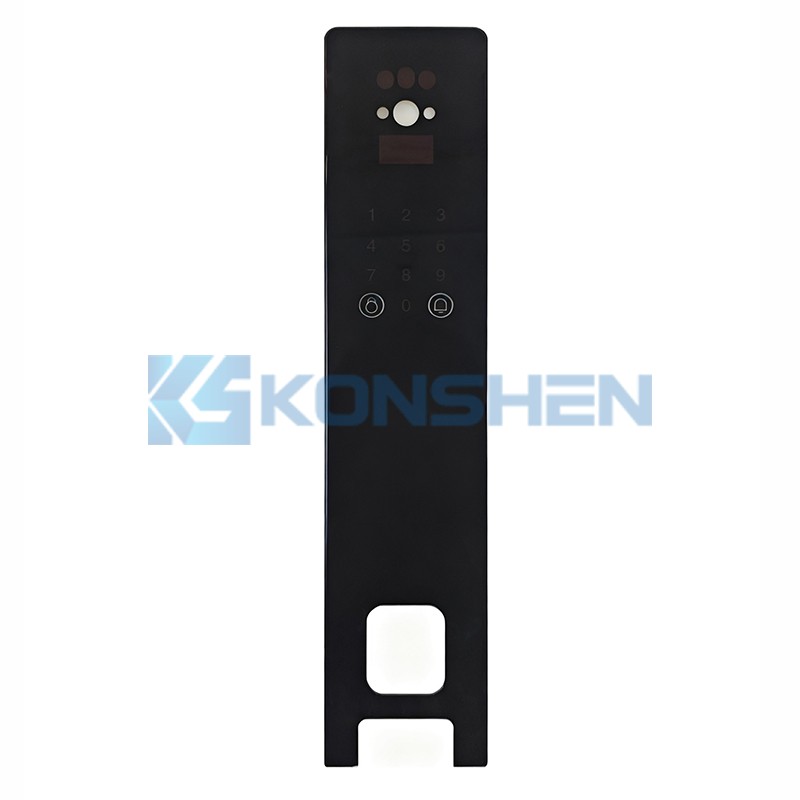
Electronic Tempered Glass Film Custom Printed Rectangular Panel Digital Keypad for Smart Door Lock
Designed for smart locks and access-control products: custom-printed rectangular keypad graphics, tempered glass protection, touch integration and repeated cleaning. Print alignment and adhesive stability are critical.

Customized Cutting Elevator Indicator Arrow Printing Touch Smart Control Elevator Panel Use Electronics Screen Glass Instrument
Elevator indicator glass with arrow printing, touch control and electronic screen integration. Requires dimensional accuracy, print alignment, robust edge finishing and reliable batch-to-batch appearance.
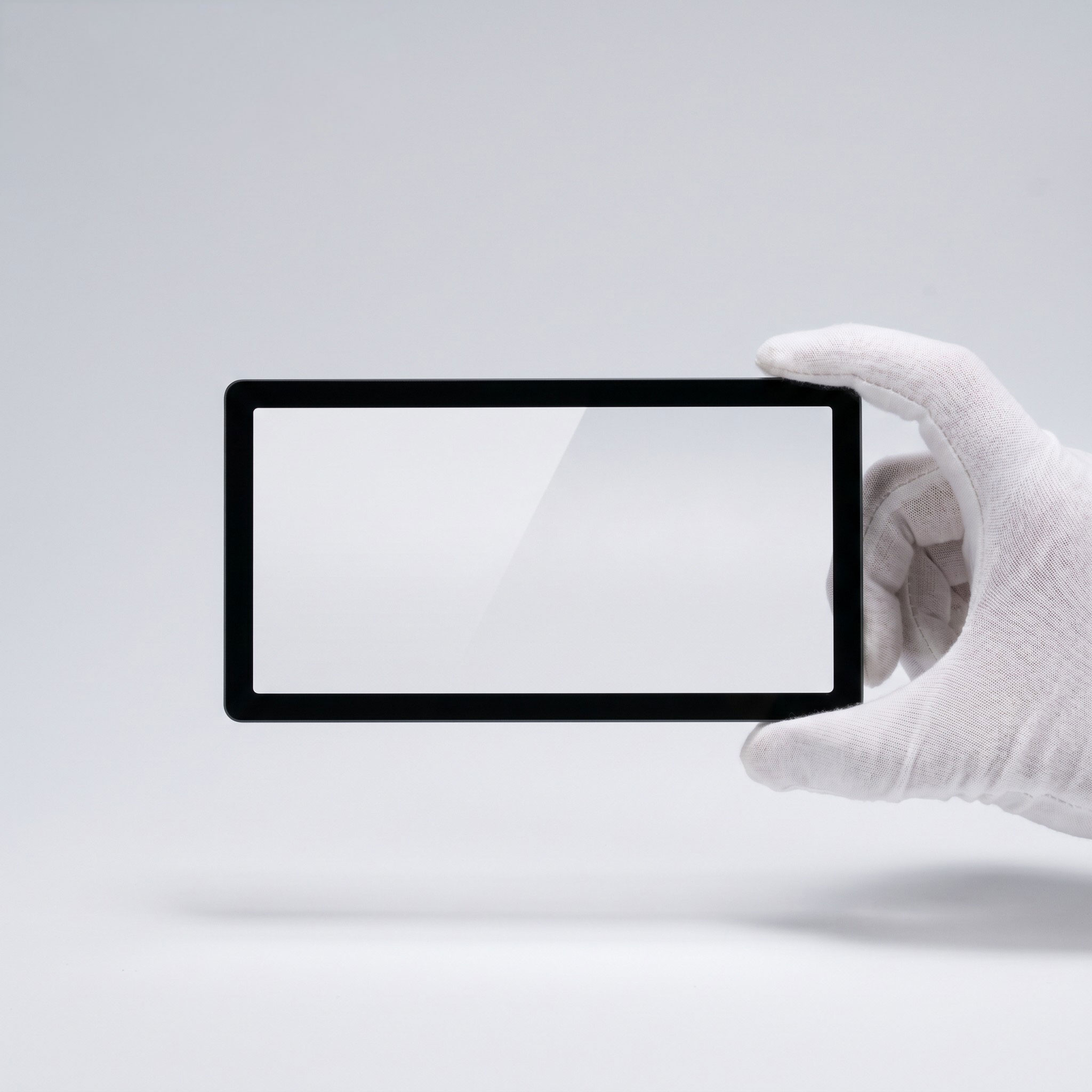
Custom Size Gorilla Glass Front Panel Panda Cover Sheet CNC Cut Silk Printed Tempered Glass Solar Display Screen Cover
Gorilla glass front panel with CNC cutting, silk printing and tempered finishing for solar display covers. A good fit for thin-cover industrial design where optical clarity and brand appearance must align.
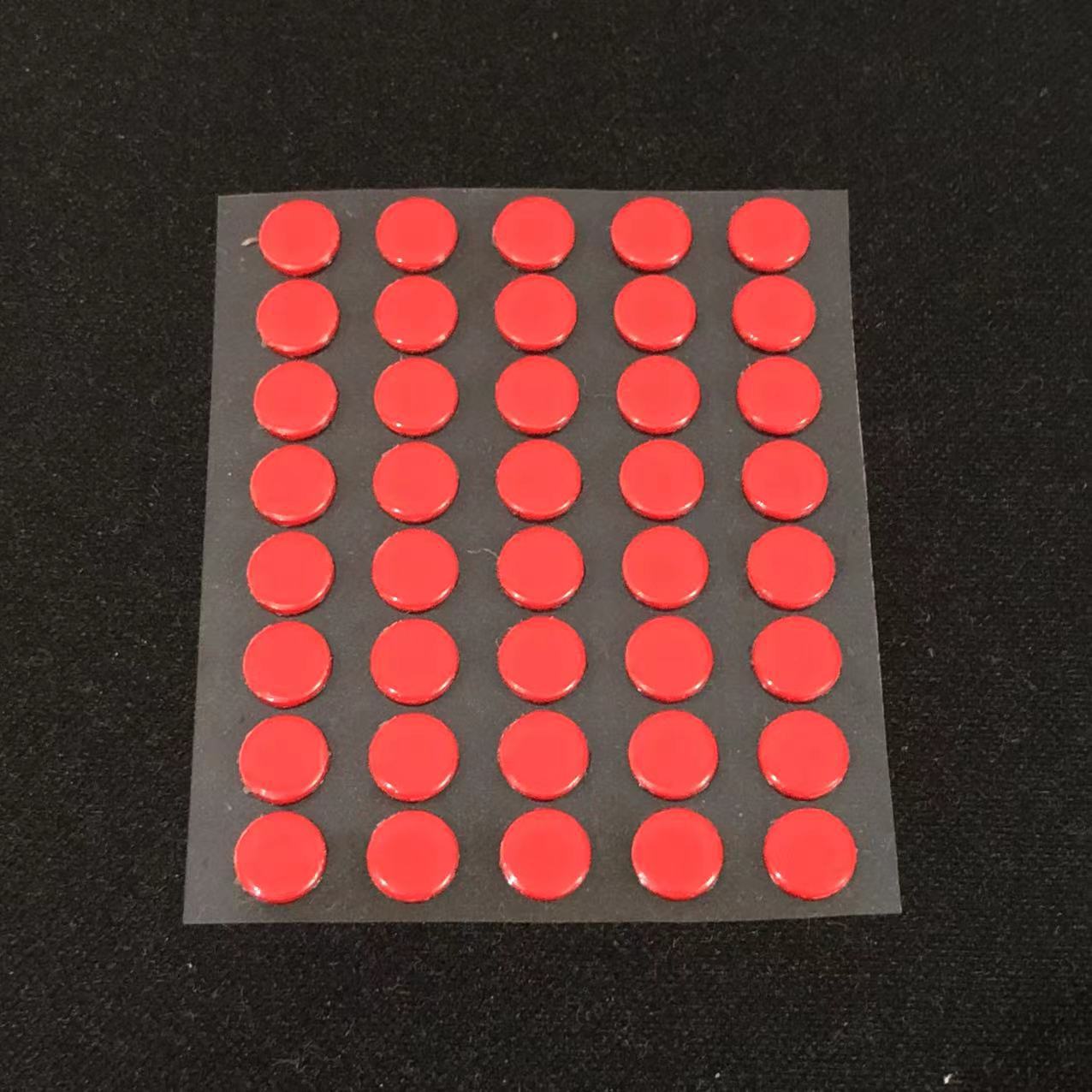
Factory Price Round Red Mouse Sticker Pads Universal Glass Mouse Skates with Small Dot PTFE Non-slip Mouse Feet
Round red mouse sticker pads with small-dot PTFE geometry, designed for universal glass mouse skates. Custom color, die-cutting and adhesive performance can be aligned with gaming-brand packaging.
A Production Profile Built for Serial Supply, Not Sample-Only Trading
Buyers searching for CE certified precision glass factories are not simply comparing unit prices. They are evaluating whether a supplier can keep a drawing stable, keep a coating repeatable, keep inspection evidence traceable and keep delivery predictable after the first approved sample.
Verified exporter on Alibaba.com for 6 years · 4.9/5 store rating · 98.18% reply rate · Trade Assurance supported · On-site Verified Assessment, Factory Video and Trade History available for review.
CE Certified Precision Glass Factories & Factory: What the Label Should Really Prove
In the European Union, CE marking is a manufacturer’s declaration that a product meets applicable harmonised legislation. For a precision glass component, the finished appliance, display, lock, elevator controller or medical device usually carries the CE mark; the glass factory’s role is to supply evidence that survives a technical-file audit. The useful question is therefore not “do you have a certificate?” but “can you prove material origin, coating chemistry, tempering records, RoHS/REACH declarations and change notifications for the exact lot you shipped?”
Traceable conformity file
A credible factory can map each drawing to the relevant substrate, coating and printing process, then provide a Declaration of Conformity support package, RoHS/REACH statements, inspection records and a change-control route. The evidence must name the actual production site, not a trading office.
Optical evidence, not optical promises
AR reflectance, transmission, haze, contact angle, sheet resistance and adhesion should be measured against a stated method. For CE-ready programs, the buyer needs a performance window that can be repeated — not a single “best sample” photographed under ideal light.
Change control before shipment
Most compliance surprises occur after approval: an ink changes, a coating supplier changes, adhesive lot changes or an edge profile is “optimized.” A CE-ready factory writes notification triggers into the supply agreement and keeps golden samples, drawing revisions and lot records aligned.
Six-Point Audit Checklist for Precision Glass Suppliers
1. Declaration of Conformity scope
Confirm whether the document applies to the glass component, the finished device or a broader product family. Ask who signs it and which standards or directives are listed.
2. Material declarations
Request RoHS and REACH statements for the substrate, ink, adhesive, protective film, coating chemistry and packaging. Verify that the declared supplier names match the production route.
3. Coating and substrate data
Ask for reflectance, transmittance, haze, sheet resistance, adhesion, abrasion and salt-spray results where applicable. The report should identify the sample construction.
4. Tempering and mechanical evidence
For safety-related surfaces, collect tempering records, edge-quality criteria, impact or strength data and a clear inspection standard for chips, scratches and print defects.
5. Lot traceability
A CE technical file is easier to defend when the supplier can link raw glass, coating batch, printing run, tempering cycle and final inspection to a shipment lot.
6. Packaging and transit validation
Compliance is lost if glass arrives broken or scratched. Review honeycomb cartons, blister trays, partition packing, shock protection and drop-test evidence for export routes.
Match the Application Before You Match the Price
Precision glass is not a commodity sheet product. The right specification depends on touch method, cleaning chemistry, indoor or outdoor light, thermal exposure, adhesive compatibility, drop risk and the cosmetic standard of the finished device.
Smart appliance & bathroom panels
Specify silk-screen printed tempered glass with an AF anti-fingerprint surface and, where steam is present, anti-fog and AR options. Validate cleaning-agent resistance, printed masking alignment, touch sensitivity and edge safety before tooling release.
Optical, sensor & laboratory glass
For lab fixtures, sensors or display windows, choose ultra-thin AR glass and add ITO/FTO conductivity only when the electrical function is defined. Request reflectance, transmittance, haze, sheet resistance and cleaning durability in one test package.
Elevator, access & smart-lock panels
Use tempered or chemically strengthened glass with digitally printed keypad and indicator graphics. Verify print registration, edge quality, adhesive stability and light-blocking performance under the final backlight before approving the batch.
Gaming & precision PTFE parts
For glass pads, mouse feet and skate dots, control adhesive thickness, die-cut geometry and friction consistency. Ask for peel-adhesion and wear data, plus packaging that prevents dust contamination before assembly.
The Future of Precision Glass Purchasing: 2025–2030
Procurement teams are moving from “find a low-cost factory” to “build a resilient, auditable glass supply chain.” The most effective buyers will combine technical validation, compliance evidence and dual sourcing without doubling the qualification workload.
CE evidence becomes a data product
Digital product passports, material declarations and traceability expectations will push glass factories to maintain structured files per part number. Buyers will request machine-readable compliance data, revision histories and lot-level evidence rather than a static PDF packet.
Dual sourcing without duplicate validation
Brands want a primary factory plus a qualified backup, but duplicating every optical, mechanical and reliability test is expensive. The winning approach is a shared test protocol, golden samples, and change-control clauses that let a second site be activated with limited re-validation.
High-mix, lower-volume customization
Smart appliances, commercial displays and access-control devices increasingly require regional variants, printed logos and small batch sizes. Factories that can prototype 1–2 pieces, review drawings quickly and keep tooling flexible will win more OEM programs.
Total landed quality replaces unit price
Breakage, rework, line stoppage and warranty claims often cost more than the glass itself. Procurement will score suppliers on process capability, packaging validation, response time and documentation completeness — not simply the quoted price per square meter.
Where Glass Technology Is Moving Next
The next generation of interfaces will hide electronics behind printed glass, combine multiple optical functions on one substrate and demand stronger evidence that the surface performance survives real cleaning, touch and outdoor exposure.
Coating stacks converge
AR + AG + AF combinations are replacing single-function glass. Buyers want one substrate that reduces reflection, controls glare and resists fingerprints while keeping print and touch integration stable. Process control across multiple coatings becomes a factory-selection criterion.
Thin, curved and strengthened
2.5D and 3D curved cover glass continues to grow in appliances, automotive and premium interfaces. Thickness ranges from 0.1 mm to 19 mm, and chemical strengthening is often combined with CNC edge finishing to balance impact resistance and slim appearance.
Conductive glass for harder environments
ITO remains important for capacitive touch and EMI shielding, while FTO is often preferred where higher thermal and chemical stability are required. Typical supply windows include 1–20 Ω/sq, transmittance above 85% and haze below 2%, but the exact target must follow the device design.
Decorative and functional merge
Silk-screen printed cover glass is no longer just a decorative bezel. It can hide inactive display areas, define touch icons, provide insulation and carry brand color. The factory must control ink thickness, pinholes, color shift and print alignment at volume.
Why Buyers Choose KELO as Their Precision Glass Factory
Huizhou KELO Glass Co., Ltd. is a factory-direct manufacturer located in Huizhou, Guangdong, inside the Greater Bay Area electronics supply chain. We produce touch screen cover glass, display cover glass, optical coated glass and custom printed glass panels, with surface engineering as a core technology. The company focuses on the processes that determine whether a sample can become a stable mass-production part: coating, tempering, printing, curved forming, bonding and final visual inspection.
For a buyer, the advantage is not simply a price list. It is one accountable factory that can review a drawing, recommend a glass and coating stack, build 1–2 prototype pieces, validate the finish, scale the batch and prepare export packing with an inspectable quality trail.
- Verified manufacturer with 6 years of exporter status on Alibaba.com
- 4.9/5 store rating, 98.18% reply rate and Trade Assurance support
- Engineering drawing review, DFM feedback and rapid sampling from 1–2 pcs
- In-house cutting, CNC, polishing, printing, tempering, coating and 3M bonding

Vertical integration
Cutting, water-jet cutting, CNC machining, drilling, edge polishing, laser engraving, silk-screen printing, sandblasting, tempering, coating, 2.5D/3D forming and 3M adhesive bonding can be coordinated in one production system, reducing handling damage and supplier hand-offs.
Surface engineering expertise
AR anti-reflective glass, AG anti-glare glass, AF anti-fingerprint glass and ITO/FTO conductive glass are engineered as functional surfaces. Coating performance is measured against the drawing, and combined stacks can be developed where one surface must solve several optical or touch problems.
Engineer-led DFM
Send a drawing, sample or target specification. The team reviews tolerance stack-up, edge quality, coating feasibility, print layout, curved forming and packing risk before quoting, so cost drivers are visible early rather than discovered during mass production.
Quality gates at three stages
Incoming inspection checks thickness, flatness and material condition. In-process control verifies CNC dimensions, tempering, coating adhesion and abrasion. Final inspection applies 100% appearance checking before protective packing and shipment.
Export-ready communication
Typical trade terms include FOB, CFR, CIF, EXW and DDP. Payment can be arranged by T/T, L/C, PayPal or Western Union, with Trade Assurance available for orders placed through Alibaba.com. Export markets include Eastern Europe, Northern Europe, North America, Southern Europe, Western Europe and South America.
Responsive inquiry handling
Most inquiries receive a response within one hour. Include the drawing, annual volume, target coating performance, destination market and required documentation in the first message, and the engineering team can return a more precise feasibility and quotation path.
One Factory, Ten Critical Process Controls
CE-ready supply is built in the process, not inspected in at the end. Keeping these stages close together shortens handling, reduces breakage risk and makes it easier to trace a finished part back to the exact production route.
Three Inspection Gates Before Anything Ships
Incoming Inspection — IQC
Raw glass and consumables are verified before they enter production. This protects the line from incoming thickness variation, surface defects and unapproved material substitutions.
- Thickness, flatness and dimensional screening
- Surface defect and edge-condition review
- Ink, coating and adhesive material verification
In-Process Control — IPQC
Critical dimensions and coating results are checked at each station. This is where print registration, coating uniformity, edge quality and curved forming are kept within the approved window.
- CNC dimensions and hole position
- Tempering and strength verification
- Coating adhesion and abrasion checks
Final Inspection — FQC / OQC
Every finished piece is checked before protective packing. The final gate protects the customer from cosmetic escapes and verifies that the shipment matches the approved golden sample.
- 100% appearance inspection
- Salt-spray and reliability review where required
- Honeycomb cartons, blister trays and partition packing
How a Custom Glass Program Moves from Drawing to Delivery
A transparent, engineer-led path reduces the risk that a beautiful prototype cannot be mass produced. The workflow below is designed to expose cost, tolerance and documentation issues before the production order begins.
1. Share the requirement
Provide a drawing, sample or target specification and the expected annual volume. Include the destination market and any CE technical-file requirements so the documentation path is aligned from the start.
2. Engineering review
The team reviews size, shape, holes, edge finish, glass material, coating stack, print layout, adhesive, curved forming and packing. DFM feedback highlights tolerance and cost drivers before tooling commitment.
3. Rapid prototype
Samples can start from 1–2 pieces for fit, optics and surface validation. Use the prototype to confirm color, gloss, touch sensitivity, print masking and cleaning resistance.
4. Validation and approval
Approve the golden sample, inspection standard and packaging method. For regulated programs, confirm the material declarations, test reports and change-notification process that will support the technical file.
5. Mass production
Bulk lead time is typically 21–31 days after sample approval, depending on size, coating complexity, curved forming and printing. In-process checks continue throughout the run.
6. Packing and shipment
Export packing uses honeycomb cartons, blister trays and partition separation to reduce transit damage. Trade terms can be aligned to FOB, CFR, CIF, EXW or DDP requirements.
Customization
Glass thickness from 0.1 mm to 19 mm, custom size, shape, holes, color, logo printing, 2.5D/3D curved forming and 3M adhesive bonding.
Trade terms
FOB, CFR, CIF, EXW and DDP can be discussed according to the destination, shipment size and buyer’s logistics preference.
Payment
T/T, L/C, PayPal and Western Union are supported. Orders placed through Alibaba.com can be protected by Trade Assurance.
Order protection
Verifiable store rating, transaction level, trade capacity, credit profile and trade history are available for buyer due diligence before the first order.
Export Experience That De-Risks the First Container
International buyers need more than a production photo. They need a supplier that understands documentation, packaging, incoterms and the communication rhythm of an overseas project. KELO serves Europe, North America and South America, with current market distribution reflecting a diversified export base.
Applications That Test a Factory’s Real Range
Consumer electronics
Touchscreen cover glass, display cover glass, camera lens covers and decorative glass panels where optical clarity and print detail drive perceived quality.
Automotive displays
Center consoles, dashboard displays and in-vehicle touch panels that need AG readability, AR clarity, AF cleaning performance and curved forming.
Industrial HMI & medical
Rugged operator panels, equipment windows and instrument glass in borosilicate, quartz or sapphire when chemical resistance or optical transmission matters.
Solar, home & gaming
FTO substrates for thin-film solar, tempered appliance lenses, bathroom control panels, elevator glass, glass mouse pads and PTFE skate feet.
CE Certified Precision Glass Factories & Factory — Questions Procurement Teams Ask
These answers are written for sourcing managers, hardware engineers and compliance teams comparing glass factories for a new device program.
Does a precision glass factory need CE certification for the glass itself?
How can I verify a “CE certified precision glass factory” before sending a deposit?
What is the minimum order quantity for custom cover glass?
What is the typical lead time for mass production?
What optical performance can the AR anti-reflective coating achieve?
Should I choose ITO or FTO conductive glass?
What thickness, sizes and shapes can you produce?
Which trade terms and payment methods are accepted?
How is quality controlled before shipment?
Can you support buyers who need EU due-diligence documentation and export packing?
Turn Your Next Glass Program into a CE-Ready Supply Chain
Send your drawing, target optical or conductive performance, annual volume, destination market and required documentation list. Our engineering team will review feasibility, recommend the most suitable glass and coating stack, outline the sample route and identify the evidence needed for your technical file. For buyers comparing CE Certified Precision Glass Factories & Factory options, the most useful first step is a drawing-based conversation rather than a generic price request.