Eight Engineered Glass References for Range Hood & Appliance Buyers
These production references show the glass formats, coatings and customisation options that wholesale buyers and appliance OEMs evaluate most often. For a range hood programme, send the drawing and target performance; our engineering team will translate it into a glass specification with thickness, edge treatment, printed graphics, coating stack and packaging requirements.
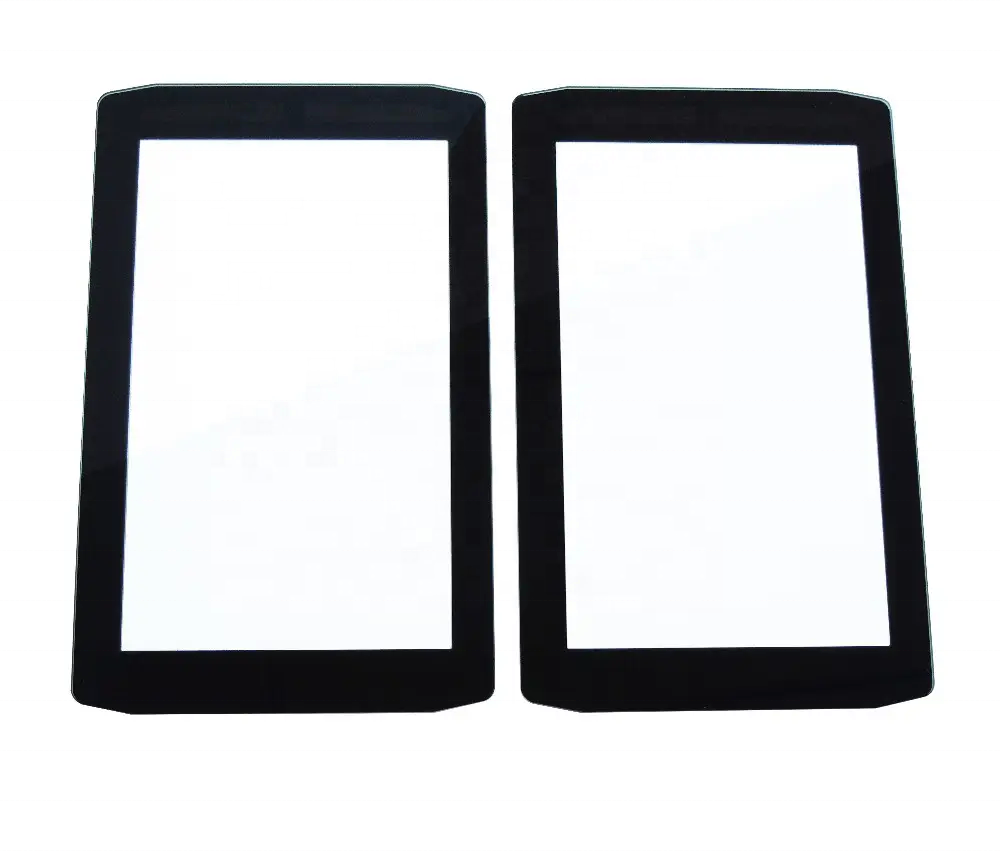
AG Tempered Glass Touch Panel for Bright Kitchen Interfaces
Anti-glare solid tempered glass for outdoor or high-brightness control surfaces. Supports custom size, printed icons, edge polishing and touch panel assembly for range hood control fascias.
View product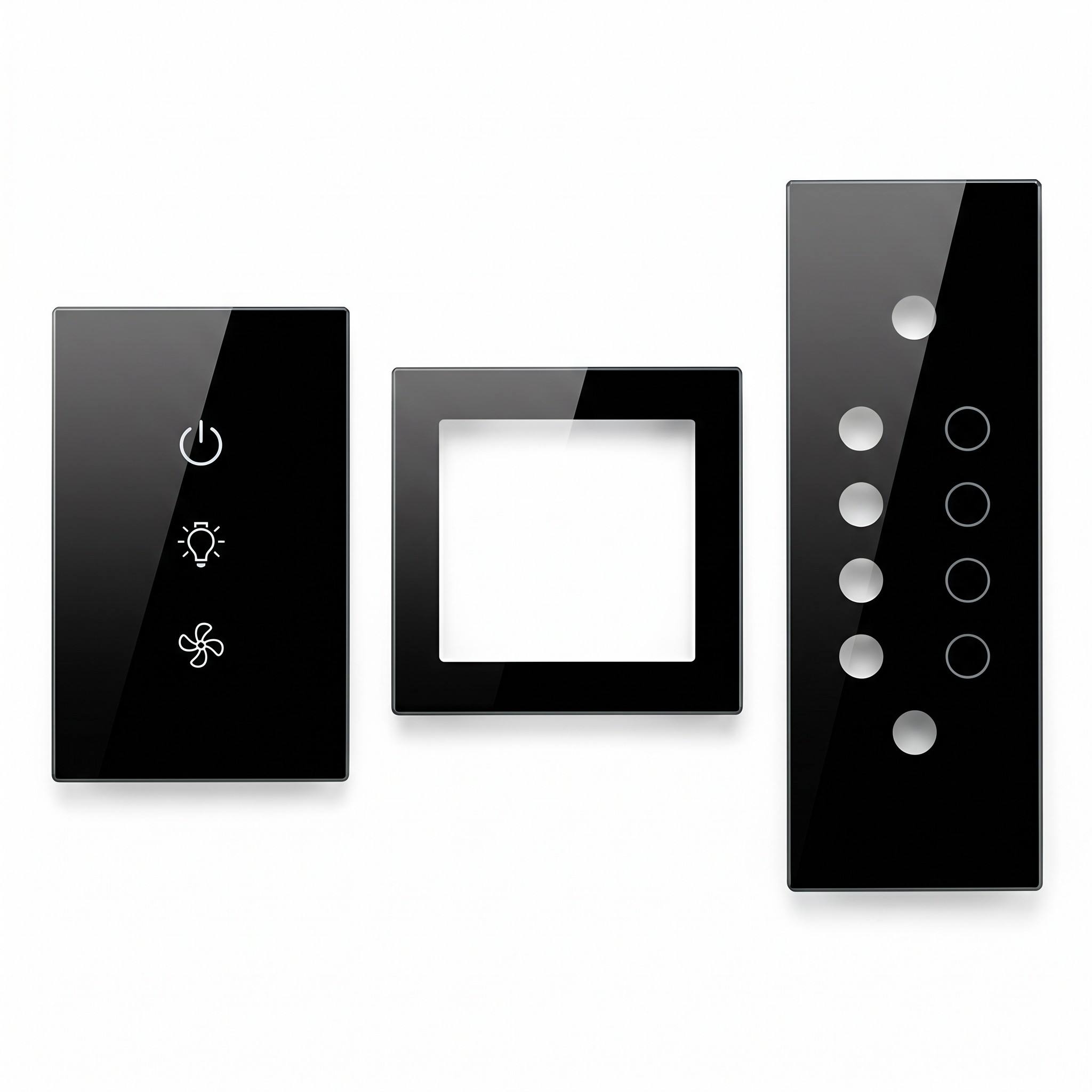
Custom Tempered Glass Front Shield for Smart Appliance Displays
Konshen KS GB002 reference: a custom-size protective cover panel for electronic displays. Adapted for range hood fascia windows with impact resistance, print alignment and flatness control.
View product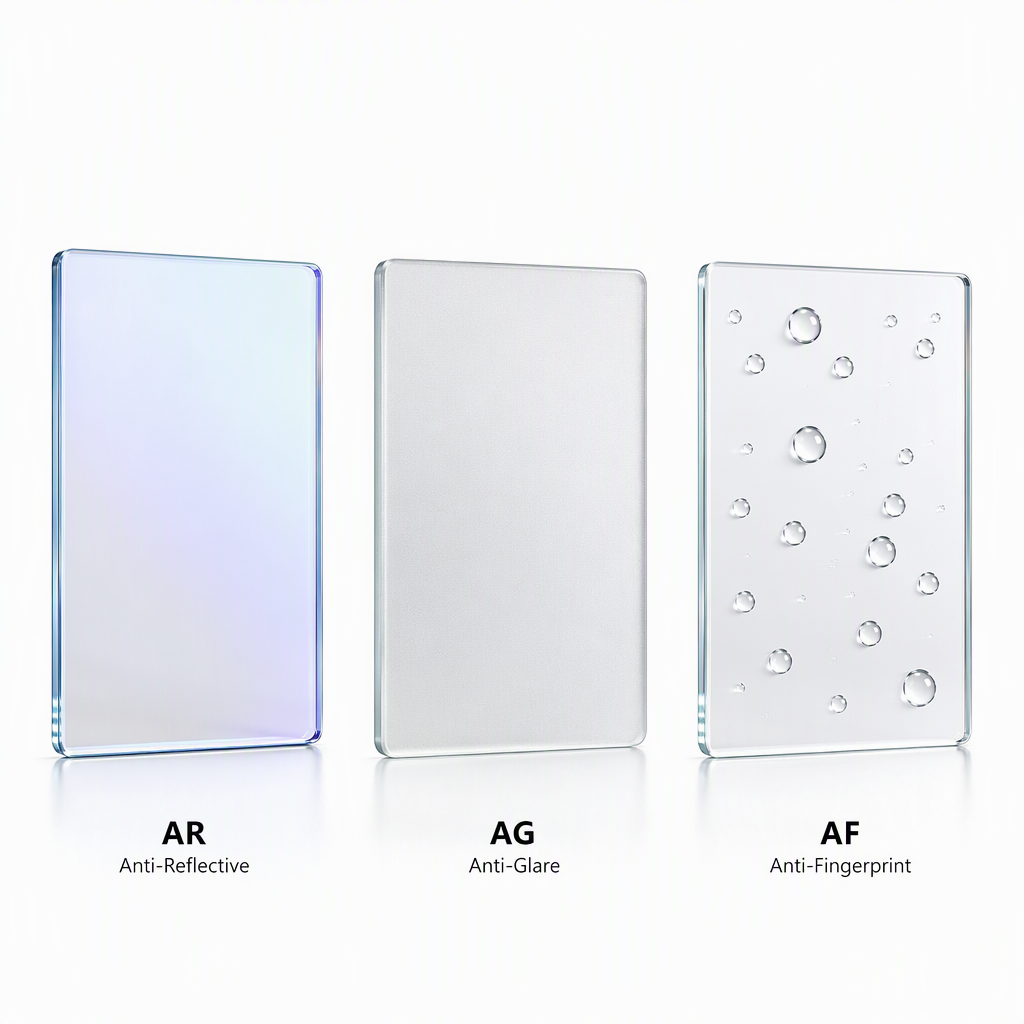
AR / AG / AF Coated Glass OEM Service — 92% Transmission
Combined optical and easy-clean coatings on one substrate. Specify transmission, haze, gloss and contact angle to match kitchen appliance display and high-touch control requirements.
View product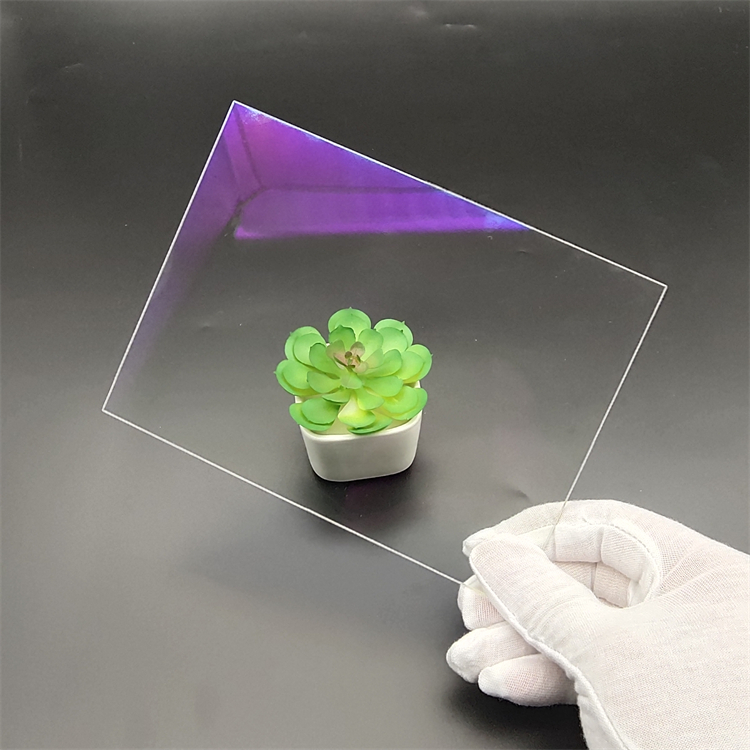
2mm Ultra-Clear Double-Side AR-Coated Tempered Glass
Thin, high-clarity tempered glass with anti-reflective coating on both faces. Suitable for premium display windows, decorative lighting apertures and flush range hood designs.
View product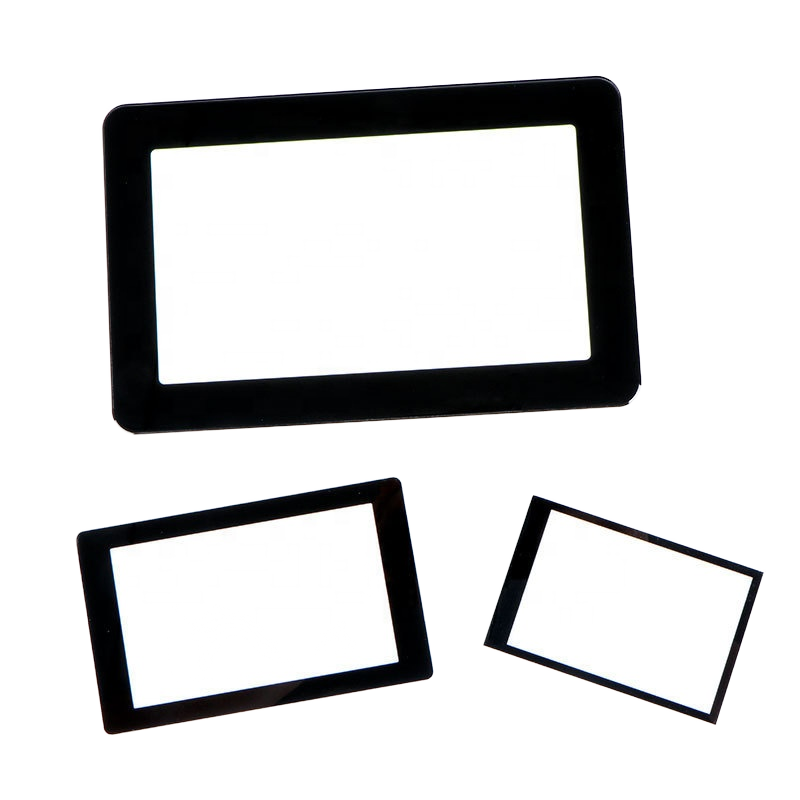
Waterproof Tempered Glass Touch Panel with Switching Control
0.2–5 mm soda-lime or extra-clear tempered glass designed for wet and outdoor interfaces. Can be reviewed for kitchen zones that need splash resistance, cleanability and reliable touch response.
View product
PTFE 3M Wear-Resistant Glide Pads & Stickers
Round and oval low-friction pads for appliance assemblies, sliding dampers and precision movement points. A complementary component for range hood mechanisms and touch-slide hardware.
View product
98% Transmittance AR Glass for Display Windows
High-transmittance anti-reflective glass from 1–19 mm for showcase and optical windows. Ideal where a range hood design uses a display window, light aperture or decorative viewing panel.
View product
KS AG002 Custom AG-Coated Tempered Glass Panel
Custom-size anti-glare tempered cover glass for electronic displays. Controlled haze and gloss protect readability under kitchen and ambient lighting while preserving a premium black-glass finish.
View productCE-Ready Range Hood Glass: What Procurement Teams Should Verify Before They Buy
CE marking applies to the finished range hood, not to a bare glass component. For suppliers and wholesalers, the real value is providing CE-supporting documentation: material declarations, coating performance records, dimensional reports, packaging specifications and traceability that help your appliance customer complete the technical file. This distinction matters because buyers are not simply purchasing a sheet of glass; they are purchasing evidence that the component will behave predictably in a kitchen environment and support EN/IEC 60335-2-31 appliance safety work.
CE scope, not just a logo
Ask suppliers how they support the appliance technical file. Glass thickness, coating durability, RoHS declarations and inspection records should be traceable to the production batch.
Kitchen environment is the test
Heat, steam, grease, cleaning agents and repeated wiping affect coatings and printed ink. Specify adhesion, abrasion and chemical resistance tests rather than relying on visual appearance alone.
Optics change perceived quality
On black glass, reflections hide icons and reduce display contrast. AR coating improves clarity, AG coating diffuses glare, and AF coating keeps the fascia cleaner for longer.
Traceability reduces audit risk
Batch-level records for glass raw material, coating lot, print setup and final inspection make wholesale supply easier to audit and simplify corrective action if a defect appears.
| Range hood location | Typical glass substrate | Suggested finish | Procurement focus |
|---|---|---|---|
| Touch control fascia | Tempered or chemically strengthened low-iron glass, 3–6 mm | Black matrix printing, AF, optional AR/AG | Icon registration, touch sensitivity compatibility, cleanability and finger oil resistance |
| Canopy front panel | Tempered low-iron glass, 4–8 mm | AR or AG, anti-fingerprint, ceramic ink | Color consistency, edge quality, impact resistance and reflection control under kitchen lighting |
| Display window | Ultra-clear or chemically strengthened glass, 1–4 mm | Double-side AR, AG, AF | Transmittance, haze, optical distortion and coating durability |
| Lamp or sensor cover | Ultra-clear, borosilicate or tempered glass, 1–3 mm | AR, selective printing, ITO if touch is required | Thermal stability, light transmission and compatibility with sensor wavelengths |
| Decorative trim and logo | Silk-screen printed glass, 2–5 mm | Gloss, matte, frosted or gradient ink | Color matching, ink adhesion, edge polishing and batch-to-batch consistency |
| Flush premium design | Chemically strengthened 2.5D or 3D curved glass | AF, AG, printed icons, anti-glare lamination | Curve tolerance, strength after forming, fit with housing and assembly handling |
Final specifications should be confirmed against the appliance drawing, target market requirements and end-customer cleaning instructions.
Product Development Trends Reshaping Range Hood Glass
Range hood design is moving toward flush black fascias, integrated touch controls, brighter displays and easier cleaning. The glass component is no longer a simple protective panel; it is part of the user experience and the appliance’s perceived quality.
Multifunctional AR + AG + AF coatings
Buyers increasingly ask for one glass surface that controls reflection, diffuses glare and resists fingerprints. Combined coating stacks reduce the need for multiple parts and support premium appliance positioning.
Flush black-glass aesthetics
Black printed glass and hidden-until-lit icons create a clean fascia. The challenge is balancing ink opacity, touch sensitivity and optical clarity when the display sits directly behind the glass.
Thin chemically strengthened glass
Thinner glass supports lighter assemblies and tighter industrial design. Chemically strengthened substrates can offer high strength with improved optical flatness and design flexibility.
Integrated touch and hidden sensors
Range hood glass is increasingly paired with capacitive touch sensors, light guides and display modules. Design collaboration between glass, electronics and housing teams reduces tolerance stack-up and assembly rework.
Curved and 3D cover glass
Curved glass creates a seamless appliance front and can follow contemporary canopy geometry. Suppliers must control curvature tolerance, optical distortion and strength after hot forming.
Sustainability and low-iron clarity
Low-iron glass improves color neutrality, while recyclability and energy use in processing are becoming procurement topics. Suppliers that can document material and process improvements gain an advantage.
Future Procurement Trends for Range Hood Glass Wholesalers
Wholesale buyers are changing how they evaluate suppliers. Price remains important, but documentation quality, delivery reliability and engineering response now influence supplier selection as strongly as unit cost.
Compliance-first sourcing
Procurement teams ask for RoHS and REACH declarations, material traceability, coating test reports and packaging specifications before they move from a sample to a volume order.
Dual-source and risk buffers
Wholesalers are reducing single-supplier risk by qualifying backup production capacity. A supplier with in-house coating, printing and tempering can shorten recovery time when demand changes unexpectedly.
Small-batch validation
Buyers want to validate fit, optics and print before committing to volume. Samples from 1–2 pieces and rapid engineering feedback reduce the cost of launching a new range hood model.
Documentation as a deliverable
The data package is now part of the purchase: dimensional reports, coating measurements, appearance criteria, packing instructions and batch identification are expected deliverables, not afterthoughts.
Total landed cost engineering
Breakage, rework and packaging waste often cost more than the glass itself. Custom honeycomb cartons, blister trays and partition packing can improve total landed cost more than a small unit-price reduction.
Supplier-managed inventory
Large wholesalers increasingly prefer scheduled releases and forecast-based production. Stable coating recipes and repeatable print setups make replenishment more predictable.
Why KELO Glass Fits Range Hood OEM and Wholesale Programmes
Huizhou KELO Glass Co., Ltd. is a factory-direct manufacturer of touch cover glass, display cover glass and optical coated glass. Our advantage is not only the glass itself; it is the ability to keep cutting, CNC machining, edge polishing, silk-screen printing, tempering, coating, curved forming and quality inspection under one roof. For appliance buyers, that means fewer handoffs, clearer accountability and more stable specifications from sample to mass production.
One factory, full process control
Cutting, CNC, polishing, laser engraving, silk-screen printing, sandblasting, flat and curved tempering, AR/AG/AF coating, 2.5D/3D forming and 3M adhesive bonding are coordinated in-house.
Coating science in-house
AR, AG, AF and ITO/FTO coating are not outsourced. This supports faster iteration on haze, gloss, reflectance, contact angle and sheet resistance during range hood glass development.
Three inspection gates
IQC verifies raw glass and consumables, IPQC checks dimensional and coating results during production, and FQC/OQC applies 100% appearance inspection before packing.
Engineering review and DFM
With a team of 21–30 R&D engineers, we review drawings, tolerances, coating performance, print registration, assembly fit and packaging before quoting volume production.
Verified export record
Our store profile shows a 4.9/5 rating, 98.18% reply rate, six years as a verified exporter on Alibaba.com, verified assessment, trade history and Trade Assurance-supported orders.
Low-friction wholesale terms
FOB, CFR, CIF, EXW and DDP terms are supported, with T/T, L/C, PayPal and Western Union payment options. Typical mass-production lead time is 21–31 days after sample approval.

Factory-direct production in Huizhou, Guangdong, with 10k–30k m² of floor area.

In-house cutting, CNC, polishing, printing, tempering, coating and curved forming.

100% appearance inspection plus adhesion, abrasion, tempering and salt-spray testing.
A Four-Step Procurement Playbook for Range Hood Glass
Use this sequence to shorten the path from concept to a validated wholesale order while keeping the specification and compliance file under control.
1. Define the application
Provide the drawing, glass thickness, overall size, viewing area, touch area, print colour, edge type, coating target and annual volume. State the cleaning chemicals and operating temperature the glass will see.
2. Approve the drawing and sample
Review DFM feedback on tolerances, glass strength, print registration, coating compatibility and packing. Validate a 1–2 piece sample for fit, optics, colour and touch performance before tooling or batch production.
3. Validate compliance and packaging
Confirm RoHS/REACH declarations, material traceability, coating test records and inspection criteria. Approve the packing method: honeycomb carton, blister tray, partition, protective film and shipping marks.
4. Scale with inspection
Release mass production with agreed AQL or 100% appearance inspection, in-process coating checks and final dimensional reports. Schedule repeat orders against forecasts rather than waiting for stock to run out.
Global export mix
Factory performance signals
20–25M pcs/yr
Touch cover glass production capacity, supported by in-house coating and tempering.
101–200 employees
Production, engineering and quality teams located at the Huizhou factory.
US$50–100M
Annual output value, reflecting a mature export-oriented manufacturing operation.
≤1 hour response
Typical engineering response time for drawings, samples and quotation clarifications.
Range Hood Glass Wholesale & CE FAQ
Practical answers for appliance OEMs, importers, distributors and private-label brands evaluating range hood glass suppliers and wholesalers.
Does range hood glass itself carry a CE mark?
What glass thickness is best for a range hood control panel?
Can you provide RoHS, REACH and material declarations?
Which coating should I choose for a black glass fascia?
What is the typical MOQ and lead time for range hood glass?
How do you control colour consistency and print registration?
How is range hood glass packed for wholesale export?
Can you support custom logos, icons and touch symbols?
Build a CE-Supporting Range Hood Glass Programme
Send your drawing, target coating performance, annual volume and destination market. Our engineering team will review feasibility, recommend the glass and coating stack, and prepare a quotation for samples or wholesale production. For buyers comparing suppliers, we can also include material declarations, inspection criteria and packaging proposals in the response.