Eight Glass Product Lines for Smart Scale & Electronic Glass Programs
The eight lines below show the production capabilities that matter in a smart scale glass project: thin-glass tempering, precise printed graphics, optical coating, conductive layers, edge finishing and reliable assembly. Product URLs from the original range are preserved.
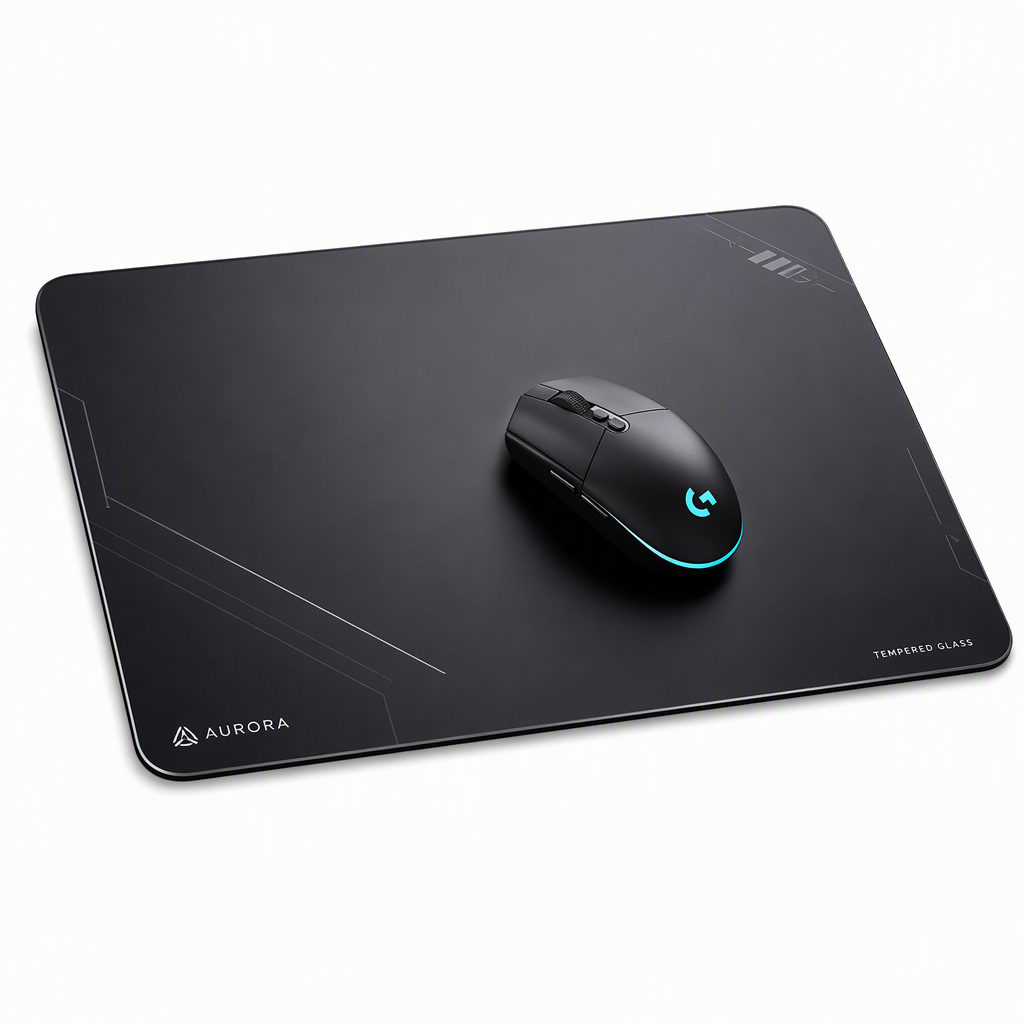
Tempered Glass Mouse Pad 2MM / 3MM with UV Printing
A hard-surface glass platform with UV printing and optional silicone base. For smart scale buyers, this line demonstrates thin-glass tempering, wear-resistant printing and clean-edge processing that translate directly into decorative scale top glass.
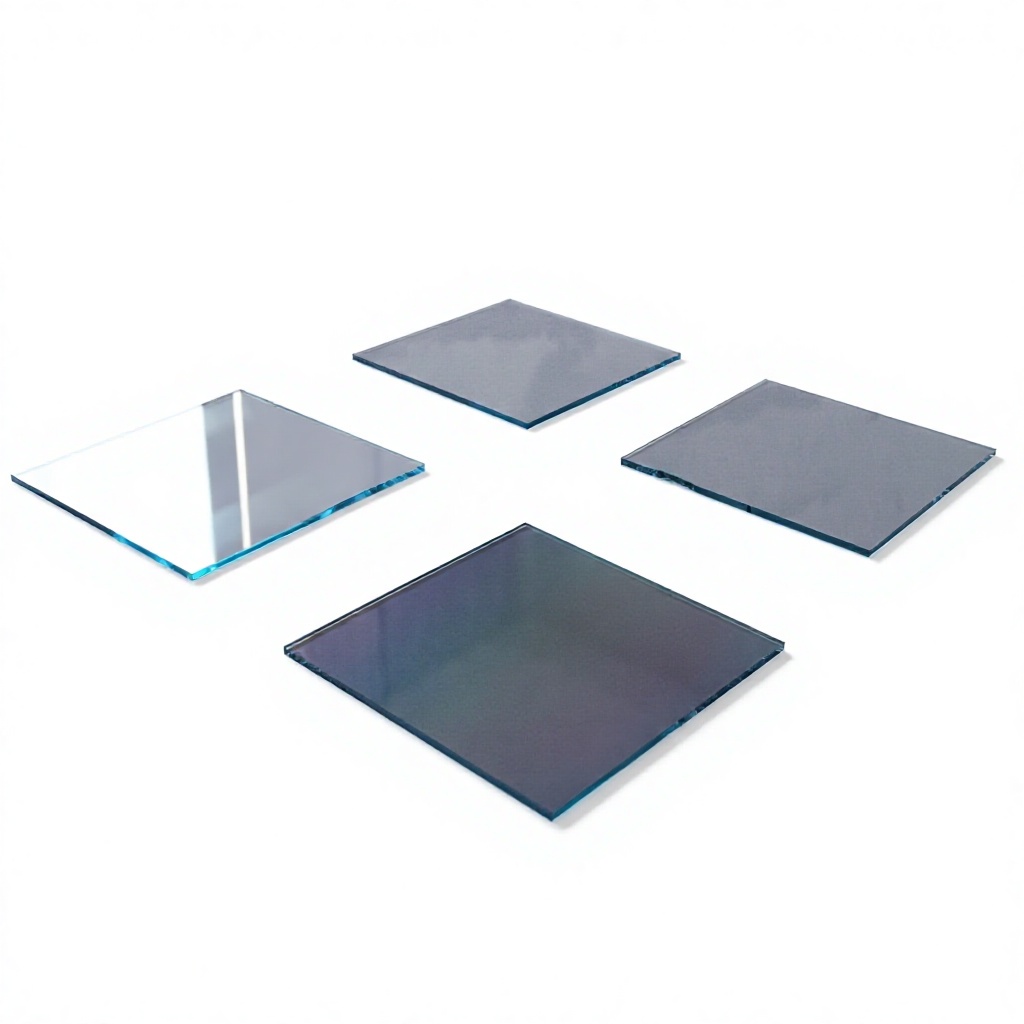
1.1mm ITO Coated Conductive Glass Panel
Optical electronic glass with ITO coating, custom shape and polished edges. Suitable for touch sensing, transparent electrodes and display-related smart scale or HMI designs where conductivity must coexist with optical clarity.

Round / Oval PTFE 3M Wear-Resistant Feet
Low-friction PTFE glides with 3M adhesive for glass and resin surfaces. Useful as an adjacent wear-part program for glass-based consumer products that need stable placement, surface protection and long-term movement durability.
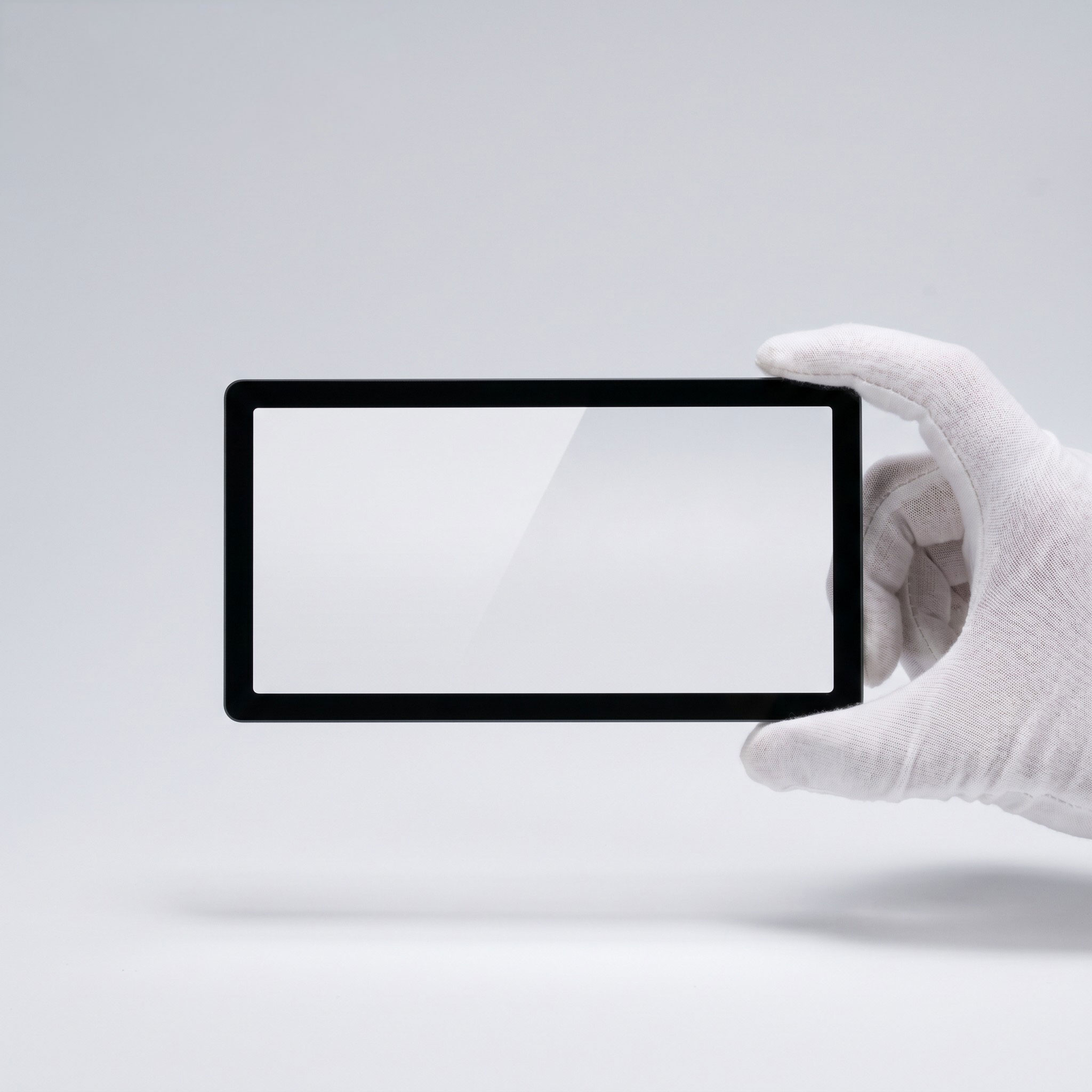
Custom Gorilla Glass Front Panel with CNC Cut & Silk Print
Gorilla glass cover sheet for displays and solar panels with CNC cutting and printed graphics. A strong reference for premium smart scale glass requiring impact resistance, precise cosmetics and reliable flatness.

98% Transmittance AR Anti-Reflective Glass
Low-reflectance AR glass for showcases and luxury frames, available from 1 mm to 19 mm. In smart scale displays, AR coating can improve legibility in bright bathrooms and reduce distracting reflections from overhead lighting.

Custom AG Anti-Glare Tempered Glass Panel
AG-coated tempered glass with high transmission for electronic displays. A controlled haze surface scatters ambient light, helping scale displays stay readable under window glare, downlights and mixed indoor lighting.
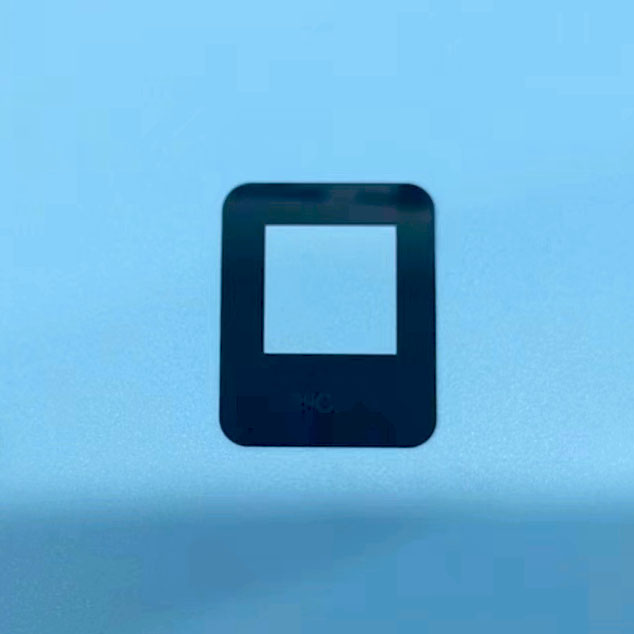
1mm Black Tempered Glass Switch Socket Panel
Flat black tempered glass wall cover with print, combining decoration with durability. Demonstrates the color, printing and flat-panel finishing used in smart home control surfaces and premium scale interfaces.

Custom Silk Screen Printed Electronic Control Panel Glass
Printed tempered glass cover for smart appliances, with custom graphics and durable ink. A direct fit for smart scale top covers that require logos, graduations, icons and easy-clean surfaces.
What “CE Certified” Should Mean When You Source Smart Scale Glass
CE marking is normally applied to the finished smart scale or electronic appliance, not to a bare glass sheet. That distinction matters. Glass thickness tolerance, flatness, edge quality, printing registration, coating adhesion, surface energy and material traceability all contribute to the evidence a buyer needs when building the technical file for a CE-marked product.
For that reason, a credible CE Certified Smart Scale Glass Manufacturer & Exporter should be evaluated on process evidence, not only on a certificate image. Can the factory control glass from 0.1 mm to 19 mm? Can it provide batch records for tempering, printing and coating? Can it validate AR, AG, AF or ITO performance with repeatable measurements? Can it pack thin glass so that cosmetic defects do not appear after a 30-day sea freight? These are the questions that separate a qualified glass partner from a price-only supplier.
Huizhou KELO Glass Co., Ltd. is built around this evidence-based approach. Our factory in Huizhou, Guangdong, combines cutting, CNC machining, edge polishing, silk-screen printing, flat and curved tempering, AR/AG/AF coating, ITO/FTO conductive coating and 3M adhesive bonding under one roof. For a smart scale project, that integration reduces handoffs between printing, tempering, coating and bonding. Every handoff is a potential source of scratches, contamination or tolerance drift.
The result is a practical middle path for OEM and ODM buyers: engineering review before quotation, samples from 1–2 pieces for fit and optics, and mass production with a typical lead time of 21–31 days after sample approval. CE-related documentation support is handled project by project, because the applicable directives, test methods and declarations depend on the final product configuration.

Manufacturing Figures Buyers Can Verify
Smart scale glass is a high-cosmetics, high-handling component. Capacity, engineering depth and response speed matter as much as the glass specification itself.
Specifications That Matter in Smart Scale Glass
Use these production windows during RFQ review. Final targets should always be confirmed against your drawing, product standard and compliance file.
Thickness and Glass Choice
0.1–19 mm capability. For smart bathroom scales, 4–6 mm tempered or chemically strengthened glass is common, but final thickness depends on load, span, edge condition, display window and adhesive design. Gorilla, borosilicate, quartz, sapphire and ceramic glass can be processed for specialty requirements.
Tempering and Edge Quality
Flat and curved tempering, CNC machining, drilling and edge polishing are controlled in-house. Edge quality is critical because micro-chips and poor polish become cosmetic defects and may reduce strength. 2.5D and 3D forming support edge-to-edge industrial design.
Silk-Screen Graphics and Registration
Logos, measurement marks, icons, black borders, gradients and functional windows can be printed on glass. Printing registration, ink thickness, color consistency and adhesion must be validated before tempering and coating, especially for scale top covers where every graphic is visible.
AR / AG / AF Coatings
AR can reach reflectance below 1.0% per side and transmittance above 99% in the 400–700 nm range. AG offers controllable haze from 5–60% and gloss from 0.5–8 GU. AF provides water contact angle above 110° and durability beyond 10,000 cycles. Combined stacks are available.
ITO and FTO Conductive Glass
ITO glass is commonly used for capacitive touch sensors, displays and EMI shielding. FTO offers better thermal and chemical stability for thin-film solar and high-temperature processes. Both can be supplied with sheet resistance of 1–20 Ω/sq, transmittance above 85% and haze below 2%.
3M Adhesive Bonding and Packing
Die-cut 3M adhesive, bubble-free lamination and protective packing reduce assembly risk. Custom honeycomb cartons, blister trays and partition packing help protect printed and coated glass during export. Incoterms include FOB, CFR, CIF, EXW and DDP.
KELO Glass: Factory-Direct, Engineering-Led and Export-Ready
For buyers comparing CE Certified Smart Scale Glass Manufacturer & Exporter candidates, the value of a supplier is measured in fewer handoffs, faster problem solving and documented quality.
One Factory, Fewer Handoffs
Cutting, CNC machining, edge polishing, printing, tempering, coating and bonding run under one roof. That vertical integration helps protect cosmetics and tolerances when a smart scale cover requires multiple process steps.
Surface Engineering In-House
AR, AG, AF, ITO and FTO capabilities are not subcontracted. Coatings can be reviewed together with printing, tempering and assembly, which reduces the risk of incompatible process choices and unclear responsibility.
Engineering-Led Customization
Drawings are reviewed for DFM before quotation. Samples can start from 1–2 pieces. Custom size, shape, holes, color, logo, 2.5D/3D forming and 3M adhesive bonding are supported for OEM and ODM programs.
Verified Export Record
Six years as a verified exporter on Alibaba.com, a 4.9/5 store rating, 98.18% reply rate and Trade Assurance support give international buyers a documented starting point for supplier review.
Quality Gates Before Shipment
IQC, IPQC and FQC/OQC checks cover incoming glass, in-process dimensions and coating results, and 100% appearance inspection. Adhesion, abrasion, tempering and salt-spray tests support release decisions.
Capacity and Stable Lead Times
A 10k–30k m² factory, 101–200 employees, 21–30 R&D engineers and US$50–100M annual output support scale. Typical mass production runs 21–31 days after sample approval, depending on coating and printing complexity.
How Smart Scale Glass Buying Is Likely to Change
Procurement teams are moving from “find the lowest piece price” to “secure a supplier that can prove consistency, compliance and recovery capability.”
Compliance-First Supplier Selection
Buyers will ask for material declarations, coating data and process records before they ask for a discount. A glass supplier that can support the finished product technical file becomes more valuable than one that only quotes a price per piece.
Traceability and Batch Consistency
Print color, coating performance and edge cosmetics must remain stable across production lots. Lot traceability, retained samples and measured release criteria will be expected for smart scale glass used in branded consumer products.
Low-Volume Customization
Brands increasingly test niche designs before scaling. Suppliers that support 1–2 piece samples, rapid drawing review and flexible customization for size, print and coating will win more early-stage development work.
Total Landed Cost and Packaging Risk
Smart scale glass is vulnerable to edge chipping and surface scratches. Buyers will compare bubble-free packing, honeycomb cartons, partition trays and Incoterms alongside unit price to estimate real landed cost and damage risk.
What the Next Generation of Smart Scale Glass Will Demand
Design and engineering trends are converging on thinner formats, cleaner surfaces, integrated optics and stronger compliance evidence.
Edge-to-Edge Printed Glass
Black borders, hidden conductive traces and integrated display windows are becoming more common. Printing must align with CNC edges and assembly tolerances while maintaining a premium, seamless surface.
AR, AG and AF by Segment
Bathroom lighting and indoor glare make AG and AR valuable. Fingerprint resistance matters for touch controls and glass surfaces. Multi-functional coating stacks will become a normal specification rather than a premium option.
Conductive and Sensor-Integrated Glass
Smart scales may integrate touch keys, transparent electrodes or sensing layers. ITO-coated glass and precise printing can reduce the number of separate components while keeping the surface easy to clean and visually quiet.
Thinner, Stronger and Better Packed
Chemically strengthened glass, 2.5D curved edges and thinner substrates can reduce material use while preserving durability. Sustainable packaging and damage-proof carton design will be evaluated alongside the glass itself.
From Drawing to Packed Carton: Six Controlled Gates
A repeatable smart scale glass program depends on process discipline. Each gate below is designed to catch issues before they become shipment claims.
Drawing and DFM Review
We review dimensions, glass type, thickness, edge condition, holes, printing, coating, adhesive and packing before quoting. Engineering feedback reduces avoidable changes later.
Cutting, CNC and Edge Polishing
Raw glass is cut, machined and polished to drawing. Edge quality, hole position and flatness are checked before printing and tempering.
Printing and Tempering
Silk-screen graphics, functional windows and logos are printed with defined registration. Tempering and curved forming are controlled according to the product design.
Coating and Conductive Layers
AR, AG, AF, ITO or FTO layers are applied and inspected against the approved sample. Optical and electrical targets are measured against the agreed specification.
Final Inspection and Reliability Checks
100% appearance inspection is combined with adhesion, abrasion, tempering and salt-spray tests. IQC and IPQC records support batch traceability.
Protective Packing and Export
Glass is packed with custom honeycomb cartons, blister trays and partitions. We support FOB, CFR, CIF, EXW and DDP terms with documentation for international buyers.
Frequently Asked Questions from Smart Scale Glass Buyers
Procurement teams usually ask the same technical and commercial questions before a first order. These answers are written for RFQ preparation.
QAre your smart scale glass panels CE certified?
CE marking applies to the finished product under the relevant directive. For glass components, we support the buyer’s conformity work with material traceability, process records, coating data, dimensional reports and sample validation. The final CE technical file remains the responsibility of the finished-product manufacturer.
QWhat glass thickness is best for a smart bathroom scale?
Many smart scale designs use tempered glass in the 4–6 mm range, but 3–8 mm or other formats may be appropriate depending on load, span, edge finish, display window and adhesive. We review the mechanical and cosmetic requirements before recommending a thickness.
QCan you print logos, measurement marks, icons and gradients?
Yes. Silk-screen printing can reproduce logos, tick marks, unit labels, black borders, icons and multiple colors. Critical details include registration, ink opacity, color control and durability. We recommend approving a printed sample before mass production.
QWhat is the MOQ and sample lead time?
Sample orders can start from 1–2 pieces so you can validate fit, optics and coating performance before committing to volume. Bulk quantity is quoted per drawing. Typical mass production lead time is 21–31 days after sample approval, depending on complexity.
QHow do you control printing and coating durability?
We use incoming, in-process and final inspection. Depending on the specification, checks may include adhesion, abrasion, salt spray, contact angle, haze, transmittance and 100% visual inspection. For AF coatings, contact angle above 110° and durability beyond 10,000 cycles can be targeted.
QWhat should be included in an RFQ for custom smart scale glass?
Send the drawing or sample, dimensions, glass type and thickness, edge and hole requirements, printing artwork, coating target, adhesive needs, annual volume, packing preference and any compliance documents required. This allows a faster DFM review and a more accurate quotation.
Send Your Smart Scale Glass Drawing for Engineering Review
Share your dimensions, thickness, printing artwork, coating target and estimated annual volume. Our team will review feasibility, recommend the most suitable glass and coating route, and support your sample validation and CE-related documentation planning.