What a CE Certified Tempered Glass Panel Should Mean in a Real B2B Order
CE marking is not a universal sticker that can be attached to every glass sheet. For tempered glass panels, conformity depends on the final application, the applicable harmonized standard, the declaration route, the technical file and the batch traceability behind the delivered lot. Buyers should therefore evaluate a supplier’s documentation discipline as carefully as the unit price.
Applicable standard and declaration route
For thermally toughened safety glass, projects often reference standards such as EN 12150. Other applications may require different evidence. Confirm who issues the declaration, which standard applies and whether the glass is supplied as a component or as part of the finished CE-marked product.
Technical file and batch traceability
A credible technical file links the approved drawing revision to glass type, thickness, edge work, coating stack, tempering record, tolerances, inspection results and packaging. Batch traceability helps the buyer respond quickly if a field issue appears after mass production.
Acceptance criteria, not vague “good quality”
Write measurable limits into the RFQ: transmittance, reflectance, haze, gloss, contact angle, sheet resistance, dimensional tolerance, edge quality, printing registration, adhesion, abrasion cycles and allowable visual defects. Measurable criteria protect both engineering and procurement teams.
As a CE-oriented tempered glass panel manufacturer and exporter, Huizhou KELO Glass Co., Ltd. supports buyers with drawing-based DFM, process records, dimensional reports, coating performance data and export documentation packages so that the final product manufacturer can complete the applicable conformity route with fewer unknowns.
8 Proven Products for Tempered Glass, Coating and Custom Display Programs
These eight product paths cover anti-glare display cover glass, printed smart-lock keypads, FTO conductive substrates, gaming glass accessories, custom display shields, AR/AG/AF coating services, outdoor waterproof touch panels and silk-screen printed appliance control panels. Each can be quoted from a drawing, a sample or a target performance specification.

KS AG002 Custom Size AG Coating Anti-Glare Tempered Glass Panel High Transmittance Cover Sheet for Electronic Display Screen
Anti-glare cover glass for readable electronic displays, with customizable size, haze level and tempered glass strength.
View product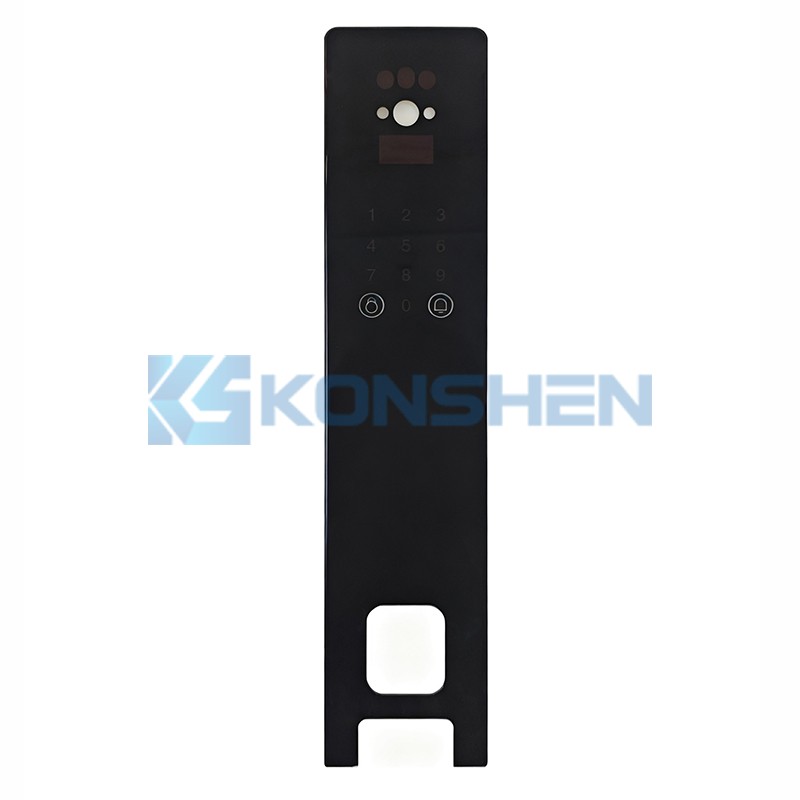
Electronic Tempered Glass Film Custom Printed Rectangular Panel Digital Keypad for Smart Door Lock
Printed glass keypad covers for smart locks and access-control interfaces, combining scratch resistance with clean graphic detail.
View product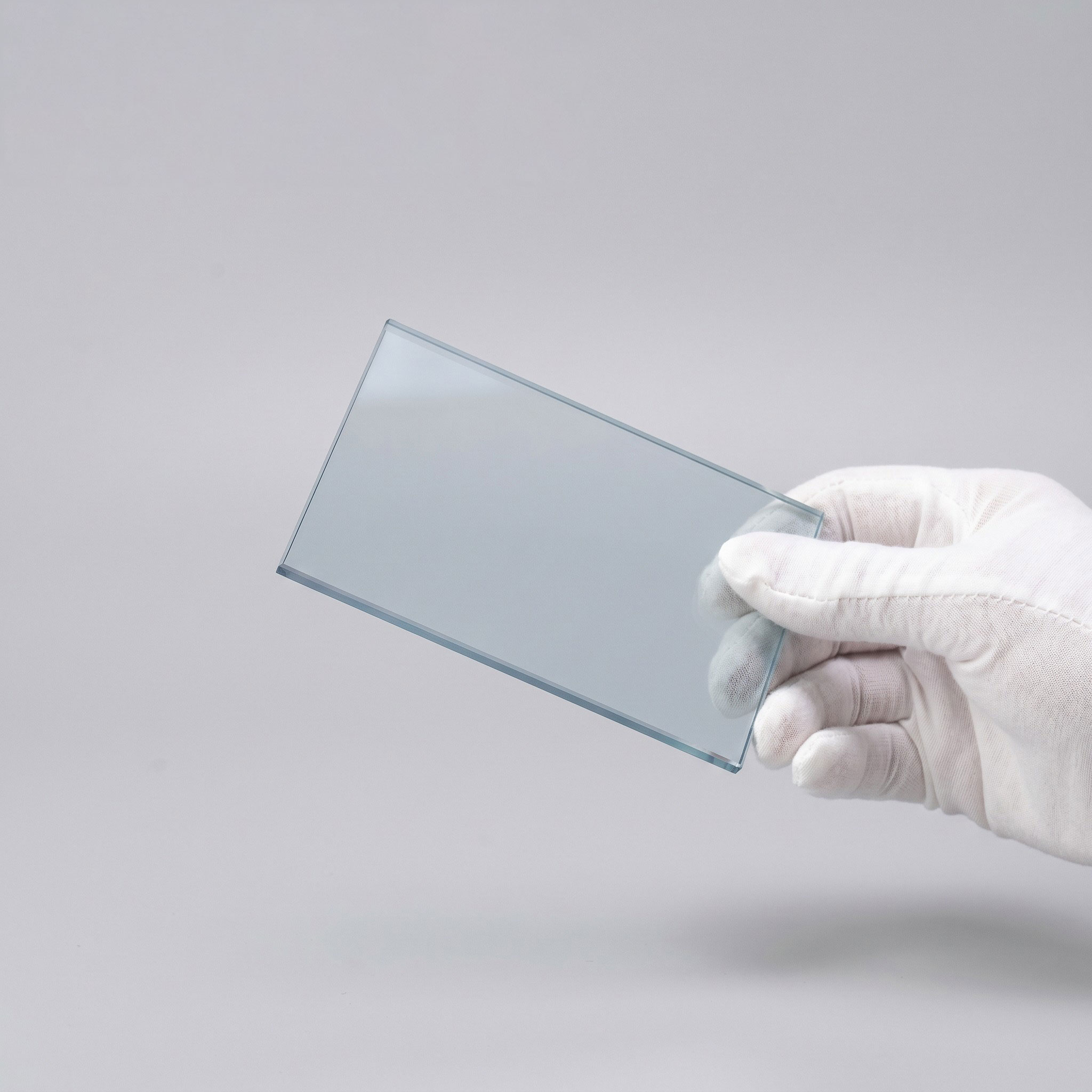
High Temperature Resistance Fluorine Doped Tin Oxide FTO Conductive Glass Solar Cell Substrate DSSC Perovskite Lab Research
FTO conductive glass for thin-film solar, DSSC, perovskite and laboratory research where thermal stability matters.
View product
PTFE Round Gaming Mouse Glides Mouse Skate Dots
Low-friction gaming mouse glides for peripheral brands and esports accessory programs, available in custom sizes and packaging.
View product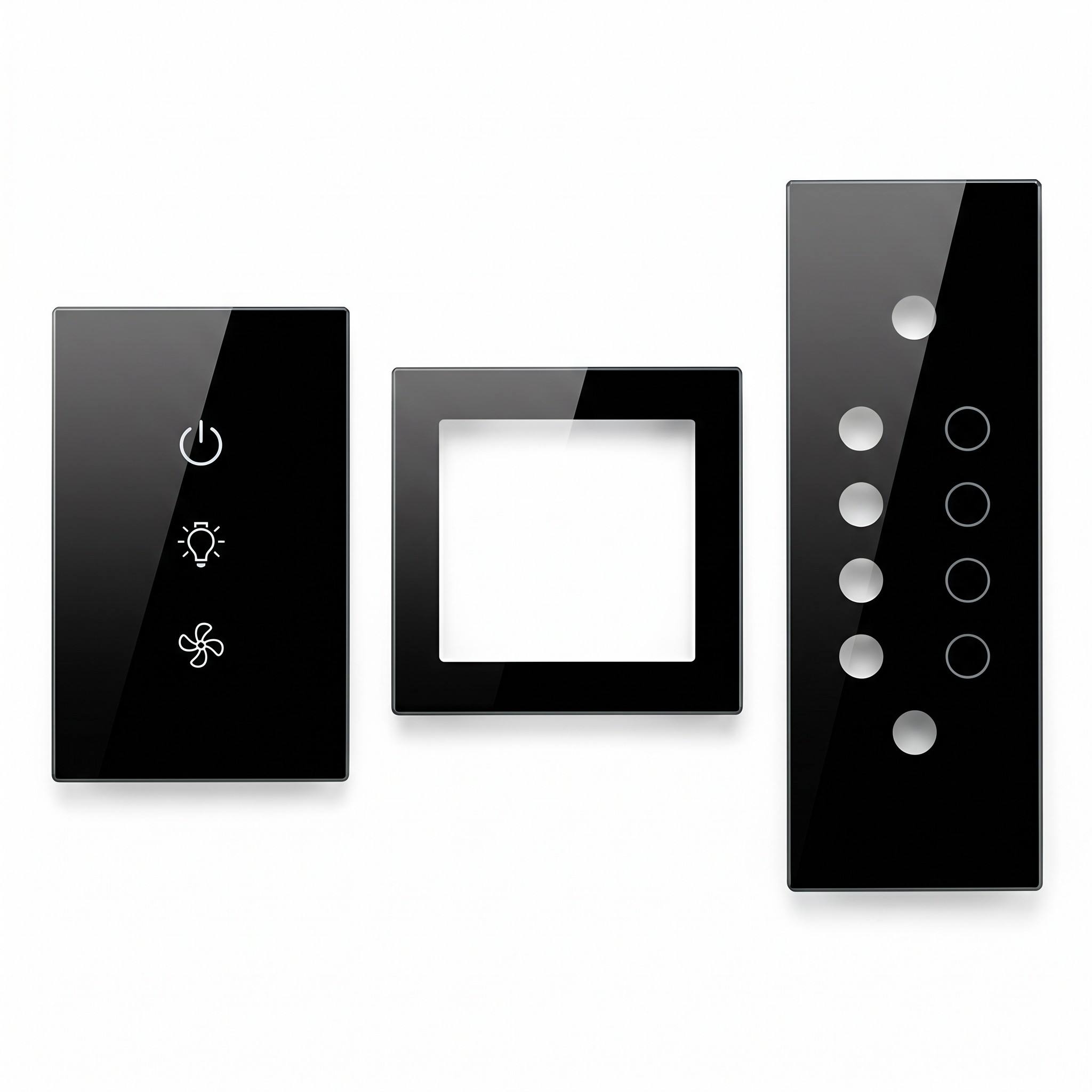
Tempered Glass Front Shield Cover Panel Custom Size Electronic Display Protection Sheet for Smart Device Konshen KS GB002
Custom front shield cover glass for smart devices, offering impact protection, optical clarity and drawing-specific fabrication.
View product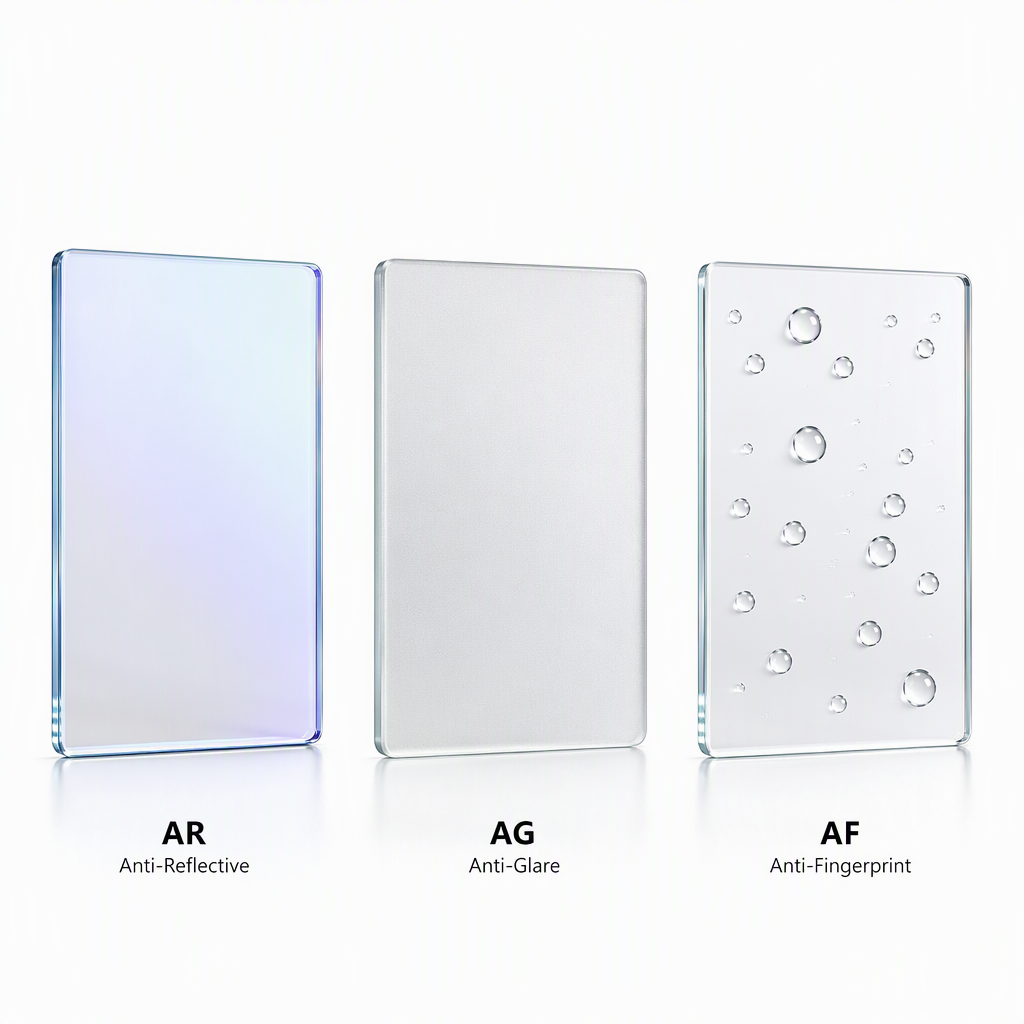
AR AG AF Coated Glass Anti Reflective Coating Service 92 Percent Transmission Anti Glare Custom Sheet Factory OEM
OEM optical coating service for anti-reflective, anti-glare and anti-fingerprint performance on custom glass sheets.
View product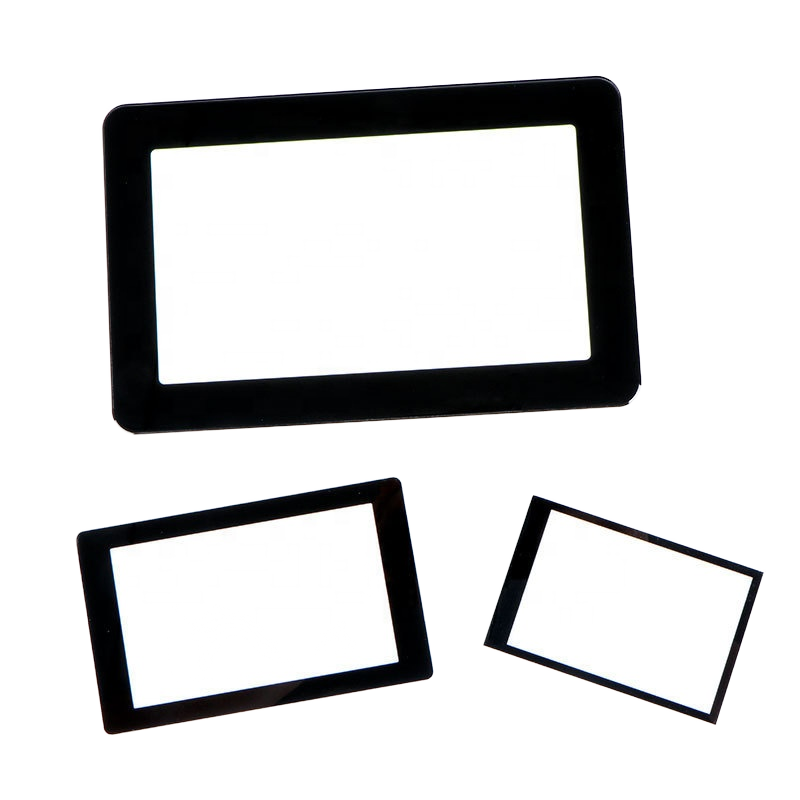
Wholesale Left Right Switching Control 0.2mm 5mm Soda Lime Extra Clear Tempered Glass Touch Screen Panel Outdoor Gym Waterproof
Extra-clear tempered touch panels for outdoor gym, kiosk and waterproof interface environments, built to drawing.
View product
Custom Silk Screen Printed Tempered Glass Electronic Control Panel Cover for Smart Appliances
Silk-screen printed tempered glass control covers for smart appliances, with custom graphics, colors and touch-friendly surfaces.
View productProcurement Trends Reshaping Tempered Glass Panel Sourcing, 2025–2030
Purchasing teams are moving from “find the lowest piece price” to “secure a predictable, documented and technically defensible supply chain.” The strongest suppliers will be those that can answer engineering, quality and compliance questions with evidence rather than sales language.
Documentation-first sourcing
RFQs increasingly request drawing revision control, applicable standards, declaration route, material records, coating data, inspection reports and packaging specifications. Suppliers that already work this way reduce back-and-forth and protect launch schedules.
Total landed cost, not unit price
Glass breakage, rework, re-inspection, expedited freight, inventory carrying cost and production-line downtime can outweigh a small unit-price gap. Buyers are modelling total landed cost per accepted panel, not per quoted piece.
Dual-region and buffer inventory
Brand owners are balancing China-based manufacturing depth with regional buffer stock for critical SKUs. Suppliers that can support controlled batch runs, stable packaging and repeatable documentation make dual sourcing easier to execute.
Traceability by batch and drawing revision
When a product serves automotive, medical, appliance or industrial channels, traceability is not optional. The ability to connect a shipment to a tempering lot, coating run, glass origin and approved drawing revision is a competitive advantage.
Consolidation of glass, coating and bonding
Buyers want fewer interfaces. A factory that can cut, CNC, print, temper, coat, curve, laminate and apply 3M adhesive under one roof reduces handling damage, split responsibility and multi-vendor coordination risk.
Performance-based acceptance criteria
Instead of vague quality claims, procurement teams are writing measurable limits for reflectance, haze, gloss, contact angle, sheet resistance, adhesion, abrasion, tempering and dimensional tolerance into the purchase specification.
Where Tempered Glass Panels Are Heading Next
Glass is becoming an active part of product performance rather than a passive protective sheet. The next generation of cover glass combines strength, optical control, touch feel, electrical function and cosmetic print in one component.
Thinner, larger and stronger glass
Larger display formats and slim industrial designs are pushing demand for thin glass with controlled flatness, reliable tempering and edge quality. Chemical strengthening is increasingly specified where impact resistance must meet compact form factors.
Composite AR + AG + AF surface stacks
Single-function coatings are no longer enough for premium products. Buyers want anti-reflection, anti-glare and anti-fingerprint performance on one surface, with clear acceptance values for transmittance, haze, gloss and durability.
2.5D and 3D curved cover glass
Automotive dashboards, smart home controllers and wearable-adjacent devices continue to move toward curved edges and seamless integration. 2.5D and 3D forming must be paired with stable printing, coating and bonding processes.
ITO and FTO as functional substrates
Transparent conductive glass supports capacitive touch sensing, EMI shielding, thin-film solar, DSSC, perovskite research and high-temperature processes. FTO is often selected where thermal and chemical stability are more critical.
Printed glass for smart appliances
Silk-screen printed glass control panels are replacing plastic in appliances and smart home devices. They deliver premium appearance, backlit graphics, easy cleaning and better scratch resistance when designed with the right ink system.
Gaming glass and tactile surface engineering
Glass mouse pads, skate feet and glide-optimized surfaces show how glass can shape user experience. These products depend on surface texture, flatness, edge finishing and packaging protection as much as material selection.
Inside KELO Glass: Factory-Direct Capacity and Engineering Depth
Huizhou KELO Glass Co., Ltd. is a factory-direct manufacturer located in Huizhou, Guangdong, inside China’s Greater Bay Area electronics supply chain. We produce touch screen cover glass, display cover glass and optical coated glass, with advanced surface treatment as a core technology. Our production floor covers 10,000–30,000 m², with touch cover glass capacity of 20–25 million pieces per year, 101–200 employees, 21–30 R&D engineers and annual output value in the US$50–100 million range.
Every key process runs under one roof: cutting and water-jet cutting, CNC machining and drilling, edge polishing, laser engraving, silk-screen printing, sandblasting and frosting, flat and curved tempering, AR/AG/AF/ITO coating, 2.5D/3D curved forming and 3M adhesive bonding. For buyers, that means one accountable supplier, tighter tolerance control and fewer handling losses between production stages.
- Engineering drawing review and DFM feedback
- Rapid prototyping from 1–2 pieces
- 100% appearance inspection before packing
- Custom honeycomb cartons and partition packing
- Gorilla, borosilicate, quartz, sapphire and ceramic glass
- FOB, CFR, CIF, EXW and DDP support

Factory-direct manufacturing in Huizhou, Guangdong.

In-house processing and surface engineering.
Engineering-led DFM
21–30 R&D engineers review drawings for tolerance, coating, printing, curved forming and cost drivers before samples are made.
Vertical integration
Cutting, CNC, polishing, printing, tempering, coating, curved forming and bonding are controlled under one factory system.
Material breadth
Gorilla glass, borosilicate, quartz, sapphire, ceramic glass, lead shielding glass and laminated safety glass can be processed to drawing.
Export readiness
6 years as a verified exporter on Alibaba.com, 4.9/5 store rating, 98.18% reply rate and Trade Assurance support for qualified orders.
Specify the Right Surface Stack Before Comparing Tempered Glass Panel Quotes
Surface treatment is where two visually similar glass panels can perform very differently. Use the performance windows below as a starting point for RFQ discussions, then confirm final targets against your drawing, product environment and reliability test plan.
| Coating / Function | Key Performance Window | Typical Application |
|---|---|---|
| ARAnti-reflective | Reflectance <1.0% per side · Transmittance >99% across 400–700 nm · single-layer or multi-layer designs | Automotive touch displays, medical monitors, showcase windows and high-clarity display covers |
| AGAnti-glare | Controllable haze 5–60% · Gloss 0.5–8 GU | Outdoor kiosks, industrial HMI, gym touch panels and sunlight-readable screens |
| AFAnti-fingerprint | Water contact angle >110° · Pencil hardness >3H · Transmittance >98% · Durability >10,000 cycles | High-touch control panels, smart home glass, appliance interfaces and public terminals |
| ITOIndium tin oxide | Sheet resistance 1–20 Ω/sq · Transmittance >85% · Haze <2% | Capacitive touch sensors, displays, EMI shielding and transparent electrodes |
| FTOFluorine-doped tin oxide | Sheet resistance 1–20 Ω/sq · Transmittance >85% · Haze <2% · stronger thermal and chemical stability | Thin-film solar cells, DSSC, perovskite research and high-temperature processes |
| CombinedAR+AG / AG+AF | Stacked optical and tactile functions on one glass substrate, with cosmetic grade inspected to drawing | Premium in-vehicle interfaces, outdoor touch systems and premium smart appliance panels |
Values shown are typical production capabilities. Final performance must be confirmed during engineering review because glass thickness, substrate type, coating design, printing, curved forming and environmental tests can affect the approved specification.
From Drawing to Delivery: 6 Controlled Steps
A clear process reduces sample cycles and protects mass-production consistency. The objective is simple: approve the right specification early, then repeat it with documented process control.
Share requirements
Send a drawing, a physical sample or a target specification, together with annual volume, application environment and acceptance criteria.
Engineering review
Our team reviews tolerances, glass type, thickness, coating stack, printing, edge work, curved forming and packaging before quoting.
Rapid prototype
Sample orders can start from 1–2 pieces so fit, optics, touch feel and coating performance can be validated before volume commitment.
Validation
You approve dimensional, optical, cosmetic and reliability results. The approved drawing revision becomes the production reference.
Mass production
Bulk lead time is typically 21–31 days after sample approval, depending on size, coating stack, curved forming and printing complexity.
Packing and shipping
Custom honeycomb cartons, blister trays and partition packing are used to reduce transit damage. FOB, CFR, CIF, EXW and DDP are supported.
Three Inspection Gates and Independent Proof of Capability
Quality is built into the process, not inspected in at the end. Each production stage has defined checks before release, and buyers can review third-party verification, buyer feedback, factory video and trade records before placing an order.
IQC: incoming inspection
Raw glass and consumables are verified before production: thickness, flatness, surface defect screening, ink and coating material verification. Starting with controlled inputs prevents avoidable downstream variation.
IPQC: in-process control
Critical dimensions and coating results are checked at each station, including CNC dimension and hole position, tempering and strength tests, and coating adhesion and abrasion testing.
FQC / OQC: final inspection
Every finished piece receives 100% appearance inspection before protective packing. Reliability checks include salt spray testing where required, followed by honeycomb, blister and partition packing.
Verified Assessment
Review the on-site verification report covering factory and capability information.
View reportRatings & Reviews
Read buyer feedback behind the 4.9/5 store rating and 98.18% reply rate.
Read reviewsFactory Video
Walk through the production and coating environment before requesting samples.
Watch videoTrade Capacity
Review export markets, trade terms and logistics capability for international orders.
View capacityCommon FAQ From Global Tempered Glass Panel Buyers
These are the questions procurement, engineering and quality teams usually ask before a first sample or mass-production order.
What does “CE certified tempered glass panel” mean for a buyer? +
CE marking is application-specific. For tempered safety glass, request the applicable harmonized standard, the declaration route, the technical file, batch traceability and relevant test records. A supplier should make clear whether it is supplying a documented glass component or a finished CE-marked product. KELO supports CE-oriented projects with drawing-based manufacturing, process records, dimensional reports, coating data and inspection documentation so the final product manufacturer can complete the appropriate conformity route.
What is the minimum order quantity for custom tempered glass panels? +
Sample orders can start from 1–2 pieces so you can validate fit, optics, touch feel and coating performance before committing to volume. Bulk quantities are quoted per drawing, glass type, coating stack, printing complexity and annual demand.
What is the typical lead time for mass production? +
Bulk lead time is typically 21–31 days after sample approval, depending on panel size, coating stack, curved forming, printing complexity and order quantity. Sample timing is quoted against the specific drawing and required processes.
Can you produce AR, AG, AF, ITO and FTO glass in-house? +
Yes. AR anti-reflective glass can achieve reflectance below 1.0% per side and transmittance above 99%. AG anti-glare glass offers controllable haze from 5–60% and gloss from 0.5–8 GU. AF anti-fingerprint glass can target a water contact angle above 110° with durability beyond 10,000 cycles. ITO and FTO conductive glass can be supplied at 1–20 Ω/sq, transmittance above 85% and haze below 2%, subject to final drawing review.
What thickness, sizes and shapes can you produce? +
Glass thickness ranges from 0.1 mm to 19 mm. Size, shape, holes, cutouts, edge treatment, color, logo printing, 2.5D/3D curved forming and 3M adhesive bonding are customized to your drawing or sample. If your design is still open, our engineering team can recommend a practical thickness and process route for the application.
Which trade terms and payment methods do you accept? +
We support FOB, CFR, CIF, EXW and DDP trade terms, and T/T, L/C, PayPal and Western Union payments. Orders placed through Alibaba.com can be protected by Trade Assurance for qualified transactions.
How do you control quality and packaging? +
Quality is controlled through incoming inspection, in-process control and final inspection, with 100% appearance checking before packing. Process checks include tempering, adhesion, abrasion and salt spray testing where required. Custom honeycomb cartons, blister trays and partition packing are used to minimize transit damage for international shipments.
Can you support custom printing, curved glass and adhesive bonding? +
Yes. Silk-screen printing, laser engraving, sandblasting, frosting, 2.5D/3D curved forming and 3M adhesive bonding can be combined with tempering and optical coating. For best results, share the artwork file, adhesive requirement, curvature profile and environmental test plan during the engineering review stage.
Which export markets do you serve? +
Our export experience covers Eastern Europe, Northern Europe, North America, Southern Europe, Western Europe and South America. We support international documentation, protective export packaging and trade terms that fit distributor, brand-owner and contract-manufacturing purchasing models.
Send Your Drawing, Target Performance and Annual Volume
Whether you are comparing a CE-oriented tempered glass panel manufacturer, developing an AR/AG/AF coated display cover, or sourcing FTO conductive glass for a solar research program, our engineering team can review feasibility, recommend a practical glass stack and quote against your specification.
Get a Quote Direct contact: info@keloglass.com · Typical response ≤1 hour