What Makes a China Instrument Panel Glass Supplier Truly Competitive?
Searching for the best China instrument panel glass supplier usually starts with a price comparison. It should end with a qualification decision. Instrument panel glass covers far more than a simple transparent cover: automotive dashboard display glass, smart appliance control panel covers, industrial HMI touch lenses, medical display windows, door-lock keypad panels and outdoor kiosk glass all depend on the same critical variables — optical clarity, coating durability, print registration, edge quality, flatness, electrical function and packaging protection.
A quotation that ignores any one of these variables can look attractive on paper and become expensive in production. The practical test is simple: the approved sample must equal volume production, batch after batch, with measured data to prove it.
KELO Glass is a factory-direct manufacturer in Huizhou, Guangdong, inside the Greater Bay Area electronics supply chain. We produce touch screen cover glass, display cover glass, AR/AG/AF optical coated glass, ITO/FTO conductive glass, 2.5D/3D curved glass and custom fabricated specialty glass. Cutting, CNC machining, edge polishing, laser engraving, silk-screen printing, sandblasting, flat and curved tempering, coating and 3M adhesive bonding are handled under one roof.

Eight Instrument Panel Glass Products Recommended for 2025–2026
The portfolio below reflects common buyer requests across appliance control panels, smart-home HMI, automotive displays, outdoor terminals, conductive glass and precision glass components. Every product URL is retained for direct engineering review.
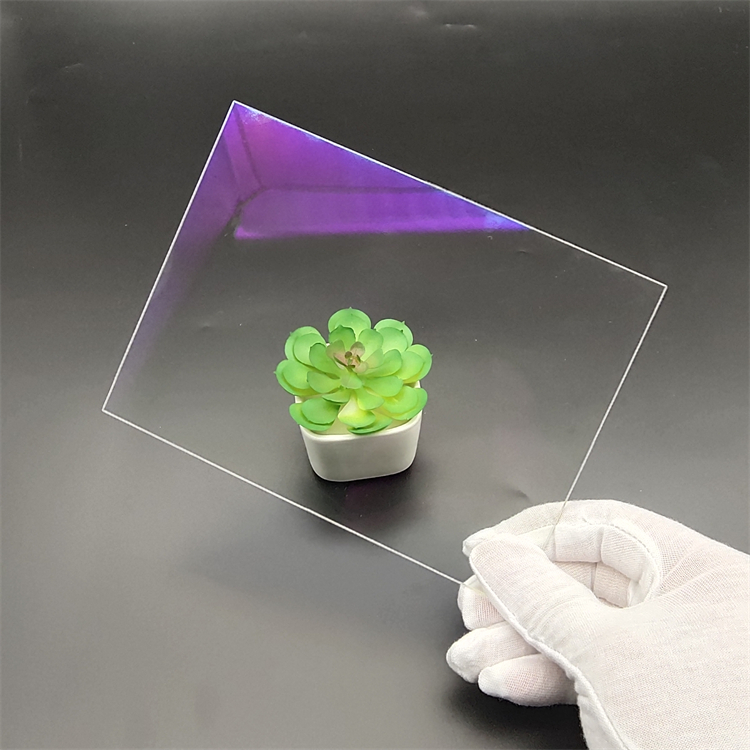
Custom 2mm Ultra-Clear Both Sides Anti-Reflective Coating Tempered Glass for Display Screen Solar & Lighting Use-Solid Structure
Double-sided AR tempered glass for display screens, solar and lighting covers where reflected light reduces contrast. A strong fit when low reflectance and a solid structure are the first specification priorities.

Custom Silk Screen Printed Tempered Glass Electronic Control Panel Cover for Smart Appliances
Integrated printed glass front panels for smart appliances. Print graphics, touch windows and tempered glass can be produced as one front assembly with controlled registration and reliable edge quality.
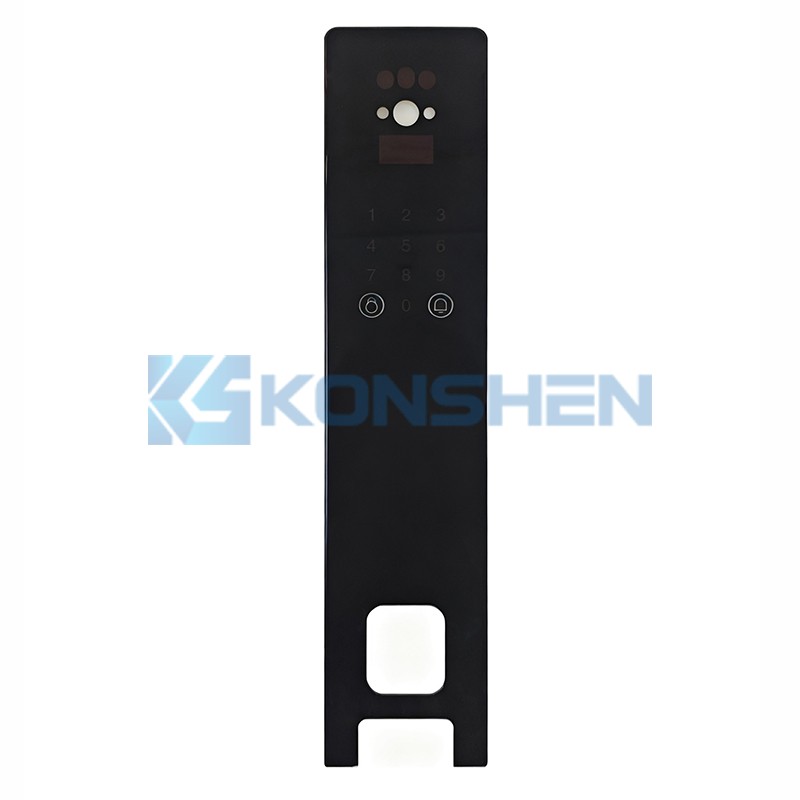
Electronic Tempered Glass Film Custom Printed Rectangular Panel Digital Keypad for Smart Door Lock
Custom printed rectangular glass keypad panels for smart locks and access-control interfaces. Scratch resistance, clean symbol printing and stable touch-window alignment support high-touch security products.

KS AG002 Custom Size AG Coating Anti-Glare Tempered Glass Panel High Transmittance Cover Sheet for Electronic Display Screen
Anti-glare tempered glass for electronic displays and outdoor terminals where ambient light causes glare. Haze and gloss can be tuned to balance readability, image clarity and a premium surface appearance.
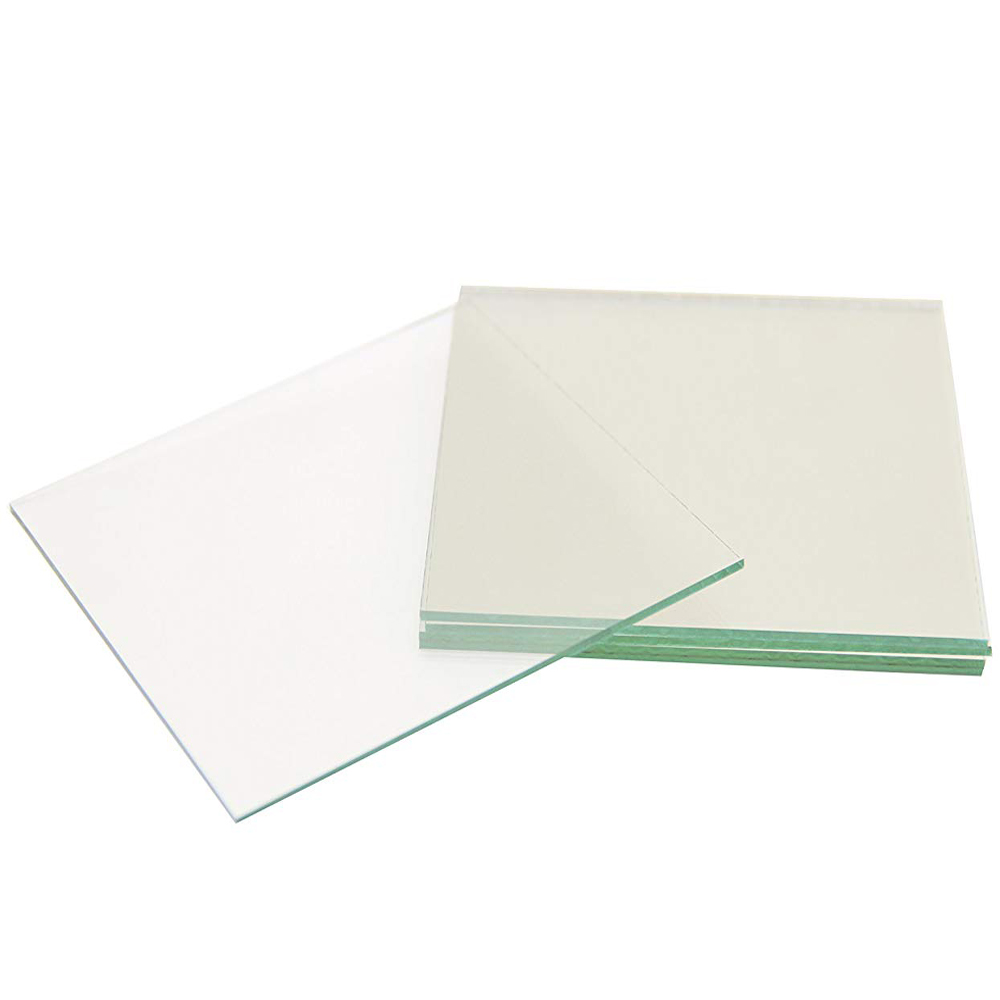
Custom 25 × 25 × 1.1 mm ITO/FTO Coated Toughened Glass for LAB Display Anti-Fog Heating Conductive Glass Bathroom Solar Applications
Transparent conductive glass for lab displays, anti-fog heating, bathroom mirrors and solar applications. ITO and FTO options allow buyers to match conductivity with thermal and chemical stability requirements.
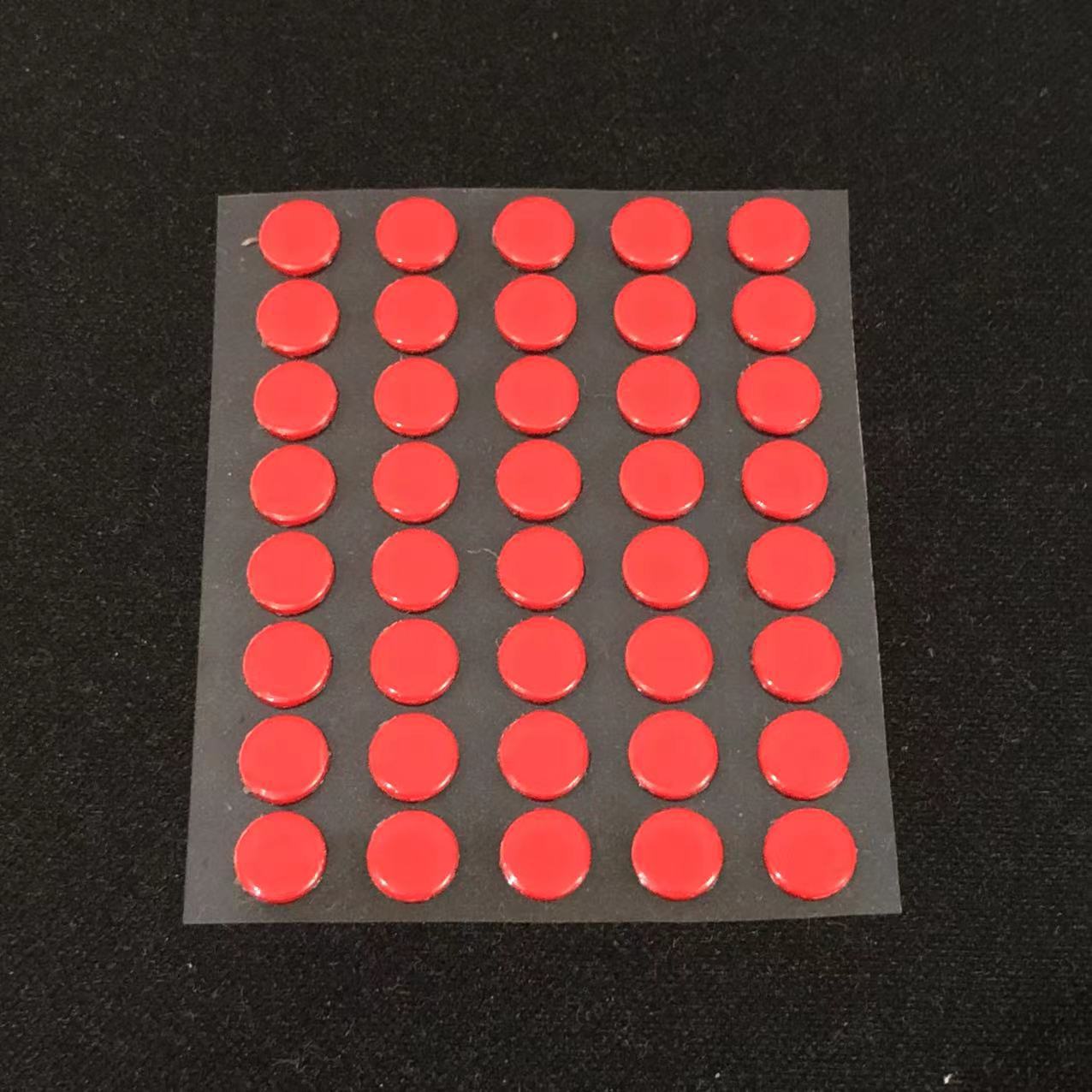
Factory Price Round Red Mouse Sticker Pads Universal Glass Mouse Skates with Small Dot PTFE Non-slip Mouse Feet
Precision glass and PTFE components for gaming peripherals. This product demonstrates small-format processing capability for brands that also source instrument panel glass, display windows and consumer glass accessories.
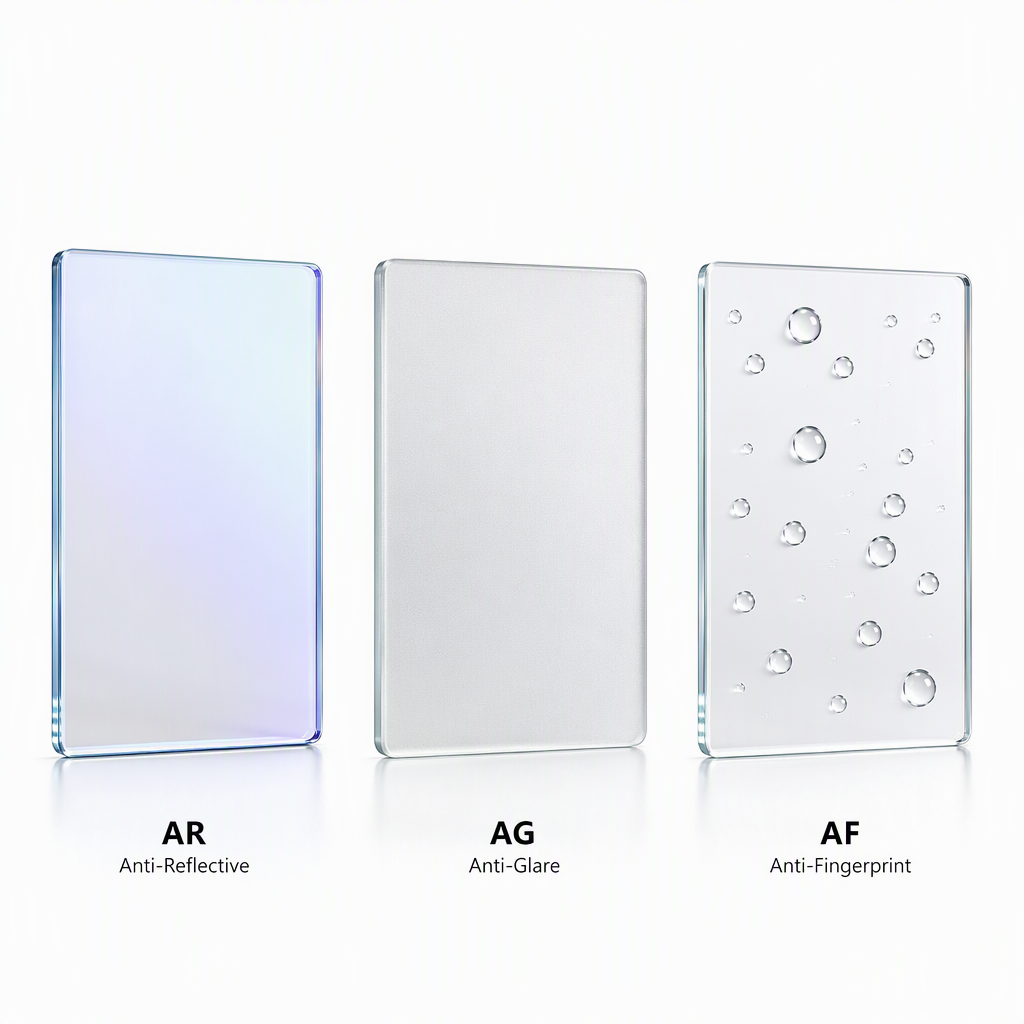
AR AG AF Coated Glass Anti Reflective Coating Service 92 Percent Transmission Anti Glare Custom Sheet Factory OEM
Multi-functional optical coating service for buyers needing AR, AG and AF performance on one glass sheet. Suitable for premium HMI, outdoor displays and touch interfaces where several optical functions must coexist.

High Transmittance 98% Anti-Reflective AR Glass for Museum Showcase Luxury Picture Frame Low Reflectance Coated 1mm-19mm
Low-reflectance AR glass for museum showcases, luxury frames and display environments where the glass should almost disappear. Thickness from 1 mm to 19 mm supports both delicate and large-format projects.
Why KELO Glass Is Shortlisted by Instrument Panel Glass Buyers
KELO is not a trading company reselling unknown factories. The production floor, coating lines, inspection gates and export documentation are built around repeatable custom glass manufacturing.
In-House Surface Engineering
AR reflectance can be held below 1.0% per side with transmittance above 99%; AG haze is tunable from 5–60%; AF contact angle exceeds 110°; ITO/FTO sheet resistance covers 1–20 Ω/sq. Coatings are measured and inspected before release.
Vertical Integration, Fewer Handoffs
Cutting, CNC, edge polishing, laser engraving, silk-screen printing, sandblasting, flat and curved tempering, coating and 3M adhesive bonding are controlled in one factory. That reduces handling damage and shortens problem-solving loops.
Engineer-Led Customization
With 21–30 R&D engineers, KELO reviews drawings for manufacturability, coating stack, print registration, curvature and tolerance. Samples start from 1–2 pieces so optical and fit validation can happen before volume commitment.
Export-Ready Reliability
Six years of verified exporter status, a 4.9/5 store rating, 98.18% reply rate and Trade Assurance support. Export markets include Eastern Europe, Northern Europe, Western Europe, Southern Europe, North America and South America.
Instrument Panel Glass Specifications and Coating Data Buyers Can Quote Directly
Use these performance windows in an RFQ, drawing note or supplier comparison table. Final targets should always be confirmed against your exact drawing, test method and application environment.
| Glass / Coating Option | Key Measured Capability | Best-Fit Instrument Panel Use | Procurement Note |
|---|---|---|---|
| AR Anti-Reflective | Reflectance <1.0% per side; transmittance >99% across 400–700 nm; single or multi-layer designs. | Automotive touch displays, medical monitors, showcase windows, high-brightness display covers. | Ask for per-side reflectance, wavelength range and test angle. “High transmittance” alone is not enough. |
| AG Anti-Glare | Haze 5–60%; gloss 0.5–8 GU; tempered substrate available. | Outdoor kiosks, industrial HMI, sunlight-readable screens, in-vehicle displays. | Specify haze and gloss together. The right balance depends on resolution, viewing distance and ambient light. |
| AF Anti-Fingerprint | Water contact angle >110°; pencil hardness >3H; transmittance >98%; durability >10,000 cycles. | Smart appliance control panels, frequently touched HMI, bathroom controls and appliance glass. | Request contact angle plus abrasion test method. Easy-clean performance must survive real cleaning cycles. |
| ITO Conductive Glass | Sheet resistance 1–20 Ω/sq; transmittance >85%; haze <2%. | Capacitive touch sensors, displays, EMI shielding and transparent heating. | Check sheet resistance uniformity, transmittance and haze as a set. ITO is common for touch and display electrodes. |
| FTO Conductive Glass | Sheet resistance 1–20 Ω/sq; transmittance >85%; haze <2%. | Thin-film solar cells, high-temperature processes, anti-fog heating and robust conductive windows. | FTO offers stronger thermal and chemical stability than ITO in many high-temperature applications. |
| Combined AR+AG / AG+AF | Stacked optical functions on one substrate; cosmetic grade achievable to 60/40 scratch-dig. | Premium automotive interfaces, outdoor touch displays and high-end appliance panels. | Stack order, colour shift and cosmetic grade must be agreed on the sample before mass production. |
| 2.5D / 3D Curved Cover Glass | Thickness 0.1–19 mm; curved forming; 3M adhesive bonding; printed borders and touch windows. | Automotive dashboards, smart-home control panels, edge-to-edge HMI and seamless front panels. | Discuss curvature tolerance, optical distortion, print alignment and bonding method early in the design stage. |
| Specialty Glass Materials | Gorilla glass, borosilicate, quartz, sapphire, ceramic glass, lead shielding glass and laminated safety glass. | Medical devices, industrial windows, harsh-environment HMI, optical instruments and security applications. | Request material certificates and suitability data for temperature, chemical exposure or optical transmission. |
Typical production capability shown. Final specification is confirmed during engineering review and sample approval.
What Instrument Panel Glass Buyers Will Demand Next
Procurement teams are moving away from catalogue shopping and toward evidence-based supplier qualification. The strongest China instrument panel glass suppliers will be judged on data, resilience and total landed cost.
Landed-Cost Modelling Replaces Piece-Price Chasing
Buyers are adding freight, duty, breakage, incoming inspection, rework, line stoppage and coating warranty into the decision. A slightly higher piece price with stable yield and protective packaging often lowers total landed cost.
Measured Data and Traceability Become RFQ Requirements
Per-batch optical and electrical reports, material certificates, process routing and inspection records are increasingly requested with quotations. Suppliers that can prove coating and dimensional consistency reduce buyer risk.
Supply Resilience and Qualified Second Lines
Brands want dual-qualified sources without repeating the entire engineering cycle. The winning supplier will offer clear documentation, stable process control and the ability to shift volume without changing the approved specification.
Faster Custom Sampling and Low-MOQ Validation
Shorter product cycles reward suppliers that can produce 1–2 piece prototypes, review drawings quickly and move to mass production in 21–31 days after sample approval. Low-volume validation is now part of mainstream sourcing.
How Instrument Panel Glass Technology Is Evolving
Glass is becoming an active interface component rather than a passive cover. The trends below directly affect drawings, coating stacks and supplier selection.
Multi-Functional Coating Stacks
AR+AG, AG+AF and AR+AG+AF stacks let one glass surface reduce reflection, diffuse glare and resist fingerprints. Automotive and outdoor HMI designs increasingly specify combined functions rather than a single coating.
Curved and Seamless HMI Glass
2.5D and 3D curved cover glass supports edge-to-edge dashboards, smart-home panels and seamless appliance fronts. The critical factors are curvature tolerance, optical distortion, print alignment and adhesive bonding.
Glass as an Active Component
ITO and FTO conductive glass support touch sensing, EMI shielding, anti-fog heating and solar applications. Buyers now compare sheet resistance, transmittance, haze and thermal stability as one performance envelope.
Robust Packaging and Process Efficiency
As panel sizes and optical requirements increase, packaging becomes part of product quality. Honeycomb cartons, blister trays and partition packing are being specified alongside coating performance to reduce transit breakage and rejected lots.
A Practical RFQ Checklist for Instrument Panel Glass
Send enough engineering data to make the quotation comparable. A supplier that can quote quickly from a clear drawing is useful; a supplier that can flag risks before tooling is more valuable.
- 2D drawing in DXF or PDF, plus STEP file if the panel is curved or has complex cut-outs.
- Glass material and thickness: 0.1–19 mm range, tempered or chemically strengthened.
- Coating target with test method: AR reflectance per side, AG haze/gloss, AF contact angle and abrasion cycles.
- Print artwork, Pantone colours, touch-window position and cosmetic acceptance criteria.
- Edge profile, holes, countersinks, 2.5D/3D curvature and 3M adhesive bonding requirements.
- Annual volume, forecast, sample quantity, target lead time and destination country.
Supplier Questions That Reveal Real Capability
- Which processes are completed in-house: coating, tempering, CNC, printing or bonding?
- What measured data ships with the batch: reflectance, haze, gloss, contact angle, sheet resistance?
- How are IQC, IPQC and FQC/OQC performed, and is appearance inspection 100%?
- Can the packing design be validated for export transit, with honeycomb cartons or blister trays?
- What are the sample lead time, mass-production lead time and terms: FOB, CFR, CIF, EXW or DDP?
Quality Control and Packaging: Protecting the Landed Cost
Quality is built into the process, not inspected in at the end. KELO uses incoming, in-process and final inspection gates, with packaging treated as part of product performance.
Incoming Inspection (IQC)
Raw glass and consumables are verified before entering production.
- Thickness and flatness checks
- Surface defect screening
- Ink and coating material verification
In-Process Control (IPQC)
Critical dimensions and coating results are checked at each station.
- CNC dimensions and hole positions
- Tempering and strength tests
- Coating adhesion and abrasion checks
Final Inspection (FQC/OQC)
Every finished piece is checked before protective packing.
- 100% appearance inspection
- Salt spray and reliability testing
- Honeycomb, blister and partition packing
From Drawing to Mass Production: A Transparent Custom Glass Process
The goal is to reach a validated sample quickly, then scale without changing the approved optical, dimensional or print performance.
Share Requirements
Drawing, sample or target specification plus annual volume.
Engineering Review
DFM feedback on tolerance, coating stack and cost drivers.
Rapid Prototype
Samples from as few as 1–2 pieces for fit and optics.
Validation
Optical, dimensional and reliability performance approved by you.
Mass Production
Typical bulk lead time of 21–31 days after sample approval.
Packing & Shipping
Export-ready packing and worldwide delivery support.
China Instrument Panel Glass Supplier With Export-Ready Support
International buyers need more than a factory floor. They need documentation, responsive communication, stable packaging and a supplier that understands Incoterms, payment methods and destination-specific handling risks. KELO supports buyers across Europe, North America and South America.
Current market distribution reflects a balanced export footprint: Eastern Europe, Northern Europe and North America each represent about 20%, while Southern Europe and Western Europe represent about 15% each, with South America at about 10%.

Instrument Panel Glass Supplier FAQ
Direct answers to the questions procurement teams ask before qualifying a China instrument panel glass supplier.
What is instrument panel glass, and how is it different from ordinary display glass?
Instrument panel glass is a engineered front panel used on control interfaces, dashboards, appliances, HMI terminals and display windows. It usually combines tempered or chemically strengthened glass with printed graphics, anti-reflective, anti-glare or anti-fingerprint coatings, and sometimes ITO/FTO conductive layers. The difference from ordinary display glass is the level of integration: optical performance, print registration, touch-window accuracy, edge quality and packaging must all meet the drawing, not just the glass thickness.
How do I choose between AR, AG and AF coating?
Choose AR when reflected light reduces image contrast and maximum transmission is required. Choose AG when ambient light causes glare and the surface needs to diffuse reflections without washing out the display. Choose AF when fingerprints, oils and frequent cleaning affect product appearance or touch feel. Combined stacks such as AR+AG, AG+AF or AR+AG+AF are common for automotive, outdoor and premium appliance interfaces, but the stack order and cosmetic grade should be approved on a sample.
Are you a manufacturer or a trading company?
Huizhou KELO Glass Co., Ltd. is a factory-direct manufacturer in Huizhou, Guangdong. Production includes cutting, CNC machining, edge polishing, laser engraving, silk-screen printing, sandblasting, flat and curved tempering, AR/AG/AF and ITO/FTO coating, 2.5D/3D curved forming and 3M adhesive bonding. Buyers can review company profiles, factory video, verified assessment, trade capacity and transaction records before placing an order.
What is the minimum order quantity for custom instrument panel glass?
Sample orders can start from 1–2 pieces so you can validate fit, optics, coating performance and print appearance before committing to volume. Bulk quantities are quoted against the drawing, material, coating stack, curvature, printing complexity and annual forecast. This low-MOQ sampling approach reduces tooling risk for new product development.
What is the typical lead time for mass production?
Bulk lead time is typically 21–31 days after sample approval. The exact schedule depends on glass size, thickness, coating stack, curved forming, printing complexity, material availability and order quantity. Engineering review and sample approval are the most important schedule milestones, because they lock the specification before mass production begins.
What thickness, sizes and shapes can you produce?
Glass thickness ranges from 0.1 mm to 19 mm. Size, shape, holes, cut-outs, colours, logo printing, 2.5D/3D curved forming and 3M adhesive bonding are customized to your drawing or sample. Specialty materials include Gorilla glass, borosilicate glass, quartz glass, sapphire glass, ceramic glass, lead shielding glass and laminated safety glass.
Should I choose ITO or FTO conductive glass?
ITO glass is commonly used for capacitive touch sensors, displays and EMI shielding because it offers good transparent conductivity. FTO glass offers stronger thermal and chemical stability, which makes it a frequent choice for thin-film solar cells, high-temperature processes and robust anti-fog heating applications. Both can be supplied with sheet resistance of 1–20 Ω/sq, transmittance above 85% and haze below 2%, but the final choice should match your process temperature and electrical target.
How do you control quality before shipment?
Quality is controlled through incoming inspection, in-process control and final inspection. Checks include thickness and flatness, surface defects, CNC dimensions, hole positions, tempering, coating adhesion, abrasion resistance, salt spray reliability and 100% appearance inspection. Custom honeycomb cartons, blister trays and partition packing are used to reduce transit damage. The inspection plan can be aligned with your drawing and acceptance criteria.
Which trade terms and payment methods do you accept?
KELO supports FOB, CFR, CIF, EXW and DDP trade terms, and accepts T/T, L/C, PayPal and Western Union payments. Orders placed through Alibaba.com can be protected by Trade Assurance. Buyers should confirm the Incoterm, destination port, insurance responsibility and packaging requirement in the quotation so the landed-cost comparison is accurate.
Have a Drawing, a Sample or a Target Specification?
Send your drawing, coating target, annual volume and destination country. Our engineering team will review feasibility and recommend the most cost-effective instrument panel glass solution for your application.
Inquire Now