Why the Best Cover Glass Supplier Is Not Always the Lowest Quotation
China’s LCD cover glass and touch cover glass supply base is mature, but mature does not mean interchangeable. Buyers searching for China best LCD cover glass exporters and wholesalers are usually comparing suppliers that look similar on a marketplace page: similar thickness ranges, similar coating names, similar sample promises. The real difference appears later — in print registration after assembly, AR coating batch consistency, edge quality after tempering, packaging damage, or how quickly an engineer answers a drawing question.
A strong sourcing decision therefore starts with a clear use case. Is the glass a protective front layer for an LCD module, a touch interface for a smart appliance, a conductive substrate for a sensor, or an outdoor display cover that must survive sunlight and cleaning chemicals? The answer changes the substrate, coating stack, cosmetic standard, packing method and supplier you should shortlist.
Eight Cover Glass Products Buyers Request Most Often
These eight product families reflect the practical range of wholesale requests: gaming peripherals, smart bathroom electronics, AF kitchen panels, AR low-iron display glass, ITO conductive glass, outdoor waterproof touch panels and AG anti-glare covers.
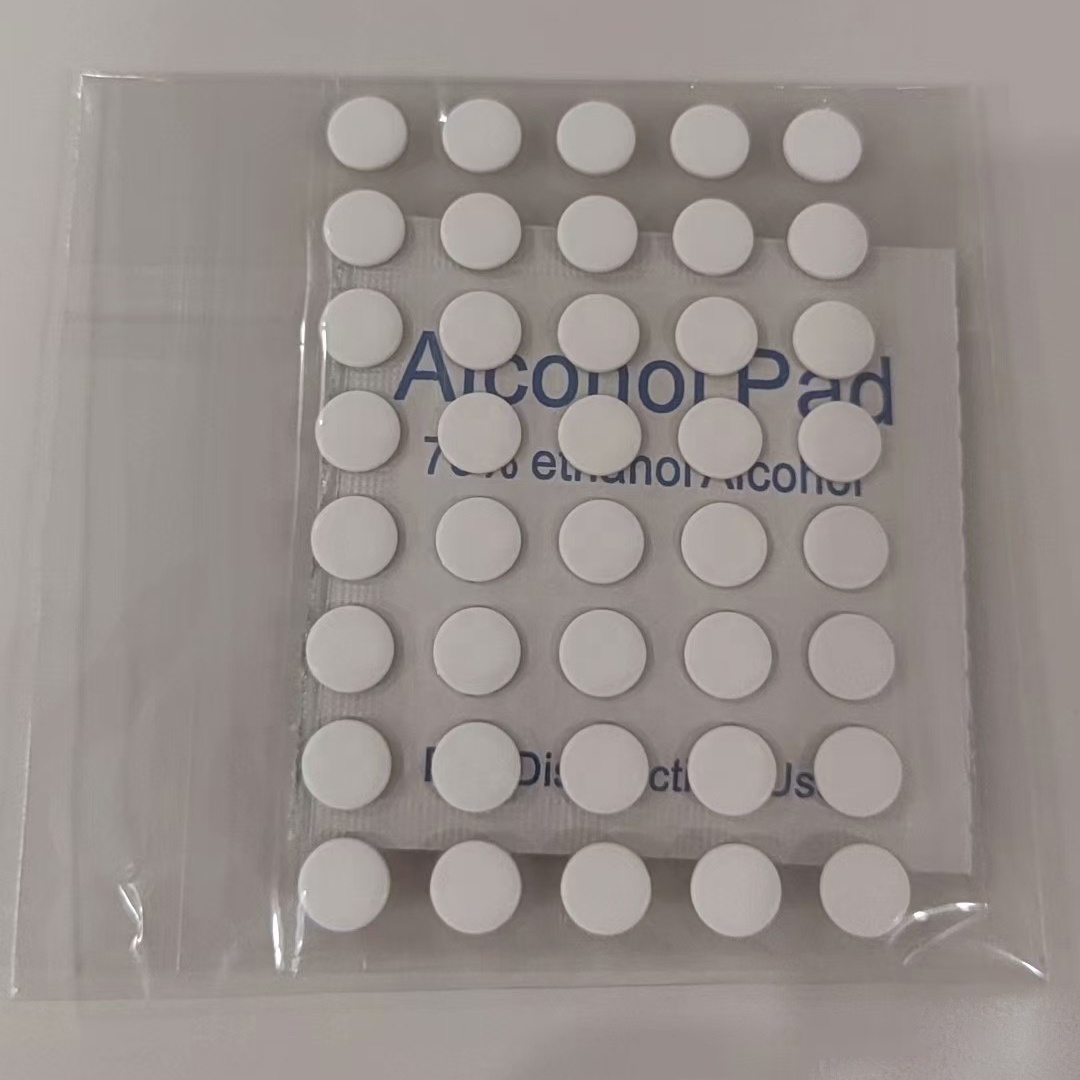
PTFE Round Gaming Mouse Glides Mouse Skate Dots
A repeat-order item for gaming peripheral brands and distributors. Buyers control skate diameter, thickness and edge finish so the mouse keeps a consistent glide and starting friction. For premium builds, ask for flatness, surface roughness and adhesive compatibility data before comparing price.
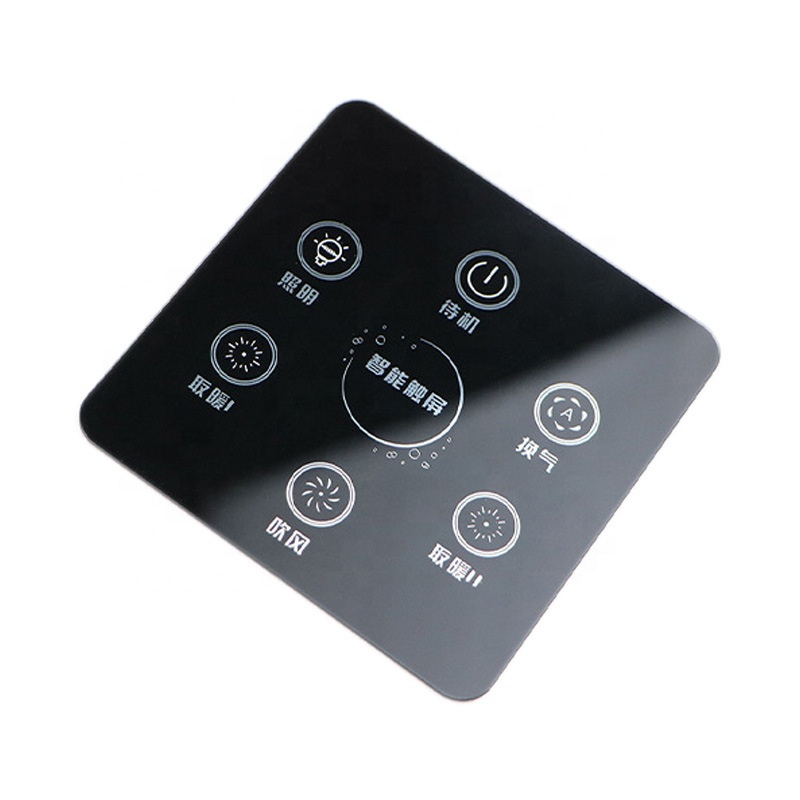
Bathroom Solid & Hollow Tempered Glass Intelligent Touch Shower Control Switch Panel Silk Screen Printed with 4-Year Warranty
An integrated tempered-glass shower panel with silk-screen graphics and a four-year warranty. Hospitality and sanitary-ware buyers should confirm switch protocol, wiring diagram, glass thickness, edge polish, sealing method and after-sales terms. The printed interface is part of the user experience, so print registration and color tolerance require a signed limit sample.
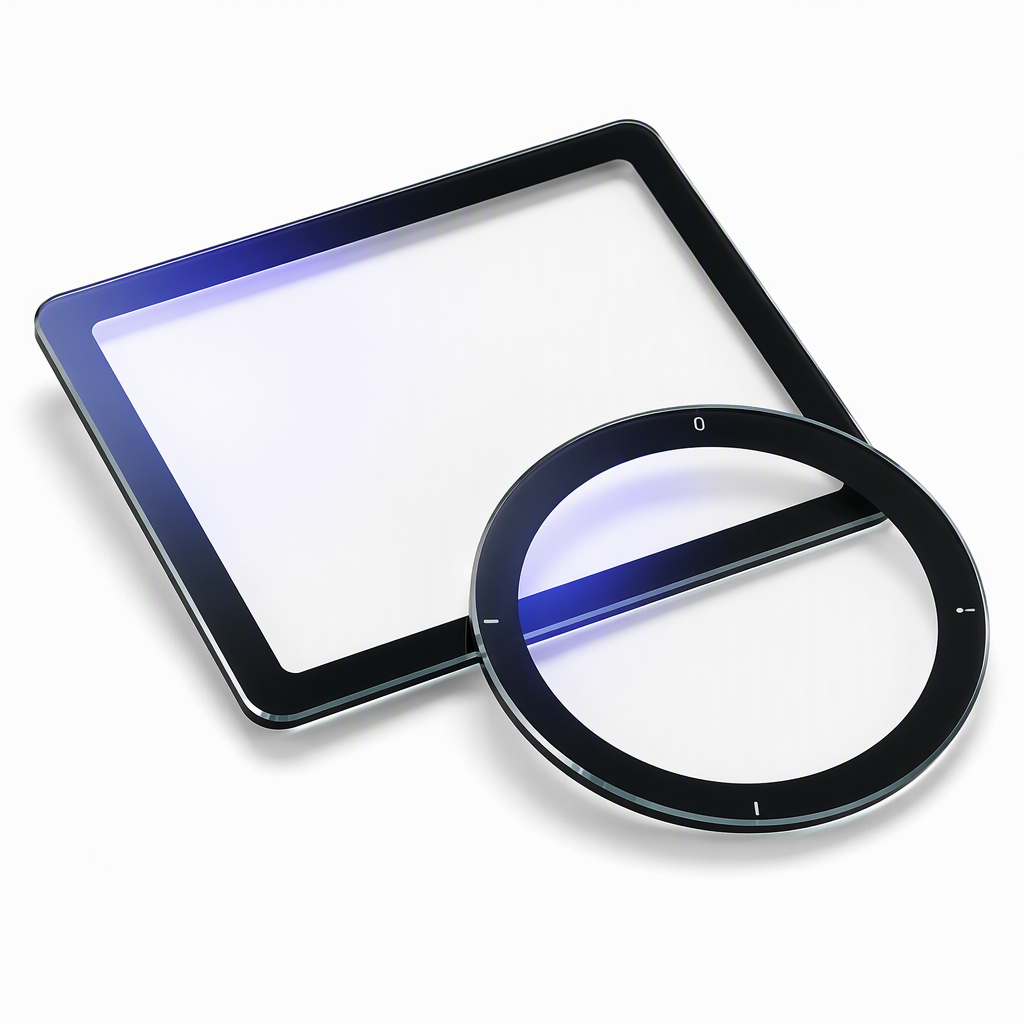
KS AF001 High Transmittance AF Coated 1.1mm/2mm CNC Cut Custom Shape Toughened Glass Panel for Kitchen Electronic Device Covers
A 1.1 mm / 2 mm AF-coated toughened glass panel for kitchen electronics. CNC cutting supports custom cut-outs, while the anti-fingerprint surface helps appliance HMI covers resist oils and repeated cleaning. Specify transmittance, haze, scratch resistance and cleaning-chemical compatibility so the coating performs in daily use, not only on the sample bench.
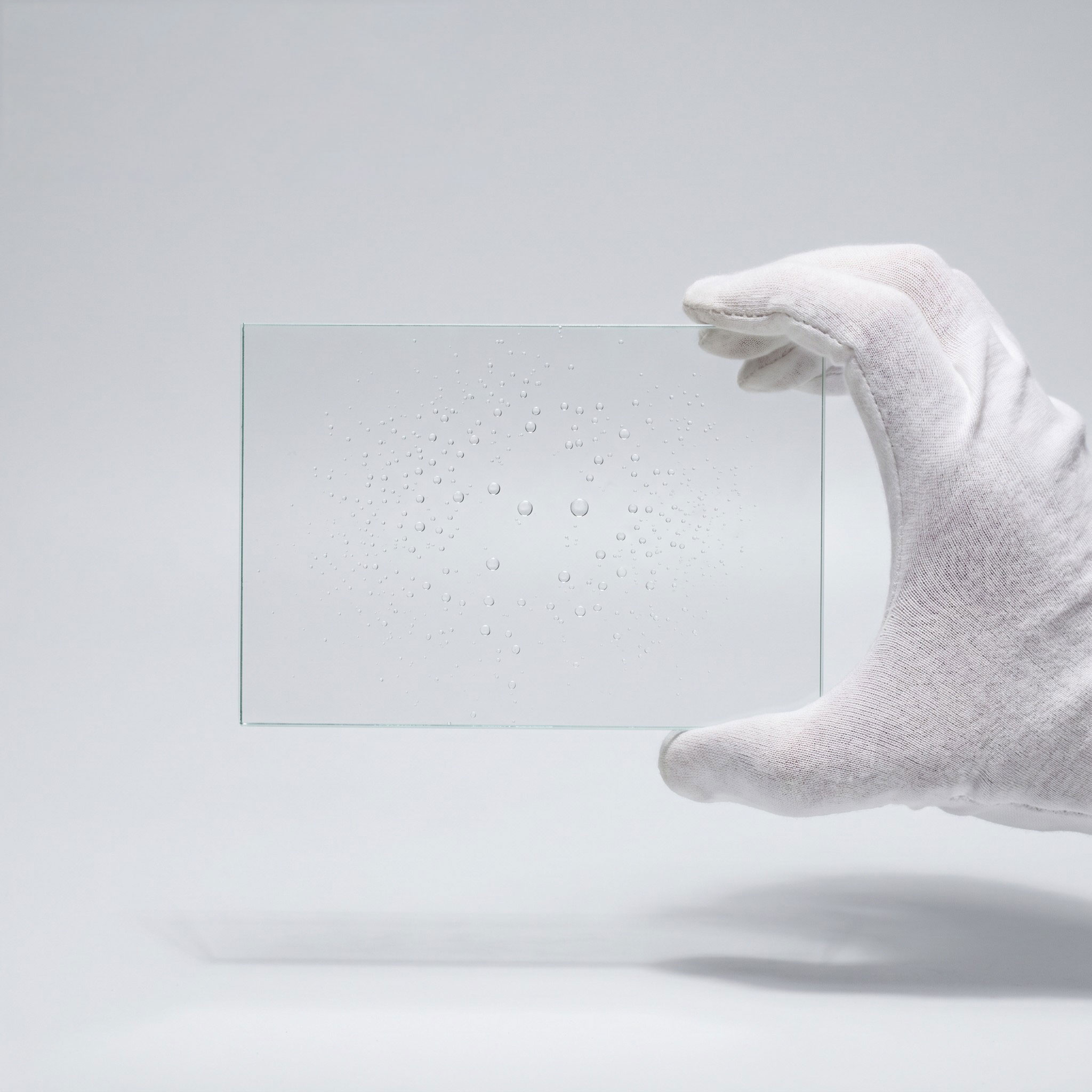
Custom Tempered Glass Toughened Glass Panels Low Iron Display Cover Glass AR Coating Factory Supply Customized Size
Low-iron display cover glass with AR coating, custom size and factory tempering. Low-iron substrate reduces the green cast visible in ordinary float glass, and AR treatment raises contrast in high-brightness displays. Require a reflectance curve, color coordinates and edge-quality criteria when optical clarity is mission-critical.
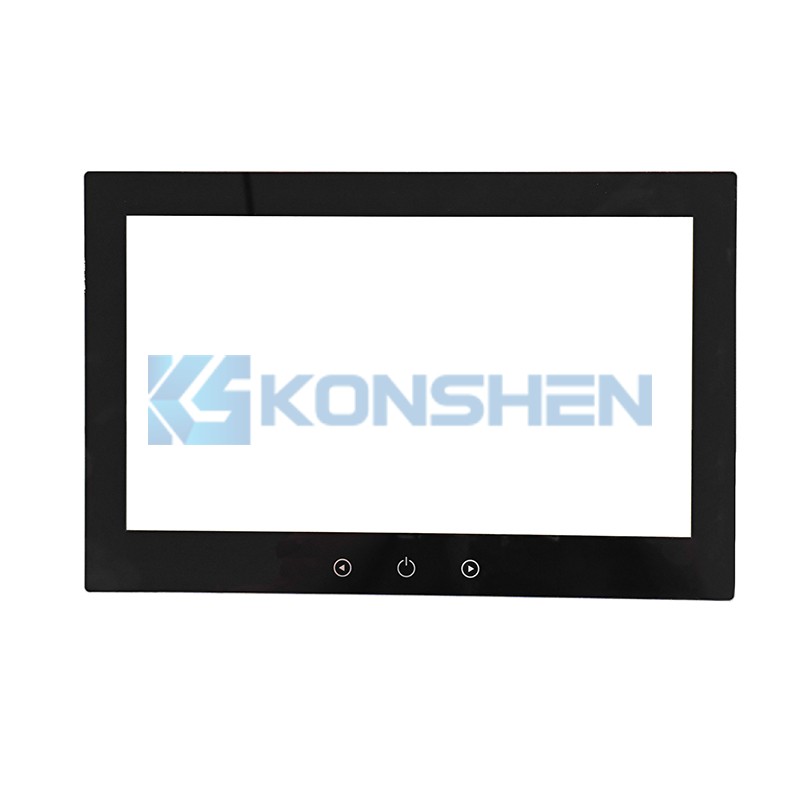
Electronic ITO Conductive Tempered Glass Custom Black Framed 1mm-4mm Thickness Display Cover for Industrial Monitor
Electronic-grade ITO conductive tempered glass with optional black frame, offered from 1 mm to 4 mm for industrial monitors. ITO is usually chosen for capacitive touch sensors, displays and EMI shielding. Define sheet resistance, transmittance, haze, busbar layout and insulation zones; the word “conductive” alone is not a purchasing specification.
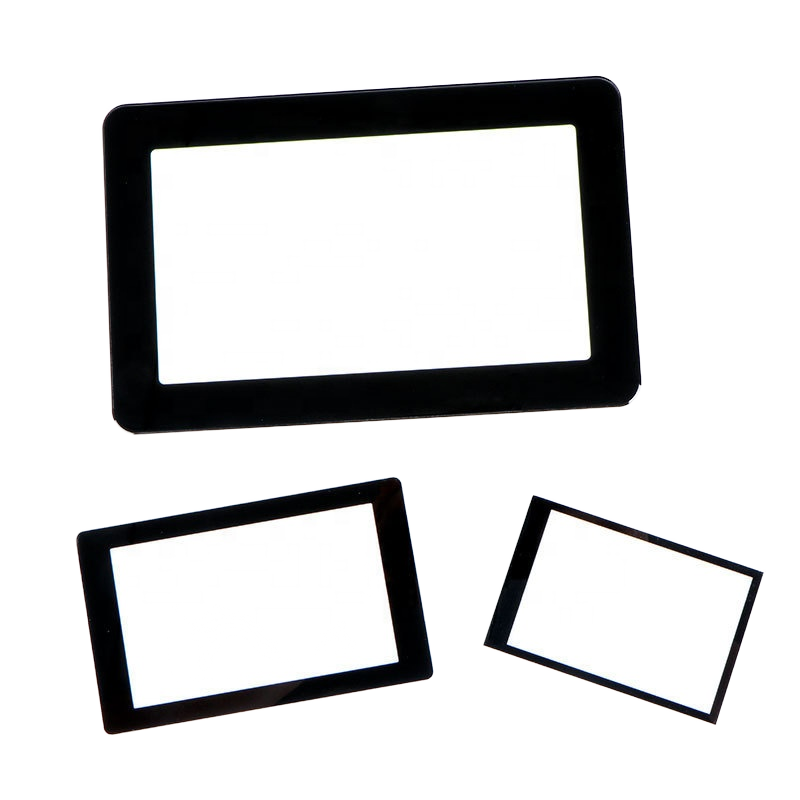
Wholesale Left Right Switching Control 0.2mm 5mm Soda Lime Extra Clear Tempered Glass Touch Screen Panel Outdoor Gym Waterproof
An outdoor touch-screen panel with left/right switching control, extra-clear soda-lime substrate and a 0.2–5 mm thickness range. It is aimed at gym, shower and wet-area interfaces where water, cleaning agents and daily touch coexist. Confirm gasket design, sealing strategy, surface treatment and cable exit before agreeing to a waterproof claim.
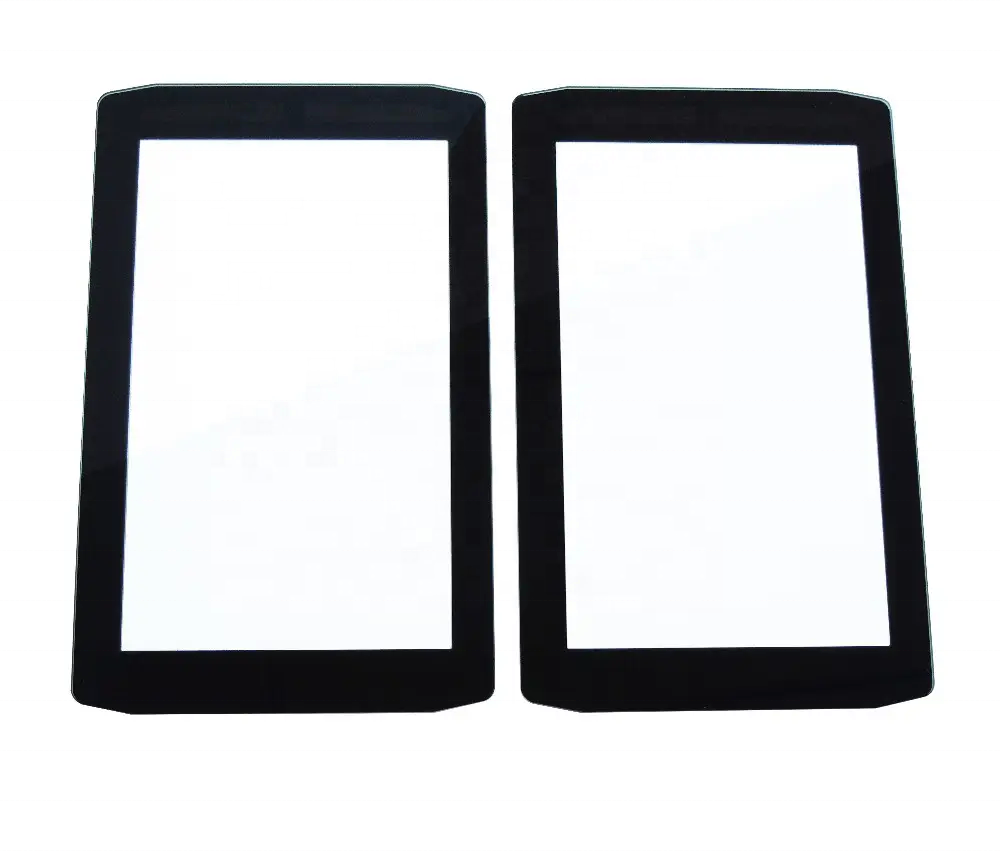
AG High Quality Solid Tempered Glass Anti-Glare Digital Screen Display Customizable Touch Screen Panel Factory Direct Outdoor
An AG anti-glare touch panel for outdoor digital displays, with customizable size and factory-direct supply. The optical target is a balance: enough haze to scatter sunlight, low enough gloss to preserve black-level depth, and a surface that remains easy to clean. Ask for gloss in GU, haze percentage and a viewing-angle comparison under real lighting.

KS AG002 Custom Size AG Coating Anti-Glare Tempered Glass Panel High Transmittance Cover Sheet for Electronic Display Screen
A custom-size AG-coated tempered glass cover sheet with high transmittance for electronic displays. It suits projects that need glare control without the sparkle of aggressive anti-glare textures. Buyers should compare haze, gloss, distinctness-of-image and coating durability, then lock these values into the drawing and inspection standard.
Three Buyer Profiles Need Three Different Supplier Checks
Queries for China cover glass exporters or wholesalers often mix brand owners, distributors and engineering-led OEMs. Each group should ask for different evidence before moving to a sample order.
Brand owners developing a new product
You need DFM feedback before the design is frozen. Ask how the supplier will handle drawing tolerances, adhesive bonding, FPC clearance, 2.5D/3D forming and cosmetic limits. A good partner will flag cost drivers early instead of simply quoting a drawing.
Ask for: engineering review, 1–2 pc prototype, assembly stack advice.Distributors and wholesale buyers
Your risk sits in repeatability, packaging and delivery. A low first price is not useful if the second batch changes color, edge quality or coating gloss. Lock a limit sample, master-carton specification and inspection standard before scaling volume.
Ask for: batch consistency, packing validation, lead-time stability.Engineering-led OEMs
You need data, not adjectives. AR reflectance curves, AG gloss and haze ranges, AF contact angle and abrasion cycles, ITO sheet resistance and tempering evidence should be comparable across suppliers. Request test methods together with the numbers.
Ask for: optical data, reliability tests, coating process control.What China’s Best LCD Cover Glass Exporters Do Differently
The first filter is process ownership. Cover glass is not only cut and tempered. Edge polishing, silk-screen printing, flat and curved tempering, optical coating, 2.5D/3D forming, adhesive bonding and final inspection all interact. When a supplier outsources several of these steps, traceability weakens: a coating defect may be blamed on the substrate, a print shift may be blamed on the glass, and the buyer absorbs the delay. A factory that controls cutting, CNC, polishing, printing, tempering, coating and QC under one roof can hold tolerances and respond faster when a problem appears.
The second filter is performance evidence. A credible LCD cover glass exporter should state typical performance windows and the measurement basis: AR reflectance below 1.0% per side and transmittance above 99% across 400–700 nm; AG haze from 5–60% with gloss around 0.5–8 GU; AF water contact angle above 110° with durability beyond 10,000 cycles; ITO or FTO sheet resistance from 1–20 Ω/sq, transmittance above 85% and haze below 2%. These figures are not marketing decoration. They are the basis for a signed specification that protects both buyer and supplier.
The third filter is export discipline. Best-in-class wholesalers do more than produce glass. They control custom honeycomb cartons, blister trays and partition packing; they understand FOB, CFR, CIF, EXW and DDP; they can support T/T, L/C, PayPal and Western Union; and they keep sample approval, mass production and change control documented. That combination is what separates a reliable export partner from a marketplace listing.
Process control under one roof
Cutting, CNC, polishing, printing, tempering, coating, curved forming, bonding and inspection should be traceable to one accountable supplier.
Optical metrology
Reflectance, transmittance, haze, gloss, color coordinates and contact angle should be measured against agreed methods, not estimated from a catalogue.
Mechanical reliability
Tempering, adhesion, abrasion and salt-spray tests matter because coated glass often fails at the interface, not in the bulk material.
Cosmetic standard
Scratch-dig, print registration, edge chips and black-frame coverage need a signed limit sample for every high-volume project.
Engineering responsiveness
Fast DFM feedback, sample iteration and clear change control shorten development time and reduce late-stage surprises.
Export and packing
Incoterms, payment methods, protective packing and documentation protect landed cost and on-time delivery.
Why KELO Glass Is Built for Export Buyers
For buyers verifying whether a Chinese cover glass manufacturer is truly factory-direct, the operating facts should be clear before the first inquiry.
Huizhou KELO Glass Co., Ltd. fits the profile buyers expect when they search for China LCD cover glass exporters and wholesalers: a factory-direct manufacturer rather than a trading shell. The company operates in Huizhou, Guangdong, inside the Greater Bay Area electronics supply chain, and focuses on touch screen cover glass, display cover glass and optical coated glass. Its stated capability covers 10,000–30,000 m² of factory floor, 20–25 million pieces per year of touch cover glass capacity, 101–200 employees, 21–30 R&D engineers, an annual output value of US$50–100 million and a typical response time within one hour. It has six years of verified exporter history on Alibaba.com, a 4.9/5 store rating and a 98.18% reply rate.
The more important advantage is vertical integration. Surface engineering is the company’s core technology, and key steps run in-house: cutting, CNC machining, edge polishing, laser engraving, silk-screen printing, sandblasting, flat and curved tempering, AR/AG/AF/ITO coating, 2.5D/3D curved forming and 3M adhesive bonding. This gives buyers one accountable supplier, tighter tolerance control, more stable lead times and pricing without unnecessary middle-man margins.
In-house surface engineering
AR, AG, AF, ITO and FTO coating options support display clarity, glare control, anti-fingerprint performance and conductive functions.
End-to-end fabrication
From raw sheet to printed, tempered, curved and bonded glass, critical steps are controlled inside the factory.
DFM and rapid samples
Engineering drawing review and prototypes from 1–2 pieces help validate fit, optics and coating before volume commitment.
Specialty material range
Gorilla glass, borosilicate, quartz, sapphire, ceramic glass, lead shielding glass and laminated safety glass can be processed.
Three quality gates
IQC, IPQC and FQC/OQC cover incoming material, in-process dimensions and final appearance before packing.
Reliability testing
Tempering, adhesion, abrasion, salt-spray and 100% appearance checks support consistent export quality.
Export-friendly terms
FOB, CFR, CIF, EXW and DDP terms are supported, with T/T, L/C, PayPal, Western Union and Trade Assurance options.
Protective packing
Custom honeycomb cartons, blister trays and partition packing are designed to reduce transit damage on long export routes.
Export market distribution
Current market spread shows experience with European, North American and South American buyers. For wholesale programs, this matters because documentation, packaging expectations and delivery terms differ by region.

Custom honeycomb cartons, blister trays and partition packing help protect polished edges and coated surfaces during international shipping.
Coating & Performance Data to Put in Your RFQ
Use these measurable windows when comparing Chinese cover glass suppliers. Final values should be confirmed against your drawing during engineering review.
| Coating | Key Performance | Typical Use |
|---|---|---|
| ARAnti-reflective | Reflectance <1.0% per side · Transmittance >99% at 400–700 nm · single or multi-layer | Automotive touch displays, medical monitors, optical windows, high-brightness LCD cover glass |
| AGAnti-glare | Controllable haze 5–60% · Gloss 0.5–8 GU | Outdoor kiosks, industrial HMI, gym and wet-area touch panels, sunlight-readable screens |
| AFAnti-fingerprint | Water contact angle >110° · Pencil hardness >3H · Transmittance >98% · Durability >10,000 cycles | Smart home panels, kitchen appliance covers, bathroom controls, frequent-touch interfaces |
| ITOIndium tin oxide | Sheet resistance 1–20 Ω/sq · Transmittance >85% · Haze <2% | Capacitive touch sensors, display covers, EMI shielding, transparent electrodes |
| FTOFluorine-doped tin oxide | Sheet resistance 1–20 Ω/sq · Transmittance >85% · Haze <2% | Thin-film solar cells and high-temperature processes requiring stronger thermal stability |
| CombinedAR+AG / AG+AF | Stacked optical functions on one substrate · cosmetic grade per 60/40 scratch-dig | Premium in-vehicle displays, outdoor touch systems and multifunction appliance panels |
Specifications shown are typical production capability. Buyers should agree measurement methods, sampling plans, cosmetic limits and acceptance criteria before mass production.
Future Procurement Trends for LCD Cover Glass Wholesale
Buyers are moving away from price-only sourcing toward total landed cost, technical transparency and supply resilience. These shifts will shape wholesale cover glass purchasing in 2025–2026 and beyond.
Total landed cost replaces piece price
Procurement teams now compare yield, cosmetic loss, replacement cost, packaging damage and inventory carrying cost. A slightly higher piece price can be cheaper when the supplier’s process capability reduces rework and delayed assembly.
Earlier supplier involvement
Cover glass is increasingly specified during mechanical design. Suppliers that can review adhesive stack, FPC clearance, curved edges and print tolerances early prevent expensive redesign after tooling or enclosure release.
Dual sourcing and approved samples
Buyers are qualifying a primary and a backup cover glass supplier for critical programs. A signed limit sample, drawing revision and process audit file make supplier switching less risky.
Multi-function coating stacks
Single-function glass is giving way to AR+AG, AG+AF and conductive-coated cover glass. Wholesale buyers need suppliers who can control two or more optical functions without sacrificing yield.
Documented reliability and traceability
Inspection data, coating batch records, material declarations and packing specifications are becoming part of the RFQ. Exporters that can answer with data will win longer-term programs.
Risk-aware logistics
DDP discussions, protective packaging, shorter lead times and responsive communication are now part of supplier evaluation. Damage in transit can erase the benefit of a low ex-works quotation.
Product Development Trends Shaping Cover Glass Specifications
LCD and touch display products continue to push toward thinner assemblies, brighter screens, larger formats and more integrated functions. The cover glass specification must keep pace.
Thin, chemically strengthened glass
Thinner cover glass supports lighter devices and tighter stacks, but it demands better edge finishing and handling control. Chemically strengthened options help balance impact resistance with reduced thickness.
2.5D and 3D curved forming
Curved edges and shaped covers are spreading from automotive and smart home into industrial design. Buyers should define radius tolerance, optical distortion limits and print alignment on the formed surface.
AR, AG and AF integration
One project may need anti-reflection, glare diffusion and anti-fingerprint performance at the same time. Stacked coatings require careful layer design and durability testing because each layer affects the next.
Low-glitter AG surfaces
Aggressive anti-glare textures can create sparkle on high-resolution displays. Development is moving toward controlled haze and low gloss with a finer surface that preserves image clarity.
Conductive glass for integrated sensors
ITO and FTO conductive glass enable touch sensing, display functions, solar and EMI shielding. As devices integrate more functions, sheet resistance, haze and patterning become more important than simple material availability.
Aesthetic and functional printing
Black frames, hidden routing, logo printing, color matching and seamless black borders are now part of cover glass value. Print registration and optical density should be written into the approval standard.
Questions Buyers Ask Before Choosing a China Cover Glass Supplier
Practical answers for procurement managers, distributors and engineering teams evaluating LCD cover glass exporters and wholesalers.
What is LCD cover glass, and how is it different from ordinary glass?
LCD cover glass is the protective front glass used over an LCD module, touch sensor or display stack. It is usually printed, tempered or chemically strengthened, coated and cut to exact dimensions. Unlike ordinary glass, it must meet optical, cosmetic, mechanical and assembly requirements at the same time. A cover glass drawing may need to define thickness, low-iron substrate, AR/AG/AF coating, black-frame print, edge finish, warpage and adhesive compatibility. Buyers should evaluate the whole stack, not only the raw glass sheet.
What is the minimum order quantity for custom cover glass?
Sample orders can start from 1–2 pieces so the buyer can validate fit, optics and coating performance before committing to volume. Bulk quantities are quoted according to the drawing, coating stack, size, print complexity and annual demand. Wholesalers should ask whether the sample price is deducted from the mass-production order and whether the approved sample becomes the official limit sample.
What is the typical lead time for mass production?
Bulk lead time is typically 21–31 days after sample approval, depending on size, coating stack, curved forming, printing complexity and order quantity. Buyers should separate sample lead time from mass-production lead time and confirm what starts the clock: drawing approval, sample approval or deposit. For project-critical orders, request a production schedule with coating and inspection milestones.
What optical performance can an AR coating achieve?
AR anti-reflective coating can achieve reflectance below 1.0% per side and transmittance above 99% across 400–700 nm, depending on single-layer or multi-layer design. The correct discussion is not only “AR or no AR.” Ask for the reflectance curve, substrate grade, transmitted color coordinates, target wavelength range and coating durability test. High transmittance is valuable only when the supplier can hold it consistently across batches.
Should I choose ITO or FTO conductive glass?
ITO glass is commonly used for capacitive touch sensors, displays and EMI shielding. FTO glass offers better thermal and chemical stability, making it a frequent choice for thin-film solar cells and high-temperature processes. Both can be supplied with sheet resistance around 1–20 Ω/sq, transmittance above 85% and haze below 2%, but the final specification depends on your process temperature, patterning method and conductivity target.
What thicknesses, sizes and shapes can be produced?
Glass thickness can range from 0.1 mm to 19 mm. Size, shape, holes, color, logo printing, 2.5D/3D curved forming and 3M adhesive bonding can be customized to a drawing or sample. For first RFQs, send a 2D drawing, a 3D model if available, the assembly environment and the annual volume. That information helps the supplier recommend the right substrate, coating and packing method.
Which trade terms and payment methods are accepted?
Exporters typically support FOB, CFR, CIF, EXW and DDP trade terms, and payment by T/T, L/C, PayPal and Western Union. Orders placed through Alibaba.com can be protected by Trade Assurance. Buyers should confirm who handles freight insurance, customs documents, landing charges and replacement responsibility before selecting an Incoterm.
How is quality controlled, and how should glass be packed?
Quality control should include incoming, in-process and final inspection, with 100% appearance checking for many cover glass programs. Tempering, adhesion, abrasion and salt-spray tests are relevant depending on the coating and application. Packing should use custom honeycomb cartons, blister trays and partition packing to minimize transit damage. Before volume production, sign a cosmetic limit sample and confirm the packing method with a drop or transport simulation when necessary.
Have a Drawing, Target Coating or Annual Volume?
Send your cover glass drawing, optical target, assembly environment and estimated annual demand. Our engineering team can review feasibility, recommend a substrate and coating stack, and advise on the most cost-effective route from prototype to mass production.