China Top Electronic Glass Factory & Exporters
Source cover glass, AR/AG/AF optical coatings and ITO/FTO conductive glass from a factory built around surface engineering, tight tolerances and export-ready quality documentation.
8 Electronic Glass Products Recommended for Global Buyers
The fastest way to qualify a China electronic glass factory is to compare real, production-ready parts, not generic capability claims. The eight products below are strong starting points for international buyers because they combine optical performance, mechanical customization and repeatable export production. Each link opens a detailed specification page; if your drawing does not match an existing part, send the target dimensions and coating requirements through the inquiry form and our engineers will map the closest production route.
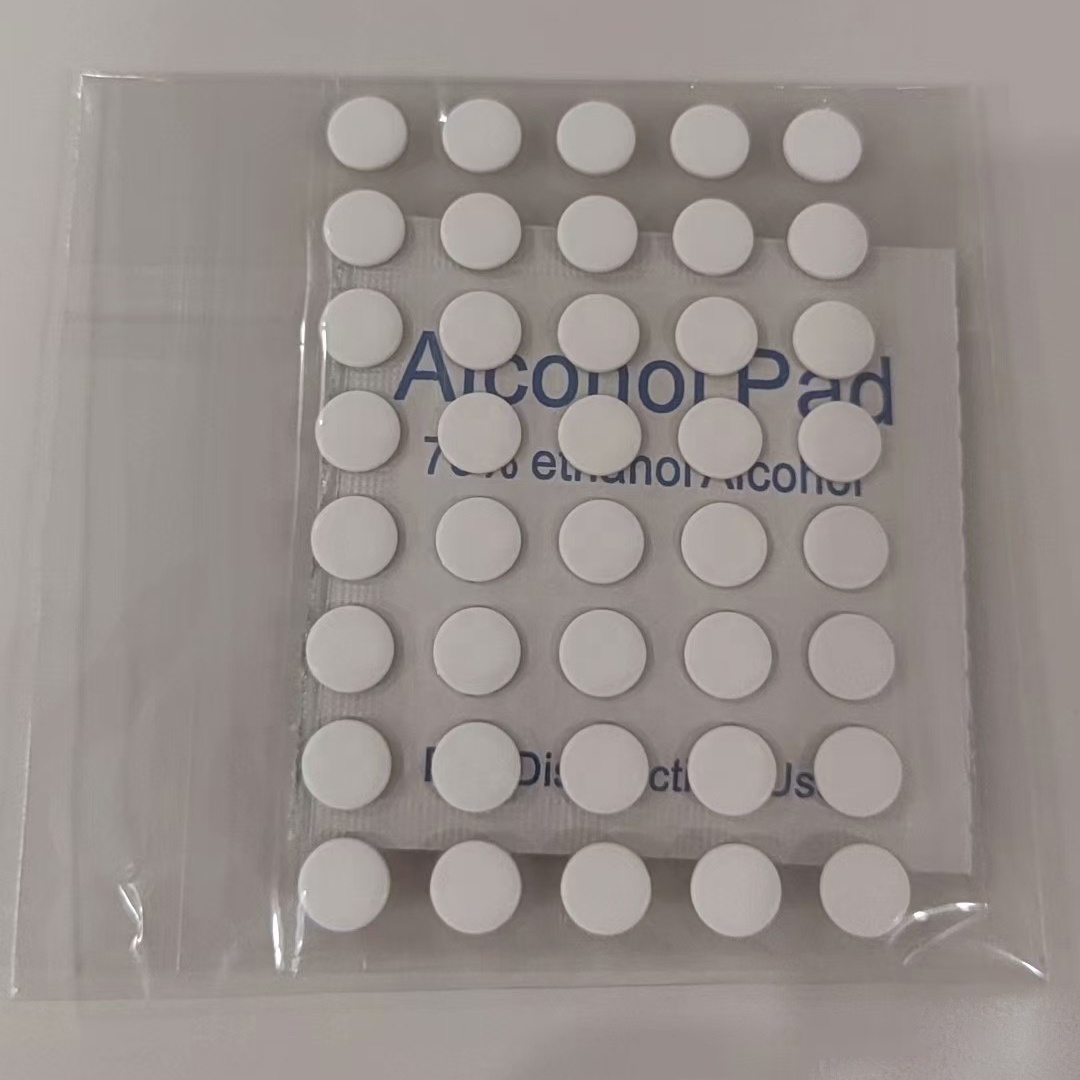
PTFE Round Gaming Mouse Glides Mouse Skate Dots
Low-friction PTFE skates for smooth tracking on glass and resin pads.

Custom Silk Screen Printed Tempered Glass Electronic Control Panel Cover for Smart Appliances
Printed tempered glass with custom graphics, durability and easy-clean surface.
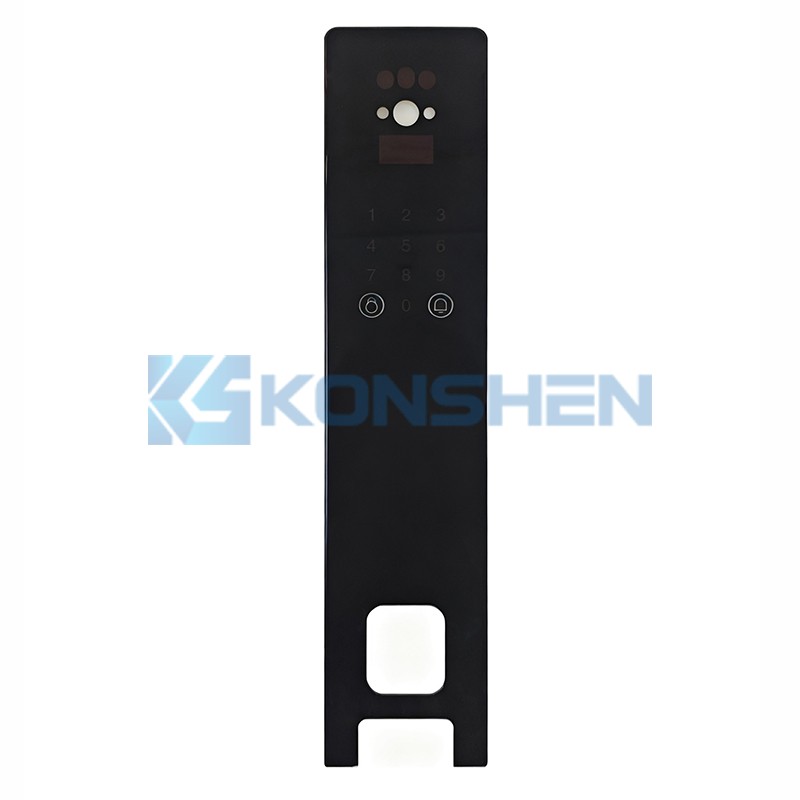
Electronic Tempered Glass Film Custom Printed Rectangular Panel Digital Keypad for Smart Door Lock
Rectangular printed keypad glass for smart entry and access-control products.
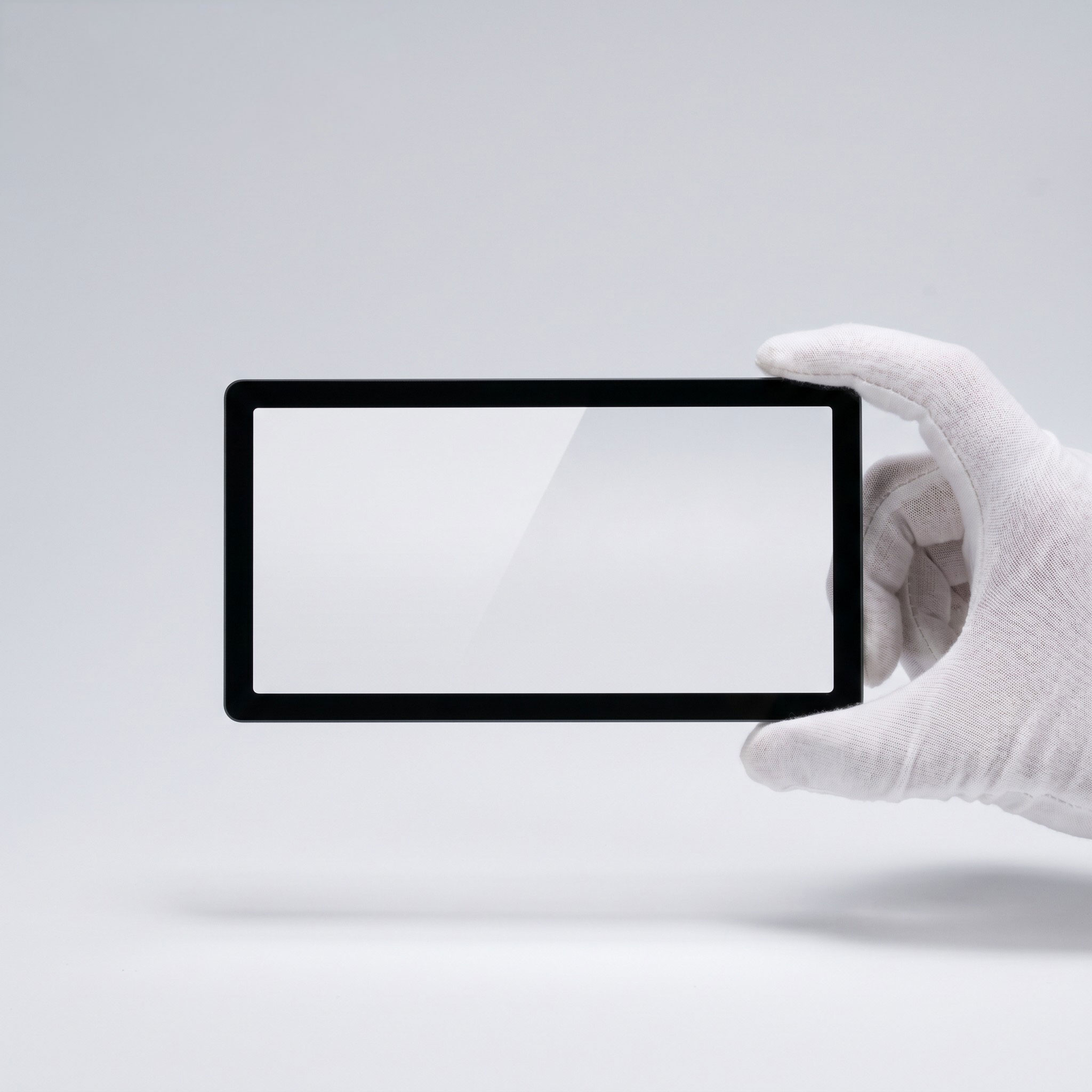
Custom Size Gorilla Glass Front Panel Panda Cover Sheet CNC Cut Silk Printed Tempered Glass Solar Display Screen Cover
CNC-cut Gorilla glass front panel with silk printing for solar display protection.

Round Oval PTFE 3M Wear-resistant Smooth Mouse Feet Stickers Glass Pad Resin Pads
3M-backed PTFE feet for glide tuning, wear resistance and consistent feel.

High Transmittance 98% Anti-Reflective AR Glass for Museum Showcase Luxury Picture Frame Low Reflectance Coated 1mm-19mm
Low-reflection AR glass for showcases, picture frames and high-clarity viewing.
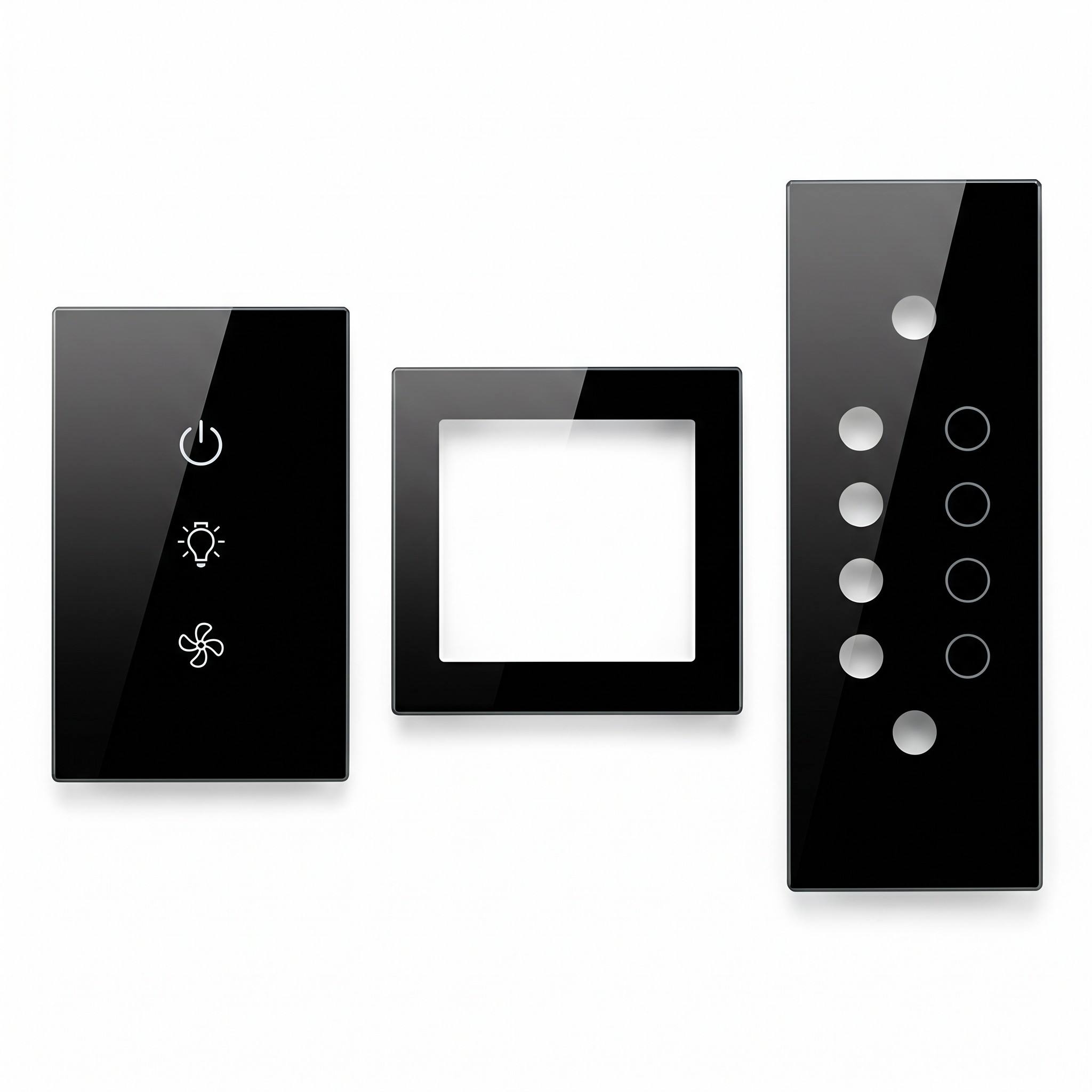
Tempered Glass Front Shield Cover Panel Custom Size Electronic Display Protection Sheet for Smart Device Konshen KS GB002
Custom tempered front shield for displays, control panels and smart devices.
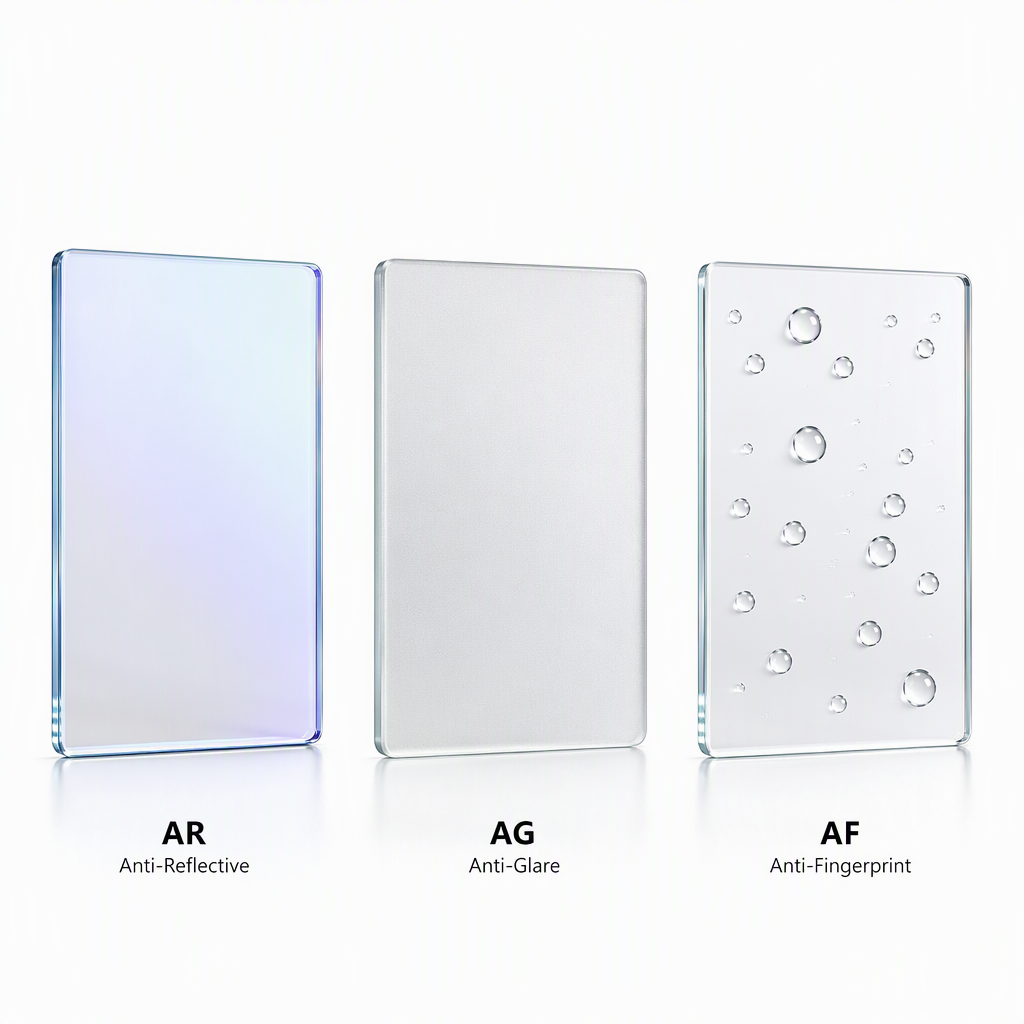
AR AG AF Coated Glass Anti Reflective Coating Service 92 Percent Transmission Anti Glare Custom Sheet Factory OEM
Combined optical coating service for custom sheets and OEM display programs.
Not sure which starting point fits? The recommendation matrix below pairs operating conditions with coating stacks, substrates and thickness ranges. For a faster answer, include your drawing, target optical values and expected annual volume in the first inquiry.
Verified Operating Figures Behind Repeat Orders
Export buyers need more than a product list; they need evidence that a factory can sustain the same result across prototypes, pilot runs and mass production.
Why KELO Is Positioned as a Top China Electronic Glass Factory & Exporter
Huizhou KELO Glass Co., Ltd. is a factory-direct manufacturer in Huizhou, Guangdong, inside the Greater Bay Area electronics supply chain. The company was built around a simple thesis: if optical coating, tempering, printing and bonding are separated across multiple vendors, the buyer absorbs the risk. KELO keeps cutting, CNC machining, edge polishing, silk-screen printing, flat and curved tempering, AR/AG/AF/ITO/FTO coating and 3M adhesive bonding under one roof. That vertical integration is not a marketing detail; it is the mechanism that protects tolerance, lead time and accountability.
For procurement teams, the advantage appears in practical places: the supplier is a verified manufacturer rather than a trader; engineering drawing review and DFM happen before tooling; samples can start from 1–2 pieces; and every batch passes incoming, in-process and final appearance inspection. The export record reinforces the operation: a 4.9/5 store rating, 98.18% reply rate, Trade Assurance support and six years of verified exporter activity. The result is a lower-risk path for buyers who need a China electronic glass factory and exporter that can answer both technical and commercial questions in the same conversation.

Factory-Direct, Not a Trader
One accountable manufacturing partner from raw glass to packed carton. That reduces finger-pointing when coating, print or dimensional tolerances interact.
Surface Engineering as Core Technology
AR, AG, AF, ITO and FTO capabilities are measured and controlled in-house. Coating performance is not outsourced to an invisible third party.
DFM & Rapid Prototyping
Engineering drawing review, tolerance feedback and prototype samples from 1–2 pieces help validate fit, optics and assembly before volume commitment.
Quality Gates & Protective Packing
Incoming, in-process and final inspection, 100% appearance checking, plus honeycomb cartons, blister trays and partition packing for transit safety.
Export-Ready Communication
FOB, CFR, CIF, EXW and DDP terms; T/T, L/C, PayPal and Western Union payment; response time typically within one hour during working periods.
Verifiable Marketplace Record
Buyers can review verified assessment, ratings, trade capacity, transaction level, trade history and credit profile before placing a first order.
Product Recommendation Matrix: Match Glass to the Operating Condition
Start from the environment, touch frequency and optical target, not the catalogue. This is how engineering teams narrow the substrate and coating stack before requesting a sample.
Bright outdoor displays
Specular reflections wash out the image. AG diffusion keeps content readable without increasing backlight power; premium designs can use AR+AG on one sheet.
AG · Haze 5–60% · Gloss 0.5–8 GUHigh-clarity showcases and medical monitors
When contrast and transmission matter, single- or multi-layer AR protects the image. Typical production targets are reflectance below 1.0% per side and transmittance above 99%.
AR · R <1.0%/side · T >99%High-touch control panels
Fingerprints and cleaning chemicals degrade perceived quality. AF top coats keep interfaces clear, wipe clean and retain a premium feel after repeated use.
AF · Contact angle >110° · >10,000 cyclesCapacitive touch and EMI shielding
ITO-coated glass is the workhorse for touch sensors, displays and EMI shielding. Specify sheet resistance and haze together so the touch controller and optical target match.
ITO · 1–20 Ω/sq · T >85% · Haze <2%Thin-film solar and high-temperature processes
FTO offers stronger thermal and chemical stability than ITO in many high-temperature steps. It is a frequent choice for thin-film solar cells and harsh processing.
FTO · 1–20 Ω/sq · High thermal stabilityImpact resistance and curved design
Thin, edge-to-edge or curved assemblies need strength without bulk. Chemically strengthened 2.5D/3D cover glass supports seamless industrial design.
0.1–19 mm · 2.5D / 3D · 3M bondingFuture Procurement Trends Shaping Electronic Glass Sourcing
Procurement is shifting from catalogue buying to supply-chain design. The question is no longer only “what is the unit price?” but “which supplier can keep optical performance stable, document the process and adapt when the product changes?”
Dual sourcing with process accountability
Buyers are adding second sources for resilience, but coating, tempering and printed glass are difficult to duplicate precisely. The winning model is a primary supplier with full process control plus a qualified backup for specific steps. Ask for process flow, coating stack and inspection data before approving a second source.
Total landed cost and yield
A low piece price means little if breakage, rework or field returns rise. Procurement teams increasingly compare total landed cost including yield, packing damage, coating rework, customs and lead-time risk. Request the packaging standard and sample retention policy alongside the quotation.
Traceability and quality data
Quality is becoming auditable. Buyers ask for batch traceability, coating performance records and inspection reports. A factory that can attach measured data to the shipment reduces incoming inspection workload and supports supplier scorecards.
Smaller pilots, faster scale-up
New product launches often begin with 1–2 prototype pieces, then move quickly to pilot quantities. Suppliers must have a rapid prototype route and a scale-up plan that does not change the critical process. Confirm whether the sample uses the same coating line as mass production.
Co-development and DFM
Glass is often one of the last components locked in, yet it affects touch sensitivity, optical clarity, strength and assembly. Earlier involvement from the glass manufacturer can reduce tooling revisions. DFM review should cover thickness, edge profile, print tolerances, coating stack and adhesive choice.
Sustainability and material compliance
RFQs increasingly include RoHS, REACH, packaging and process documentation. Lead-free inks, optimized glass yield, recyclable packing and consolidated shipments are becoming part of supplier selection, especially for European brands reporting Scope 3 progress.
Product Development Trends Shaping Next-Generation Electronic Glass
Product roadmaps point toward more function per square millimetre. Glass is no longer just a protective cover; it is an optical interface, a touch substrate, a structural surface and, in some products, an electrical component.
Multi-functional coating stacks
AR, AG and AF functions are moving from separate sheets to integrated stacks. The design challenge is balancing low reflectance, glare diffusion and oleophobic durability without creating colour shift or unacceptable haze.
Ultra-thin chemically strengthened cover glass
Thinner glass supports lighter devices and tighter industrial design, but strength and flatness must be controlled. Look for suppliers that can manage 0.1–19 mm thickness and validate edge quality and tempering stress.
2.5D and 3D curved forming
Curved cover glass is expanding beyond phones into dashboards, appliance interfaces and smart-home panels. Buyers should validate optical distortion, print alignment and bonding reliability on curved surfaces.
Embedded touch and conductive glass
ITO and FTO substrates enable capacitive sensing, EMI shielding and thin-film solar. Next-generation products require lower sheet resistance without unacceptable haze, especially as displays become brighter and more efficient.
AR glass for high-transmission visual systems
Museum showcases, medical imaging, AR/VR optics and luxury picture frames demand high transmission and low reflectance. Multi-layer AR designs with reflectance below 1.0% per side are becoming a specification, not a premium option.
More demanding operating environments
Outdoor kiosks, bathroom controls, kitchen appliances and automotive interiors are pushing humidity, chemical, salt-spray and abrasion requirements. Suppliers must test the finished stack, not just individual materials.
From Drawing to Export: A Workflow Built for Repeat Orders
A custom glass project fails most often at the interfaces: between design and tooling, between coating and printing, or between final inspection and packing. KELO’s workflow is arranged to keep those interfaces visible and accountable.
Specialty materials processed include Gorilla glass, borosilicate glass, quartz glass, sapphire glass, ceramic glass, lead shielding glass and laminated safety glass. Customization covers size, shape, holes, colour, logo printing, 2.5D/3D forming and adhesive bonding; trade terms include FOB, CFR, CIF, EXW and DDP.

Incoming Inspection
Raw glass and consumables are checked for thickness, flatness, surface defects and material consistency before entering production.
In-Process Control
CNC dimensions, hole positions, tempering strength, print alignment and coating results are monitored at each critical station.
Coating Validation
Adhesion, abrasion, contact angle, transmittance, reflectance, haze and gloss are measured against the approved sample or drawing.
Final Appearance
100% appearance inspection before packing, with defined release criteria for scratches, chips, print defects and optical anomalies.
Reliability Testing
Salt spray, abrasion and durability checks support applications exposed to cleaning, humidity, sunlight or repeated touch.
Protective Packing
Custom honeycomb cartons, blister trays and partition packing are selected to reduce transit damage and simplify incoming handling.
Questions Procurement Teams Ask Before a First Order
Straight answers to the technical and commercial questions that usually appear in an RFQ for custom electronic glass.
What is the minimum order quantity for custom electronic glass?
Sample orders can start from 1–2 pieces so fit, optics and coating performance can be validated before volume. Bulk MOQ is quoted per drawing and usually depends on size, printing complexity and coating stack.
What lead time should I plan for mass production?
Typical bulk lead time is 21–31 days after sample approval. Schedule more time for new tooling, multi-layer AR, 3D forming or complex silk-screen graphics. Raw glass availability and coating queue are confirmed at PO review.
What optical performance can KELO’s AR coating achieve?
Our AR coating can achieve reflectance below 1.0% per side and transmittance above 99% across 400–700 nm in single- or multi-layer designs. Final targets are confirmed against your drawing, substrate and wavelength range.
Should I specify ITO or FTO conductive glass?
ITO is common for capacitive touch sensors, displays and EMI shielding. FTO offers higher thermal and chemical stability for thin-film solar and high-temperature processes. Both can be supplied at 1–20 Ω/sq sheet resistance, above 85% transmittance and below 2% haze, subject to design review.
What thickness, sizes, shapes and customization are possible?
Glass thickness ranges from 0.1 mm to 19 mm. Size, shape, holes, edge profile, colour, logo printing, 2.5D/3D curved forming and 3M adhesive bonding are customized to the drawing or sample. Specialty materials include Gorilla glass, borosilicate, quartz, sapphire and ceramic glass.
What trade terms, payment methods and quality controls apply?
We support FOB, CFR, CIF, EXW and DDP, with T/T, L/C, PayPal and Western Union payment. Orders through Alibaba.com can use Trade Assurance. Quality control includes incoming, in-process and final inspection, 100% appearance checking, tempering, adhesion, abrasion and salt-spray testing, plus damage-resistant honeycomb, blister or partition packing.
Have a Drawing, Sample or Target Specification?
Send the glass thickness, dimensions, coating requirement, annual volume and destination market. Our engineering team will review feasibility, propose the most cost-effective substrate and coating stack, and return a quotation with lead time and packing options. Buyers, distributors and brand owners are welcome.
Send an Inquiry