Eight Custom Glass Cover Panel Lines for OEM Procurement
These product families cover the most common optical, conductive, decorative and protection requirements in display, appliance, automotive, elevator, industrial and museum applications.
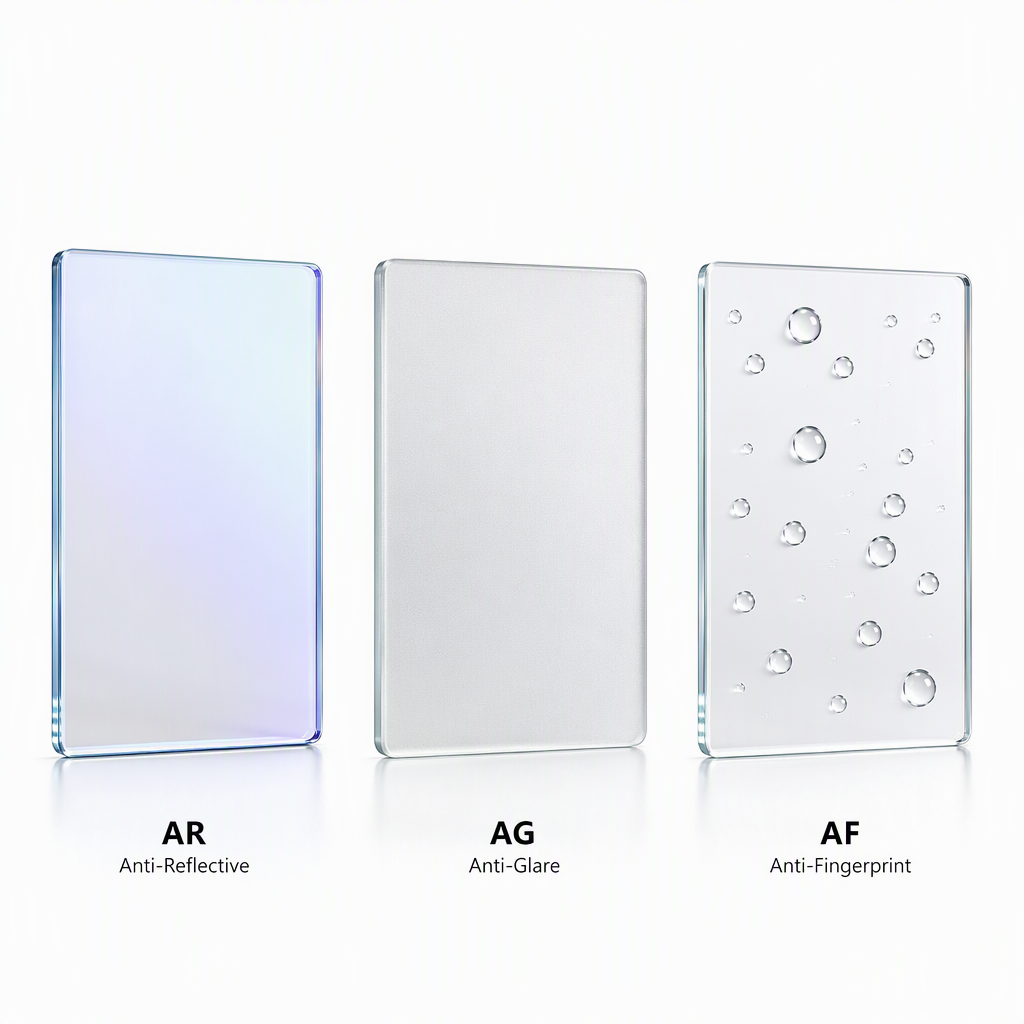
AR AG AF Coated Glass Anti Reflective Coating Service 92 Percent Transmission Anti Glare Custom Sheet Factory OEM
Combined optical coating for reflection control, glare diffusion and easy-clean touch surfaces.
View product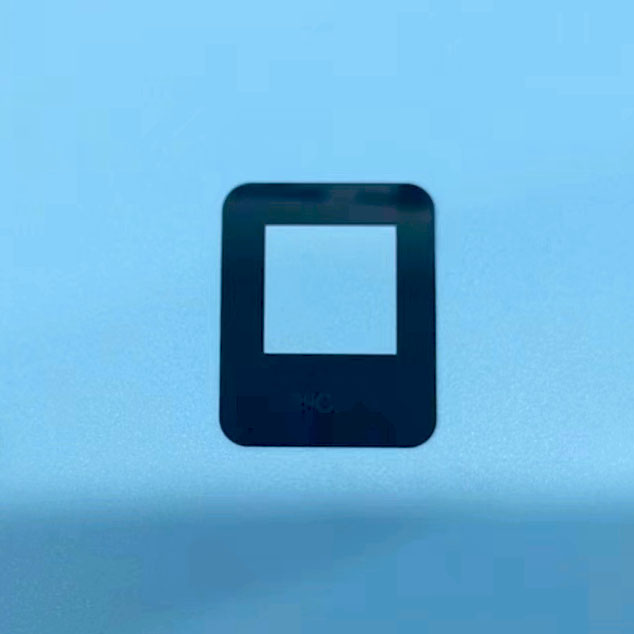
1mm Black Tempered Glass Switch Socket Panel Flat Solid Wall Cover with Print
Decorative tempered cover panel for switch, socket and wall-control interfaces.
View product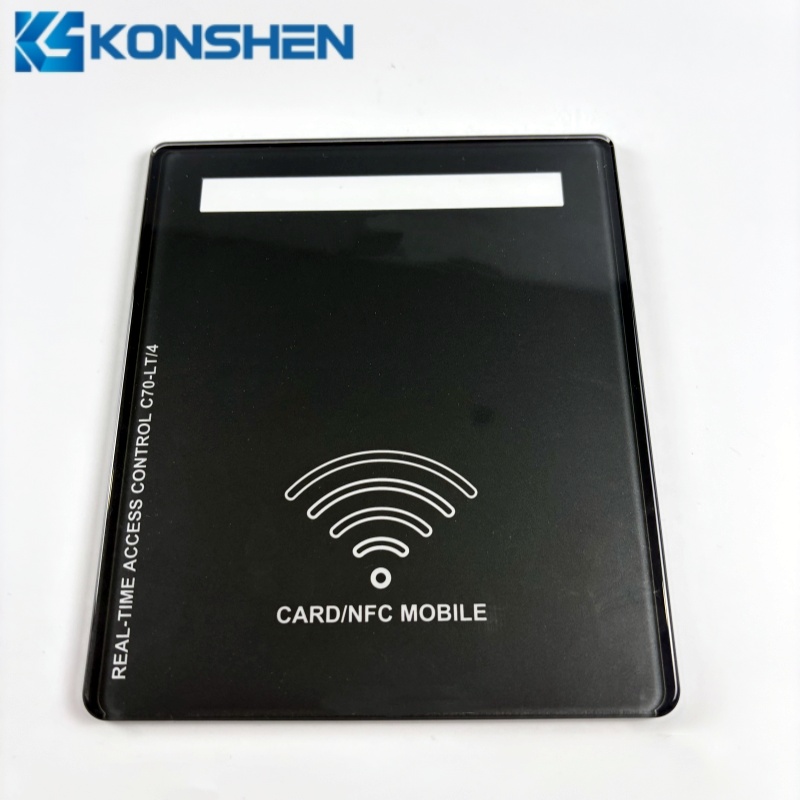
Custom 5mm NFC Access Card Silkscreen Printing Tempered Touch Screen Glass Switch Display Cover Glass
Printed touch glass for NFC, access-control and smart display switch panels.
View product
KS AG002 Custom Size AG Coating Anti-Glare Tempered Glass Panel High Transmittance Cover Sheet for Electronic Display Screen
Anti-glare display cover with controllable haze for readable outdoor and bright-room screens.
View product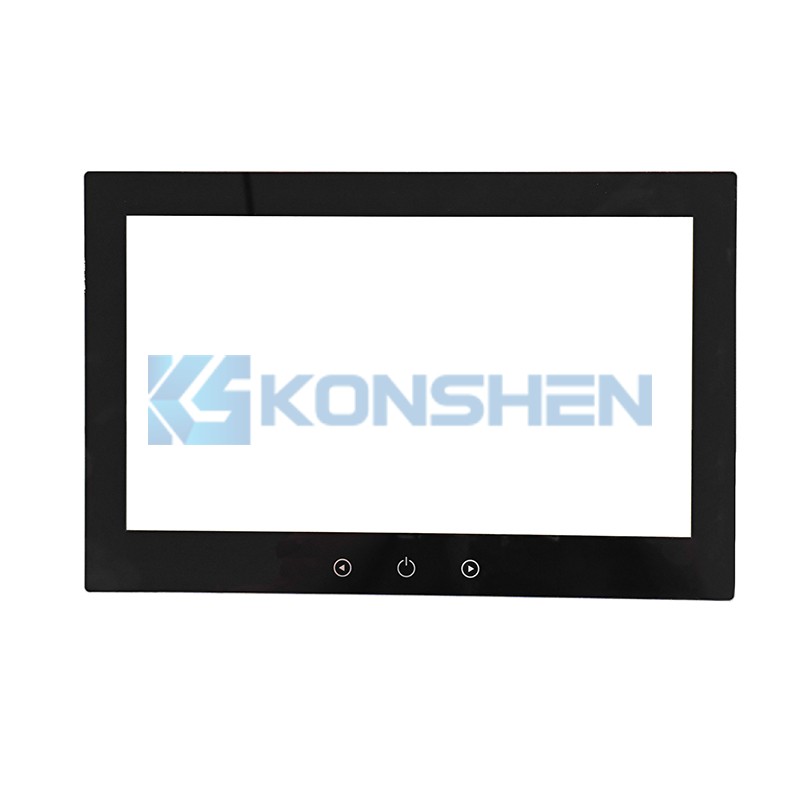
Electronic ITO Conductive Tempered Glass Custom Black Framed 1mm-4mm Thickness Display Cover for Industrial Monitor
Transparent conductive glass for touch sensing, displays and EMI shielding in industrial systems.
View product
Customized Cutting Elevator Indicator Arrow Printing Touch Smart Control Elevator Panel Use Electronics Screen Glass Instrument
Precision-cut and printed elevator control glass with graphic, icon and arrow customization.
View product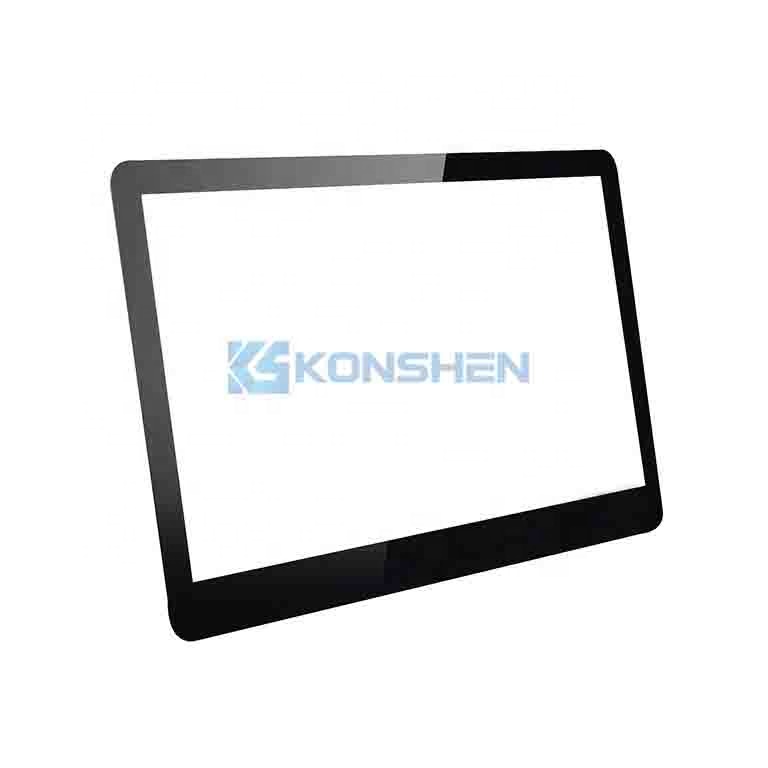
2mm 3mm Solid/Hollow Anti-Glare Chemical Tempered LCD Touch Screen Protection Cover Glass Silk Screen Printed European Style
Chemically strengthened LCD protection glass with anti-glare finish and decorative printing.
View product
High Transmittance 98% Anti-Reflective AR Glass for Museum Showcase Luxury Picture Frame Low Reflectance Coated 1mm-19mm
Low-reflection AR glass for museum cases, luxury frames and high-clarity optical windows.
View productA Custom Glass Cover Panel Is Now a Specification-Driven Component
The purchase decision has shifted from “who can cut glass at the lowest price” to “who can hold optical, mechanical, electrical and cosmetic performance across production lots.”
A custom OEM glass cover panel sits at the intersection of optics, electronics, industrial design and supply-chain risk. A display is often judged in seconds by its blackness, reflection control, touch feel, edge finish, print alignment and the buyer’s confidence that the next shipment will match the approved sample. For that reason, cover glass has become an engineered interface component, not a commodity sheet.
Huizhou KELO Glass Co., Ltd. is a factory-direct manufacturer located in Huizhou, Guangdong, inside China’s Greater Bay Area electronics supply chain. The company produces touch screen cover glass, display cover glass and optical coated glass, with advanced surface treatment as its core technology. Every key step runs under one roof: cutting, CNC machining, edge polishing, silk-screen printing, flat and curved tempering, coating and bonding. For buyers, that means one accountable supplier, tighter tolerances, stable lead times and pricing without middle-man margins.
The information advantage lies in publishing production windows that procurement and engineering teams can use directly in an RFQ. KELO’s typical capability includes glass thickness from 0.1 mm to 19 mm, AR reflectance below 1.0% per side with transmittance above 99% across 400–700 nm, AG haze from 5–60% with gloss from 0.5–8 GU, AF water contact angle above 110°, ITO/FTO sheet resistance from 1–20 Ω/sq, transmittance above 85% and haze below 2%.
These are not catalogue claims detached from production. They are the windows against which engineering review, sampling, inspection and final packing are aligned. That alignment is the difference between a low piece price and a low total cost of ownership.
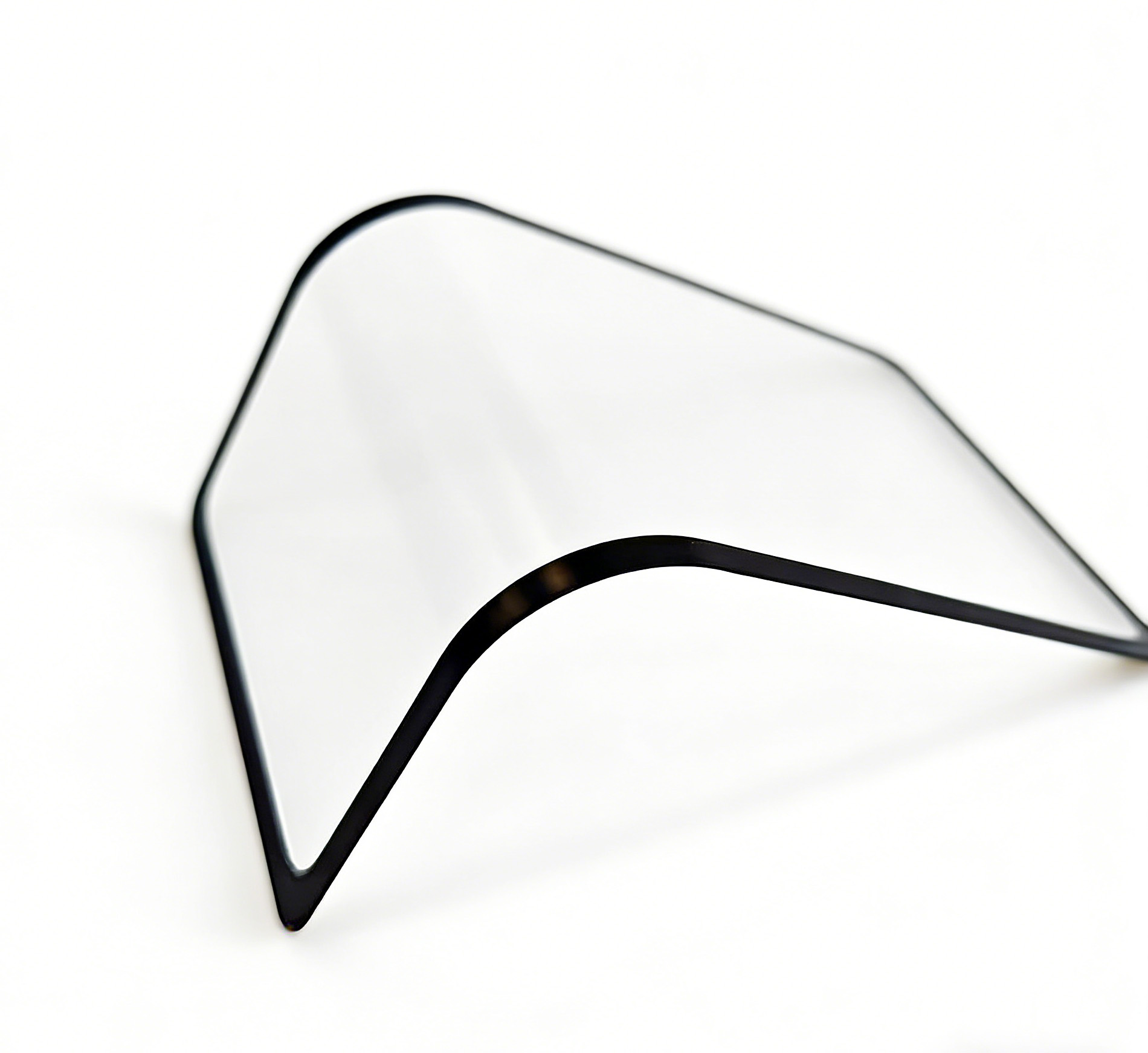
Curved cover glass, optical coating and silk-screen printing can be engineered as one part — reducing assembly steps and supplier hand-offs.
Performance Windows Buyers Can Specify in an RFQ
Use the following matrix to compare coating, conductive and forming options before requesting samples.
| Specification area | Typical production window | What it solves | Procurement note |
|---|---|---|---|
| AR anti-reflective coating | Reflectance < 1.0% per side; transmittance > 99% at 400–700 nm; single or multi-layer | Ghost reflections, low contrast, showcase visibility, medical and automotive display clarity | Specify substrate, wavelength range and whether one side or both sides are coated |
| AG anti-glare coating | Haze 5–60%; gloss 0.5–8 GU | Sunlight readability, outdoor kiosks, industrial HMI, in-vehicle screens | Do not request “anti-glare” alone; define haze and gloss targets |
| AF anti-fingerprint coating | Water contact angle > 110°; pencil hardness > 3H; transmittance > 98%; durability > 10,000 cycles | Fingerprint resistance, easy cleaning, high-touch appliance and smart-home panels | State cleaning chemicals and abrasion test method for validation |
| ITO conductive glass | Sheet resistance 1–20 Ω/sq; transmittance > 85%; haze < 2% | Capacitive touch sensing, displays and EMI shielding | Define sheet resistance, pattern, busbar layout and optical target |
| FTO conductive glass | Sheet resistance 1–20 Ω/sq; transmittance > 85%; haze < 2% | Thin-film solar cells and high-temperature processes | Choose when thermal and chemical stability matter more than ITO process familiarity |
| Combined stacks | AR+AG, AG+AF and other functional stacks; cosmetic grade per 60/40 scratch-dig | Premium outdoor and in-vehicle interfaces that need two or more surface functions | Confirm stack order, measurement side and cosmetic acceptance criteria |
| Thickness and forming | 0.1–19 mm; flat, 2.5D and 3D curved; holes, cutouts, chamfers and polished edges | Hardware fit, impact resistance, edge-to-edge industrial design | Provide a 2D drawing or 3D model plus assembly tolerance and adhesive plan |
Final targets are confirmed against your drawing during engineering review. Sampling from 1–2 pieces allows fit, optics and coating performance to be validated before volume commitment.
Product Recommendations by Application
The fastest way to specify is to start from the operating condition: sunlight, touch frequency, cleaning, electrical function, impact risk and visual brand requirements.
Outdoor kiosks and EV charging screens
Use AG or AR+AG tempered cover glass with haze and gloss specified numerically. The goal is to diffuse harsh reflections without sacrificing readability or touch sensitivity.
Recommended: AG haze 5–60% · gloss 0.5–8 GU · chemical or physically tempered substrate
Automotive HMI and center consoles
AR+AF stacks reduce reflections while resisting fingerprints. For curved dashboards and edge-to-edge consoles, 2.5D or 3D forming should be reviewed with the drawing early.
Recommended: AR+AF · 2.5D/3D · contact angle >110° · automotive cosmetic acceptance
Smart home switch and socket panels
Black tempered glass with silk-screen printing and AF easy-clean coating gives a premium appliance look while keeping everyday cleaning simple.
Recommended: 1 mm black tempered glass · printed graphics · AF coating
Museum showcases and luxury frames
High-transmittance AR glass improves object visibility and reduces environmental reflections. Thickness from 1 mm to 19 mm supports different frame and case constructions.
Recommended: 98% AR glass · low reflectance · custom sheet sizes
Industrial monitors and HMI terminals
ITO conductive glass supports touch sensing and EMI shielding while maintaining optical clarity. For dusty or wash-down environments, edge sealing and print design should be reviewed together.
Recommended: ITO 1–20 Ω/sq · T >85% · haze <2% · 1–4 mm
Elevator and access-control panels
Printed touch glass with indicator arrows, icons and cutouts can combine decorative and functional layers. Chemical strengthening helps manage daily impact and cleaning.
Recommended: chemically tempered glass · CNC cutouts · silkscreen icons · AG optional
What Smart Buyers Will Model into 2025–2030 Sourcing Plans
Glass cover panel procurement is becoming less transactional and more engineering-led. The following trends are already visible in RFQs from Europe, North America and South America.
Supply-chain de-risking and dual sourcing
Buyers are reducing single-supplier exposure by qualifying a primary and a secondary source. The stronger secondary source is not a trader with a catalogue; it is a factory that controls cutting, printing, tempering, coating and inspection in-house. Process depth is now a risk-management feature.
Total landed cost replaces piece price
Procurement teams increasingly compare total landed cost: sample cycle time, yield, inspection burden, packaging damage, rework, freight and inventory risk. A slightly higher piece price can be cheaper when the supplier reduces incoming rejects and schedule disruption.
Digital RFQ and drawing-based communication
More buyers now send STEP, DXF, PDF drawings and target optical data instead of loose descriptions. Suppliers must respond with DFM feedback, tolerance review, coating recommendations and sample timing. A supplier that can read engineering intent is more valuable than one that only quotes dimensions.
Verified quality data and traceability
IQC, IPQC and FQC/OQC records are moving from internal documents to buyer-facing evidence. Expect more requests for coating adhesion, abrasion, salt spray, tempering and appearance inspection data. A supplier with 100% appearance inspection and defined release criteria is easier to audit.
Compliance and sustainable material efficiency
Energy use, packing waste and material yield are becoming part of supplier scorecards. Custom honeycomb cartons, blister trays and partitioned packing protect glass and reduce damage-related waste. Process yield and right-first-time sampling also contribute to a lower environmental burden.
Early supplier involvement in design
Brand owners are bringing glass suppliers into design reviews earlier to avoid late changes in print, coating, curved forming and adhesive bonding. Early DFM feedback can remove cost before tooling and samples are committed.
How Custom Glass Cover Panels Are Evolving
The next generation of cover glass will carry more functions per part: optical control, touch sensing, decorative print, easy-clean performance and structural strength.
Thinner, stronger and larger formats
Devices continue to reduce bezel, thickness and weight while increasing display area. Glass must remain flat, strong and printable at larger sizes. Thickness from 0.1 mm to 19 mm allows thin consumer covers and thicker industrial or museum windows to be sourced from one partner.
2.5D and 3D curved forming
Curved cover glass supports edge-to-edge industrial design in automotive, smart home and wearable interfaces. The procurement challenge is to align the 3D model, optical distortion limits, print alignment and adhesive bonding before sampling.
Combined AR+AG+AF optical stacks
Buyers increasingly want one substrate to solve multiple problems: low reflection, glare diffusion and fingerprint resistance. Combined stacks require tighter process control, but they simplify BOM structure and reduce assembly steps.
ITO and FTO conductive glass
Transparent conductive glass remains central to capacitive touch, displays and thin-film solar. ITO is common for touch and EMI shielding; FTO is chosen where thermal and chemical stability are critical. Low sheet resistance and controlled haze are becoming baseline expectations.
Display integration and haptic-friendly glass
Cover glass is increasingly designed together with display modules, sensors and haptic feedback. Uniform thickness, flatness, printed dead-front graphics and precise cutouts all influence the final user experience.
Application-specific glass families
Automotive, medical, smart home, outdoor kiosk and gaming glass each require different acceptance criteria. Suppliers will be expected to translate application risk into measurable drawings rather than selling one generic glass sheet to every market.
Why KELO Glass Is a Lower-Risk OEM Partner
The supplier you choose is part of your quality system. KELO combines factory-direct production, surface-treatment expertise and export experience in one accountable organization.
Huizhou KELO Glass Co., Ltd. is a factory-direct manufacturer, not a trading company. Production is located in Huizhou, Guangdong, and every critical process is kept in-house: cutting, water-jet cutting, CNC machining and drilling, edge polishing, laser engraving, silk-screen printing, sandblasting and frosting, flat and curved tempering, AR/AG/AF/ITO coating, 2.5D/3D curved forming and 3M adhesive bonding.
That vertical integration matters because outsourcing individual steps adds handling damage, longer lead times and unclear responsibility when something fails. Keeping the process under one roof allows tolerances to be controlled from raw sheet to packed carton. For procurement teams, the benefit is a single quality owner and a shorter path from drawing to validated sample.
Samples start from 1–2 pieces, so fit, optics and coating performance can be checked before volume commitment. Mass production is typically quoted at 21–31 days after sample approval, depending on size, coating stack, curved forming and printing complexity. Customization includes size, shape, holes, color, logo printing, 2.5D/3D forming and adhesive bonding.
Quality is controlled through incoming, in-process and final inspection, with 100% appearance checking. Tempering, adhesion, abrasion and salt spray tests are part of the release process. Custom honeycomb cartons, blister trays and partition packing help minimize transit damage. The company supports FOB, CFR, CIF, EXW and DDP terms, with T/T, L/C, PayPal and Western Union payments; orders placed through Alibaba.com can be protected by Trade Assurance.

Export-ready packing uses custom honeycomb cartons, blister trays and partition packing to protect optical surfaces and printed edges.
Current Export Market Distribution
Common Questions from OEM Buyers and Importers
These answers reflect the questions that most often appear before a first sample order or a supplier qualification audit.
What is the minimum order quantity for custom OEM glass cover panels?
What lead time should we plan for samples and mass production?
What optical performance can your AR coating achieve?
Should we choose ITO or FTO conductive glass?
What thicknesses, sizes, shapes and printing options are available?
How do you control quality before shipment?
Which trade terms and payment methods do you accept?
Can one part combine AR, AG, AF, printing and curved forming?
How can we verify the supplier before placing a volume order?
How do you reduce damage risk during international shipping?
Send a Drawing, Get an Engineered Quote
Share your drawing, target coating performance, annual volume and application environment. Our engineering team will review feasibility, recommend the most cost-effective glass solution and guide the sample process from 1–2 pieces through mass production.