OEM/ODM Automotive Display Glass Suppliers & Wholesaler
From 0.2 mm chemically strengthened cover glass to AR/AG/AF coated panels and ITO/FTO conductive glass, we help automotive Tier-1, Tier-2 and HMI buyers source display glass with verified optics, durable touch surfaces and export-ready documentation.
Inquire NowAutomotive Display Glass Products for OEM/ODM Programs
Each product below is processed in-house through cutting, CNC machining, edge polishing, tempering, coating, printing and inspection. Buyers can validate fit, optics and touch performance before committing to volume.
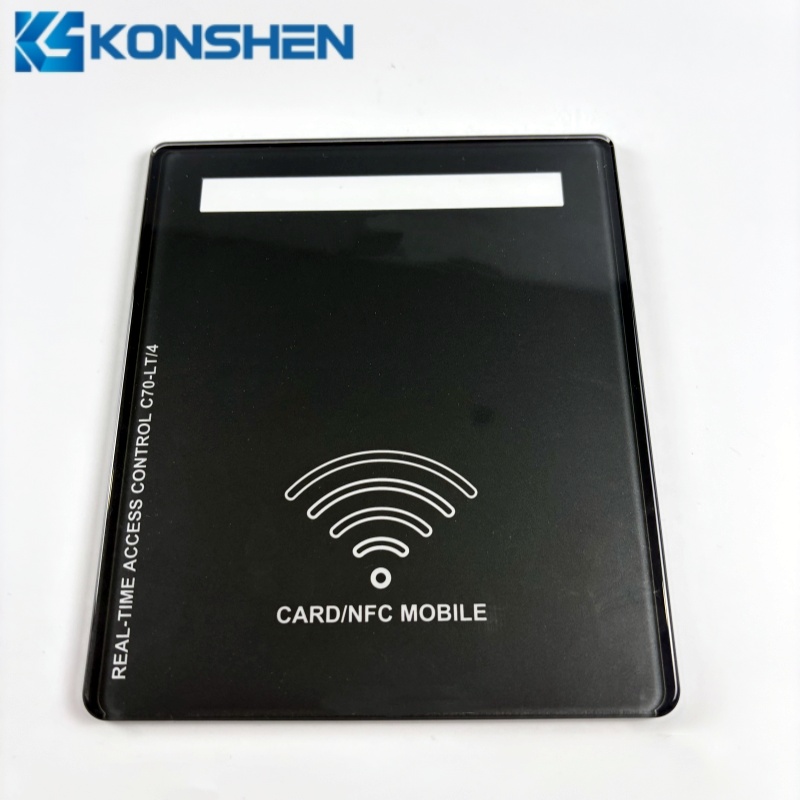
Custom 5mm NFC Access Card Silkscreen Printing Tempered Touch Screen Glass Switch Display Cover Glass
Ideal for access-control cards, smart switches and interactive panels that require printed graphics, durable touch surfaces and NFC integration.
View product detail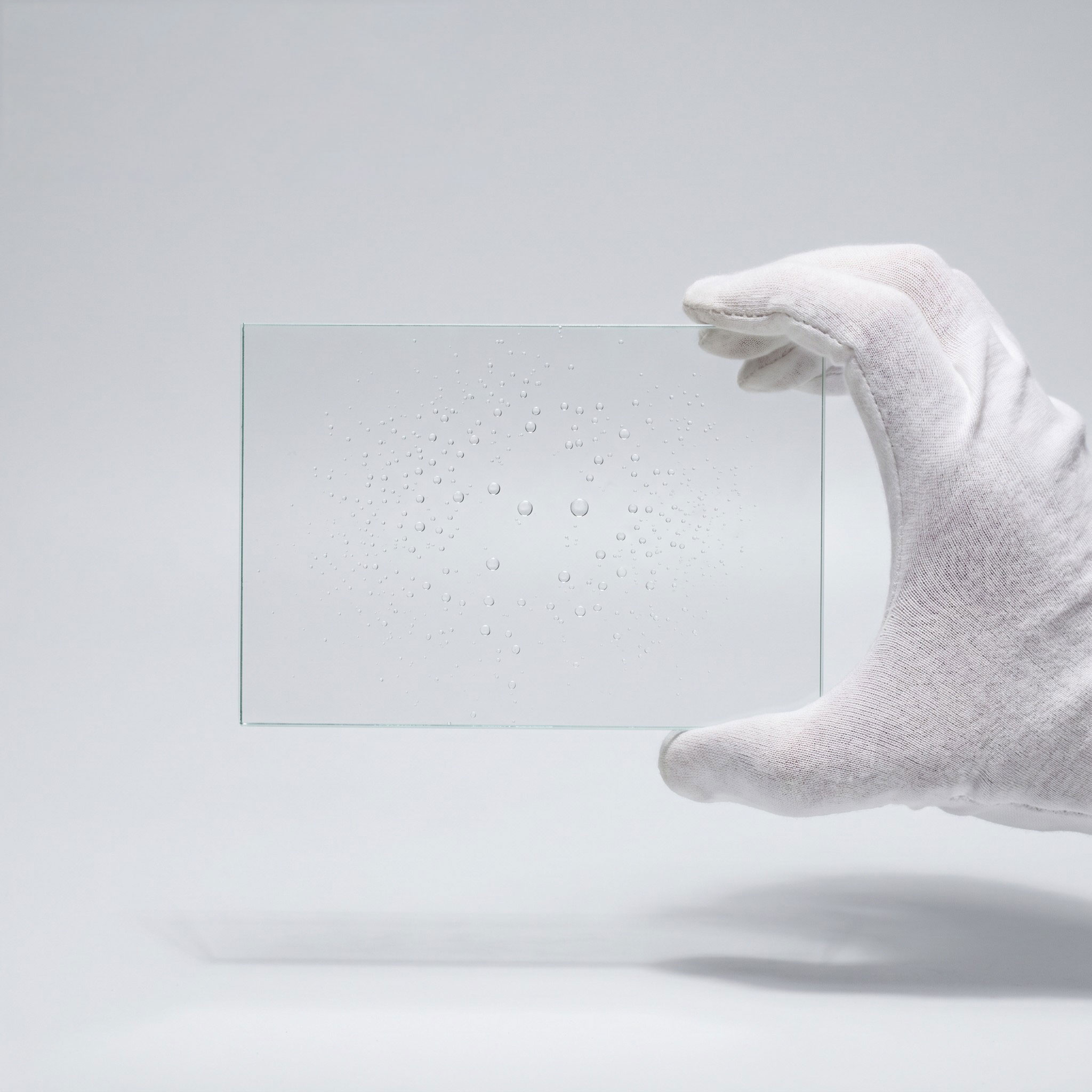
KS AF001 High Transmittance AF Coated 1.1mm/2mm CNC Cut Custom Shape Toughened Glass Panel for Kitchen Electronic Device Covers
Anti-fingerprint coated glass for appliance covers, kitchen electronics and high-touch interfaces where clarity and cleanability matter.
View product detail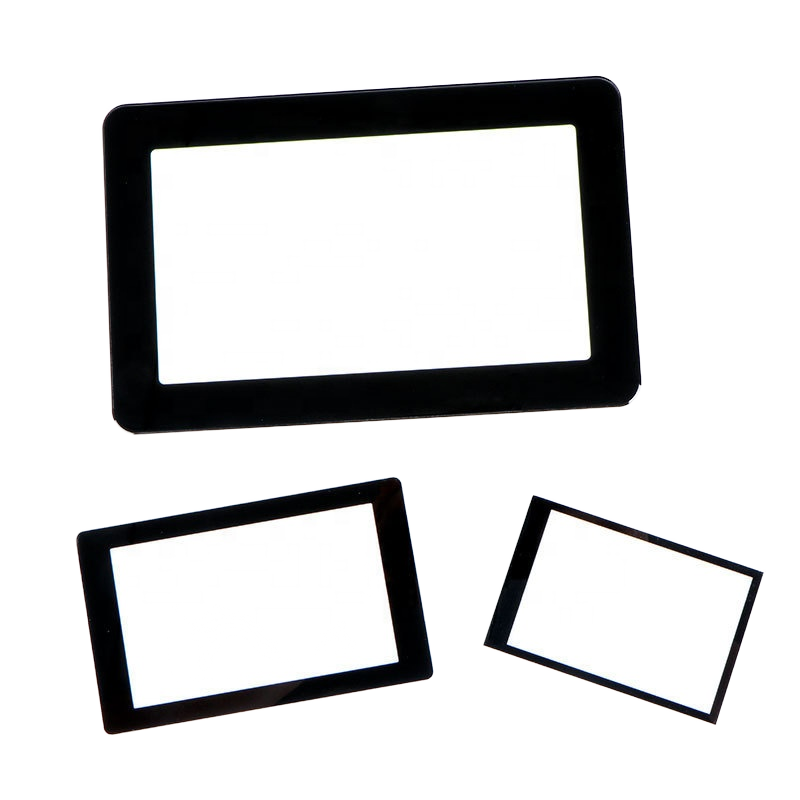
Wholesale Left Right Switching Control 0.2mm 5mm Soda Lime Extra Clear Tempered Glass Touch Screen Panel Outdoor Gym Waterproof
Extra-clear tempered touch glass for outdoor controls, gym equipment and wet environments where readability and moisture resistance are critical.
View product detail
Curved Tempered Glass Panel with Anti-reflective Coating Waterproof for Bathroom and Instrument Display Decoration
Combines curved forming, anti-reflective performance and waterproof assembly support for premium displays and decorative instrument covers.
View product detail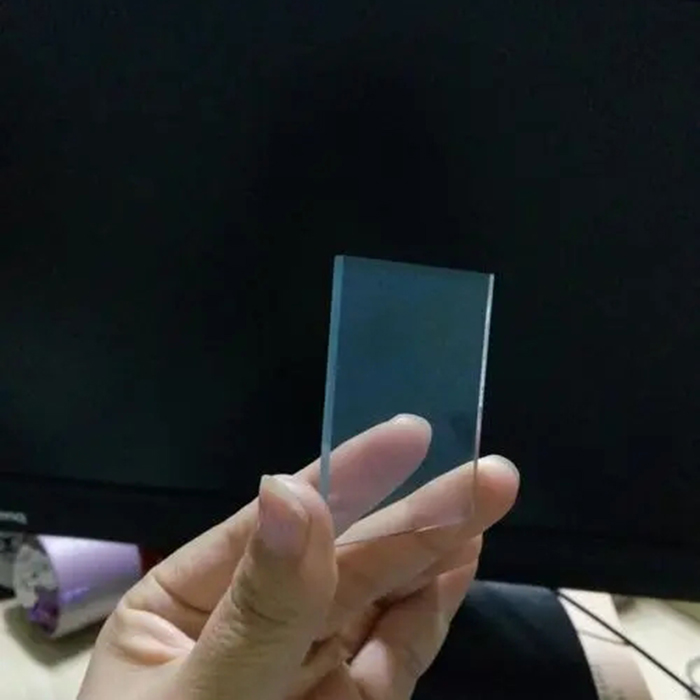
1.1 2.2mm Solid Flat Square Indium Tin Oxide (ITO) Coated Conductive Glass and FTO Conductive Glass for Lighting Applications
Transparent conductive substrates for lighting, touch sensors, displays and thin-film solar applications requiring stable sheet resistance.
View product detail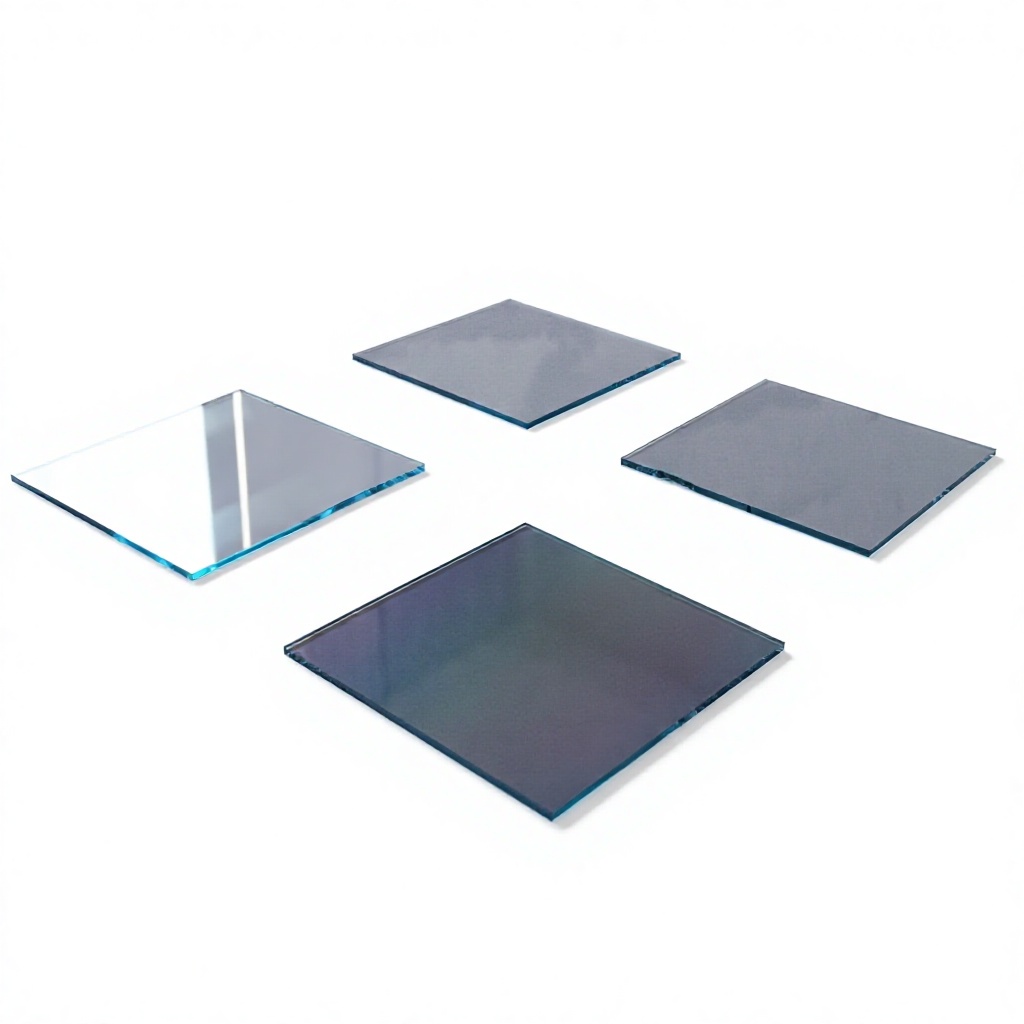
1.1mm ITO Coated Conductive Glass Panel Optical Electronic Glass Custom Shape Polished Edge for Industrial Use
Custom-shaped ITO glass with polished edges for industrial touch sensors, electronic displays and precision optical assemblies.
View product detail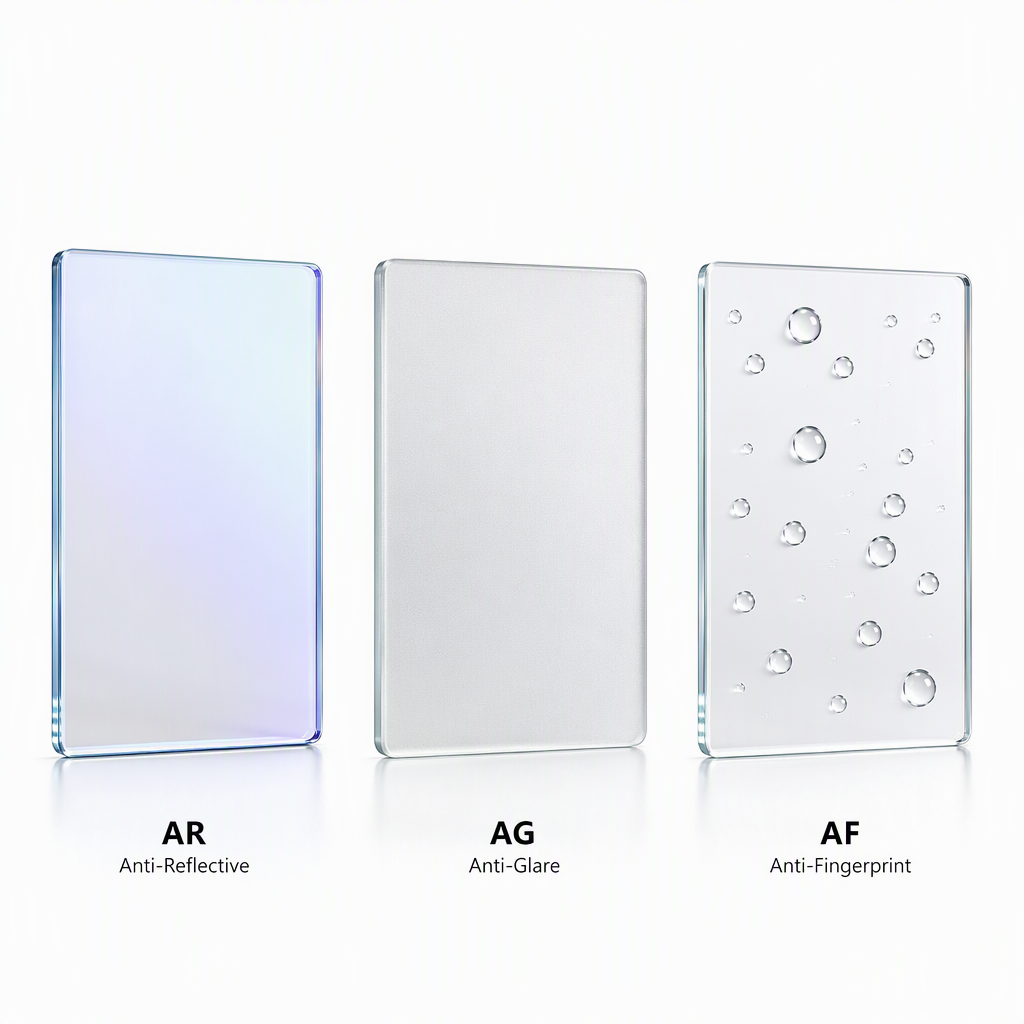
AR AG AF Coated Glass Anti Reflective Coating Service 92 Percent Transmission Anti Glare Custom Sheet Factory OEM
Multi-functional optical coating service for buyers who need reflection control, glare diffusion and fingerprint resistance on one sheet.
View product detail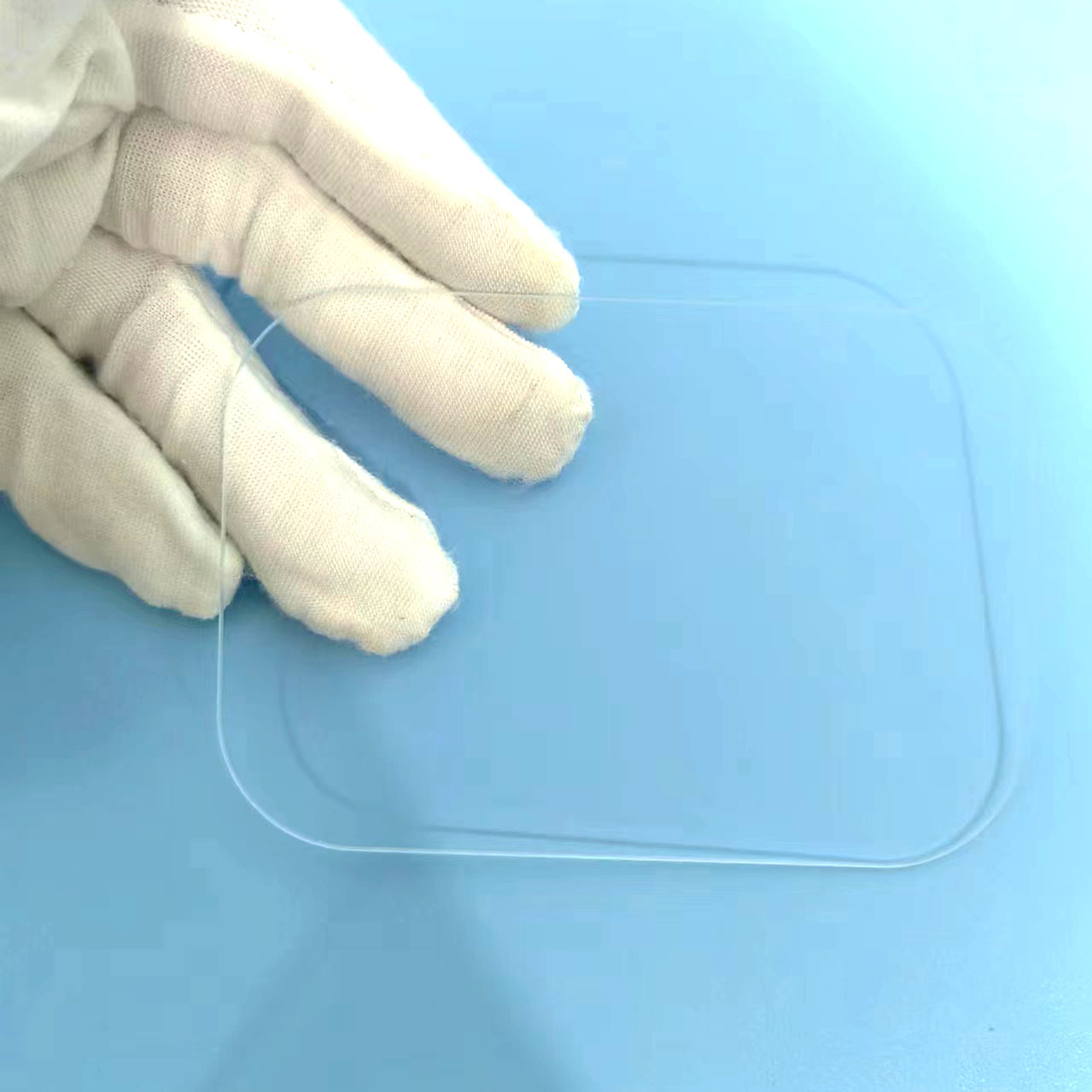
1.1mm ITO Coated Conductive Glass Panel High Transmittance CNC Custom Shape Polished Edge for Smart Home Touch Mirror
High-transmittance ITO glass for smart mirrors and touch-enabled surfaces, with CNC shaping and polished edges for clean integration.
View product detailWhat Buyers Should Know About OEM/ODM Automotive Display Glass
Automotive display glass is not a commodity pane. It is an engineered stack that usually includes a glass substrate, chemical strengthening or tempering, precision edge finishing, optical coating, printed graphics, adhesive and protective packaging. In an EV cockpit, instrument cluster, head-up display or charging-station HMI, a small change in reflectance, haze, flatness or touch sensitivity can affect perceived quality, safety and warranty cost.
For procurement teams, the most reliable sourcing strategy is to define the operating condition first: sunlight exposure, cleaning chemicals, touch frequency, impact risk, temperature range, optical targets and electrical function. Then confirm the substrate, coating stack and assembly method with the supplier’s engineering team. This approach reduces costly re-sampling and ensures the approved sample matches mass production.
As an OEM/ODM automotive display glass supplier and wholesaler, KELO Glass supports both drawing-based customization and sample-based development. Buyers can start with 1–2 pieces, validate the optics and fit, then scale to 21–31 day production. Because cutting, CNC, tempering, coating and inspection are controlled in-house, the specification approved at sample stage is easier to maintain in volume.
For search and procurement teams comparing automotive display glass suppliers, the key question is not only “Who can quote the lowest unit price?” It is “Who can document the process, hold the optical window, protect the glass in transit and respond quickly when the design changes?” That is where factory-direct engineering support creates measurable value.
RFQ Checklist for Display Glass
- Substrate, thickness and tolerance: 0.1–19 mm range
- Shape, holes, edge profile and 2.5D/3D curvature
- Optical target: AR reflectance, AG haze and gloss
- Surface function: AF, AR+AG, AG+AF or ITO/FTO
- Printing, logo, color and light-transmission zones
- Adhesive, protective film and packaging method
- Annual volume, sample quantity and target lead time
- Inspection records, trade terms and destination port
Which Display Glass Fits Your Automotive or HMI Application?
These recommendations help buyers narrow the specification before requesting a sample. Final selection should always be confirmed against your drawing, operating environment and reliability test plan.
Center Console & Infotainment
Large curved displays need strength, low reflection and smudge resistance. Specify chemically strengthened 2.5D/3D cover glass with AR+AG+AF or AG+AF.
Recommended: AR+AG+AF coated cover glassInstrument Cluster
Night-time clarity and anti-reflection matter more than decorative effects. Use AR-coated glass with controlled haze, low color shift and stable surface quality.
Recommended: single or multilayer AR glassHead-Up Display & Optical Windows
Optical clarity is the priority. Multi-layer AR coating can achieve transmittance above 99% and reflectance below 1.0% per side across 400–700 nm.
Recommended: high-transmittance AR glassSmart Mirror & Touch Surface
Touch-enabled mirrors and smart home panels need a transparent conductive layer without degrading reflectivity or visual clarity.
Recommended: ITO conductive glass + AFOutdoor Charging & HMI
Sunlight, rain and frequent cleaning demand diffused glare, durable coatings and reliable sealing. Use AG or AR+AG with waterproof assembly support.
Recommended: AG-coated tempered glassTouch Switches & NFC Panels
Appliance control panels, smart switches and access cards benefit from thin tempered glass, precise printing and clean edge finishing.
Recommended: 0.2–5 mm printed tempered glassAutomotive Display Glass Procurement Trends Buyers Should Plan For
Purchasing decisions are moving beyond unit price toward supply resilience, engineering speed and documented process control. These trends are especially relevant for OEM/ODM automotive display glass programs.
Dual Sourcing & Supply Resilience
Automotive buyers are qualifying secondary glass suppliers earlier to protect production from logistics disruption, coating capacity constraints and regional risk. A supplier with in-house coating and tempering can shorten the recovery path when demand spikes.
Earlier Supplier Involvement
Design-for-manufacturing reviews now happen before tooling and enclosure locks. Suppliers that can comment on edge stress, coating stack, flatness and adhesive selection help avoid expensive changes after sample approval.
Total Landed Cost Focus
Procurement teams are comparing breakage rate, packaging cost, inspection time, rework risk and lead-time variability—not just the unit price. Damage-proof packing and stable optical performance often create a lower total cost than a cheap quote.
Traceability & Documentation
Quality teams increasingly request inspection records, coating data, material declarations and packing specifications. A supplier that controls the process in-house can respond faster to PPAP-style, IMDS or customer-specific documentation requests.
Low-Volume Validation, Fast Scale-Up
Programs often begin with engineering samples before volume is confirmed. Suppliers offering 1–2 piece samples and clear scale-up plans reduce the gap between prototype validation and mass production.
Sustainability & Packaging Efficiency
Glass is recyclable, but breakage and excess packaging undermine its environmental advantage. Buyers are asking for right-sized cartons, reusable blister trays where practical, and fewer transit failures.
Product Development Trends Reshaping Display Cover Glass
Automotive interiors, smart home interfaces and industrial HMI are converging around larger screens, curved surfaces and multi-functional coatings. These are the development directions buyers should discuss during RFQ.
Larger, Curved Multi-Display Modules
Wide cockpit displays and seamless smart surfaces require 2.5D/3D forming, stable flatness and edge strength. Glass must fit tightly into the enclosure while maintaining optical quality across the full viewing area.
Hybrid AR + AG + AF Stacks
Instead of choosing one coating, buyers increasingly want reflection control, glare diffusion and fingerprint resistance on the same part. Stack design must balance transmittance, haze and durability.
Anti-Glare with Better Contrast
Automotive and outdoor HMI buyers are moving away from over-diffused surfaces that look hazy. Controlled haze and gloss allow sunlight readability while preserving sharpness and night-time clarity.
Touch & EMI Functions Inside the Glass
ITO and FTO conductive glass allow touch sensing, heating and EMI shielding to be integrated into the display stack. Buyers are asking for tighter sheet-resistance control and lower haze.
Thinner Strengthened Glass
Thinner cover glass lets designers reduce weight and stack height, but it must be paired with appropriate strengthening, edge finishing and adhesive bonding to preserve impact resistance.
Decorative and Smart Surfaces
Printed borders, color layers, light-transmission windows and dead-front effects are becoming part of the glass specification. This requires close control of ink, coating and touch-sensor alignment.
Why KELO Glass Is a Reliable OEM/ODM Automotive Display Glass Supplier
KELO Glass is a factory-direct manufacturer in Huizhou, Guangdong, China, producing touch screen cover glass, optical coated glass and ITO/FTO conductive glass. Our advantage is vertical integration: multiple critical processes run under one roof instead of being outsourced.
Factory-Direct Manufacturer
Not a trading company. Buyers work directly with a production team covering cutting, CNC, polishing, tempering, coating and inspection.
In-House Surface Engineering
AR, AG, AF, ITO and FTO coating are controlled internally. This supports consistent optics and faster problem-solving when specifications change.
Broad Thickness & Material Range
0.1–19 mm processing capability covers thin cover glass, tempered panels and specialty materials such as borosilicate, quartz and sapphire.
Rapid Sampling from 1–2 pcs
Engineering samples let buyers validate fit, optics, printing and touch before paying for volume. Sample approval becomes a shared reference.
100% Appearance Inspection
Incoming, in-process and final inspection gates include dimensional checks, coating tests, salt spray and appearance review.
Export-Ready Packaging
Custom honeycomb cartons, blister trays and partition packing help reduce transit damage for fragile coated glass and curved panels.
Verified Trade Credentials
Verified assessment, 4.9/5 store rating, 98.18% reply rate and Trade Assurance support give international buyers more confidence.
Engineering-Led OEM/ODM Support
DFM feedback on tolerance, coating stack, edge stress and adhesive selection helps buyers move from drawing to validated sample efficiently.
Coating Performance Windows for RFQ and Drawing Notes
Use these measured windows as a starting point for your specification. Final targets are confirmed against your drawing, application and test plan during engineering review.
| Coating / Function | Typical Performance | Best-Fit Application | Procurement Note |
|---|---|---|---|
| ARAnti-reflective | Reflectance <1.0% per side; transmittance >99% across 400–700 nm; single or multi-layer | Instrument clusters, HUD optics, medical and high-brightness displays | Specify wavelength range, viewing side and acceptable color shift |
| AGAnti-glare | Haze range 5–60%; gloss 0.5–8 GU | Outdoor kiosks, charging stations, industrial HMI, sunlight-readable screens | Balance haze against contrast; too much diffusion can look milky |
| AFAnti-fingerprint | Water contact angle >110°; pencil hardness >3H; transmittance >98%; >10,000 cycles | Touch control panels, smart home glass, appliance interfaces | Define cleaning chemical exposure and abrasion cycles |
| ITOIndium tin oxide | Sheet resistance 1–20 Ω/sq; transmittance >85%; haze <2% | Capacitive touch sensors, displays, EMI shielding | Confirm electrode pattern, sheet resistance and busbar design |
| FTOFluorine-doped tin oxide | Sheet resistance 1–20 Ω/sq; transmittance >85%; haze <2% | Thin-film solar cells, high-temperature processes | Choose FTO when thermal and chemical stability are priorities |
| CombinedAR+AG / AG+AF | Stacked functions on one substrate; cosmetic grade per 60/40 scratch-dig | Premium in-vehicle interfaces and outdoor touch displays | Confirm stack order, durability tests and inspection criteria |
Note: values above are typical production capabilities. Custom optical targets, dimensions, printing and curvature are quoted per drawing.
Quality Control That Reduces Integration Risk
Quality is built into each process gate. For automotive and HMI buyers, this means fewer surprises when glass reaches the assembly line.
Incoming Inspection
Raw glass, inks, coatings and adhesives are verified before production. Thickness, flatness, surface defects and material identity are checked to protect downstream processes.
In-Process Control
CNC dimensions, hole positions, edge quality, tempering, printing and coating results are checked station by station. Coating adhesion, abrasion and optical performance are monitored.
Final Inspection & Packing
Finished parts receive 100% appearance inspection plus salt spray, adhesion and reliability testing where required. Honeycomb cartons and blister trays protect coated surfaces.
From Drawing to Mass Production
A clear, engineer-led workflow helps buyers validate the design quickly and scale with fewer manufacturing surprises.
Share Requirements
Send drawing, sample, target optics, annual volume and any packaging or documentation requirements.
Engineering Review
DFM feedback covers tolerance, edge stress, coating choice, printing accuracy and cost drivers.
Prototype Sampling
Samples can start from 1–2 pieces so you can confirm fit, optics, touch performance and appearance.
Validation
Review measured data, visual inspection and reliability results before approving the sample.
Mass Production
Typical lead time is 21–31 days after sample approval, depending on coating, curvature and printing complexity.
Packing & Shipping
Export-ready packing, trade terms and shipping coordination support delivery to Europe, North America and South America.
Export Support for International Display Glass Buyers
KELO Glass supports buyers across Europe, North America and South America with OEM/ODM glass production and export coordination. We work with FOB, CFR, CIF, EXW and DDP trade terms, and accept T/T, L/C, PayPal and Western Union payments. Orders placed through Alibaba.com can be protected by Trade Assurance.
For automotive and industrial programs, early alignment on packaging, labeling, destination port and inspection format helps avoid delays. Send your drawing, target coating performance and annual volume—our engineering team will review feasibility and recommend a cost-effective glass solution.
Current Market Distribution
OEM/ODM Automotive Display Glass FAQ
Straight answers to the questions procurement, engineering and quality teams ask before a first order.
What is the minimum order quantity for custom display glass?
What is the typical lead time for mass production?
What optical performance can your AR coating achieve?
Should I choose ITO or FTO conductive glass?
What thickness, sizes and shapes can you produce?
Which trade terms and payment methods do you accept?
How do you control quality before shipment?
Can you support automotive project documentation?
Send Your Drawing—Get a Feasibility Review and Quote
Share your glass size, thickness, coating target, printing, annual volume and destination. Our engineering team will review the drawing, recommend the right substrate and surface treatment, and reply with sample and production options.
Inquire Now Email: info@keloglass.com · Samples from 1–2 pcs · Export support for Europe, North America and South America