Eight OEM/ODM Custom Glass Products for Immediate Specification
These product families cover the most common wholesale inquiries we receive: conductive glass, Gorilla-style front panels, curved AR glass, anti-glare LCD protection, elevator control panels, electronic display covers, low-iron tempered display glass and outdoor touch panels. Each can be customized by drawing, with sample validation before volume production.
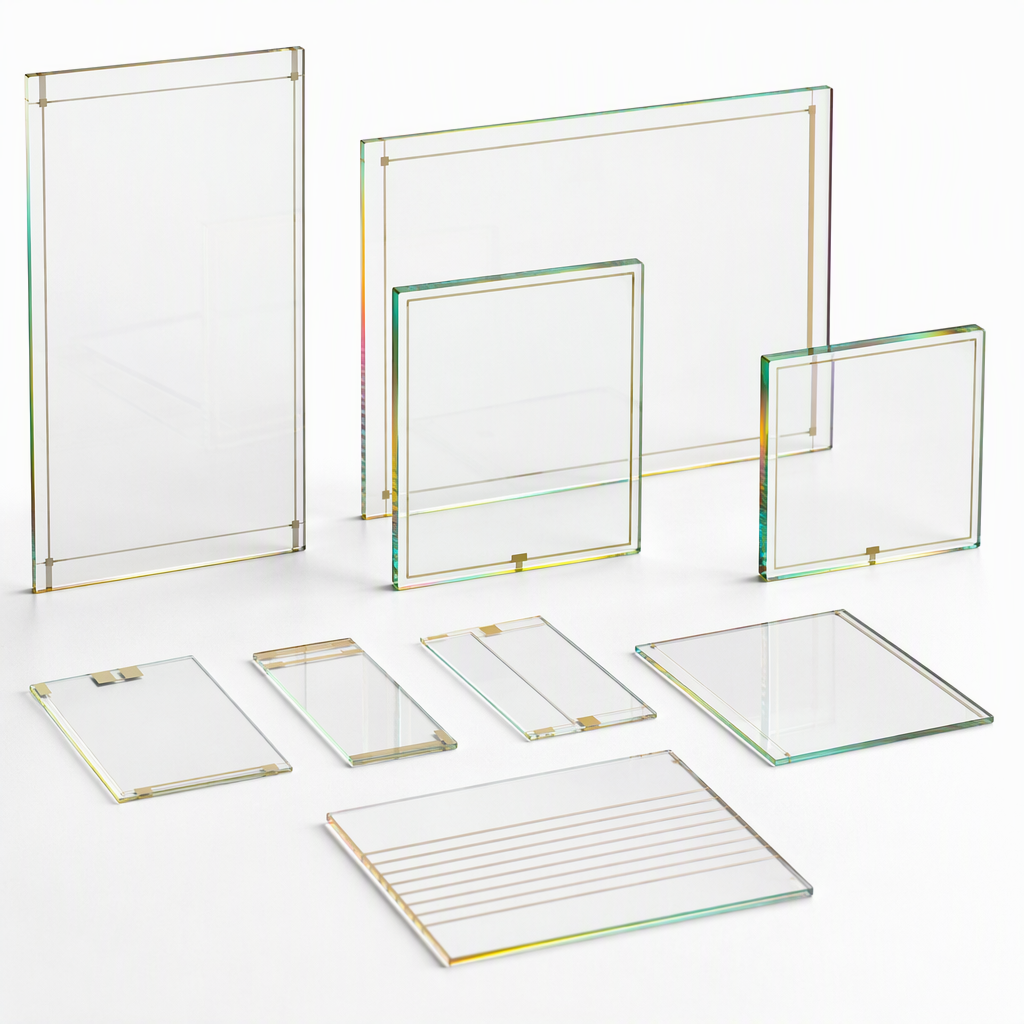
ITO Coated Glass Conductive Sheet 6–8 Ω/sq
Custom-size conductive glass for touch-panel heating substrates, with stable sheet resistance for repeatable electrical performance.
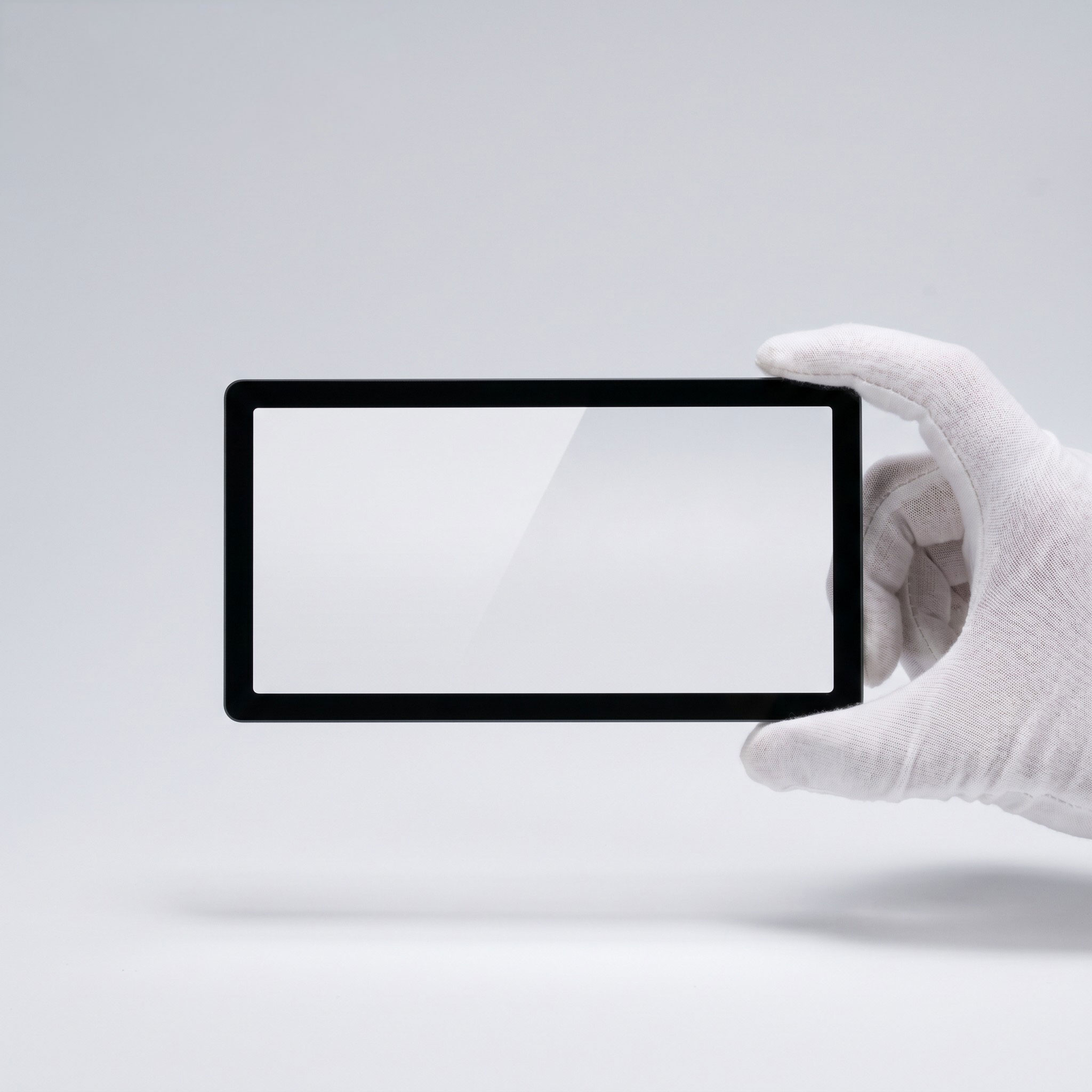
Custom Size Gorilla Glass Front Panel
CNC-cut, silk-printed and tempered Panda cover glass for solar display screens and front-panel applications.

Curved Tempered Glass Panel with AR Coating
Waterproof anti-reflective curved panel for bathroom controls, instrument displays and decorative glass interfaces.
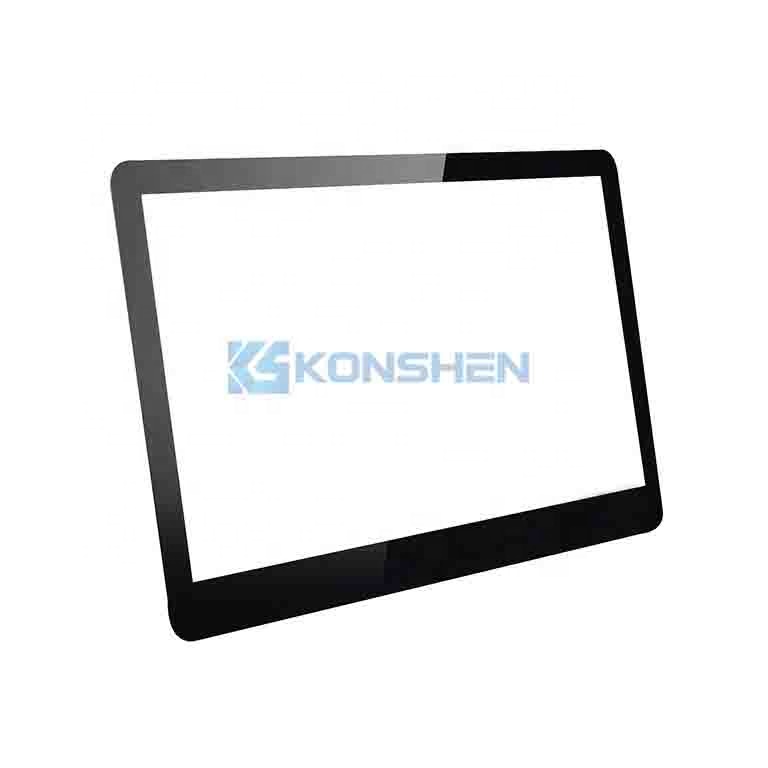
2mm / 3mm Anti-Glare Chemical Tempered LCD Cover Glass
European-style silk-screen printed cover glass for LCD touch protection, available in solid and hollow formats.

Customized Elevator Indicator Touch Panel Glass
CNC-cut smart control elevator panel glass with arrow printing and touch-screen compatibility for building systems.

KS AG002 Anti-Glare Coated Glass Panel
High-transmittance AG tempered cover sheet for electronic displays requiring controlled haze and reduced reflections.
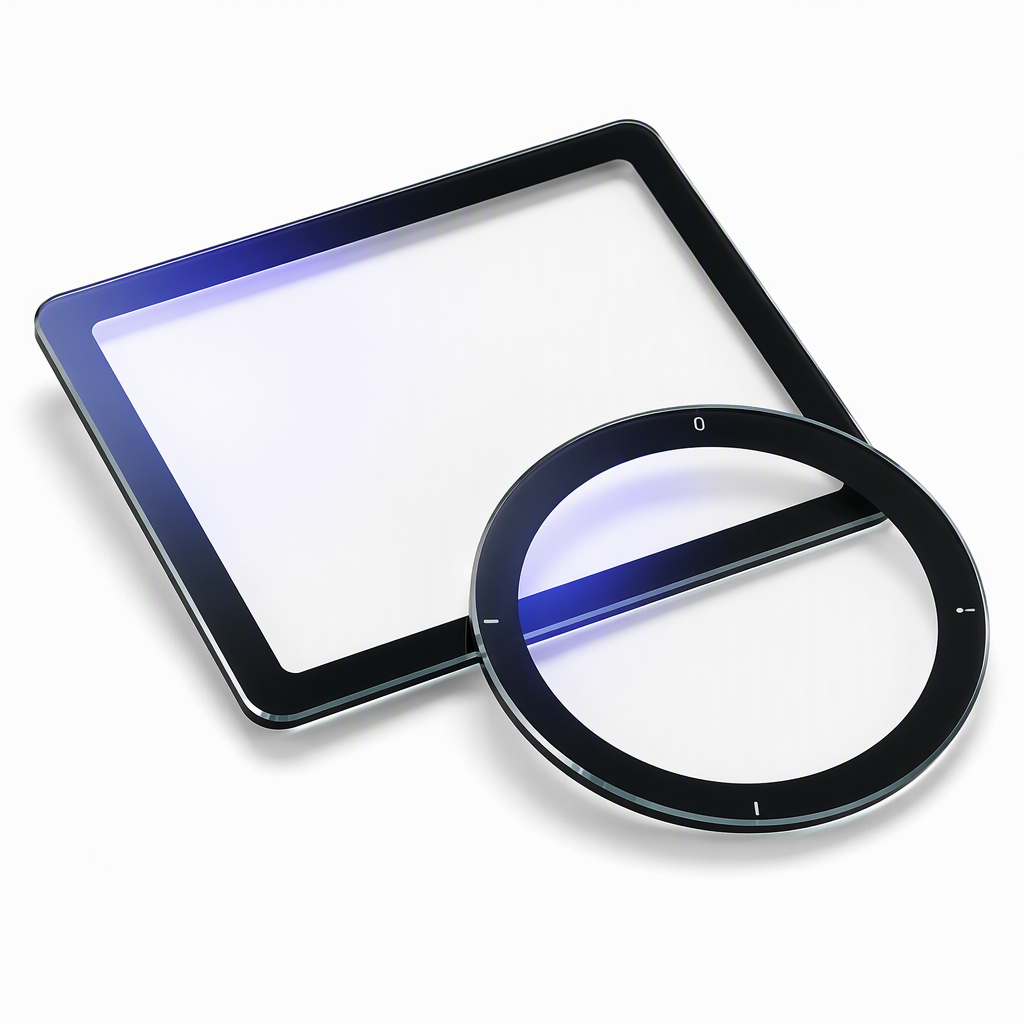
Custom Low-Iron AR-Coated Tempered Display Glass
Low-iron tempered glass with AR coating for display covers where color neutrality and optical clarity matter.
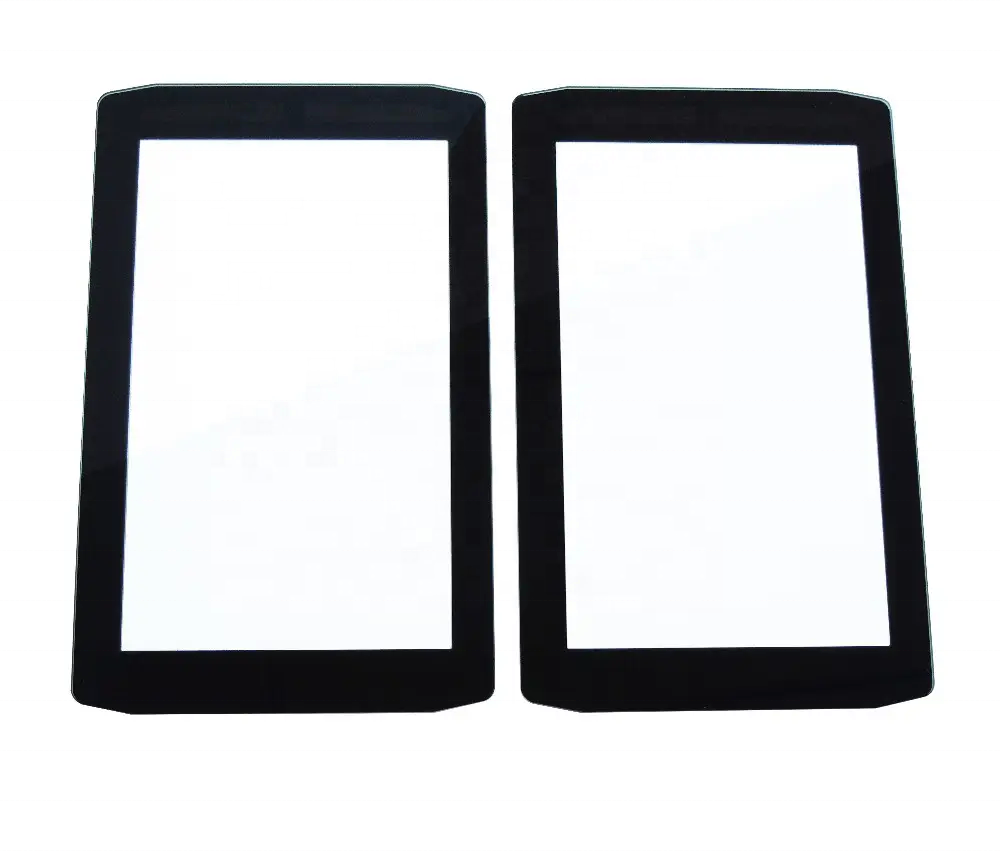
Outdoor Solid Tempered Anti-Glare Touch Screen Panel
Direct-factory AG touch panel glass for outdoor displays, kiosks and interfaces exposed to strong ambient light.
Product URLs are preserved from the original catalogue. If your drawing is not listed, send the target specification through the inquiry button and our engineering team will match the closest process route.
What B2B Buyers Should Expect from an OEM/ODM Custom Glass Supplier
The difference between a low quotation and a low total program cost is usually hidden in coating control, tolerance discipline and documentation. A capable custom glass supplier should help you reduce rework, protect your display yield and shorten the path from concept to validated sample.
Optical performance must be validated in the full stack
AR reflectance, AG haze and AF contact angle are not isolated catalogue numbers. They interact with your display brightness, bezel color, adhesive and cover thickness. Ask for measured samples on your target substrate, not only a datasheet.
Mechanical reliability is designed, not inspected in
Edge quality, hole positions, tempering route and curved forming all affect breakage risk. A factory that controls cutting, CNC, polishing, printing and tempering in-house can hold tighter process windows and respond faster when a drawing changes.
Supply continuity matters as much as unit price
Wholesale buyers need repeatable packing, clear lead times and export documentation. A supplier with verified production capacity, Trade Assurance support and experience in Europe and North America reduces the non-product risk that often delays launches.
Select the Glass by Operating Environment, Not by Catalogue Alone
For procurement teams, the fastest way to narrow a custom glass quotation is to define the operating condition first: sunlight, touch frequency, optical clarity, conductivity or curved form. The recommendations below reflect the performance windows our factory builds to and the applications where each product family is commonly specified.
AR Anti-Reflective Glass
Reflectance below 1.0% per side and transmittance above 99% across 400–700 nm in single-layer or multi-layer designs. Recommended for automotive touch displays, medical monitors, showcase windows and high-brightness screens where reflections reduce contrast.
Best for: optical clarityAG Anti-Glare Glass
Controllable haze from 5–60% and gloss from 0.5–8 GU. Diffuses ambient and sun reflections for outdoor kiosks, industrial HMI and in-vehicle displays without adding backlight power.
Best for: sunlight and outdoor readabilityAF Anti-Fingerprint Glass
Water contact angle above 110°, pencil hardness above 3H, transmittance above 98% and durability beyond 10,000 cycles. Ideal for high-touch control panels, smart home interfaces and appliance glass.
Best for: frequent touch and cleaningITO Conductive Glass
Sheet resistance from 1–20 Ω/sq, transmittance above 85% and haze below 2%. Commonly used for capacitive touch sensors, displays and EMI shielding where transparency and conductivity must coexist.
Best for: touch sensing and EMIFTO Conductive Glass
Offers stronger thermal and chemical stability than ITO for thin-film solar cells and high-temperature processes, while maintaining transparent conductive performance in the same resistance and haze windows.
Best for: solar and high-temperature processing2.5D / 3D Chemically Strengthened Cover Glass
For edge-to-edge industrial design, curved dashboards and slim touch interfaces. Custom thickness from 0.1–19 mm, with CNC cutting, holes, silk printing, curved forming and 3M adhesive bonding available.
Best for: curved, thin and impact-resistant designsProcurement Trends Reshaping OEM/ODM Glass Sourcing in 2025–2030
Custom glass purchasing is moving away from single-part price comparison and toward total program value: engineering responsiveness, coating consistency, sample speed, compliance evidence and supply resilience. These trends are especially relevant for wholesalers, distributors and OEMs building multi-year product platforms.
Total landed cost replaces lowest unit price
Buyers increasingly compare breakage rate, inspection cost, packing performance and engineering rework alongside piece price. A slightly higher quotation from a factory that controls coating and tempering in-house can reduce total cost by avoiding batch rejects and line downtime.
Low-MOQ prototyping accelerates decisions
Sample quantities from 1–2 pieces allow design teams to validate fit, optics and coating performance before committing to volume. Procurement teams now request a clear prototype-to-mass-production path, not just a bulk quotation.
Dual sourcing and supply resilience
Single-country concentration is being replaced by qualified second sources and documented capacity checks. Verified factory area, annual output value and production capacity are now standard questions in supplier risk reviews.
Traceability and documentation become default
Incoming, in-process and final inspection records are increasingly requested with shipments. For coated glass, buyers also ask how adhesion, abrasion, tempering and salt-spray performance are checked before release.
Co-development with coating specialists
AR, AG, AF and conductive layers are being specified earlier in the design cycle. Suppliers that can review drawings, recommend a coating stack and validate samples become engineering partners rather than transactional vendors.
Sustainability and process efficiency
Energy-efficient coating routes, lower rework rates and damage-proof packaging all contribute to a lower environmental burden per usable panel. Buyers are beginning to request packaging optimization and process consistency as part of supplier evaluation.
Product Development Trends to Design Into Your Next Build
Glass is no longer only a protective cover. It is becoming an optical, electrical and decorative interface. These four development directions are shaping new RFQs for custom glass suppliers and wholesalers.
Combined functional stacks
AR+AG and AG+AF combinations on one substrate allow premium touch interfaces to deliver readability, easy-clean performance and cosmetic quality without lamination steps.
Thin, strong, curved cover glass
2.5D and 3D forming with chemical strengthening supports slim bezels, curved dashboards, smart-home panels and waterproof bathroom interfaces.
Transparent conductive substrates
ITO and FTO glass continue to enable capacitive touch, EMI shielding, thin-film solar and sensor integration where a transparent conductive surface is required.
Outdoor-readable durability
AG haze control, tempered strength and reliable printing help outdoor kiosks, charging stations and industrial terminals remain legible and durable in strong ambient light.
Why KELO Glass Is a Factory-Direct OEM/ODM Partner, Not a Trading Intermediary
Huizhou KELO Glass Co., Ltd. operates from Huizhou, Guangdong, inside China’s Greater Bay Area electronics supply chain. Our core technology is advanced surface treatment, and every key process runs under one roof: cutting, CNC machining, edge polishing, silk-screen printing, flat and curved tempering, AR/AG/AF/ITO coating, 2.5D/3D forming and 3M adhesive bonding.



Verified manufacturer, not a trader
Factory-direct production with documented facilities, capacity and export history. Buyers work with the manufacturing team that controls the process.
In-house surface engineering
AR, AG, AF, ITO and FTO coating are handled internally, allowing one accountable supplier for optical and conductive performance.
Engineering drawing review and DFM
We review tolerance, coating stack, printing and forming requirements before quoting, so cost drivers are visible early.
Rapid prototyping from 1–2 pcs
Validate fit, optics and coating performance with low sample quantities before committing to volume production.
100% appearance inspection
Incoming, in-process and final quality gates include tempering, adhesion, abrasion and salt-spray checks where applicable.
21–31 day mass-production lead time
After sample approval, bulk production typically runs 21–31 days depending on size, coating stack, curved forming and printing complexity.
Export-ready commercial terms
FOB, CFR, CIF, EXW and DDP terms are supported, with T/T, L/C, PayPal and Western Union payment options.
Verification and buyer confidence
Our verified profile supports buyer due diligence: 4.9/5 store rating, 98.18% reply rate, Trade Assurance and a typical response time within one hour.
Coating Performance and Quality Gates Buyers Can Specify
Surface treatment is our core strength. The values below are typical production windows that can be used in an RFQ or drawing note, with final targets confirmed during engineering review.
| Coating | Key Performance | Typical Use |
|---|---|---|
| AR Anti-reflective | Reflectance <1.0% per side · Transmittance >99% (400–700 nm) · single or multi-layer | Automotive touch displays, medical monitors, display windows |
| AG Anti-glare | Controllable haze 5–60% · Gloss 0.5–8 GU | Outdoor kiosks, industrial HMI, sunlight-readable screens |
| AF Anti-fingerprint | Water contact angle >110° · Pencil hardness >3H · Transmittance >98% · Durability >10,000 cycles | Touch control panels, smart home and appliance glass |
| ITO Indium tin oxide | Sheet resistance 1–20 Ω/sq · Transmittance >85% · Haze <2% | Capacitive touch sensors, displays, EMI shielding |
| FTO Fluorine-doped tin oxide | Sheet resistance 1–20 Ω/sq · Transmittance >85% · Haze <2% | Thin-film solar cells, high-temperature processes |
| Combined AR+AG / AG+AF | Stacked functions on one substrate · cosmetic grade per 60/40 scratch-dig | Premium in-vehicle and outdoor touch interfaces |
Values are typical production capability; final acceptance criteria are confirmed against your drawing, display stack and reliability plan.
What to ask for in a coating RFQ
Specify the measurement method, substrate thickness, target wavelength range, haze tolerance, adhesion test, abrasion cycles and cosmetic acceptance criteria. For conductive glass, confirm sheet resistance, transmittance and haze on the same sample.
- AR: reflectance per side and transmittance range
- AG: haze, gloss and sparkle tolerance
- AF: contact angle and durability cycles
- ITO/FTO: Ω/sq, transmittance and haze
- Cosmetic grade: scratch-dig and inspection light
Incoming Inspection
Raw glass and consumables are verified before production.
- Thickness and flatness check
- Surface defect screening
- Ink and coating material verification
In-Process Control
Critical dimensions and coating results are checked at each station.
- CNC dimension and hole position
- Tempering and strength tests
- Coating adhesion and abrasion
Final Inspection
Every finished piece is checked before protective packing.
- 100% appearance inspection
- Salt spray reliability testing
- Honeycomb, blister and partition packing
How a Custom Glass Project Runs from Drawing to Delivery
A transparent, engineer-led process designed to reach a validated sample quickly and scale without surprises.
Share Requirements
Provide a drawing, sample or target specification with annual volume and operating environment.
Engineering Review
Receive DFM feedback on tolerance, coating, printing, curved forming and cost drivers.
Rapid Prototype
Validate with samples from as few as 1–2 pieces before committing to tooling or volume.
Validation
Approve fit, optics, reliability and cosmetic criteria against the agreed drawing.
Mass Production
Typical bulk lead time is 21–31 days after sample approval, depending on complexity.
Packing & Shipping
Damage-proof cartons, blister trays and partition packing support worldwide delivery.
Export-Ready Supply for Distributors, Brand Owners and Contract Manufacturers
Our export experience covers the documentation, packing and incoterms that international buyers expect. Current market distribution reflects long-term relationships across Europe, North America and South America.
For wholesalers, repeatability across batches is more important than a one-time sample. We therefore keep the same coating, tempering, printing and inspection route from prototype through mass production, with packaging selected to minimize transit damage.

Frequently Asked Questions from Procurement Teams
Straight answers to the questions that usually arise before a first OEM/ODM custom glass order.
What is the minimum order quantity for custom cover glass?
What is the typical lead time for mass production?
What optical performance can your AR coating achieve?
Should I choose ITO or FTO conductive glass?
What thickness, sizes and shapes can you produce?
Which trade terms and payment methods do you accept?
How do you control quality?
Can you support OEM/ODM drawings, samples and export packing?
Send Your Drawing, Target Coating Performance and Annual Volume
Buyers, distributors and brand owners are welcome. Our engineering team will review feasibility, recommend the most cost-effective glass and coating route, and confirm the sample path before mass production.