8 Light Switch Glass Product Types Buyers Request Most
These products represent the practical range of custom glass used in smart locks, wall switches, appliance control panels, elevator interfaces, outdoor touch screens, solar display covers, display protection, and gaming accessories. Each item can be adapted by drawing, coating stack, printing, thickness, and packing requirement.
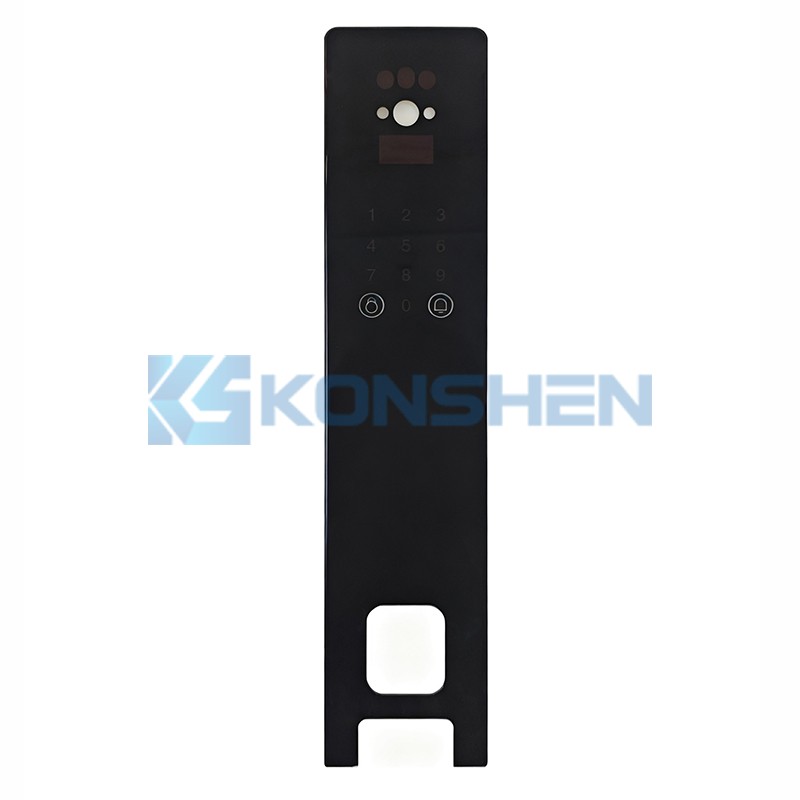
Electronic Tempered Glass Film Custom Printed Rectangular Panel Digital Keypad for Smart Door Lock
Custom-printed tempered glass for smart lock keypads, with precise icon windows, wear-resistant ink, and stable touch feedback.
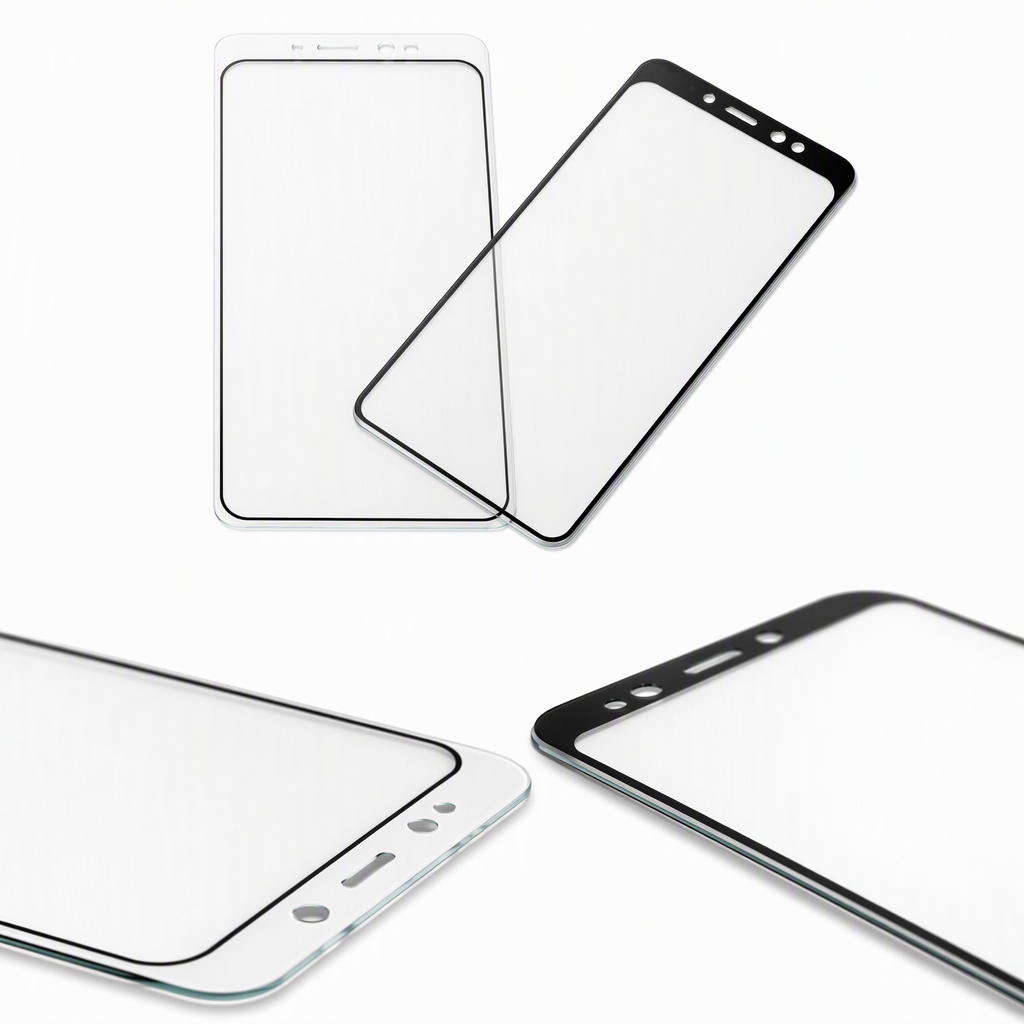
Toughened Glass Panel No Coating CNC Hole Drilling Irregular Shape Silk Screen Printed Custom Size Wholesale Supplier
Uncoated toughened glass with CNC holes and irregular outlines for wall switches, appliance interfaces, and industrial control panels.
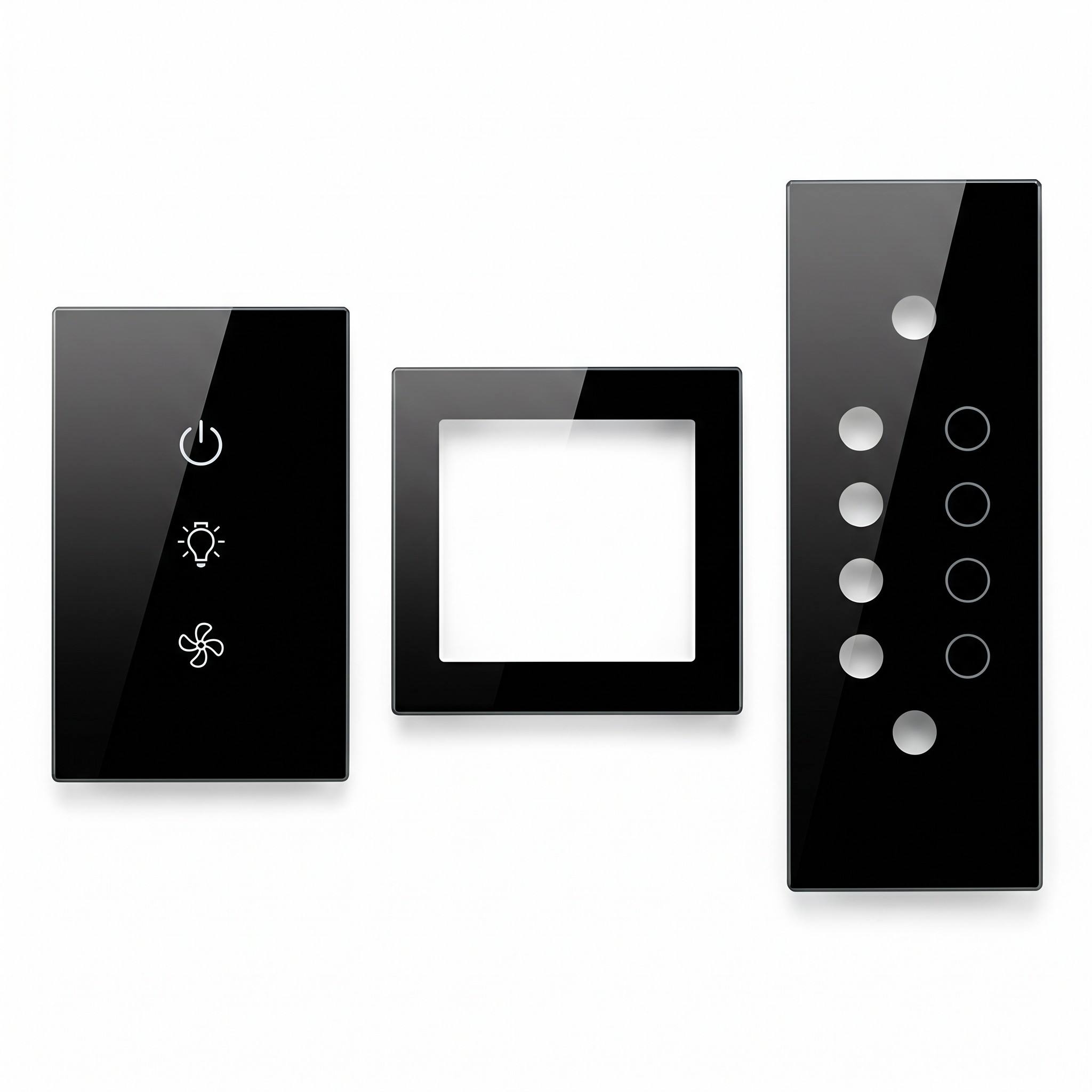
Tempered Glass Front Shield Cover Panel Custom Size Electronic Display Protection Sheet for Smart Device Konshen KS GB002
Front shield cover glass for smart devices and displays, sized to protect the screen while preserving optical clarity and touch response.
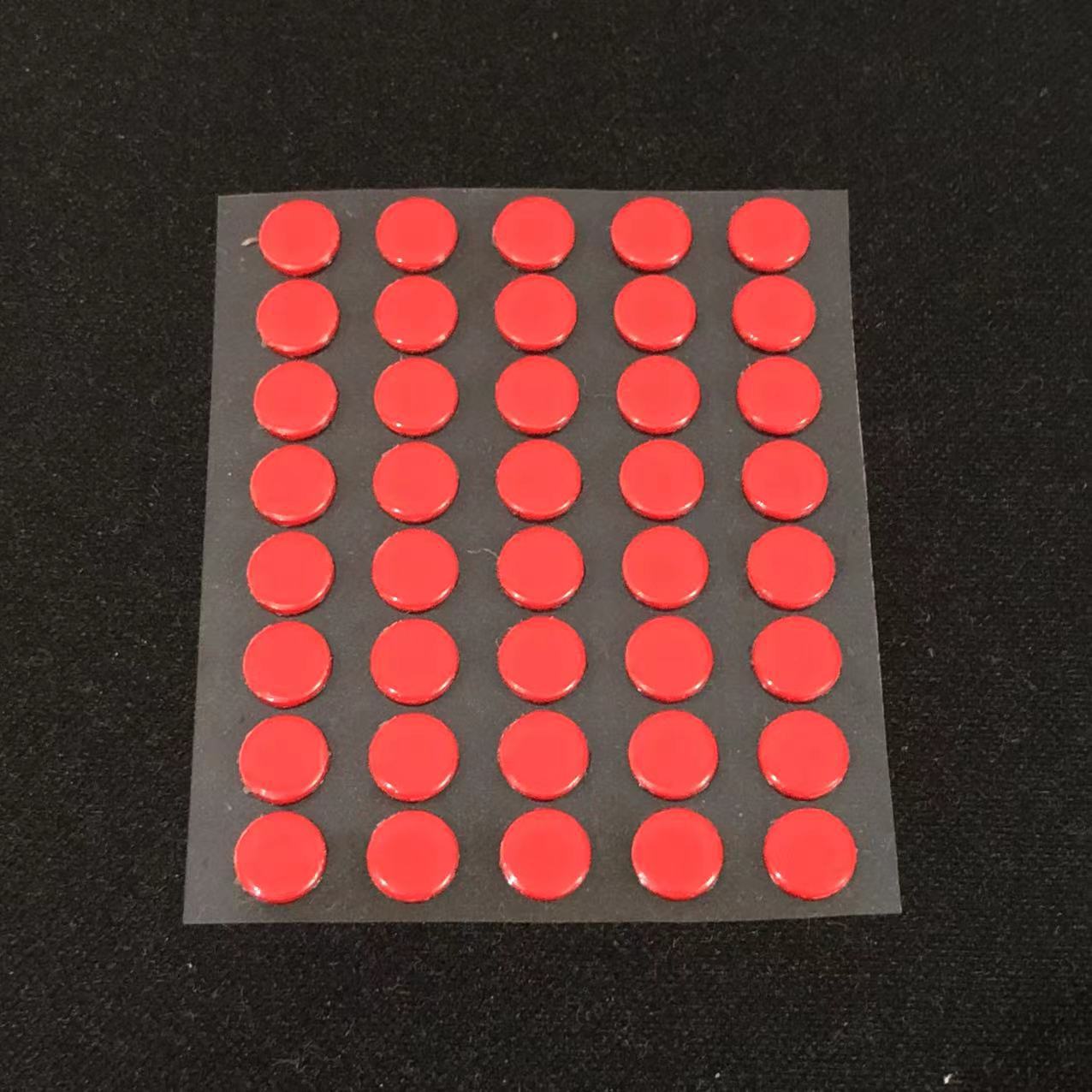
Factory Price Round Red Mouse Sticker Pads Universal Glass Mouse Skates with Small Dot PTFE Non-slip Mouse Feet
PTFE glass mouse skates with consistent glide and low friction, representing KELO’s glass-surface finishing capability for gaming peripherals.

Customized Cutting Elevator Indicator Arrow Printing Touch Smart Control Elevator Panel Use Electronics Screen Glass Instrument
Cut-to-shape elevator touch panel glass with arrow printing and hidden-until-lit icon windows for high-touch building interfaces.
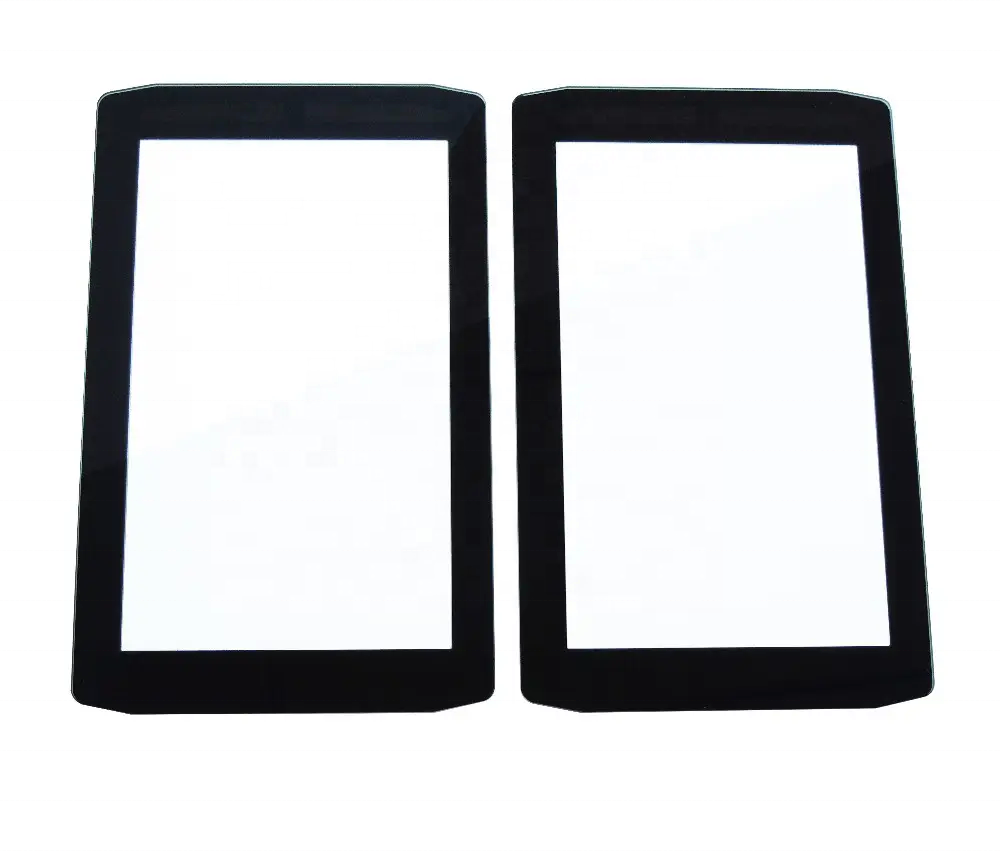
AG High Quality Solid Tempered Glass Anti-Glare Digital Screen Display Customizable Touch Screen Panel Factory Direct Outdoor
Anti-glare tempered glass for outdoor touch screens, kiosks, and high-brightness displays, with haze levels tuned for readability.
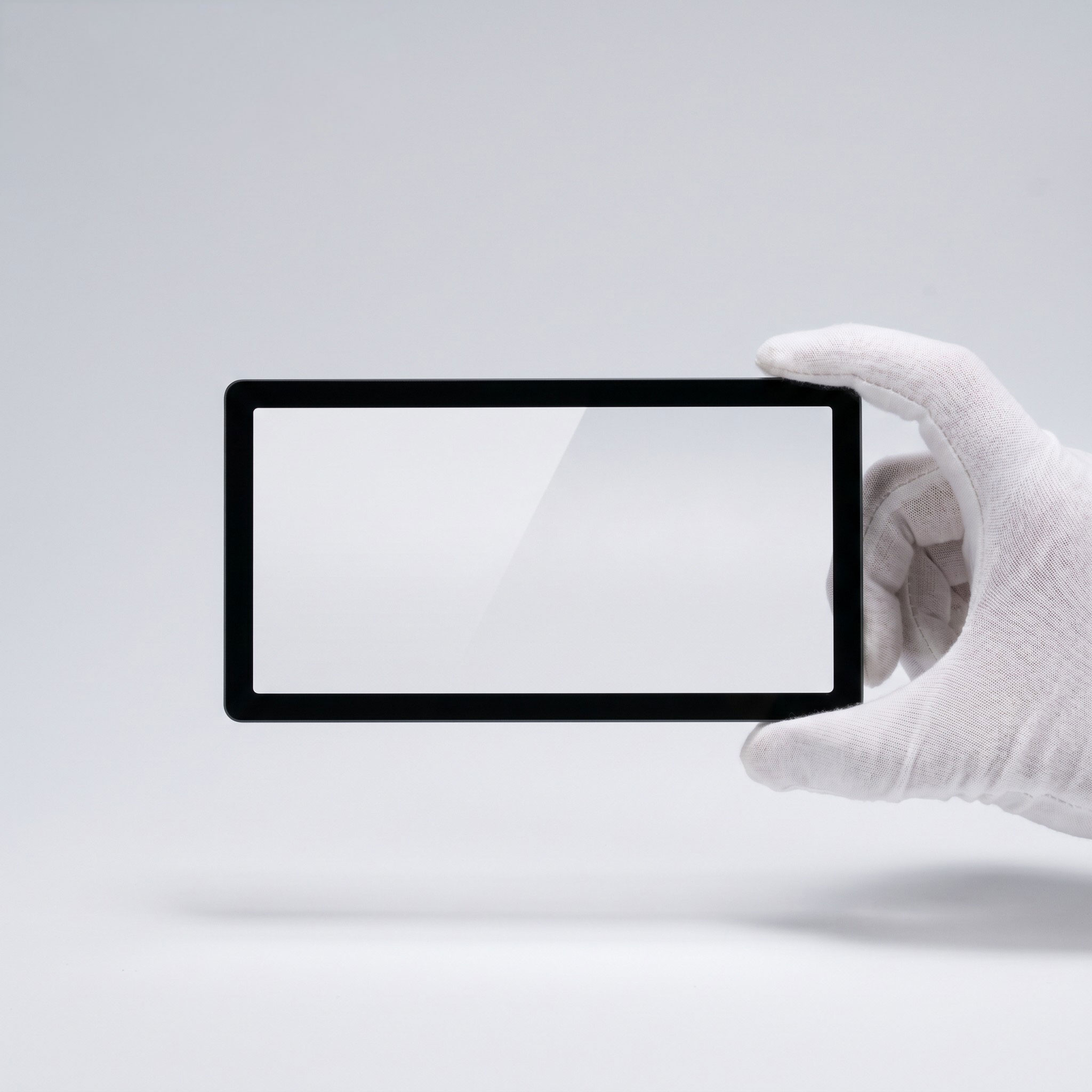
Custom Size Gorilla Glass Front Panel Panda Cover Sheet CNC Cut Silk Printed Tempered Glass Solar Display Screen Cover
CNC-cut Gorilla glass front panel with silk-printed graphics for solar displays and smart devices, combining scratch resistance with precise edges.

Custom Silk Screen Printed Tempered Glass Electronic Control Panel Cover for Smart Appliances
Printed tempered glass control panel cover for smart appliances, with durable ink, backlight windows, and optional AF or AG treatment.
Executive summary. Light switch glass is the visible interface between a building occupant and an electrical or electronic control system. It must look precise, survive repeated cleaning, support reliable touch performance, and match the visual language of the product or interior. That combination makes supplier selection a technical decision, not a price-only decision. This guide is written for procurement teams, brand owners, distributors, and hardware engineers comparing light switch glass supplier & exporters for custom projects.
The strongest suppliers are not simply the ones with the lowest quotation. They are the ones that can control glass strengthening, CNC tolerances, silk-screen registration, optical coating performance, adhesive bonding, final inspection, and export packing under one management system. KELO Glass’s factory-direct model is used here as a reference case because it covers the complete process from cutting and tempering to AR, AG, AF, and ITO/FTO coating.
Why Light Switch Glass Is a Strategic Material, Not a Commodity
A light switch cover looks simple from the outside, but in production it is a stack of decisions. The substrate may be regular soda-lime glass, chemically strengthened glass, borosilicate, Gorilla glass, quartz, or a specialty material. The edge may be polished flat, ground, or curved. The surface may receive AR anti-reflective coating, AG anti-glare etching, AF anti-fingerprint treatment, or a conductive ITO/FTO layer. The printed graphics may need to align with LED windows, icons, touch sensors, and adhesive layers.
For smart home wall switches, hotel room controls, appliance panels, elevator indicators, and industrial HMI interfaces, a small process error becomes visible immediately. Ink misregistration makes an icon look off-center. Poor tempering control creates edge stress or breakage risk. Inconsistent coating makes one batch glossier than the next. Weak packing causes hidden transit damage that only appears at the assembly line. This is why professional buyers evaluate light switch glass exporters on process capability, not just unit price.
Search intent is also broader than the exact phrase. Buyers may search for tempered glass switch panel manufacturers, custom glass control panel suppliers, smart switch glass cover factories, printed glass switch panel exporters, anti-glare switch glass, or touch switch glass wholesale suppliers. The same buyer needs technical evidence: thickness range, tempering method, coating performance, minimum order quantity, sampling time, inspection standard, export terms, and packaging protection.
Information gain: what this guide adds
Instead of repeating a directory-style ranking, this article gives a practical shortlist model: 10 supplier capabilities, one comparison framework, a factory-direct advantage checklist, a specification table for RFQs, and a quality gate structure that buyers can use in supplier audits. This is designed to support semantic search around supplier selection, product trends, procurement trends, and custom light switch glass applications.
The Top 10 Supplier & Exporter Evaluation Framework
A credible Top 10 Light Switch Glass Supplier & Exporters list should be treated as a capability map rather than a popularity contest. The 10 criteria below are weighted heavily in real sourcing decisions because they directly affect yield, assembly cost, brand experience, and delivery risk.
Vertical Integration
Cutting, CNC, polishing, printing, tempering, coating, and bonding under one roof reduce hidden outsourcing and finger-pointing.
Tempering & Strengthening
Flat or curved tempering and chemical strengthening control impact resistance, edge strength, and long-term safety.
Printing & Icon Registration
Silk-screen printing, dead-front graphics, colour matching, and precise icon windows are critical for switch glass aesthetics.
Optical Coating Suite
AR, AG, and AF performance must be measurable: reflectance, haze, gloss, contact angle, and abrasion durability.
Conductive & EMI Capability
ITO or FTO glass with 1–20 Ω/sq sheet resistance, over 85% transmittance, and low haze supports touch and shielding functions.
Forming & Tolerance Control
0.1–19 mm thickness, holes, cutouts, irregular shapes, 2.5D/3D curved forming, and 3M adhesive bonding must be repeatable.
Inspection & Reliability
IQC, IPQC, and FQC/OQC with 100% appearance checking, adhesion, abrasion, tempering, and salt spray tests reduce hidden defects.
DFM & Sampling Speed
Engineering drawing review and samples from 1–2 pieces help buyers validate fit, optics, print, and assembly before volume.
Export & Documentation
FOB, CFR, CIF, EXW, and DDP terms, plus T/T, L/C, PayPal, and Western Union, should be supported with clear export records.
Communication & Traceability
Fast response, verified assessments, buyer reviews, trade history, and batch traceability protect schedule and accountability.
Supplier Comparison: What Each Type Does Well — and Where It Fails
Procurement teams usually compare several supplier types. Each has a place in the market, but the risk profile is different. Use this table to align supplier type with product maturity and program risk.
| Supplier Type | Strengths | Hidden Risks | Best Fit |
|---|---|---|---|
| Factory-direct glass processor | Control over tempering, CNC, printing, coating, inspection, and packing; stronger engineering feedback. | Needs disciplined communication and a clear drawing package from the buyer. | Custom switch glass, smart home panels, appliance control glass, and long-term OEM programs. |
| Trading company | Easy to contact, can consolidate multiple components, and may offer flexible order coordination. | Production may be subcontracted; process traceability and corrective action can be weaker. | Simple, mature parts where the buyer already has a validated factory source. |
| Coating specialist | Deep optical know-how for AR, AG, AF, and ITO/FTO performance. | May not own cutting, tempering, printing, or final assembly; multiple handoffs add damage risk. | Projects where coating performance is the primary technical challenge. |
| Regional fabricator | Short logistics and fast local support for low-volume customization. | Higher unit cost and a narrower material or coating range. | Replacement parts, local prototyping, and urgent small batch needs. |
| Low-cost broker | Attractive initial pricing and broad catalogue access. | Unverified quality, inconsistent substrates, weak packing, and limited engineering support. | Non-critical accessories only after sample validation. |
Inside KELO Glass: Factory-Direct Advantages That Reduce Procurement Risk
Huizhou KELO Glass Co., Ltd. is a factory-direct manufacturer in Huizhou, Guangdong, within the Greater Bay Area electronics supply chain. The company produces touch screen cover glass, display cover glass, and optical coated glass, with surface treatment as a core technology. For light switch glass projects, that means the supplier can support the full route: cutting, CNC machining, edge polishing, laser engraving, silk-screen printing, sandblasting, flat and curved tempering, AR/AG/AF/ITO coating, 2.5D/3D curved forming, and 3M adhesive bonding.
This vertical integration reduces the most common sourcing problems. There is one accountable supplier for tolerances, coating performance, print registration, and final appearance. Engineering feedback can happen before tooling and printing are released. Samples can be validated quickly. Mass production can be planned with a 21–31 day typical lead time after sample approval, depending on size, coating stack, curved forming, and printing complexity.
Single-source process control
Cutting, printing, tempering, coating, and QC remain under one management system, reducing hidden outsourcing risk.
Rapid engineering loop
Drawing review, DFM feedback, and samples from 1–2 pieces help validate the design before mass production.
Verified export profile
Six years as a verified exporter, 4.9/5 store rating, 98.18% reply rate, and Trade Assurance support provide recognizable buying confidence.
Protective packing
Custom honeycomb cartons, blister trays, and partition packing are used to reduce transit damage on thin and printed glass.



Product Development Trends Reshaping Light Switch Glass
Light switch glass is moving from a decorative cover to an integrated interface surface. The most relevant product trends for buyers are summarized below, with direct implications for supplier selection.
Hidden-until-lit graphics
Dead-front printing and backlight windows create clean surfaces when off and clear icons when active, requiring tight print and LED alignment.
AF + AG hybrid surfaces
Buyers increasingly combine anti-fingerprint easy-clean performance with anti-glare readability for touch panels in bright rooms.
Thinner strengthened glass
Chemically strengthened thin glass supports lighter switch assemblies while maintaining impact and scratch resistance.
2.5D and 3D curved edges
Curved cover glass creates premium edges and easier cleaning, but demands precise forming and edge polishing control.
Integrated touch and EMI layers
ITO/FTO conductive glass enables touch sensing and shielding functions without adding visual clutter to the interface.
Smart appliance integration
Glass control panels are merging with displays, sensors, and backlit icons in refrigerators, ovens, and laundry appliances.
Colour and material harmony
Print colour consistency, gloss level, and substrate tint increasingly need to match surrounding plastics and metal finishes.
Cleaner maintenance
High-touch public and hospitality interfaces favour surfaces that resist smudges and wipe clean without aggressive chemicals.
Future Procurement Trends in Light Switch Glass Sourcing
Future procurement will be shaped less by catalogue browsing and more by evidence, speed, and total landed cost. The four shifts below are especially relevant for buyers comparing supplier & exporters.
Verified data over unverified rankings
Procurement teams will check factory video, verified assessment, buyer reviews, trade history, and sample reports before committing to volume.
Low-MOQ prototyping
Projects increasingly require 1–2 piece samples for fit, optics, coating, and assembly validation before a larger purchase order.
Total cost of ownership
Unit price is only one factor. Transit damage, inspection yield, assembly scrap, and lead-time reliability change the real landed cost.
Dual sourcing and buffers
Brand owners increasingly qualify a primary factory and a secondary source for coating, printing, or regional fabrication to protect launch schedules.
How to Evaluate a Light Switch Glass Supplier Without Visiting the Factory
If a factory visit is not possible, use a weighted scorecard. The percentages below reflect a practical RFQ weighting for custom light switch glass where appearance, touch reliability, and export packing all matter.
Specification Checklist for an RFQ
A clear RFQ shortens the path from quotation to validated sample. Use the checklist below as a minimum data package for light switch glass supplier & exporters.
| Specification Area | What to State | Why It Matters |
|---|---|---|
| Substrate and thickness | Glass type, 0.1–19 mm thickness, tint, strength grade, and whether Gorilla, borosilicate, quartz, sapphire, or ceramic glass is required. | Determines optical appearance, weight, impact resistance, and process route. |
| Tempering and strengthening | Flat or curved tempering, chemically strengthened glass, edge treatment, and expected drop or impact requirement. | Protects safety, handling yield, and long-term durability in high-touch use. |
| Dimensions and tolerance | 2D drawing, critical dimensions, edge profile, corner radius, flatness, and cosmetic acceptance zone. | Prevents assembly gaps, uneven touch feel, and visible mismatch with housings. |
| CNC holes and cutouts | Hole diameter, position tolerance, countersink requirements, and whether holes must be polished or chamfered. | Controls sensor, LED, screw, and connector fit while reducing crack initiation risk. |
| Printing and graphics | Pantone colours, icon registration, dead-front windows, gloss level, ink durability, and backlight transmission. | Protects brand appearance and ensures symbols remain readable after cleaning. |
| Optical coating | AR reflectance target, AG haze and gloss, AF contact angle, ITO/FTO sheet resistance, transmittance, and haze limit. | Matches the coating stack to indoor glare, touch cleanliness, or conductive function. |
| Adhesive and assembly | 3M adhesive grade, liner type, bonding area, bubble control, and whether the glass ships bonded or loose. | Reduces assembly failure, rework, and damage during final product integration. |
| Packing and documents | Honeycomb cartons, blister trays, partitions, desiccant, labels, inspection records, and trade terms. | Minimizes transit damage and supports smooth customs and incoming inspection. |
Quality Gates Buyers Should Require
Quality should be built into each production gate, not inspected only at the end. For light switch glass, these three gates cover the main risks.
Incoming Inspection
Raw glass and consumables are verified before production begins.
- Thickness and flatness checks
- Surface defect screening
- Ink and coating material verification
In-Process Control
Critical dimensions and coating results are checked at each station.
- CNC dimension and hole position
- Tempering and strength tests
- Coating adhesion and abrasion checks
Final Inspection
Finished parts are checked before protective packing and shipment.
- 100% appearance inspection
- Salt spray and reliability testing
- Honeycomb, blister, and partition packing
Light Switch Glass Applications and Recommended Product Direction
The right product direction depends on the interface environment. Use these application notes to narrow the RFQ before contacting a supplier.
Smart home wall switches
Printed tempered glass with AF easy-clean treatment for frequent touch and a premium flat surface.
Smart door locks
Custom keypad glass film or cover panel with wear-resistant printing and precise icon windows.
Appliance control panels
Silk-screen printed tempered glass with backlit zones and optional AG or AF coating.
Elevator and building control
Arrow-printed touch panel glass with hidden-until-lit graphics and durable surface treatment.
Outdoor touch screens
AG anti-glare tempered glass for kiosks, digital signage, and sunlight-readable interfaces.
Solar display covers
Gorilla glass or strengthened glass with CNC cutting and silk-printed graphics for display protection.
Industrial HMI panels
Toughened glass with CNC holes, irregular outlines, and robust edge finishing for equipment control.
Gaming and peripheral glass
PTFE glass skates and specialty glass surfaces with controlled friction and clean finish.
Buyer FAQ: Light Switch Glass Suppliers and Exporters
What is light switch glass?
How do I choose a light switch glass supplier or exporter?
What is the minimum order quantity for custom light switch glass?
What is the typical lead time for mass production?
Can the glass be printed with icons and backlight windows?
Which coating is best for light switch glass?
What sizes, shapes, and thicknesses can be produced?
How is quality controlled during production?
Which trade terms and payment methods are accepted?
Do you support OEM and ODM projects?
How should light switch glass be packed for export?
Have a Drawing or Target Specification?
Send your light switch glass drawing, target coating performance, annual volume, and packing requirement. Our engineering and export team will review feasibility, recommend the most cost-effective glass structure, and confirm the next sampling step.
Factory-direct cover glass, AR/AG/AF optical coated glass, ITO/FTO conductive glass, and custom tempered glass panels from Huizhou, Guangdong.