Top China Commercial Display Glass Exporters & Wholesaler
How global buyers evaluate Chinese commercial display glass suppliers for cover glass, AR/AG/AF optical coatings, ITO/FTO conductive glass, curved panels and specialty glazing — with 8 product recommendations, procurement trends, factory advantages and a direct quote path.
8 Commercial Display & Specialty Glass Products to Shortlist
These products reflect the practical range buyers request from a China commercial display glass wholesaler: conductive glass, anti-glare cover glass, tempered control panels, ITO heating substrates and gaming-application glass. Each item below keeps its original product URL for quick technical review.
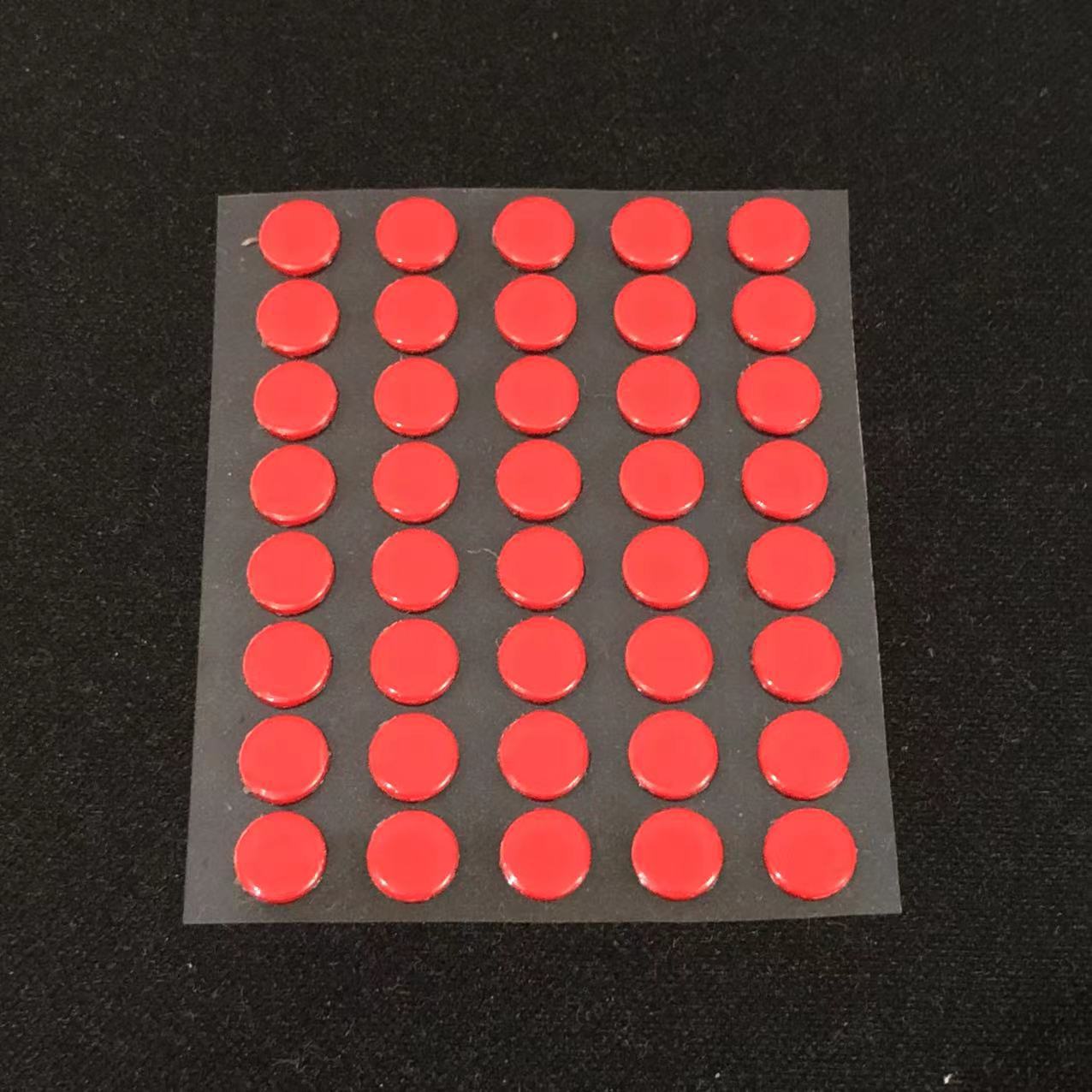
Round Red PTFE Mouse Skates & Glass Pad Feet
Factory-price round red PTFE mouse sticker pads for universal glass mouse skates, with small-dot non-slip mouse feet and smooth glide characteristics.
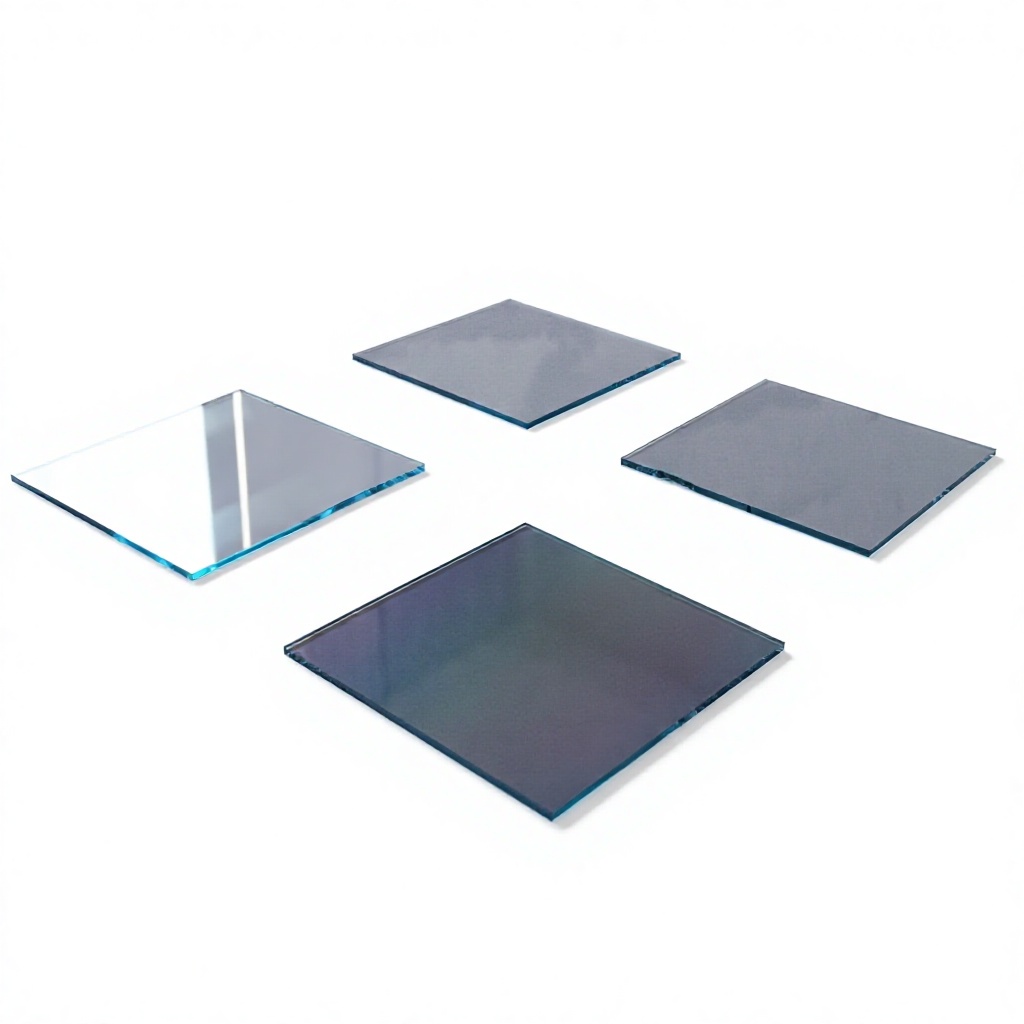
1.1 mm Custom ITO Conductive Glass Panel
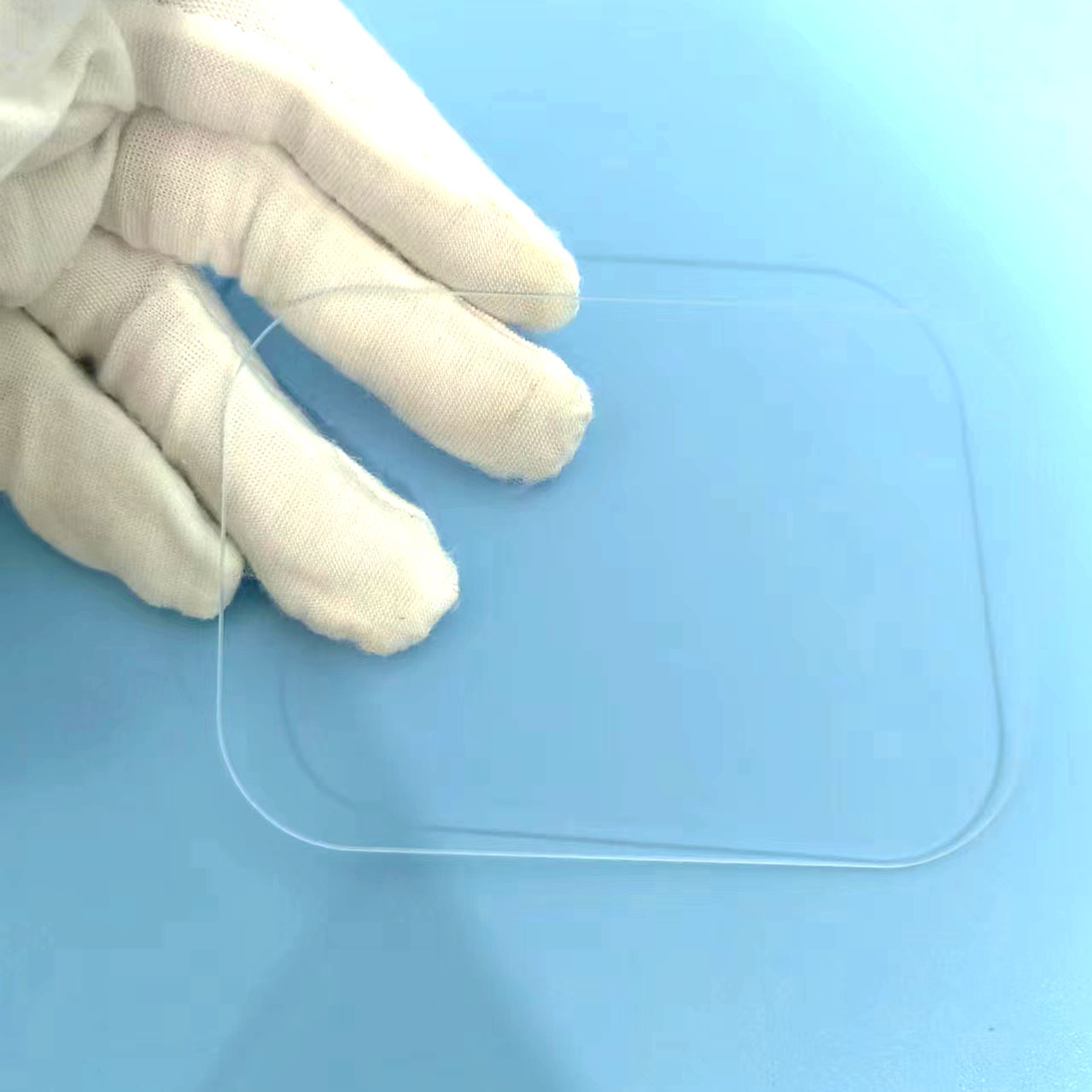
Optical electronic glass with custom shape and polished edge for industrial use, touch sensors, display modules and transparent conductive applications.
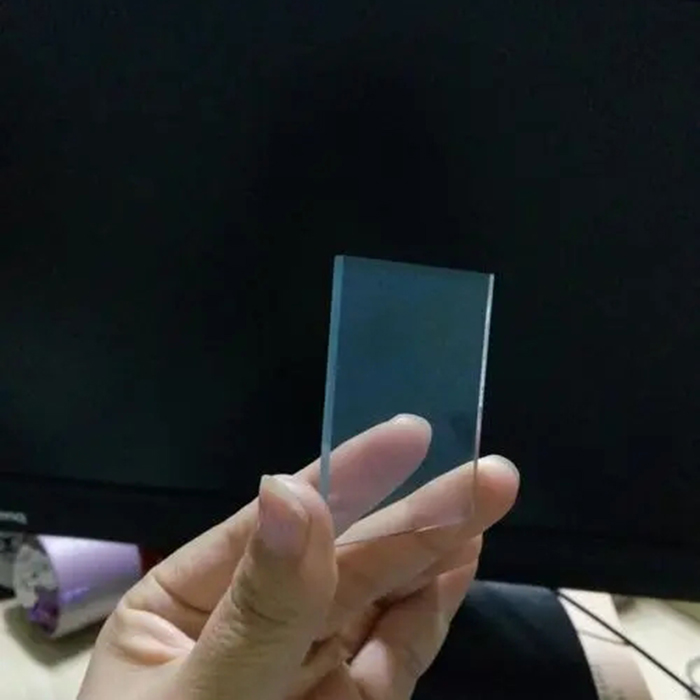
ITO & FTO Conductive Glass for Lighting
Solid flat square indium tin oxide and fluorine-doped tin oxide conductive glass for lighting applications, with stable coating performance and custom sizing.
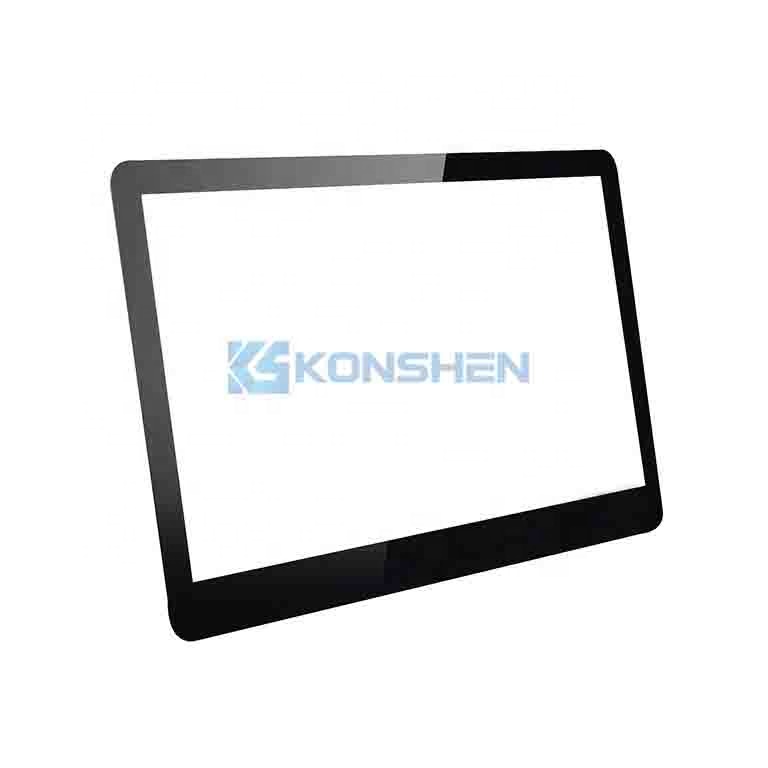
Anti-Glare Tempered LCD Protection Cover Glass
2 mm and 3 mm solid or hollow anti-glare chemical tempered LCD touch screen protection cover glass with silk-screen printing and European-style finishing.
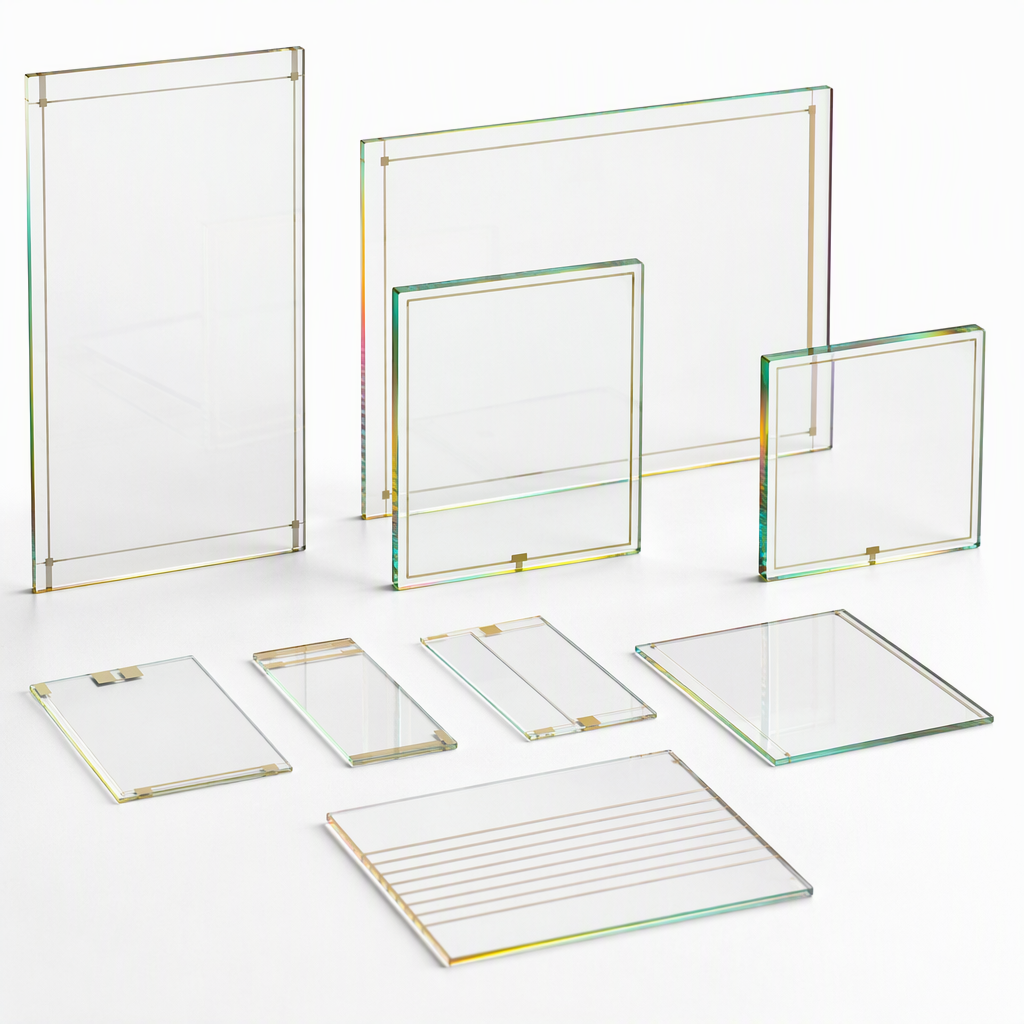
6–8 Ω/sq ITO Heating Substrate Glass Sheet
ITO coated glass conductive sheet rated at 6 to 8 ohm per square, with custom size support for touch panels, heating substrates and display assemblies.

Round & Oval 3M PTFE Mouse Feet Stickers
Round and oval PTFE 3M wear-resistant smooth mouse feet stickers for glass pads and resin pads, supporting customized shapes for gaming brands.
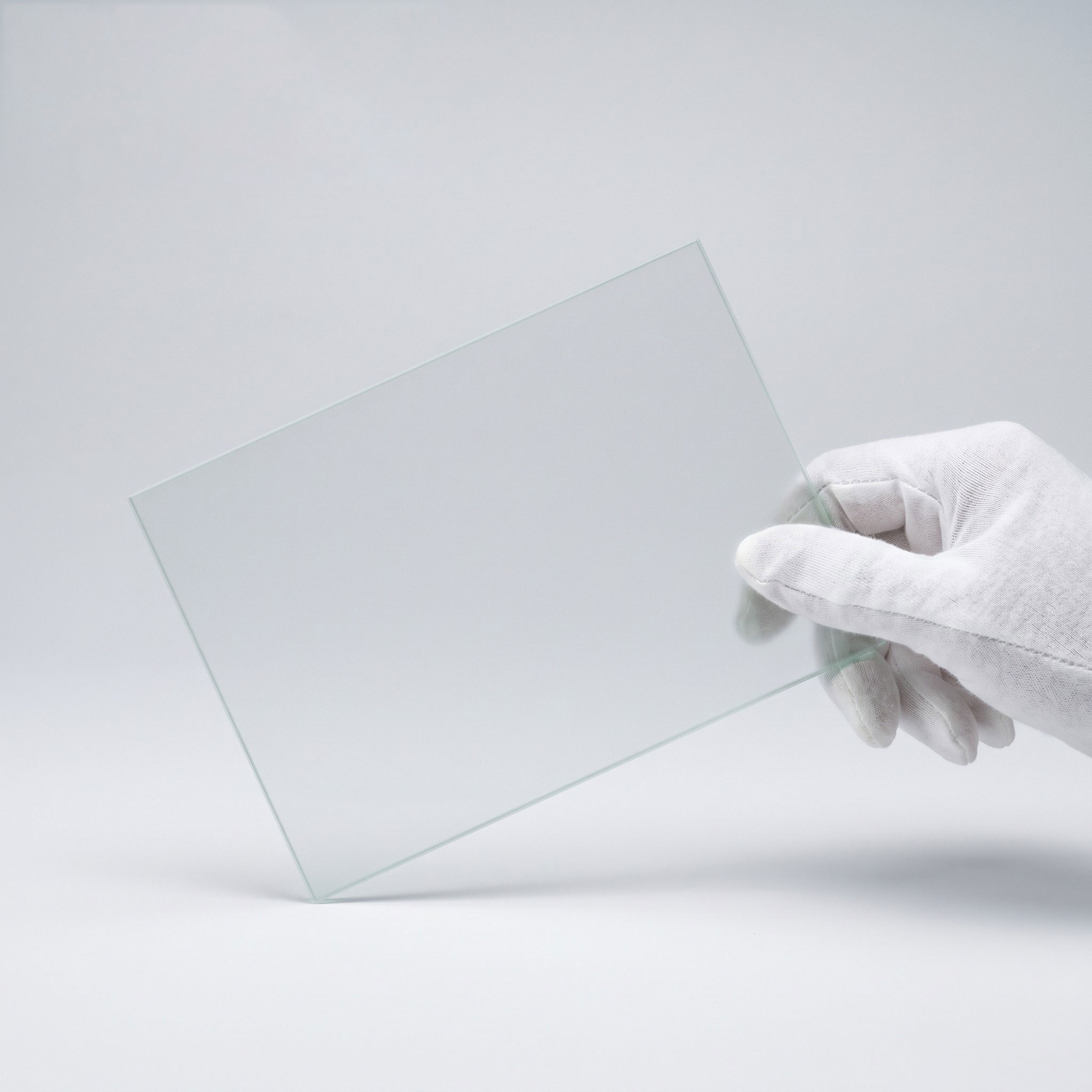
KS AG002 AG-Coated Tempered Display Glass
Custom-size AG coating anti-glare tempered glass panel with high transmittance for electronic display screens, kiosks and industrial UI windows.
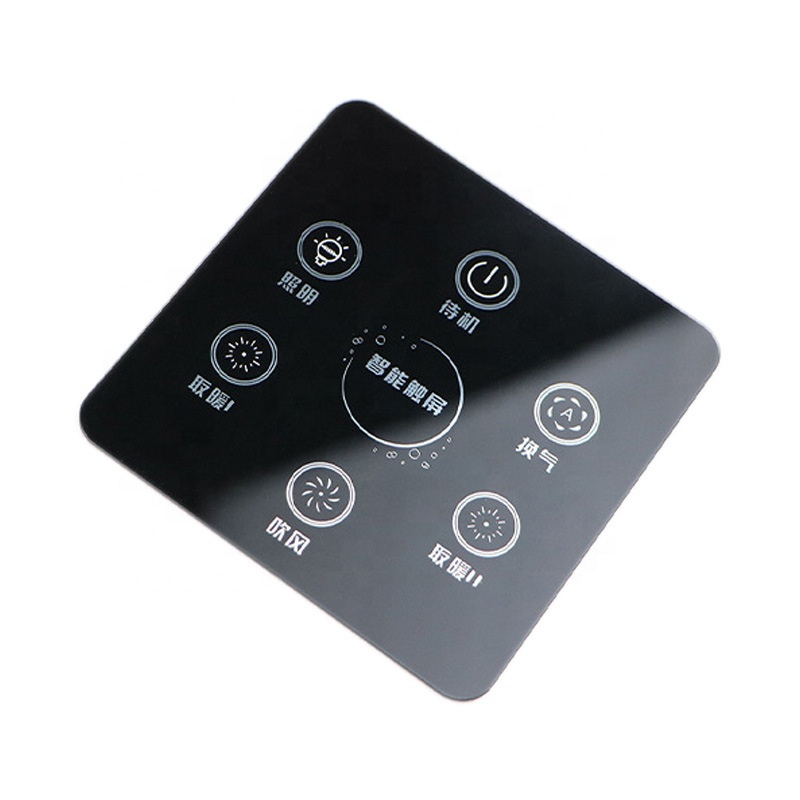
Smart Shower Touch Control Glass Panel
Bathroom solid and hollow tempered glass intelligent touch shower control switch panel with silk-screen printing and a 4-year warranty option.
What a China Commercial Display Glass Exporter Should Prove Before You Buy
China remains the most complete supply base for commercial display glass because the country combines glass substrate access, precision CNC machining, silk-screen printing, tempering, optical coating and export packing within a mature electronics cluster. That density is an advantage, but it also means the term “China commercial display glass exporter” is used loosely. For procurement teams, the real question is not whether a supplier can show a catalogue; it is whether the supplier controls the processes that determine yield, optical consistency and delivery risk.
A genuine factory-direct manufacturer should be able to explain how the glass is cut, machined, polished, printed, tempered, coated, inspected and packed. It should also provide measured performance windows rather than vague adjectives. For AR anti-reflective glass, this means reflectance below 1.0% per side and transmittance above 99% across 400–700 nm in suitable designs. For AG anti-glare glass, it means controllable haze within 5–60% and gloss within a defined range. For ITO and FTO conductive glass, it means sheet resistance, transmittance and haze data that can be checked against the drawing.
Information gain matters most in coated display glass. Two suppliers may quote the same thickness and size, but deliver very different results after coating, edge polishing and tempering. A buyer who asks for process ownership, batch inspection data, sample dimensions and packing validation will usually separate a capable exporter from a catalogue trader. The same logic applies to commercial display glass wholesalers: a wholesaler can aggregate products, but it cannot substitute for coating-line control when your specification depends on optical performance.
2025–2030 Buying Trends for Display Glass Wholesale & OEM Projects
Buyers are moving away from lowest-unit-price sourcing toward total cost, verified process capability and supply resilience. These six trends are especially relevant when shortlisting China commercial display glass exporters.
Total cost of ownership replaces unit price
Procurement teams now compare yield, coating durability, RMA rate, packing protection and assembly fit. A slightly higher piece price can be cheaper when it prevents line stoppage and rework.
Dual sourcing with verified capacity
Brands are qualifying a primary supplier and a backup manufacturer. That increases demand for factory video, on-site assessment records, transaction history and evidence that coating is not outsourced.
Specification-based RFQs
Drawings now include substrate type, thickness, transmittance, haze, sheet resistance, contact angle, tolerance, edge quality and printing color. Clear inputs reduce quotation ambiguity.
Traceability and export documentation
Purchase teams increasingly request batch records, inspection reports and packing logs. For repeat wholesale orders, traceability protects both the buyer and the manufacturer during audits.
Faster sampling cycles
Samples from 1–2 pieces allow design validation before volume commitment. Engineering review, rapid prototyping and a typical 21–31 day mass-production window are becoming buying criteria.
Multi-function optical stacks
Single-function glass is giving way to combined requirements: AR plus AG for outdoor readability, AG plus AF for touch cleanliness, and conductive coatings for sensing or heating.
Where Commercial Display Glass Technology Is Moving
Product development is being shaped by thinner devices, larger display formats, curved interfaces and harsher operating environments. The right supplier should be able to discuss these trends in engineering terms, not marketing terms.
Thin, large-format cover glass
Commercial kiosks, industrial HMI and smart-home panels are moving toward larger visible areas and thinner glass, requiring stable flatness, edge quality and coating uniformity.
2.5D and 3D curved forming
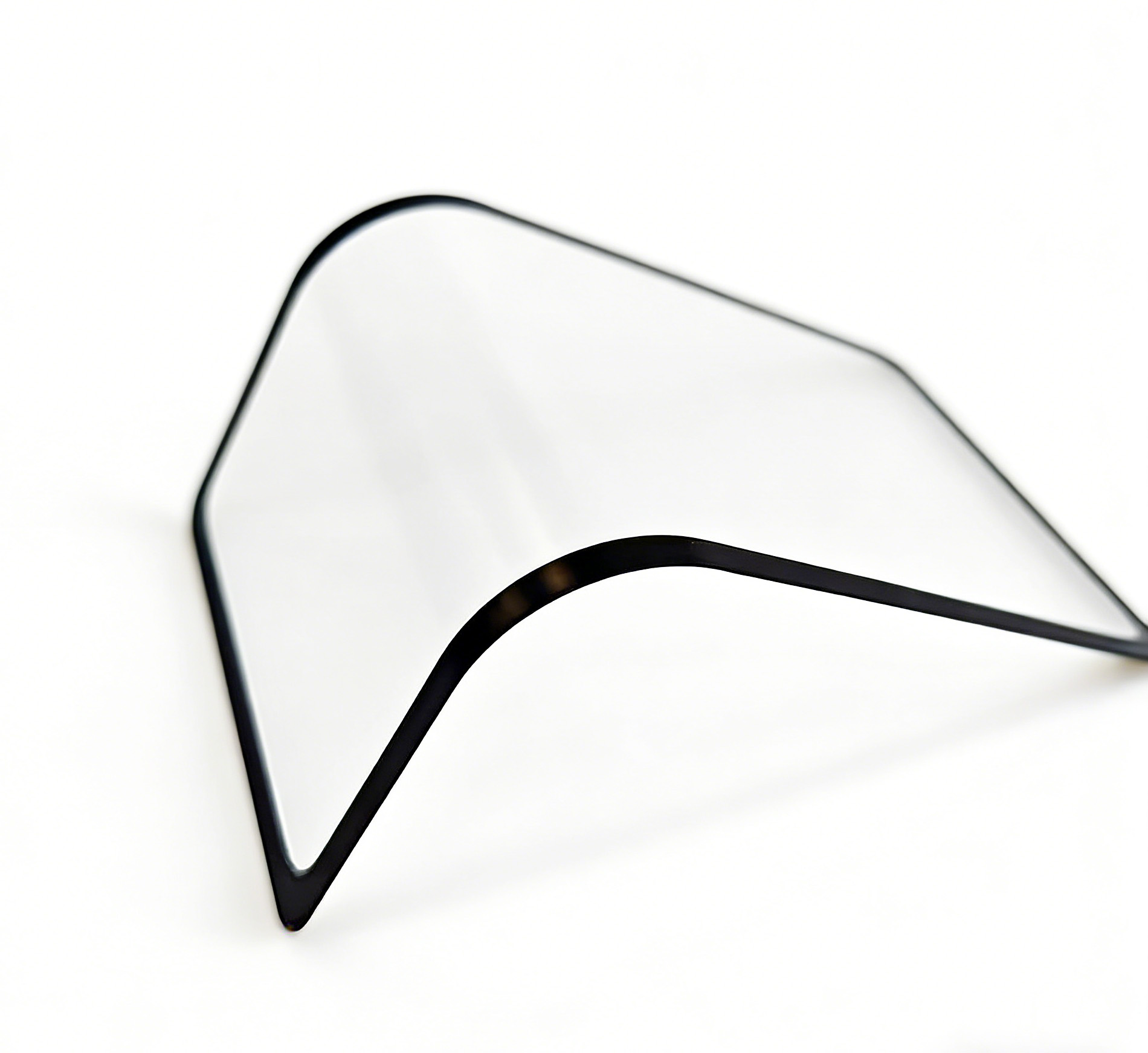
Automotive dashboards, bathroom controls and premium appliances increasingly use curved glass to match housings and improve touch ergonomics, while still requiring tempered strength.
Combined AR, AG and AF performance
One glass surface may need low reflection, anti-glare diffusion and anti-fingerprint behavior. Combined stacks demand careful layer design, adhesion control and abrasion testing.
ITO and FTO application specialization
ITO remains common for capacitive touch, displays and EMI shielding. FTO is often preferred where thermal and chemical stability matter, such as thin-film solar or high-temperature processing.
Stronger touch interfaces
Chemically strengthened and tempered glass are used to reduce breakage in high-touch public terminals, appliances and bathroom controls without making the panel excessively heavy.
Application-specific glass portfolios
Buyers want one partner for display cover glass, control-panel glass, conductive substrates and gaming glass. A broad but process-controlled portfolio reduces supplier count and qualification effort.
Why KELO Glass Is Built for Export Buyers
Huizhou KELO Glass Co., Ltd. is a factory-direct manufacturer in Huizhou, Guangdong, serving buyers who need cover glass, optical coated glass and conductive glass with accountable quality control.
Factory-direct vertical integration
Cutting, CNC machining, edge polishing, laser engraving, silk-screen printing, sandblasting, flat and curved tempering, coating and 3M adhesive bonding are handled under one roof. This reduces handling damage and shortens problem-solving loops.
In-house surface engineering
AR, AG, AF, ITO and FTO coating capability is central to the factory. Buyers can request measured targets such as reflectance below 1.0% per side, controllable haze, contact angle above 110° or sheet resistance of 1–20 Ω/sq.
Engineering-led customization
Drawing review and DFM feedback are provided before sampling. Thickness from 0.1 mm to 19 mm, custom holes, printing, edges, 2.5D/3D forming and adhesive bonding can be matched to the application.
Three-gate quality control
Incoming inspection verifies raw glass and consumables. In-process checks cover CNC dimensions, tempering strength and coating adhesion. Final inspection includes 100% appearance checking plus reliability tests and protective packing.
Export trade terms and payment flexibility
Orders can be quoted under FOB, CFR, CIF, EXW and DDP terms, with T/T, L/C, PayPal and Western Union payment options. Alibaba.com orders can be protected by Trade Assurance where applicable.
Verified export track record
The company profile shows 6 years as a verified exporter on Alibaba.com, a 4.9/5 store rating, a 98.18% response rate, 101–200 employees, 21–30 R&D engineers and annual output value in the US$50–100M range.
Experience, Expertise, Authority and Trust
Google’s Search Quality Rater Guidelines reward content that demonstrates first-hand process knowledge, credible expertise and transparent trust signals. For industrial glass sourcing, those signals must be specific and checkable.
Experience
Export work with Europe and North America, verified Alibaba.com history, buyer feedback and a 4.9/5 store rating indicate practical trade experience rather than a new catalogue site.
Expertise
21–30 R&D engineers, in-house coating, tempering, CNC and curved forming capability support specification discussions on optics, strength and electrical function.
Authority
Factory floor area of 10k–30k m², 101–200 employees and annual output value of US$50–100M provide scale context. A verified manufacturer profile can be reviewed independently.
Trust
100% appearance inspection, adhesion and abrasion tests, salt spray testing, custom honeycomb cartons and Trade Assurance support reduce buyer risk from sample to repeat order.
What to Request From a China Display Glass Manufacturer
Use this checklist during RFQ review. It helps compare suppliers on evidence rather than presentation.
| Evaluation Area | Evidence to Request | Why It Matters |
|---|---|---|
| Factory ownership | Company profile, factory video, on-site verification report, production process list | Separates a real manufacturer from a trading intermediary and clarifies who controls coating and tempering. |
| Coating performance | Measured reflectance, transmittance, haze, gloss, contact angle or sheet resistance data | Prevents a sample from passing visually while failing the optical or electrical specification in production. |
| Sampling capability | Prototype quantity, sample lead time, drawing review notes and dimensional report | Confirms whether the supplier can validate a new design before tooling and volume commitment. |
| Quality plan | IQC, IPQC and FQC/OQC checklist, appearance standard, tempering and adhesion tests | Shows how defects are detected and contained before shipment, not after arrival. |
| Packing validation | Honeycomb carton, blister tray, partition packing and drop/transit protection details | Glass damage in transit can erase the benefit of a low unit price and delay an entire build. |
| Commercial terms | FOB, CFR, CIF, EXW or DDP quotation; payment method; Trade Assurance availability | Clarifies landed cost, risk transfer and order protection before purchase approval. |
From Drawing to Container: Six Controlled Checkpoints
Custom glass projects fail when assumptions are hidden. A clear workflow forces the important decisions — substrate, thickness, edge, printing, coating, tolerance and packing — into the open before production begins.
Share requirements
Provide drawing, sample or target specification plus annual volume and destination.
Engineering review
Receive DFM feedback on tolerance, coating stack, printing and cost drivers.
Prototype sample
Samples can start from 1–2 pieces for fit, optics and surface validation.
Validation
Approve dimensions, appearance, optical data and reliability expectations.
Mass production
Typical lead time is 21–31 days after sample approval, depending on complexity.
Packing & shipping
Custom protective packing, export documentation and agreed Incoterms.
Commercial Display Glass in Real Products
The same process discipline supports very different end products, from industrial control panels to smart bathroom interfaces and gaming peripherals.
Consumer electronics
Touchscreen cover glass, display windows and camera lens covers.
Automotive displays
Center consoles, dashboards and in-vehicle touch panels.
Smart home & appliances
Appliance glass lenses, switch panels and socket panels.
Industrial HMI
Rugged operator panels and factory control terminals.
Medical devices
Optical windows in quartz and sapphire for instruments.
Solar energy
FTO substrates and conductive glass for thin-film cells.
Hotel & bathroom
Smart bathroom control panels and mirror glass.
Gaming peripherals
Glass mouse pads, skates and PTFE mouse feet.
Export Distribution and Wholesale Readiness
For wholesale buyers, a supplier’s market experience affects documentation, packing, communication and delivery predictability. KELO Glass serves buyers across Europe and the Americas, with market distribution concentrated in regions that demand traceable quality and consistent repeat-order performance.
Frequently Asked Questions About China Display Glass Procurement
These answers address the commercial and technical questions that most often appear before a first order.
Are you a manufacturer or a trading company?
Huizhou KELO Glass Co., Ltd. is a factory-direct manufacturer located in Huizhou, Guangdong. Core processes such as cutting, CNC machining, edge polishing, silk-screen printing, tempering, coating and adhesive bonding are handled in-house. That matters because coating and tempering performance cannot be fully controlled by a supplier that only resells finished glass.
What is the minimum order quantity for custom display glass?
Sample orders can start from 1–2 pieces so you can validate fit, optics, coating performance and appearance before committing to volume. Bulk quantities are quoted per drawing, coating stack, size, shape and annual demand.
What is the typical lead time for mass production?
Bulk lead time is typically 21–31 days after sample approval. The final schedule depends on glass size, coating type, curved forming, printing complexity, packing requirements and the current production load.
What optical performance can your AR coating achieve?
AR anti-reflective coating can be engineered for reflectance below 1.0% per side and transmittance above 99% across 400–700 nm in appropriate single-layer or multi-layer designs. Final targets are confirmed against your drawing and use environment.
Should I choose ITO or FTO conductive glass?
ITO glass is commonly used for capacitive touch sensors, displays and EMI shielding. FTO glass offers better thermal and chemical stability, making it a frequent choice for thin-film solar cells and high-temperature processes. Both can be supplied with sheet resistance in the 1–20 Ω/sq range, transmittance above 85% and haze below 2%, depending on the exact specification.
What thickness, sizes and shapes can you produce?
Glass thickness ranges from 0.1 mm to 19 mm. Size, shape, holes, color, logo printing, edge treatment, 2.5D/3D curved forming and 3M adhesive bonding can be customized to your drawing or sample.
Which trade terms and payment methods do you accept?
FOB, CFR, CIF, EXW and DDP trade terms can be quoted. Payment options include T/T, L/C, PayPal and Western Union. Orders placed through Alibaba.com can be protected by Trade Assurance where applicable.
How do you control quality before shipment?
Quality is controlled through incoming, in-process and final inspection, including 100% appearance checking, tempering verification, adhesion and abrasion tests, salt spray testing and defined packing checks. Custom honeycomb cartons, blister trays and partition packing are used to reduce transit damage.
What information should I send to get an accurate quote?
Send a drawing or sample photo, glass thickness, dimensions, substrate preference, coating target, printing requirements, edge and hole details, estimated annual volume, destination country and required trade term. Our engineering team can then review feasibility and recommend the most cost-effective glass solution.
Have a Drawing or a Glass Specification? Let’s Engineer It.
Buyers, distributors and brand owners are welcome. Send your drawing, target coating performance and annual volume. The KELO Glass team will review feasibility, flag cost drivers and recommend the right cover glass, AR/AG/AF coating, ITO/FTO substrate or curved glass solution for your commercial display project.