Factory-direct B2B supply · Cologne (Köln) · Rhine-Ruhr

AG Coated Glass Factory & Wholesaler for Cologne

Anti-glare, AR, AF, ITO/FTO and tempered cover glass for outdoor displays, smart buildings, appliance panels, automotive HMI and exhibition technology — engineered in-house, sampled from 1–2 pieces, and shipped to Cologne with export documentation.

Get a Quote AG · AR · AF · ITO/FTO · 0.1–19 mm · 21–31 day production
Eight product lines

Factory-Direct Glass Products for Cologne Buyers

Use this product set as a starting point for Cologne wholesale sourcing, then confirm thickness, haze, reflectance, print, edge finish and coating stack during engineering review. Every item below is processed through an in-house production chain rather than a trading layer.

Need a Cologne-specific recommendation? Tell us the installation lighting, touch frequency and cleaning method. We will narrow the choice between AG, AR, AF, ITO/FTO and combined coatings before you commit to a sample.

Factory profile

Wholesale Capacity Without a Trading-Margin Layer

Huizhou KELO Glass Co., Ltd. is a factory-direct manufacturer in Huizhou, Guangdong, China, serving Cologne buyers through export wholesale. These profile figures matter only when they translate into stable tolerances, clear documentation and repeatable coating performance.

10k–30km²Factory floor area
20–25Mpcs/yrTouch cover glass capacity
101–200Employees on site
21–30R&D engineers
US$50–100MAnnual output value
≤1hTypical response time

European experience that matters to Cologne procurement

Our export mix is weighted toward Europe, with additional experience in North America and South America. For a Cologne buyer, that means familiar documentation, packing expectations and trade terms rather than a first-time export experiment.

Europe70%
North America20%
South America10%
Optical engineering

Why AG Coated Glass Is a Strategic Material for Cologne — Not a Commodity

Glass is often purchased as a cut-to-size commodity, but in Cologne’s visual environment it behaves more like an optical interface. The city’s showrooms, trade-fair halls around Koelnmesse, Rhine-side public screens, hotel and retail interiors, and the Rhine-Ruhr automotive and medical supply chain all place glass under mixed light: direct daylight, reflected sky, LED walls and dense artificial illumination. In that setting, a clear panel with the wrong surface treatment can turn a high-brightness display into a mirror, a public touchpoint into a fingerprint magnet, or a premium product into a visually noisy surface.

AG — anti-glare — coated glass changes the reflection geometry. Instead of one sharp specular highlight, the surface scatters incoming light into a controlled, diffuse reflection. The result is not only “less glare” in a marketing sense. It is a measurable change in haze, gloss, distinctness-of-image and contrast under real lighting. For Cologne buyers, the useful question is not “Do you sell AG glass?” but “Which haze band, transmission level, glass thickness, edge finish and optional AF top coat will keep this interface readable and cleanable in its actual installation?”

AR anti-reflective glass takes a different route: it reduces surface reflectance so more light passes through the glass. AF anti-fingerprint coating lowers surface energy so oils and cleaning residues wipe away more easily. ITO and FTO conductive glass add electrical functionality. A strong wholesale quote therefore starts with the operating condition, not a stock image.

RFQ data that prevents a costly mismatch

  • Peak ambient light, viewing distance and whether direct sun reaches the glass.
  • Target haze range, gloss level and the measurement angle used for acceptance.
  • Glass size, thickness, tolerance, edge quality and hole/print positions.
  • Touch frequency, cleaning agents and whether fingerprints are a visible issue.
  • Required documents, annual volume and delivery destination in Cologne.

AG Anti-Glare

Use when daylight or strong downlights create a visible reflection. Choose lower haze for optical clarity and higher haze when reflection control is more important than a perfectly glossy look.

AR Anti-Reflective

Use when the glass must disappear visually, such as display windows, medical monitors, camera covers or showcase panels. Our published capability reaches reflectance below 1.0% per side and transmittance above 99%.

AF Anti-Fingerprint

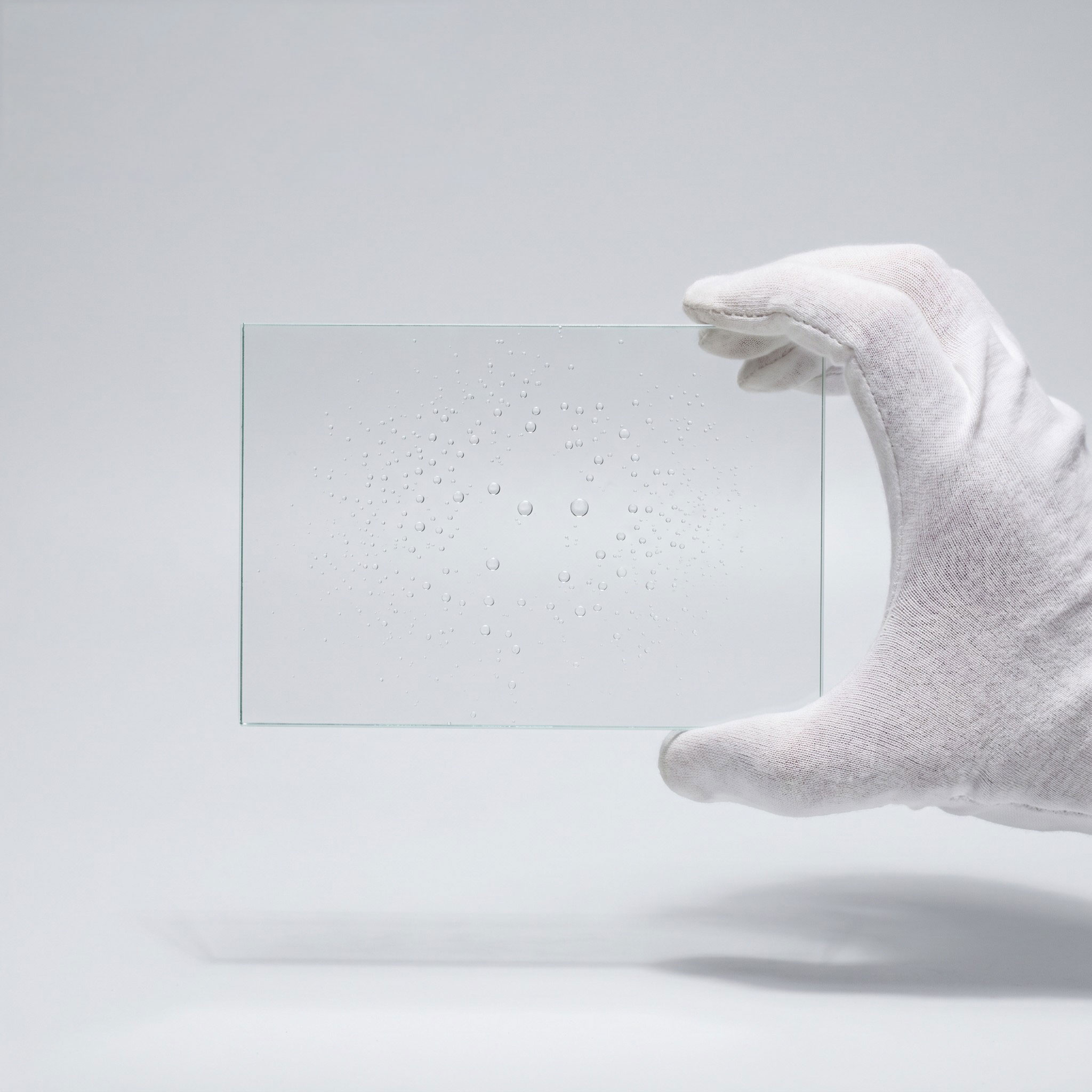
Use on high-touch public and appliance surfaces where cleaning frequency is part of the user experience. Contact angle above 110° and more than 10,000 abrasion cycles are typical production targets.

Local applications

Where AG Coated Glass Creates Value in Cologne

Cologne is not a single market. It combines exhibition technology, public-facing wayfinding, hotel and retail interiors, Rhine-side outdoor installations, and a wider Rhine-Ruhr engineering base. Each use case puts a different demand on the glass surface.

Koelnmesse exhibitions & brand showrooms

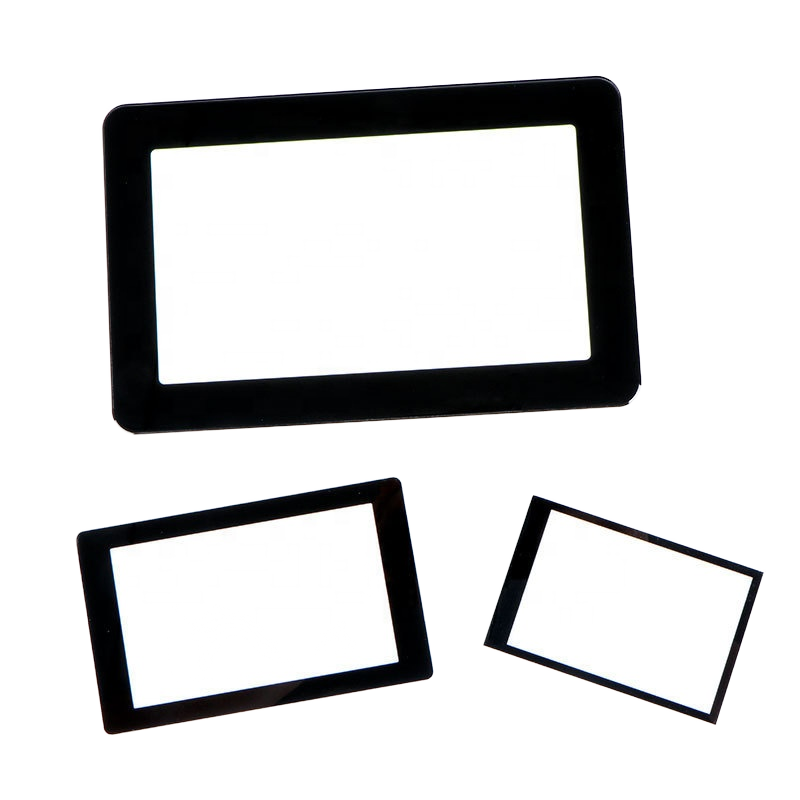
Trade-fair demos compete with hall lighting and camera flash. AR protects colour and transmittance, AG softens reflections across viewing angles, and AF keeps shared touch surfaces presentable during long show days. Print windows, camera holes and edge quality should be frozen before the show build.

Rhine riverfront outdoor kiosks & wayfinding

Rain, low winter sun and public use create a tough optical environment. Tempered or chemically strengthened glass with controlled AG haze, sealed edges, AF treatment and UV-stable printing helps the display remain legible without forcing the backlight to maximum output.

Rhine-Ruhr automotive HMI

Centre-stack and dashboard displays increasingly require 2.5D/3D forming, optical bonding, chemical strengthening and combined AR/AG function. The glass should be specified as part of the display stack, not as a standalone sheet, because reflectance, bonding and curvature affect final readability.

Medical, laboratory & life science

Anti-fogging AR glass, ITO/FTO conductive substrates and quartz or sapphire optical windows support instruments, sensor covers and diagnostic equipment. Cleanability, chemical compatibility and consistent transmission matter more than decoration.

Smart building, hotels & hospitality

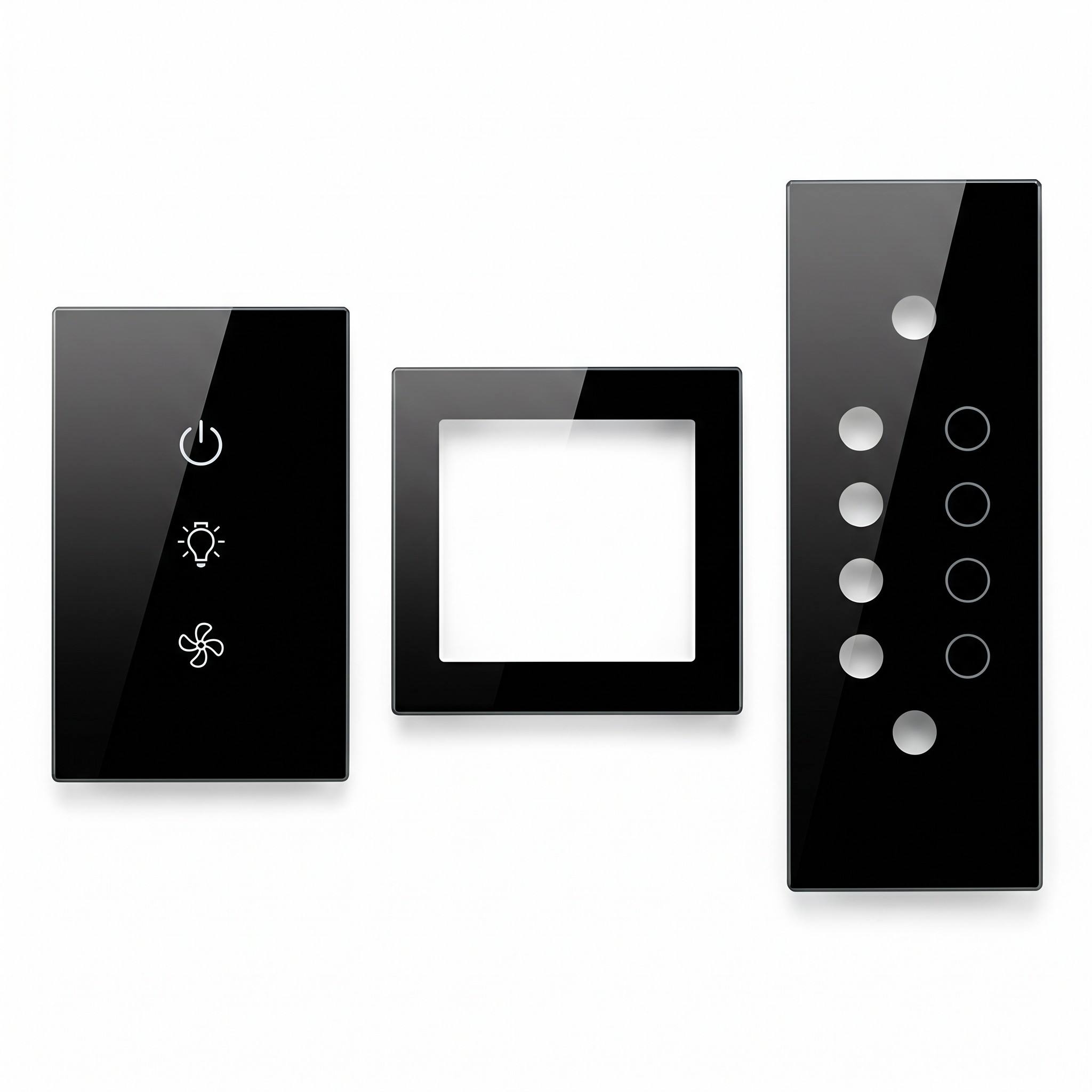
Appliance-style control panels, backlit icons, printed borders and easy-clean AF surfaces suit hotel rooms, public restrooms, kitchenettes and building automation interfaces. Matte AG finishes can also reduce visible fingerprints under downlights.

Retail, gaming & consumer technology

Showcases, display covers, glass mouse pads and glide components all rely on consistent surface quality. For gaming and consumer brands, custom printing and repeatable small-batch production can be more valuable than a large catalogue of stock sizes.

Cologne market trends

What Cologne Buyers Are Changing in Their Glass Specifications

Procurement teams are moving away from one-size-fits-all cover glass. The strongest briefs now combine optical performance, cleanability, documentation and a realistic path from prototype to volume.

The trade-fair calendar rewards small-batch customisation

Koelnmesse exhibitors often need a small set of custom panels, printed logos and quick remakes before a fixed show date. A supplier that can sample from 1–2 pieces and keep dimensions stable is more useful than one that only quotes large volume.

Daylight management is becoming a design requirement

Matte, low-glare surfaces are no longer limited to industrial equipment. Architects, retailers and product designers are using controlled AG haze to reduce visual fatigue and to make displays feel calmer in bright interiors.

Touch hygiene and cleanability shape material choice

Public terminals, hotels, medical equipment and kitchen appliances are evaluated by how they look after cleaning. AF coating is increasingly specified alongside AG and AR because fingerprints and cleaning marks affect perceived product quality.

Premium matte and edge-to-edge design

Cologne buyers in retail and consumer technology often want a consistent low-gloss appearance across large panels. That requires control of gloss, haze, colour neutrality and print alignment, not just a roughened surface.

Automotive HMI and smart-home convergence

The Rhine-Ruhr engineering base pushes display specifications toward curved, bonded and optically coated glass. Similar expectations are moving into smart-home controls, where appliance-grade glass must be tough, printable and easy to clean.

Documentation and predictable EU logistics

Purchasing teams want fewer surprises: clear trade terms, protective packaging and relevant material declarations. A DDP quotation to Cologne may be preferred for sample and small production runs, while FOB or CIF may suit larger repeat orders.

Engineering data

Specify the Right Coating the First Time

Use these production windows as a technical starting point for a Cologne RFQ. Final targets should always be confirmed against your drawing, installation lighting and acceptance method.

Coating performance guide for AG, AR, AF, ITO, FTO and combined coated glass
Coating Key performance Typical Cologne use Specification note
AG Haze 5–60%; gloss 0.5–8 GU Outdoor kiosks, exhibition displays, sunlit HMI, retail screens Low haze preserves clarity; higher haze suppresses reflections but can soften fine detail.
AR Reflectance <1.0% per side; transmittance >99% Medical monitors, automotive displays, camera windows, showcases Single or multi-layer designs; confirm colour neutrality and durability with the display stack.
AF Contact angle >110°; pencil hardness >3H; transmittance >98%; durability >10,000 cycles Touch panels, appliance glass, hotel controls, public interfaces Define cleaning chemicals and abrasion testing before approval.
ITO Sheet resistance 1–20 Ω/sq; transmittance >85%; haze <2% Capacitive touch sensors, displays, EMI shielding Specify resistance tolerance, pattern area and busbar compatibility.
FTO Sheet resistance 1–20 Ω/sq; transmittance >85%; haze <2% Thin-film solar, high-temperature processes, laboratory work Choose FTO where thermal and chemical stability are more critical than ITO’s common display role.
Combined AR+AG or AG+AF stacks on one substrate Premium automotive, outdoor touch, high-end appliance panels Stack order, optical interference and surface durability must be validated together.

For outdoor displays in Cologne

Start with AG in a moderate haze band and add AF for public touch. Add AR only when the display must be photographed, viewed through glass, or used to show printed graphics behind the cover.

For automotive or medical clarity

Start with AR below 1.0% reflectance and discuss chemical strengthening, optical bonding and edge quality. If reflections still distract, a light AG layer can be combined, but it must be approved as part of the final stack.

For solar, lab or sensor projects

Start with ITO or FTO at the required sheet resistance, then confirm transmission, haze and temperature exposure. FTO is often the better conversation point for high-temperature or thin-film solar work.

Factory advantages

Why KELO Glass Is a Practical Cologne Wholesale Partner

A factory-direct relationship is useful only when engineering, coating, quality control and export communication work together. These are the capabilities behind a Cologne quotation.

One factory, one accountability line

Cutting, CNC machining, edge polishing, laser engraving, silk-screen printing, flat and curved tempering, coating, 2.5D/3D forming and 3M adhesive bonding stay inside the production chain.

Surface coating is in-house

AG, AR, AF, ITO and FTO coating are not outsourced. Coated batches are measured and visually inspected before release, which reduces the risk of a specification changing between sample and mass production.

Prototype before volume commitment

Samples can start from 1–2 pieces so you can validate fit, optics, print and coating feel before committing to production. Bulk lead time is typically 21–31 days after sample approval, depending on complexity.

Quality gates, not final-inspection theatre

Incoming, in-process and final checks cover thickness and flatness, CNC dimensions, tempering strength, coating adhesion, abrasion and appearance. Finished orders use custom honeycomb cartons, blister trays and partition packing.

Specialty material range

We process Gorilla glass, borosilicate, quartz, sapphire, ceramic glass, lead shielding glass and laminated safety glass alongside standard soda-lime and tempered cover glass, giving designers more room to solve thermal, optical or impact requirements.

Export terms for German buyers

We support FOB, CFR, CIF, EXW and DDP trade terms, plus T/T, L/C, PayPal and Western Union. Alibaba Trade Assurance can protect eligible orders. Our public profile lists a 4.9/5 store rating and a 98.18% response rate.

Built for engineering-led wholesale, not catalogue-only selling

Huizhou KELO Glass Co., Ltd. is located in Gaotian Village, Zhenlong Town, Huiyang District, Huizhou, Guangdong, China. The advantage for Cologne is direct engineering communication, controlled production and wholesale pricing without layers of trading margin. A sample is more than a photograph: it is the moment when optical performance, print position, edge quality and touch feel become real.

  • Factory-direct manufacturing
  • 1–2 pc samples
  • 21–31 day bulk production
  • 100% appearance inspection
  • AG / AR / AF / ITO / FTO in-house
  • Export packing to Europe
Specialty glass materials processed by KELO Glass including quartz, sapphire and borosilicate
OEM / ODM workflow

From Cologne Drawing to Production Release

A clear process protects both schedule and optical performance. The earlier the installation conditions are shared, the fewer revisions are needed later.

1

Share requirements

Send drawing, sample photo or target spec, plus annual volume and delivery destination in Cologne.

2

Engineering review

We check thickness, tolerance, coating stack, haze/reflectance target, print and cost drivers with DFM feedback.

3

Rapid prototype

Samples can start from 1–2 pieces so fit, optics, surface feel and print can be evaluated together.

4

Validation

Approve appearance, dimensional report, coating results and packing requirements before mass production.

5

Mass production

Typical bulk lead time is 21–31 days after sample approval, depending on size, curvature and coating complexity.

6

Packing & shipping

Honeycomb cartons, blister trays and partition packing protect the order for export to Germany and wider Europe.

Cologne buyer FAQ

Questions Procurement Teams Ask Before a First Order

These answers are written for buyers comparing a factory-direct glass supplier for Cologne, not for retail or consumer purchases.

Are you a factory in Cologne or a wholesaler serving Cologne?

We are a factory-direct manufacturer in Huizhou, Guangdong, China, serving Cologne and wider Rhine-Ruhr buyers through export wholesale. We are not a Cologne retail shop. The practical advantage is direct access to production engineering, samples and wholesale pricing.

How do I choose between AG, AR and AF for a Cologne installation?

Start with the problem you can see. If daylight or downlights create a distracting reflection, start with AG. If the glass must be optically clear for a display, camera or showcase, start with AR. If fingerprints and cleaning marks are the issue, start with AF. Combined stacks such as AR+AG or AG+AF are possible, but the final sample must be evaluated under the actual lighting and cleaning conditions.

What is the minimum order and can samples be sent to Cologne?

Sample orders can start from 1–2 pieces so you can validate fit, optics and coating performance before committing to volume. Bulk quantities are quoted per drawing. For Cologne, sampling is especially useful before a Koelnmesse deadline because print position, gloss and touch feel can be checked physically.

What lead time should I plan for delivery to Cologne?

Bulk lead time is typically 21–31 days after sample approval, depending on size, coating stack, curved forming and printing complexity. Freight time to Cologne should be added. For trade-fair or launch dates, tell us the event date early so production, packing and shipping can be planned backward from the deadline.

Can you provide RoHS, REACH or material declarations?

Relevant material and coating declarations can be discussed for the quoted glass construction. Compliance should always be confirmed against the final product scope, application, and the documentation your German customer or regulatory team requires. Please include the requested document list in the RFQ so it is addressed before quotation.

How is glass packed for shipment to Germany?

Custom honeycomb cartons, blister trays and partition packing are used to minimise transit damage. For coated or printed panels, interleaving and edge protection are discussed according to size and surface sensitivity. If you have a preferred German receiving standard, share it before production.

Can you match printed logos, holes, 2.5D/3D shapes and 3M adhesive?

Yes. Size, shape, holes, colour, logo printing, 2.5D/3D curved forming and 3M adhesive bonding can be customised to your drawing or sample. Glass thickness ranges from 0.1 mm to 19 mm, and specialty materials can be reviewed where the application requires them.

What if my Cologne project needs a matte finish but also high transmission?

That is a common conflict in premium displays. A moderate AG haze may provide the matte look, while AR can improve transmission and reduce reflection. The right answer depends on the content being displayed, the viewing distance and the acceptance angle. We recommend evaluating two or three haze levels on real samples rather than approving from a flat image.

Next step

Request a Cologne Wholesale Quote with a Real Engineering Review

Send a drawing, target glass size, thickness, coating requirement (AG, AR, AF, ITO or FTO), haze or reflectance target, print/edge finish, annual volume and delivery address in Cologne. We will reply with feasibility, a recommended glass stack, sample path, production timing and an export quotation.

Useful RFQ details: installation lighting · touch frequency · cleaning method · print colours · 2.5D/3D requirement · target date · preferred Incoterm · required documents.

Start with a sample, a drawing or even a target haze range. Our engineering team will help translate it into a producible glass specification.

Get a Quote

Email: info@keloglass.com
Huizhou KELO Glass Co., Ltd.
Gaotian Village, Zhenlong Town, Huiyang District, Huizhou, Guangdong, China