CE Certified AG Anti-Glare Coated Glass for Outdoor Touch Displays
Factory & wholesalers for the Japan market — optical-grade AG, AR, AF, ITO/FTO and tempered cover glass engineered for sunlight-readable kiosks, EV chargers, industrial HMI and smart-city terminals.
8 Glass Products Selected for AG Outdoor Display and Japan OEM Projects
These eight product families cover the practical building blocks of an outdoor touch display program: anti-glare cover glass, anti-reflective laminated or coated glass, chemically tempered LCD protection glass, conductive ITO/FTO glass, and custom curved or printed glass. Each product can be quoted for Japan-bound wholesale, distributor stock, or OEM/ODM production.
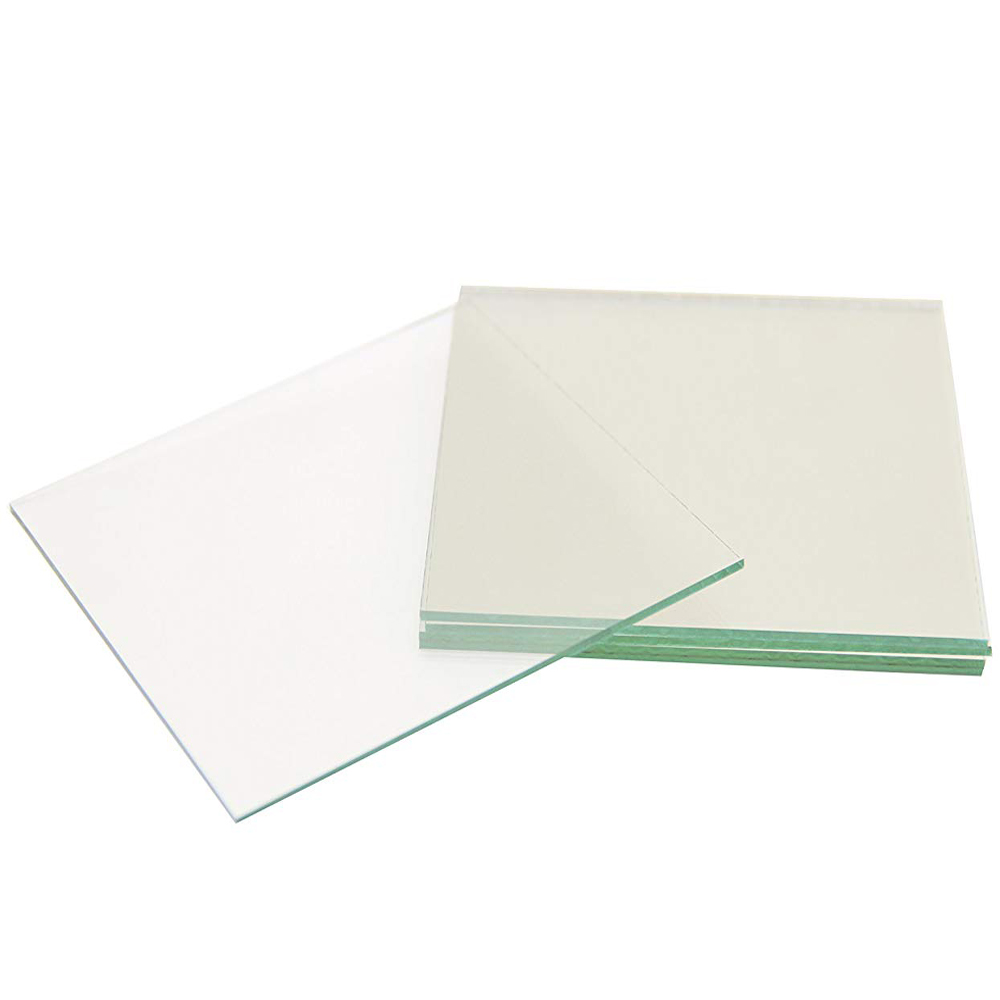
Custom 25×25×1.1 mm ITO/FTO Coated Toughened Glass
Small-format conductive glass for laboratory displays, anti-fog heating, bathroom touch controls and solar test fixtures. ITO or FTO coating, tempered substrate and custom cutting.

Curved Tempered Glass with Anti-Reflective Coating
Waterproof curved AR cover glass for bathroom interfaces, instrument windows and decorative display front panels. Supports 2.5D/3D forming, optical coating and printed borders.

Round & Oval PTFE 3M Mouse Feet Stickers
Wear-resistant PTFE glide pads with 3M adhesive for gaming mice, glass mouse pads and peripheral OEM programs. Smooth movement, long service life and custom die-cut shapes.
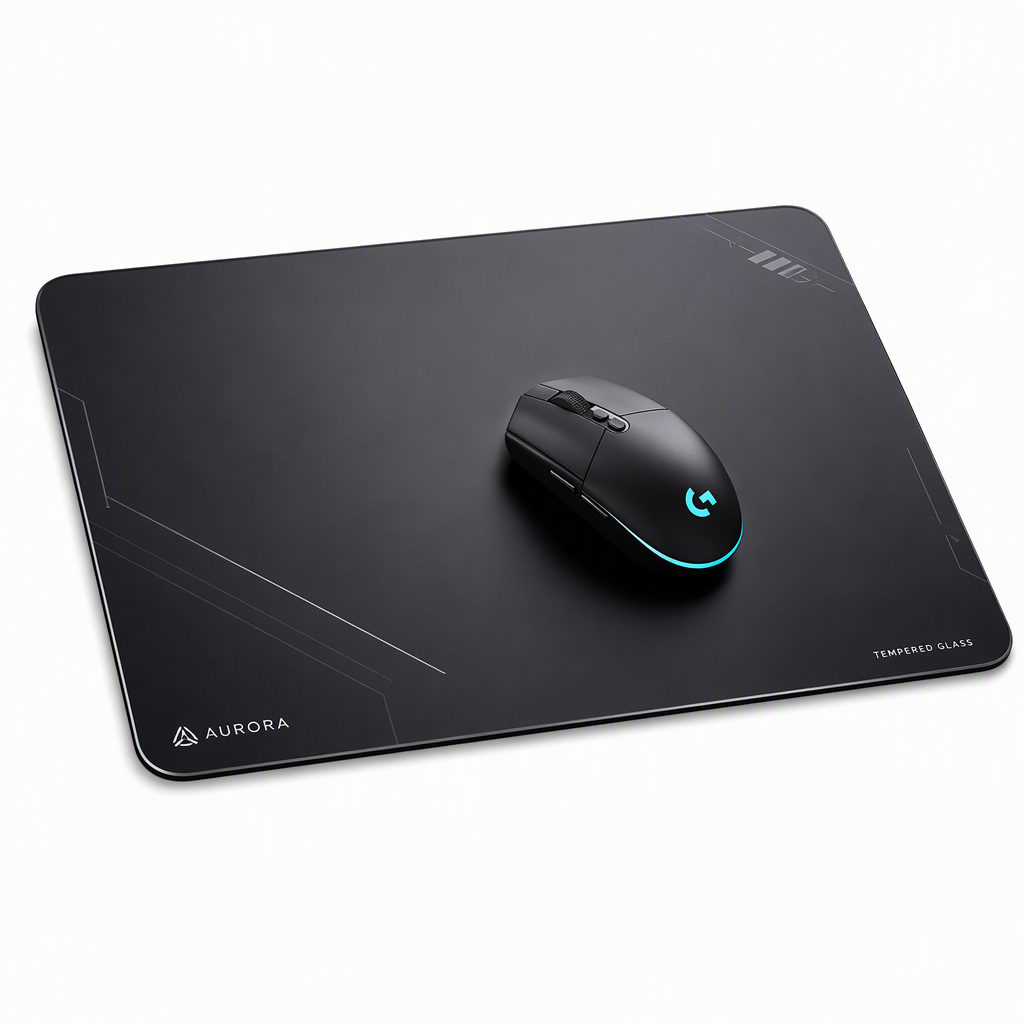
Tempered Glass Mouse Pad 2 mm / 3 mm
Hard-surface glass mouse pad with UV printing, custom logo and silicone base. Factory OEM for gaming brands, e-commerce sellers and Japan distributors seeking differentiated accessories.
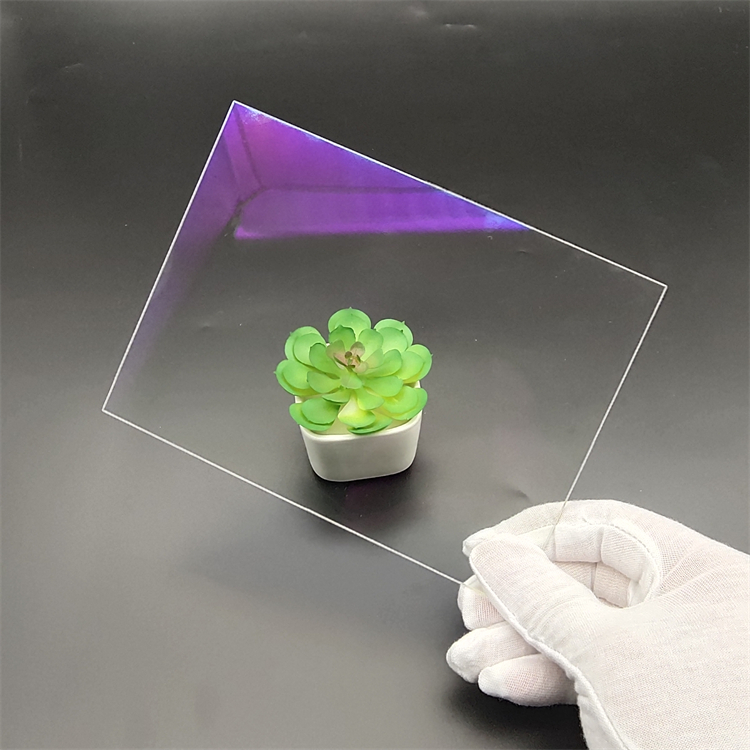
2 mm Ultra-Clear Double-Side AR Tempered Glass
Both-side anti-reflective tempered glass for display screens, solar covers and lighting applications where maximum transmission and low reflection are critical.
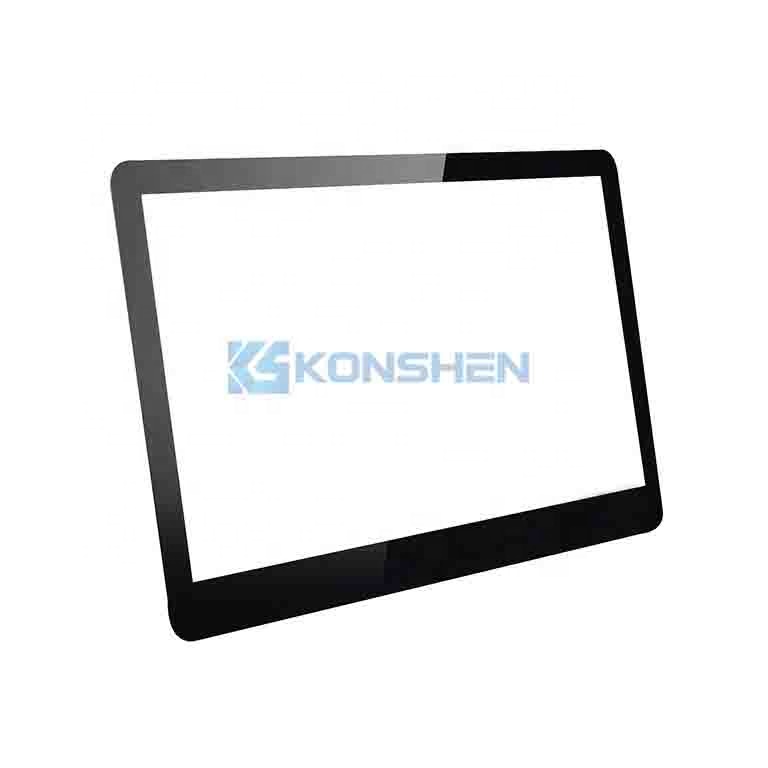
2 mm / 3 mm Anti-Glare Chemically Tempered LCD Cover Glass
Solid or hollow AG cover glass with silk-screen printing for outdoor LCD touch panels, appliance interfaces and European-style protection covers.
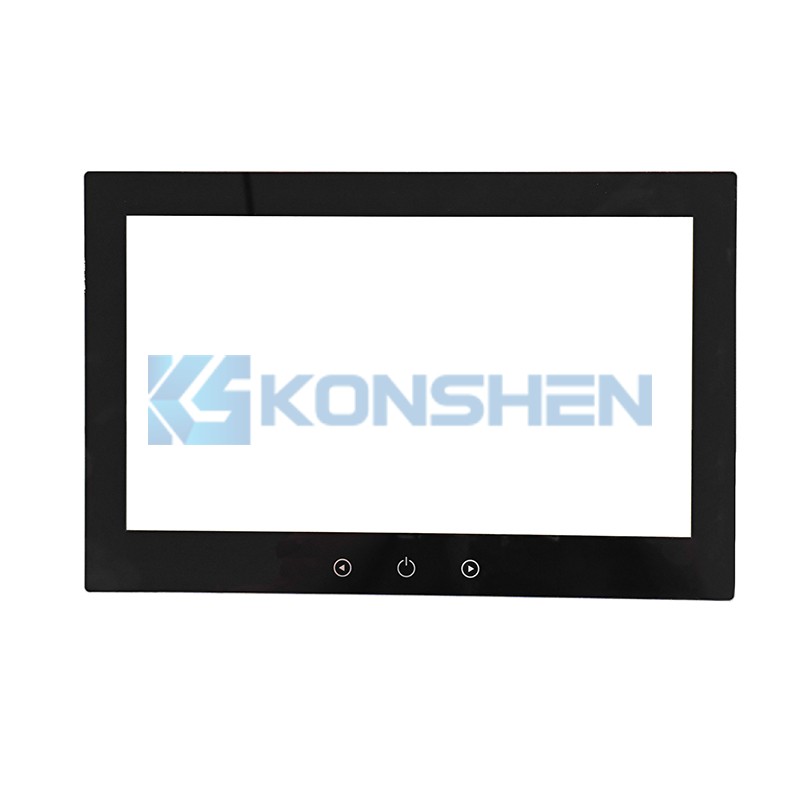
Black-Framed ITO Conductive Tempered Glass
Custom black border ITO glass, 1–4 mm, for industrial monitor covers, capacitive touch sensors and EMI shielding windows. Print colour and frame width are customizable.
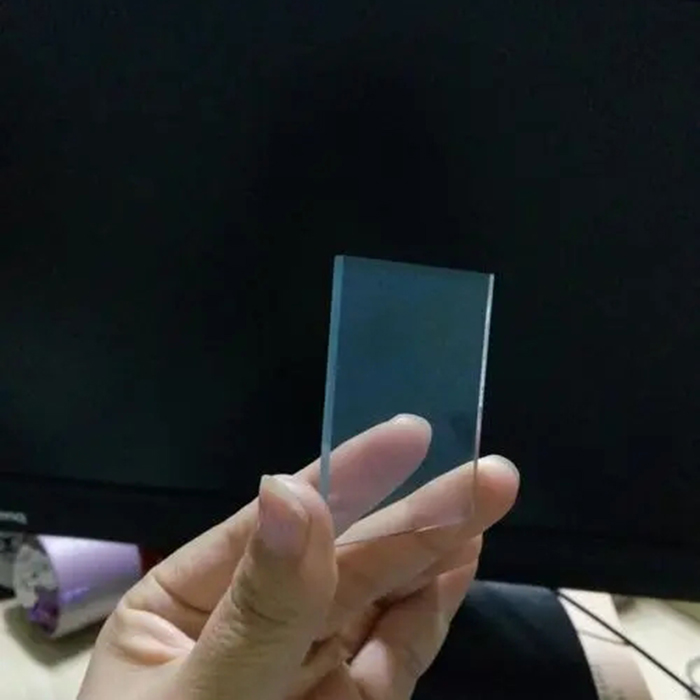
1.1 / 2.2 mm ITO & FTO Conductive Glass for Lighting
Flat square conductive glass for lighting applications, touch sensors and thin-film solar research. ITO and FTO options with low sheet resistance and high transmission.
AG Anti-Glare Glass Is a Readability Specification, Not a Cosmetic Add-On
Outdoor touch displays in Japan operate in a demanding optical environment. Strong summer sun, low winter sun angles, rain, snow reflections, coastal salt air, and high humidity can all reduce perceived contrast. When a display is installed at a train station, roadside EV charger, parking payment terminal, shopping mall entrance, or factory gate, the viewer often sees both the screen image and a reflected image of the sky, building, or vehicle headlights. AG anti-glare coated glass changes that optical behaviour by scattering specular reflections into a softer, lower-intensity light distribution.
The engineering decision is not simply “add AG”. The correct target depends on sunlight exposure, viewing distance, display brightness, housing design, and whether the screen is behind an air gap or optically bonded. Too little haze can leave a sharp reflection that masks content. Too much haze can soften the image and reduce perceived contrast, especially on fine text. For a CE-certified AG anti-glare coated glass program, the practical specification should define haze, gloss, transmission, colour neutrality, surface hardness, and durability under cleaning.
For Japanese OEMs and wholesalers, this is where a factory-direct partner adds value. KELO Glass produces AG, AR, AF and combined coated glass in-house, then reviews the drawing against the display stack. Our engineers can recommend an AG haze window, optional AR or AF top layer, glass thickness, tempering method, printed border and packing method before a sample is made. The goal is to approve the optical outcome on a real sample, not only a catalogue value.
CE marking is normally applied to the final outdoor display, kiosk, machine or electrical assembly under the applicable EU directive. For component glass, KELO supports the CE technical file with material declarations, coating performance records, RoHS-oriented documentation, batch traceability and inspection records. The exact certificate scope, test standard and documentation package must be confirmed project by project against the final product and destination.
What Japanese Buyers Typically Ask Us to Prove
1. Optical balance: haze and gloss measured on the agreed coating stack, not only on a generic sample.
2. Cleaning durability: AG or AG+AF surfaces that survive repeated wiping in public and industrial environments.
3. Climate readiness: tempered or chemically strengthened glass, edge quality, printing adhesion and packaging suitable for humid, coastal or cold-region installation.
4. Supply evidence: sample approval records, batch traceability, packing validation and export documents for Japan-bound shipments.
KELO Glass: Factory-Direct Capacity for Japan Wholesale Programs
Huizhou KELO Glass Co., Ltd. is a manufacturer located in Huizhou, Guangdong, inside the Greater Bay Area electronics supply chain. We are not a trading intermediary: cutting, CNC machining, edge polishing, silk-screen printing, tempering, coating and bonding are controlled under one roof.
Vertical Integration
Cutting, water-jet cutting, CNC drilling, edge polishing, laser engraving, silk-screen printing, flat and curved tempering, AR/AG/AF/ITO coating, 2.5D/3D forming and 3M adhesive bonding are handled in-house.
Coating Is Never Outsourced
Surface treatment is our core technology. Every coated batch is measured and visually inspected before release, which helps protect optical consistency across repeat orders.
Engineering Review and DFM
Our engineering team reviews drawings, tolerances, coating targets, print design, edge requirements and assembly methods before quoting, reducing late-stage sample changes.
Low-Friction Sampling
Sample orders can start from 1–2 pieces so Japan buyers can validate fit, optics and coating performance before committing to volume.
Production Lead Time
Bulk lead time is typically 21–31 days after sample approval, depending on size, coating stack, curved forming, printing complexity and order quantity.
Export and Trading Support
We support FOB, CFR, CIF, EXW and DDP terms, with T/T, L/C, PayPal and Western Union payment. Orders through Alibaba.com can be protected by Trade Assurance. Store rating 4.9/5 and 98.18% reply rate support buyer confidence.
Where AG Anti-Glare Coated Glass Fits Japan's Outdoor and Public Touch Infrastructure
Japan's display market combines high product expectations with practical installation constraints: limited maintenance labor, long service life targets, strict visual quality and careful packaging requirements. These are the most common local use cases we quote for Japanese OEMs, importers and wholesale distributors.
Outdoor Digital Signage and Wayfinding
Station entrances, shopping streets, tourist information boards and roadside signage need AG glass that controls sky and building reflections while retaining fine text clarity. A 3 mm chemically tempered AG cover with optional AF top coat is often a practical starting point.
EV Charging and Parking Payment Terminals
Displays face direct sun, headlights, rain and frequent finger contact. AG helps suppress reflected glare; AF improves wipe-clean performance; printed black borders hide busbars and bonding lines.
Smart City, Public Transport and Municipal HMI
Public terminals require stable readability, durable edges and consistent cosmetic quality. Silk-screen printed AG glass can integrate logos, icons and framing while maintaining a clean front surface.
Industrial Automation and Factory HMI
Factory floors often combine bright overhead lighting, coolants, oils and gloves. Chemically strengthened AG glass with AF and an ITO conductive layer can support touch sensing, EMI shielding and easier cleaning.
Smart Home, Bathroom and Appliance Panels
Humidity, condensation and daily cleaning drive demand for AF-coated glass, anti-fog ITO heating glass and curved AR cover glass for bathroom controls, mirror interfaces and appliance touch panels.
Retail, Vending and Cashless POS Kiosks
Self-service counters, vending interfaces and payment kiosks benefit from AG+AF glass that reduces glare and fingerprints while preserving a premium optical appearance for brand-facing installations.
Specify AG, AR, AF, ITO and Tempered Glass by Operating Condition
The strongest specification is built from the installation environment, not only from a product name. Use the table below as a starting point for RFQs, then confirm the final optical target on a sample with the actual display and housing.
| Coating or Glass Type | Typical KELO Production Window | Best-Fit Japan Application | Specification Note |
|---|---|---|---|
| AG Anti-Glare | Haze 5–60%; gloss 0.5–8 GU | Outdoor kiosks, EV chargers, public transport terminals | Balance haze against text clarity; validate at real viewing distance. |
| AR Anti-Reflective | Reflectance <1.0% per side; transmittance >99% at 400–700 nm | Display windows, medical monitors, high-clarity signage | Use double-side AR when maximum transmission is required. |
| AF Anti-Fingerprint | Contact angle >110°; pencil hardness >3H; transmittance >98%; >10,000 cycles | Touch control panels, appliances, payment terminals | Best when paired with AG for public high-touch surfaces. |
| ITO Conductive | Sheet resistance 1–20 Ω/sq; transmittance >85%; haze <2% | Capacitive touch sensors, industrial monitors, EMI shielding | Define both sheet resistance and visible pattern requirements. |
| FTO Conductive | Sheet resistance 1–20 Ω/sq; transmittance >85%; haze <2% | Thin-film solar, high-temperature processes, lighting | Choose when thermal and chemical stability are more important than ITO process familiarity. |
| Combined Stack | AR+AG, AG+AF or AR+AG+AF subject to review | Premium outdoor and in-vehicle interfaces | Confirm cosmetic grade, scratch-dig criteria and cleaning method. |
| Tempered / Strengthened Glass | 0.1–19 mm; flat, 2.5D and 3D forms | Impact-resistant cover glass and curved front panels | Edge polishing and flatness strongly affect assembly yield. |
Production windows are typical capability indicators. Final values are confirmed against the drawing, coating stack and sample approval.
Five Trends Shaping AG Glass Demand in Japan
Japanese buyers are not simply asking for “anti-glare glass”. They are asking for a repeatable optical outcome that supports longer service intervals, lower power consumption, public safety and premium product perception. These trends are visible in quotations, sample requests and distributor enquiries.
Sunlight-Readable Design Without Unlimited Brightness
Increasing display brightness adds heat and power consumption. AG glass, sometimes combined with AR, can improve perceived contrast so the display does not need to be pushed to an extreme brightness level in every outdoor installation.
More Touch Surfaces in Public Infrastructure
EV chargers, cashless payment kiosks, station wayfinding and municipal terminals are becoming more common. Public touch surfaces require easy-clean AF performance, durable AG texture and consistent cosmetic print quality.
Maintenance Efficiency and Labor Saving
With an aging workforce and labor constraints, operators prefer surfaces that reduce cleaning frequency and survive repeated wiping. AG+AF glass can lower visible fingerprints and make routine maintenance faster.
Larger, Thinner and Curved Cover Glass
Edge-to-edge front panels, curved smart-home controls and integrated printed frames require precise forming, polishing and printing. A supplier must control flatness, edge quality and coating uniformity together.
Documentation and Traceability Expectations
Public-sector and OEM programs increasingly ask for batch traceability, inspection records, material declarations and RoHS-oriented documentation. CE support and project-specific test reports help reduce approval friction.
Wholesale and Distributor Stock Models
Japan importers often need stable repeat supply across mixed sizes, coating options and packaging configurations. Factory-direct production, low-friction sampling and 21–31 day bulk lead times support distributor stock planning.
Recommended AG Glass Configurations for Japanese OEMs and Wholesalers
These are practical starting configurations for quotation discussions. The final build should be confirmed after reviewing the drawing, installation environment, display stack and annual volume.
For Sun-Exposed Outdoor Kiosks
Recommended: 3 mm chemically tempered AG glass, haze 20–40%, gloss 2–5 GU, optional AF top coat and black silk-screen border. Suitable for wayfinding, car parks and public terminals.
For EV Chargers and Payment Terminals
Recommended: 2–3 mm AG+AF cover glass with custom print, low-gloss surface and waterproof bonding support. The AF layer helps reduce fingerprint visibility and improves wipe-clean behaviour.
For High-Clarity Display Windows
Recommended: 2 mm both-side AR tempered glass, or AR+AG where the display faces a bright background but still requires strong image clarity.
For Industrial and Transport HMI
Recommended: 3–4 mm chemically strengthened AG glass with ITO conductive coating for touch or EMI shielding, plus custom black framing and robust packing for Japan-bound logistics.
From CE Documentation Support to Three Inspection Gates
For Japan-bound AG glass, quality is not only a final appearance check. It is the combination of incoming material control, in-process measurement, final inspection, packing validation and documents that help the buyer clear internal approval.
CE and Material Documentation
We provide material declarations, coating reports, inspection records and batch traceability to support the customer's CE technical file. Final CE marking responsibility remains with the equipment manufacturer, and the exact documentation package is confirmed per project.
IQC, IPQC and FQC/OQC
Incoming glass and consumables are verified; critical dimensions, tempering, adhesion and abrasion are checked during production; final inspection includes 100% appearance checking, salt spray reliability testing and packing review.
Japan-Bound Packing and Shipping
Custom honeycomb cartons, blister trays and partition packing reduce transit damage. We support FOB, CFR, CIF, EXW and DDP discussions, with CFR Tokyo, Yokohama, Kobe or Osaka quotations available on request.
Common Procurement Questions from Japanese Importers and OEM Buyers
These answers reflect the questions we most often receive during sample review, distributor onboarding and first-order planning.
Can you supply CE-certified AG anti-glare coated glass?
CE marking generally applies to the final display, kiosk or machine under the relevant EU directive, rather than automatically to the glass component. For CE-oriented projects, KELO supports your technical file with material declarations, coating performance reports, RoHS-oriented documentation, inspection records and batch traceability. Please confirm the required certificate scope, standard and document list before ordering.
What is the minimum order quantity for a Japan trial order?
Sample orders can start from 1–2 pieces so that fit, optics, printed graphics and coating performance can be validated before volume production. Bulk quantities are quoted according to the drawing, size, coating stack, tempering method and annual demand. Distributors with mixed SKU requirements are welcome to discuss a quotation structure by model.
How should we specify AG glass for a Japanese outdoor installation?
Start with the installation environment: direct sun exposure, typical viewing distance, display brightness, housing air gap, cleaning method and whether the surface is bonded. For direct-sun roadside equipment, a 20–40% haze window with 2–5 GU gloss is often a practical starting point. Covered or semi-outdoor installations may use a lower haze. The final choice should be validated on a real sample.
Can you support JIS-related inspection requirements?
We can inspect against the drawing and customer-approved criteria, including dimensions, appearance, coating adhesion, abrasion, hardness and packing. Where a project references JIS-conscious test items, we will review the requested standard and report format before quotation. Certification scope must be confirmed for each project; we do not assume that a general factory capability automatically equals certification for every test item.
What is the typical lead time and sample process?
After drawing review and sample approval, mass production is typically 21–31 days depending on glass size, coating stack, curved forming, printing complexity and quantity. Samples are quoted according to the drawing and coating target. For urgent projects, share the target installation date so engineering and production can review feasibility before the order is placed.
Do you support custom size, holes, printing, 2.5D/3D and adhesive bonding?
Yes. Glass thickness ranges from 0.1 mm to 19 mm. Size, shape, holes, colour, logo printing, 2.5D/3D curved forming and 3M adhesive bonding are customized to the drawing or sample. We also process specialty materials such as borosilicate glass, quartz glass, sapphire glass, ceramic glass, lead shielding glass and laminated safety glass.
Which trade terms, payments and shipping options are available for Japan?
We support FOB, CFR, CIF, EXW and DDP trade terms, and T/T, L/C, PayPal and Western Union payments. Orders placed through Alibaba.com can be protected by Trade Assurance. Packing can be customised with honeycomb cartons, blister trays and partitions to reduce transit damage. CFR quotations to major Japanese ports can be prepared on request.
How do you control quality before shipment?
Quality is controlled through incoming inspection, in-process inspection and final inspection with 100% appearance checking. Depending on the product, we also perform tempering, adhesion, abrasion and salt spray tests. Custom packing is reviewed before shipment, and batch traceability is maintained for repeat orders.
Send Your AG Glass Drawing, Target Haze and Annual Volume
KELO Glass supports Japanese OEMs, brand owners, importers and wholesale distributors with factory-direct AG, AR, AF, ITO/FTO and tempered cover glass. Share the drawing, installation photo, display brightness, target haze/gloss, print file and estimated order quantity — our engineering team will review feasibility and recommend a practical glass stack.