Eight Factory-Direct Glass Products for Infrared Filter Glass & Optical Assemblies
For San Antonio engineers sourcing infrared filter glass, the optical window is only one part of the assembly. The surrounding cover glass, conductive layer, printed interface and protective coating all affect transmission, glare, durability and field service life. The eight product families below are produced under KELO’s factory-direct model, with drawing review, sample validation and in-house inspection before shipment. Select the closest platform, then send your wavelength range, dimensions, coating target and annual volume for a project-specific recommendation.
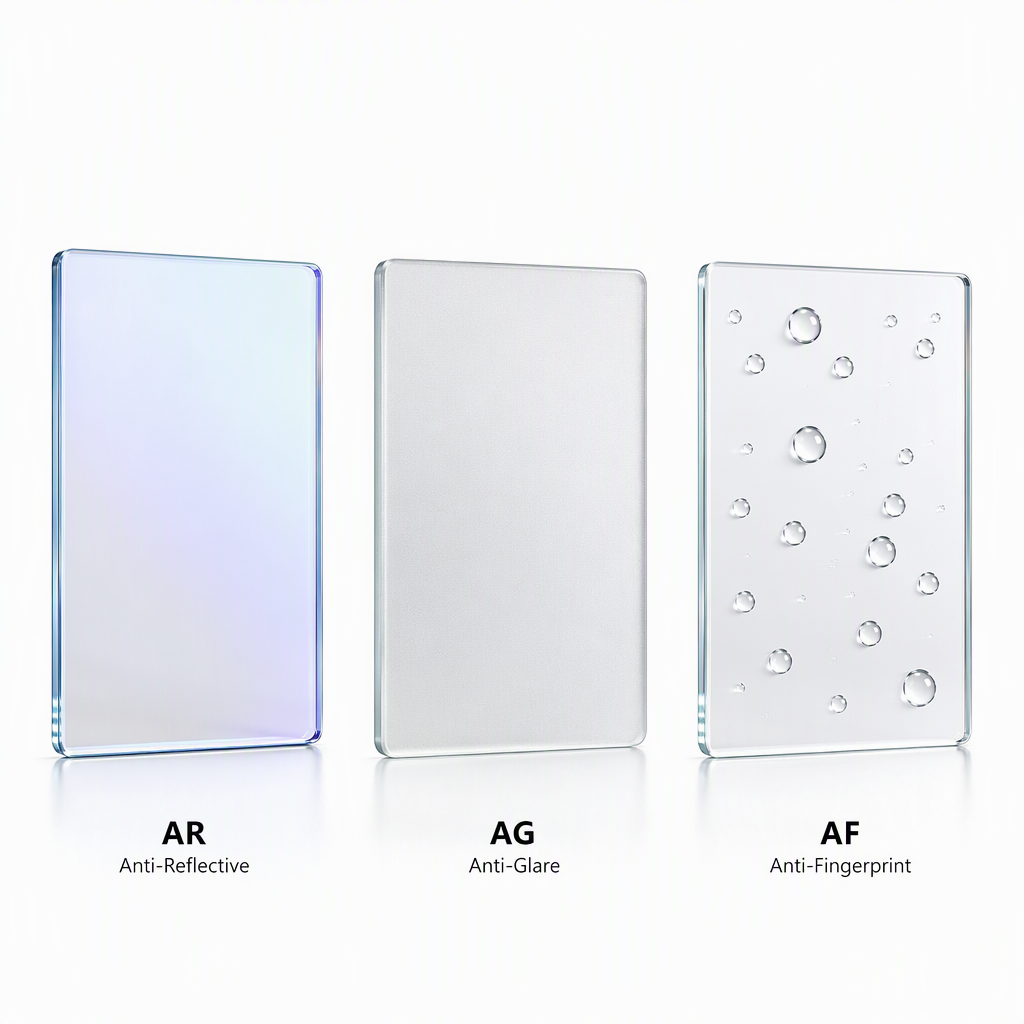
AR AG AF Coated Glass Anti Reflective Coating Service 92 Percent Transmission Anti Glare Custom Sheet Factory OEM
A versatile optical platform for IR camera windows, sensor covers and display stacks. AR raises transmission and suppresses ghost reflections; AG softens ambient glare; AF improves cleaning in high-touch environments. Custom sheet sizes, shapes and OEM production are supported.
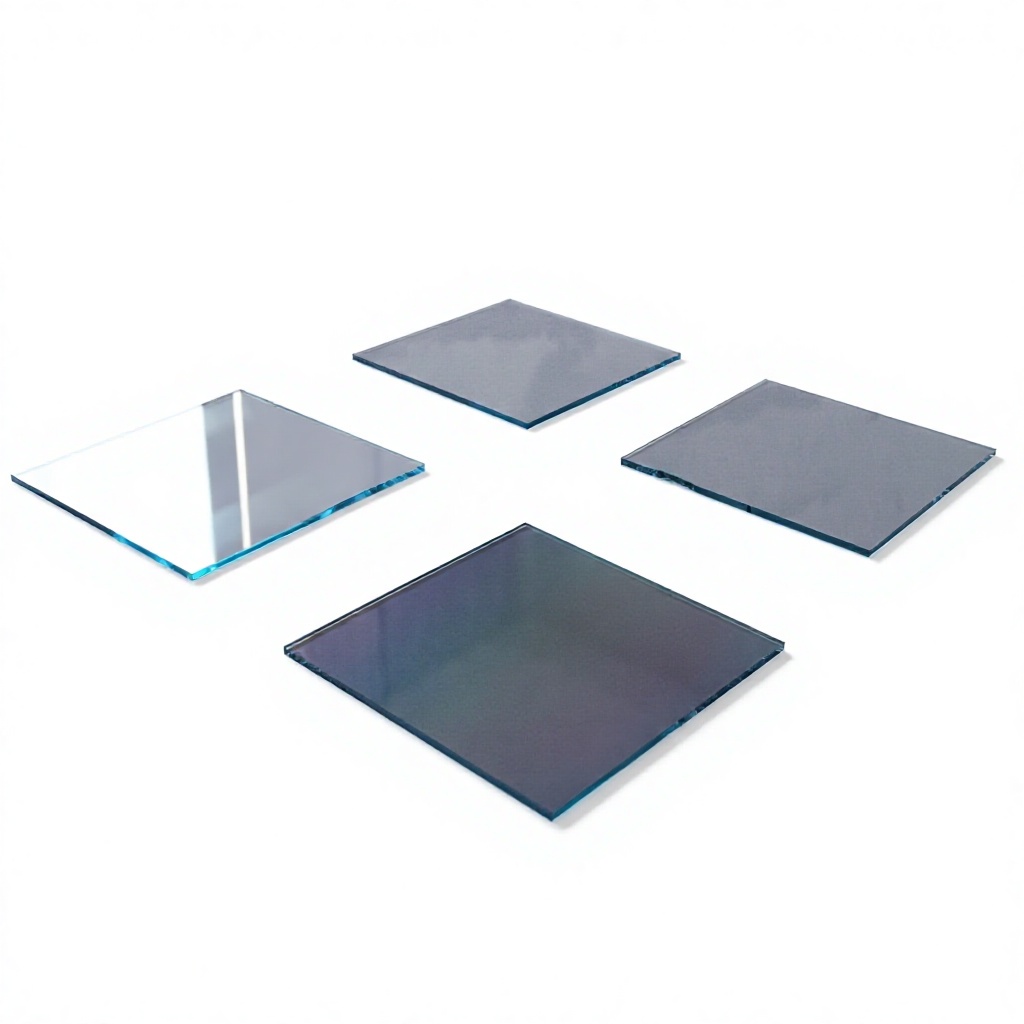
1.1mm ITO Coated Conductive Glass Panel Optical Electronic Glass Custom Shape Polished Edge for Industrial Use
A 1.1 mm transparent conductive glass panel for industrial sensing, touch and EMI-related assemblies. Custom shape, polished edge and dimensional control help integrate the substrate into space-constrained optoelectronic hardware.

Custom Silk Screen Printed Tempered Glass Electronic Control Panel Cover for Smart Appliances
Printed tempered glass control covers for appliances, instruments and user interfaces. Silk-screen graphics, windows and touch areas can be aligned to a drawing, with strengthening and appearance checks before packing.
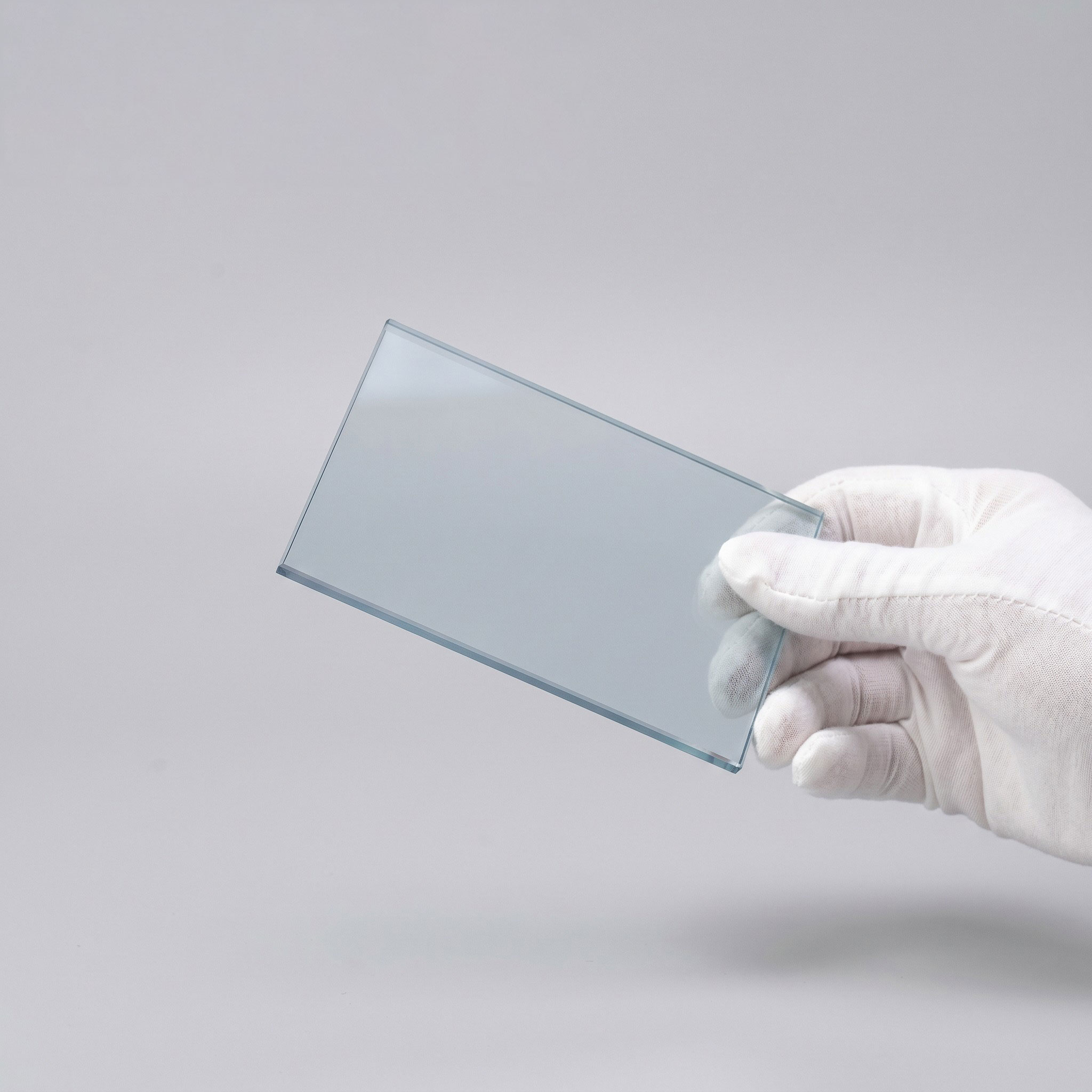
High Temperature Resistance Fluorine Doped Tin Oxide FTO Conductive Glass Solar Cell Substrate DSSC Perovskite Lab Research
FTO conductive glass for thin-film solar, DSSC, perovskite research and high-temperature processes. Compared with ITO, FTO often offers stronger thermal and chemical stability where annealing or aggressive processing is involved.
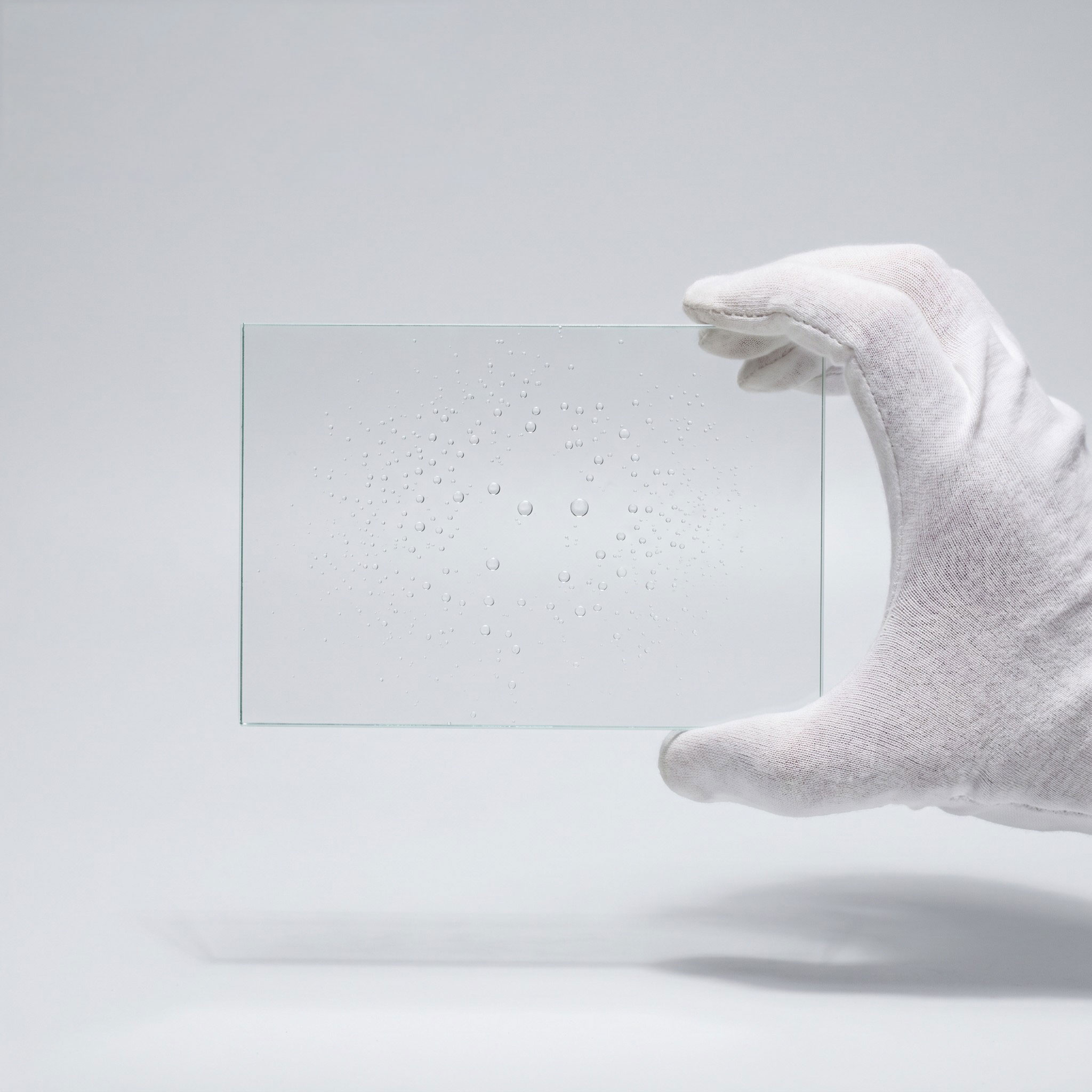
KS AF001 High Transmittance AF Coated 1.1mm/2mm CNC Cut Custom Shape Toughened Glass Panel for Kitchen Electronic Device Covers
AF-coated toughened glass for kitchen electronics and frequent-clean control surfaces. The oleophobic surface resists fingerprints and oils while preserving transmittance, making it suitable for appliance lenses and smart-home interfaces.
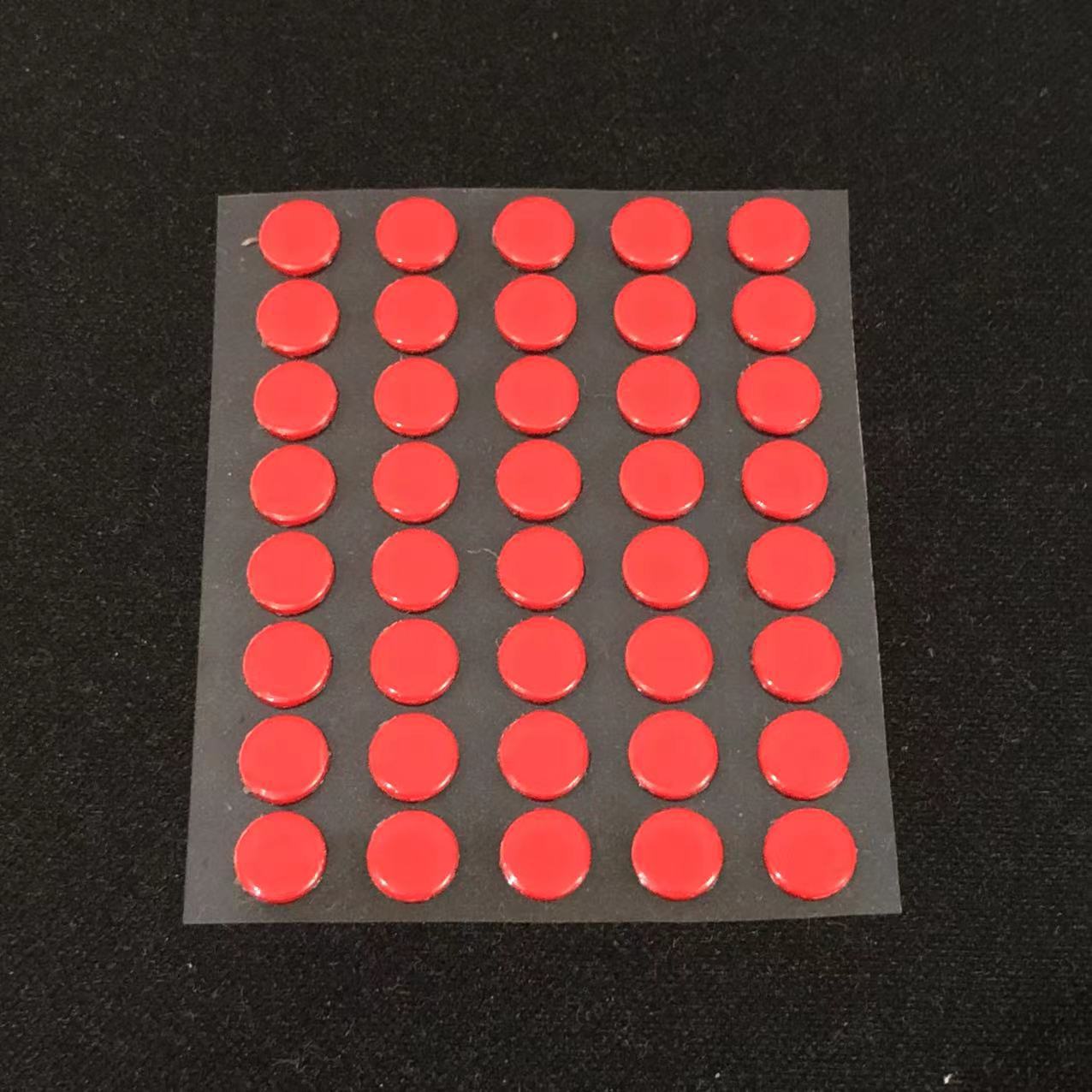
Factory Price Round Red Mouse Sticker Pads Universal Glass Mouse Skates with Small Dot PTFE Non-slip Mouse Feet
Precision PTFE mouse skates with a round adhesive dot format. A niche gaming accessory, but a useful example of KELO’s small-format converting, adhesive and packing capability for brands that need repeatable parts and clean release liners.

KS AG002 Custom Size AG Coating Anti-Glare Tempered Glass Panel High Transmittance Cover Sheet for Electronic Display Screen
AG-coated tempered glass for electronic displays that face windows, sunlight or bright indoor lighting. Haze and gloss can be tuned to reduce distracting reflections without losing image clarity.
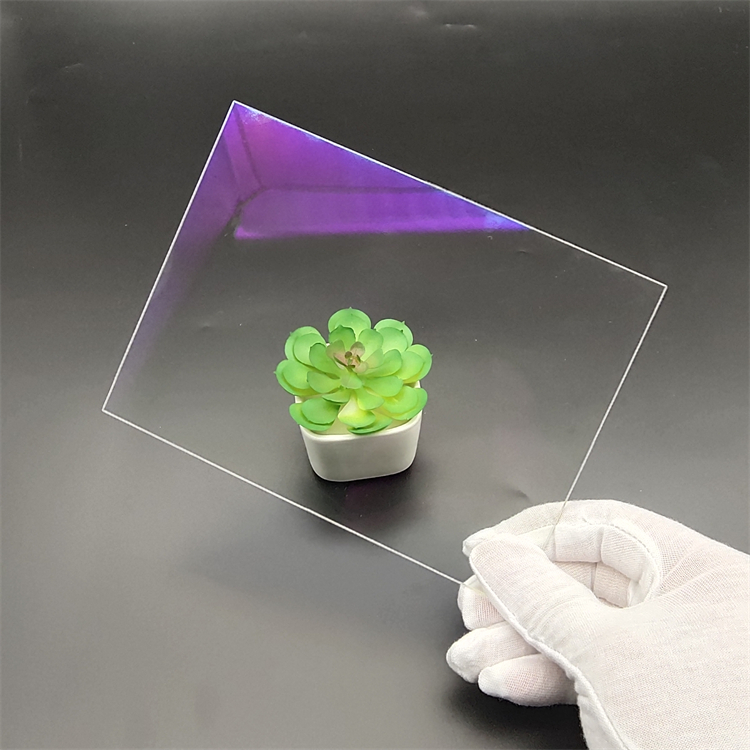
Custom 2mm Ultra-Clear Both Sides Anti-Reflective Coating Tempered Glass for Display Screen Solar & Lighting Use-Solid Structure
Double-sided AR-coated tempered glass for display, solar and lighting cover applications. The ultra-clear substrate and low-reflection treatment support high-transmission assemblies where surface reflections would reduce contrast or sensor signal.
Supplier Capacity in Numbers: What San Antonio Buyers Can Verify
San Antonio procurement teams should compare more than a price per square meter. The real questions are whether the factory can hold optical tolerances after coating, whether the sample can be repeated in production, and whether the supplier can document the process. These figures reflect KELO Glass’s published factory profile and export capability.
Infrared Filter Glass in San Antonio: Applications That Demand More Than a Catalogue Part
San Antonio is not only a tourism and hospitality market; it is also a growing advanced manufacturing, bioscience, aerospace, energy and logistics hub. Infrared filter glass is used in thermal cameras, NIR/SWIR imaging, spectroscopy, LiDAR, gas sensors, medical diagnostics, industrial inspection, security and automotive sensing. In South Texas, intense sunlight, heat, dust and long outdoor duty cycles raise the bar for coating durability and optical stability.
KELO’s role is manufacturing: cutting, coating, tempering, printing, bonding and inspection. We help buyers evaluate AR-coated IR windows, IR-cut and IR-pass filters, bandpass filters, conductive windows and protective cover glass, while keeping the mechanical format aligned with the enclosure, sensor and assembly method. For San Antonio teams comparing a local distributor with a factory-direct supplier, the decisive factor is usually whether the optical coating and the glass fabrication can be controlled together.
Thermal Imaging & Security Cameras
IR windows, AR-coated sensor covers and protective glass for thermal cameras used in industrial inspection, security and energy audits across Bexar County.
Medical Diagnostics & Bioscience
Optical windows and filter covers for diagnostic instruments, spectroscopy and laboratory equipment where transmission and cleanliness are critical.
Aerospace & Defense Supply Chain
Precision optical glass for ruggedized systems and supplier programs. Export-control and documentation requirements should be confirmed during RFQ.
Energy, Oil & Gas, Industrial Sensors
High-temperature FTO substrates, conductive glass and durable optical windows for sensors exposed to heat, vibration and process environments.
Automotive, EV & Transportation
AR/AG/AF cover glass for displays and sensor windows, including in-cabin interfaces and exterior sensing exposed to Texas heat and sunlight.
Outdoor Displays & Smart Buildings
AG and AR laminated glass for kiosks, HMI panels and public-facing displays that must remain readable under bright South Texas daylight.
Electronics, Semiconductor & Machine Vision
ITO/FTO substrates, cover glass and optical windows for sensors, inspection systems and precision electronic hardware.
Hospitality, Retail & Public Interfaces
Anti-fingerprint and anti-glare glass for touch panels, appliance controls, restroom controls and high-traffic public systems.
San Antonio Market Trends Shaping Infrared Filter Glass Demand
The San Antonio market is connected to broader Texas and North American supply chains. Buyers are not only looking for glass; they are looking for predictable optical performance, faster engineering feedback and a supplier that can support both prototype and production volumes.
Nearshoring & the Mexico Gateway
San Antonio’s position on the Texas–Mexico trade corridor encourages buyers to qualify suppliers that can document specifications, pack safely and scale across borders.
Defense & Aerospace Optical Demand
Optical windows and filter covers increasingly require traceable drawings, stable coating performance and packaging that protects finished surfaces.
Medical Device Localization
Bioscience and medical device teams need small batches, repeatable optical transmission and clean packaging before clinical or pilot production.
Energy Transition & High-Temperature Processing
Solar, sensor and industrial energy projects are increasing demand for FTO substrates and glass that can survive annealing or aggressive process steps.
Harsh Sunlight & Heat Durability
South Texas conditions put more emphasis on AR/AG/AF coating durability, color stability and resistance to cleaning chemicals and abrasion.
Smaller, Faster Custom Batches
Engineering teams want 1–2 piece samples before committing to volume, then a production path with a typical 21–31 day lead time after approval.
Touch, Display & Interface Growth
More products combine a display, touch control and protective cover, driving demand for combined AR+AG or AG+AF glass stacks.
Supply-Chain Transparency
Buyers want verified factory data, inspection records, clear trade terms and a supplier that can discuss tolerances before a purchase order is issued.
How to Specify Infrared Filter Glass for San Antonio Applications
Specifying IR filter glass is not just a thickness-and-size exercise. Four decisions usually determine success: the wavelength band you must pass or block; the substrate, because borosilicate, quartz, sapphire and chemically strengthened glass behave differently under thermal load, impact and IR transmission; the coating stack, including AR, AG, AF, IR-cut or conductive layers; and the mechanical format, including edge quality, holes, print, curvature and adhesive.
| Filter / Window Type | Function to Define | Typical Substrate / Coating | San Antonio Use Case |
|---|---|---|---|
| IR-Pass / Longpass | Transmit NIR or SWIR while blocking shorter visible wavelengths | Borosilicate, quartz or sapphire with custom coating | Night vision, thermal sensing, security cameras |
| IR-Cut / Shortpass | Suppress infrared while preserving visible image contrast | AR-coated optical glass, camera window | Camera modules, medical imaging, display sensors |
| NIR / SWIR Bandpass | Isolate a narrow sensing band for detection or spectroscopy | Custom multilayer coating on selected substrate | Gas sensing, machine vision, lab instruments |
| AR-Coated IR Window | Reduce surface reflection and raise useful transmission | AR coating: R <1.0% per side, T >99% target in visible range | Thermal camera protection, sensor covers |
| AG / AF Cover Glass | Control glare, fingerprints and cleaning wear | AG haze 5–60%; AF contact angle >110° | Outdoor HMI, automotive displays, public kiosks |
| ITO / FTO Conductive Glass | Add transparent conductivity for shielding or sensing | 1–20 Ω/sq, T >85%, haze <2% | EMI windows, touch sensors, solar research |
Typical production windows are shown for engineering discussion. Final targets are confirmed against your drawing, wavelength range and environmental test plan. Thickness range: 0.1–19 mm; custom shapes, holes, printing, 2.5D/3D forming and 3M adhesive bonding are available.
San Antonio RFQ Priority Profile
Illustrative evaluation weighting for custom optical glass projects. Use it as a checklist when comparing quotations.

Why KELO Glass Is a Practical Manufacturing Partner for San Antonio Buyers
KELO Glass is not a trading intermediary. It is a factory-direct manufacturer in Huizhou, Guangdong, with in-house cutting, CNC, polishing, printing, tempering, coating, curved forming, bonding and inspection. For a San Antonio buyer, that means one accountable supplier for the optical window, the protective cover, the printed interface and the conductive substrate.
It also means engineering feedback can address coating and mechanical fit together rather than treating them as separate purchases. That is especially important for infrared filter glass projects where a small change in coating, edge finish or mounting can alter transmission, stray light, adhesion or assembly yield.
- Verified manufacturer, not a trader
- Engineering drawing review & DFM
- Rapid samples from 1–2 pcs
- 100% appearance inspection
- AR / AG / AF / ITO / FTO in-house
- North America export experience
In-House Surface Engineering
AR, AG, AF, ITO and FTO coatings are handled as part of the manufacturing flow, not outsourced after fabrication.
Custom Geometry & Forming
0.1–19 mm thickness, holes, edge polishing, silk-screen printing, 2.5D/3D curved forming and adhesive bonding.
Engineering Response
21–30 R&D engineers and a typical response time within one hour help keep RFQ reviews moving.
Production Scale
10k–30k m² factory area, 101–200 employees and 20–25 million pieces per year touch cover glass capacity.
Quality Gates
IQC, IPQC and FQC/OQC checks cover dimensions, coating adhesion, abrasion, strength and final appearance.
Export & Trade Support
FOB, CFR, CIF, EXW and DDP terms; T/T, L/C, PayPal and Western Union; Alibaba Trade Assurance available.
Verified Assessment
Review the on-site assessment of KELO’s factory and capabilities.
Ratings & Reviews
See buyer feedback behind the 4.9/5 store rating and 98.18% reply rate.
Factory Video
Walk through the production, coating and inspection environment.
Trade Capacity
Check export markets, trade terms and logistics capability before RFQ.
Quality Control and OEM Workflow Built for Repeat Orders
San Antonio buyers often start with a prototype but need a production path. A sample that works is not enough if the next batch shifts in color, haze, transmission, edge quality or adhesion. KELO manages this with three inspection gates and a defined OEM workflow, so the specification approved at sample stage has a better chance of repeating in volume.
Incoming Inspection
Raw glass and consumables are verified before production begins.
- Thickness & flatness check
- Surface defect screening
- Ink & coating material verification
In-Process Control
Critical dimensions and coating results are checked at each station.
- CNC dimension & hole position
- Tempering & strength tests
- Coating adhesion & abrasion
Final Inspection
Every finished piece is checked before protective packing.
- 100% appearance inspection
- Salt spray reliability testing
- Honeycomb, blister & partition packing
Share Requirements
Drawing, sample, wavelength target, coating spec and annual volume.
Engineering Review
DFM feedback on tolerance, coating, edge finish and cost drivers.
Rapid Prototype
Samples from as few as 1–2 pieces for fit and optical validation.
Validation
Approve transmission, haze, adhesion, dimensions and appearance.
Mass Production
Typical lead time 21–31 days after sample approval, depending on complexity.
Packing & Shipping
Export packing to San Antonio via air, express or sea plus inland transport.
Infrared Filter Glass, Lead Time and Custom Supply Questions
These are the questions procurement teams, optical engineers and distributors in San Antonio most often ask before requesting a quotation.
Can KELO ship infrared filter glass to San Antonio and Bexar County?
Do you have a local San Antonio warehouse?
What is the minimum order quantity for custom IR filter glass?
What lead time should San Antonio buyers plan for?
What IR filter glass formats can you customize?
How do you control coating quality on optical filter glass?
Can you support drawings, NDAs and inspection records?
Should I choose ITO or FTO conductive glass?
How can I verify KELO before a first order?
Which trade terms and payment methods do you accept?
Request an Infrared Filter Glass Quote for Your San Antonio Project
Send your drawing, wavelength target, substrate preference, coating requirement, surface finish, annual volume and delivery city. Our engineering team will review feasibility, recommend a glass and coating stack, and quote the most practical production route. If you are comparing local distributors, include the performance values you need—not only a part number.