What San Diego Product Teams Should Expect From an LCD Cover Glass Factory
When a San Diego OEM, integrator, distributor, design studio or startup searches for LCD cover glass manufacturers & factories serving San Diego, the real question is not simply who sells glass. It is who can convert an optical, mechanical and environmental requirement into a repeatable production part with documented quality, stable lead time and clear engineering communication.
Huizhou KELO Glass Co., Ltd. is a factory-direct manufacturer in Huizhou, Guangdong, inside China’s Greater Bay Area electronics supply chain. The company produces touch screen cover glass, display cover glass, optical coated glass and conductive glass, with in-house surface treatment as its core capability. Public company information describes a 10,000–30,000 m² factory, 20–25 million pieces of annual touch cover glass capacity, 101–200 employees, 21–30 R&D engineers, an annual output value of US$50–100 million, six years as a verified exporter, a 4.9/5 store rating and a 98.18% response rate.
For San Diego buyers, those numbers matter only when they translate into practical outcomes: a readable outdoor display in coastal sun, a chemically strengthened panel that survives daily cleaning, an AR-coated window that preserves image contrast, an ITO substrate that performs in a diagnostic instrument, or a custom glass control panel for hospitality and smart-building projects. This page is a buyer’s reference for product selection, localized applications, San Diego market trends, procurement FAQ and factory advantages.
Why a Factory-Direct Model Matters Here
San Diego teams often need small sample quantities first, then a controlled ramp to volume. Keeping cutting, CNC, polishing, printing, tempering, coating and inspection under one roof shortens the feedback loop between drawing, sample and production.
Factory Metrics San Diego Procurement Teams Can Verify
Use these facts as a starting point for supplier qualification, then validate them against your drawing, sample and inspection requirements.
Eight Custom Glass Products for San Diego LCD, Touch and Optical Projects
These are production-ready product routes, not generic stock items. Each can be customized by drawing or sample, and each benefits from in-house cutting, CNC machining, edge finishing, printing, tempering, coating and inspection. San Diego buyers can validate fit and optics with samples from 1–2 pieces before committing to volume.
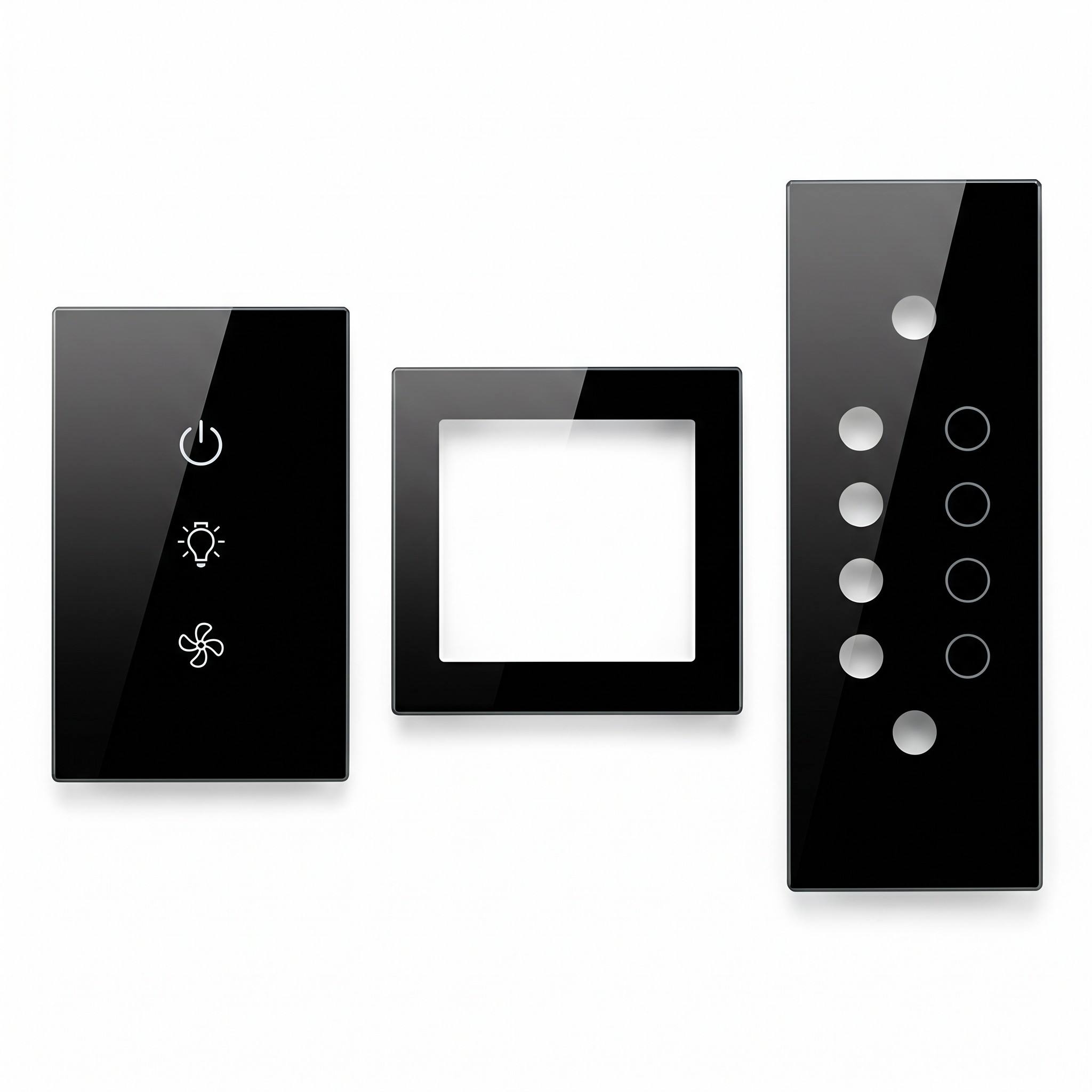
Outdoor Waterproof Tempered Glass Touch Screen Panel, 0.2mm–5mm Soda Lime Extra Clear
A left-right switching control panel for gym, recreation and outdoor kiosk environments. Extra-clear soda lime glass supports readable displays, while waterproof construction addresses splash and humidity exposure common in coastal fitness and public recreation facilities.
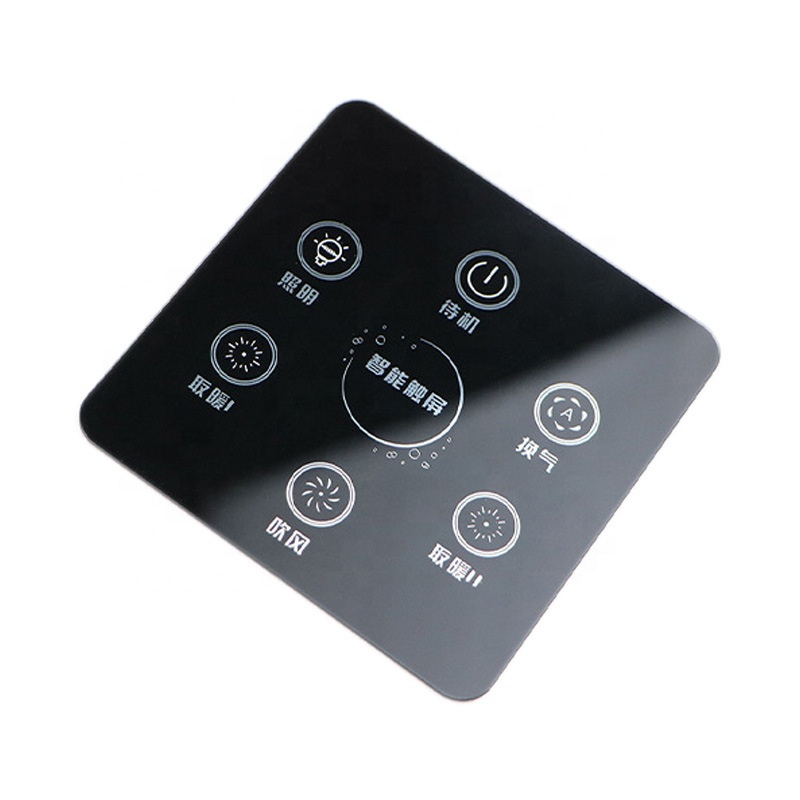
Bathroom Intelligent Touch Shower Control Switch Panel, Solid & Hollow Tempered Glass
Silk-screen printed tempered glass with a four-year warranty for shower and wet-area control. Suitable for hospitality renovations, multifamily projects and smart bathrooms where water, soap and frequent cleaning are daily conditions.

High-Transmittance 98% AR Glass for Museum Showcases and Luxury Picture Frames
Anti-reflective coated glass from 1mm to 19mm for showcases, gallery framing, aquarium exhibits and premium retail displays. Low reflectance helps preserve contrast and color when display lighting is difficult to control.
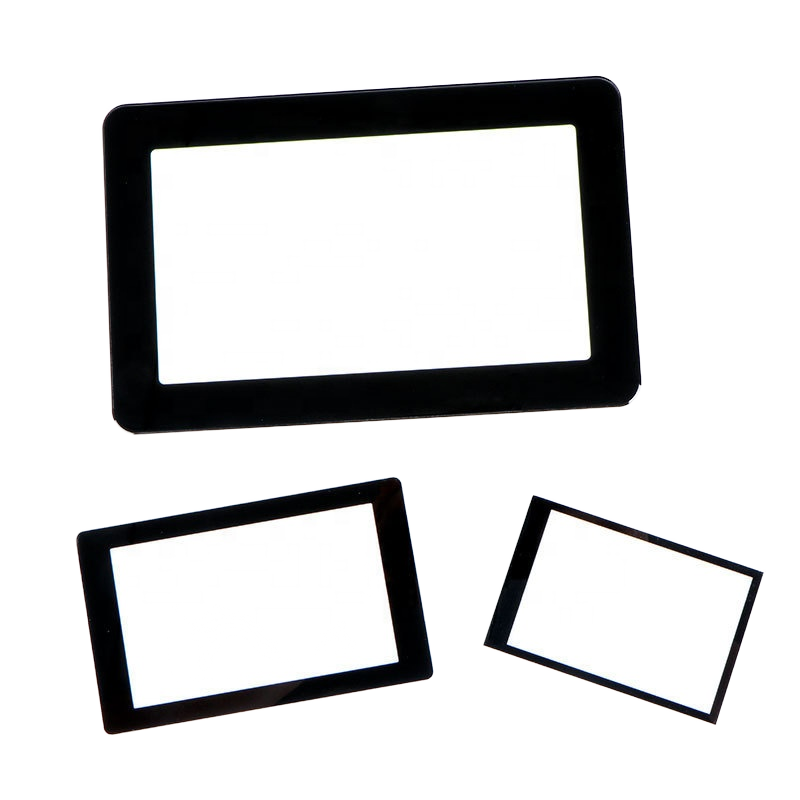
Custom Tempered Glass Front Shield Cover Panel for Electronic Display Protection
A custom-size front shield for smart devices, LCD modules and HMI enclosures. The panel can be machined to drawing with holes, cutouts, edge treatment and printing for a production-ready display protection part.
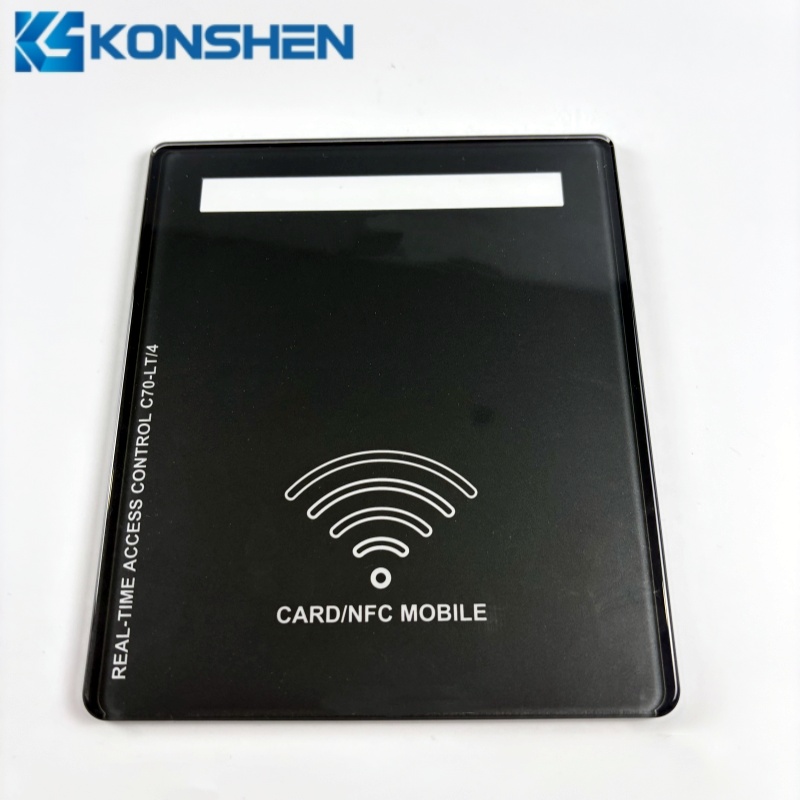
Custom 5mm NFC Access Card & Silk-Screen Printed Tempered Touch Glass Switch Panel
A tempered glass interface for access control, smart-building, campus and secure facility hardware. NFC functionality, 5mm glass and silkscreen graphics support durable touch surfaces in high-traffic entries and hospitality environments.
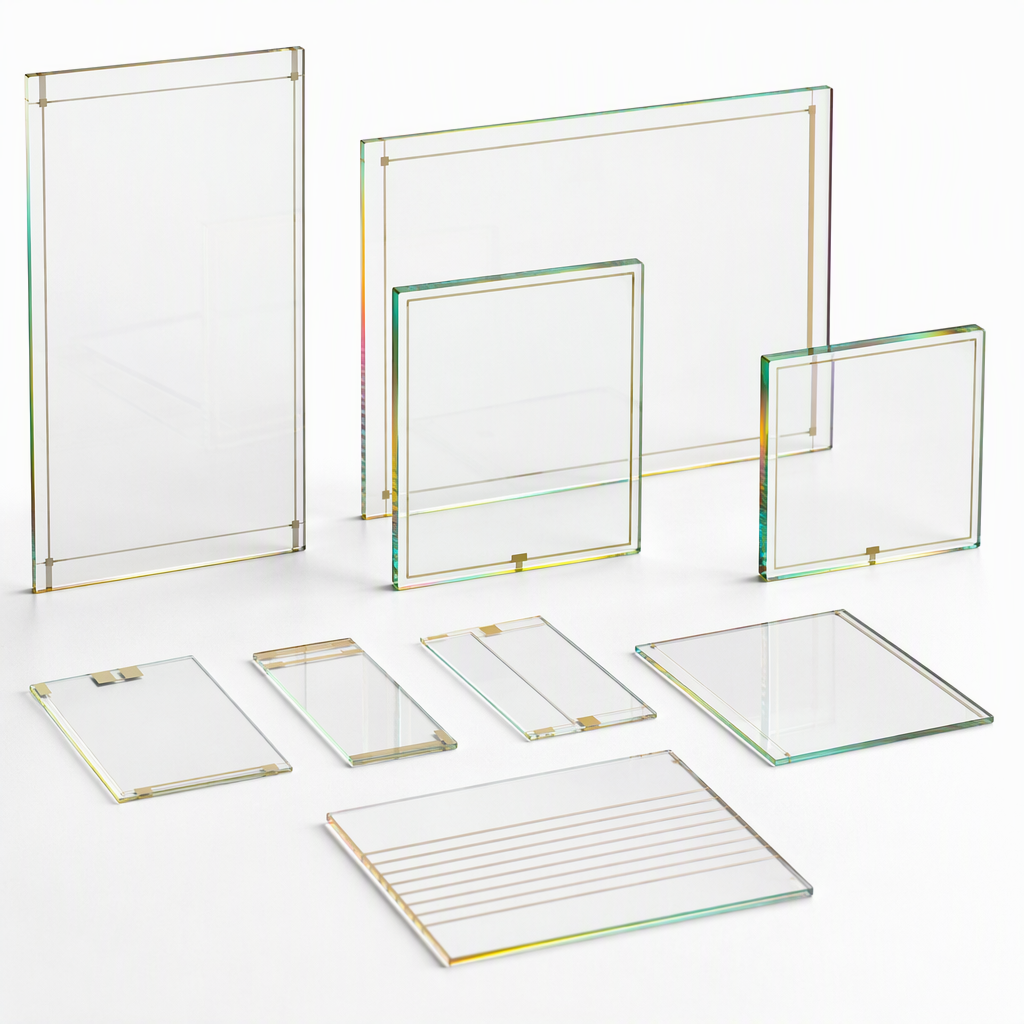
ITO Coated Conductive Glass Sheet, 6–8 Ohm/sq, Touch Panel Heating Substrate
Transparent conductive glass for touch sensing, heating, EMI shielding and instrumentation. Custom sizes and sheet resistance options support San Diego biotech, diagnostics, outdoor camera and de-icing applications.
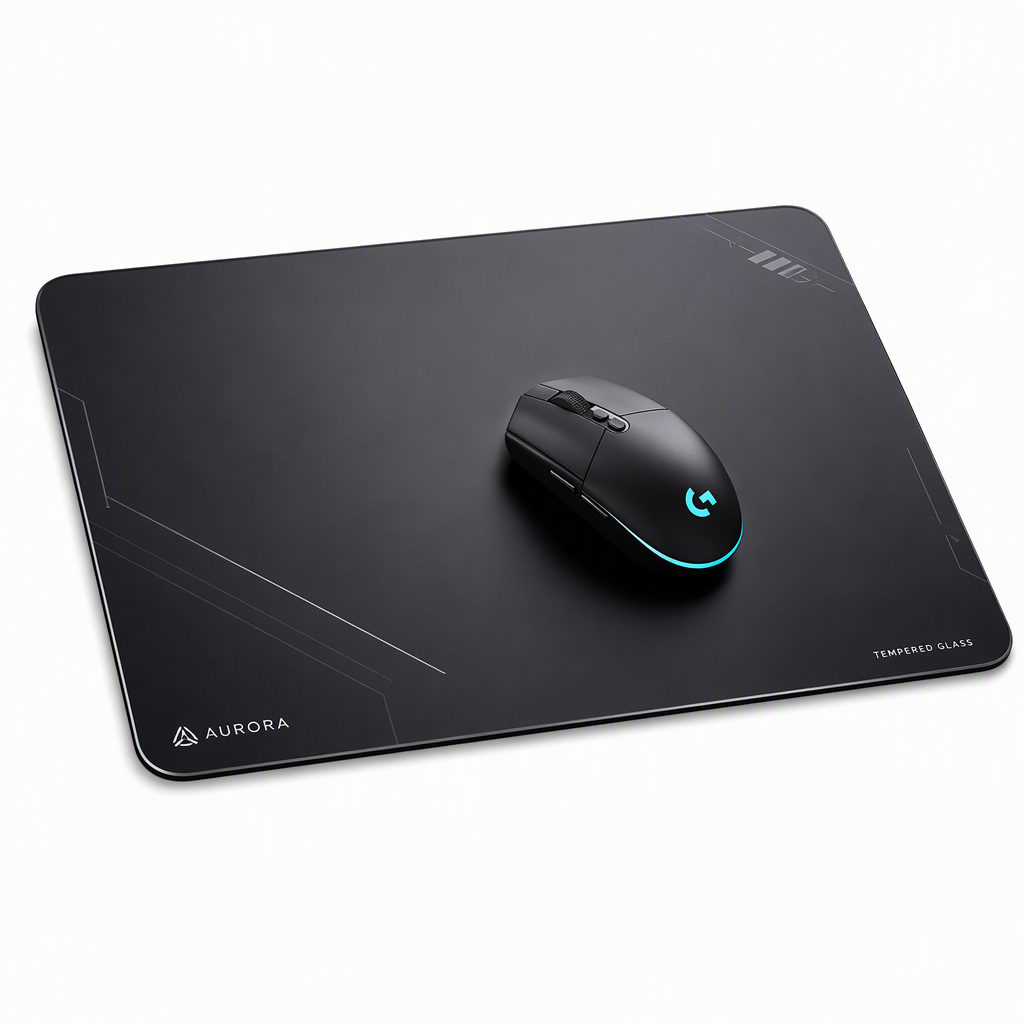
Tempered Glass Mouse Pad, 2mm/3mm Hard Surface with UV Printing and Silicone Base
A glass mouse pad and gaming surface for peripheral brands, esports venues and corporate programs. UV printing supports custom logos, while the hard tempered surface and silicone base balance glide and stability.
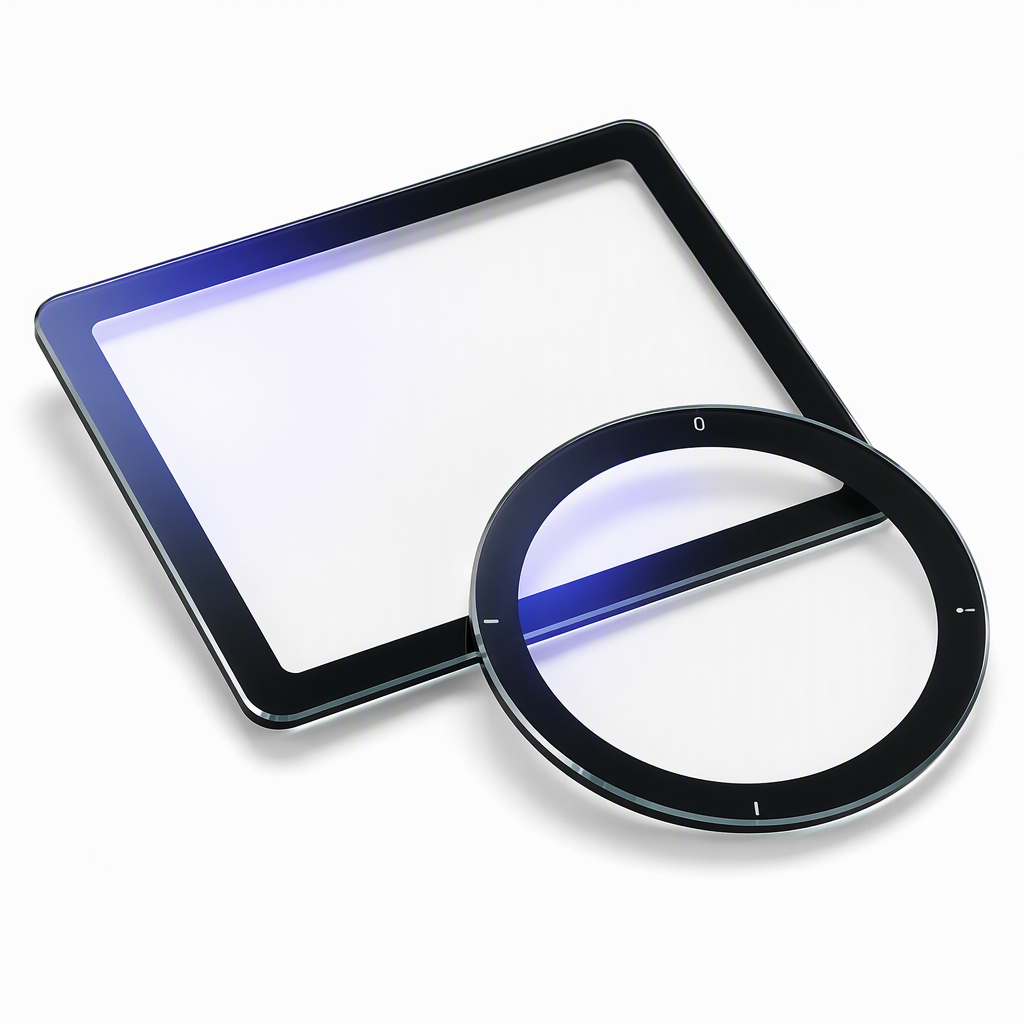
Custom Low-Iron AR-Coated Tempered Display Cover Glass
Low-iron tempered glass with AR coating for display covers, instrument windows and precision enclosures. Custom size, coating and edge finishing allow San Diego engineers to match optical clarity and mechanical protection in one part.
Why KELO Glass Fits a San Diego Supply Chain
A supplier is more than a price list. For custom LCD cover glass, the advantage comes from engineering review, process control, coating capability and export discipline working together.
Factory-Direct Accountability
KELO is a verified manufacturer rather than a trading intermediary. Buying direct reduces handoff risk between cutting, tempering, coating, printing and final inspection, and it gives San Diego buyers a clearer point of responsibility when a custom part must meet both optical and mechanical targets.
In-House Optical Coating Expertise
AR, AG, AF, ITO and FTO coatings are central to the factory’s surface-engineering capability. Published performance windows include AR reflectance below 1.0% per side, transmittance above 99%, controllable AG haze from 5–60%, AF contact angle above 110° and conductive glass sheet resistance from 1–20 Ω/sq.
Engineering Review Before Quotation
With 21–30 R&D engineers, projects can be reviewed for design-for-manufacture issues before a quote is finalized. This is especially useful when a San Diego team is adapting an existing LCD stack, changing bezel dimensions, adding NFC, moving from flat to 2.5D glass or tightening an optical specification.
Integrated Process Chain
Cutting, water-jet cutting, CNC machining, drilling, edge polishing, laser engraving, silk-screen printing, sandblasting, flat and curved tempering, AR/AG/AF/ITO coating, 2.5D/3D forming and 3M adhesive bonding are handled in-house. That integration supports tighter tolerances and fewer transit-damage risks between process steps.
Quality Gates Built for Audits
Incoming inspection, in-process control and final inspection are defined as three release gates. Checks cover thickness and flatness, surface defects, ink and coating materials, CNC dimensions, hole position, tempering, adhesion, abrasion, salt spray and 100% appearance inspection. Custom honeycomb cartons, blister trays and partitions reduce transit damage.
Verified Export and Trade Record
KELO’s public profile includes six years as a verified exporter, a 4.9/5 store rating, a 98.18% reply rate and support for FOB, CFR, CIF, EXW and DDP terms. Payment options include T/T, L/C, PayPal and Western Union, and orders placed through Alibaba.com can be protected by Trade Assurance.
Application Scenarios Across San Diego’s Innovation Economy
San Diego is not a single market. A cover glass specification that works for a Torrey Pines diagnostic instrument may be wrong for a waterfront kiosk, a naval enclosure or a gaming peripheral. These application scenarios show where specific glass constructions create value.
Life Science & Medical Instruments
Around Torrey Pines, Sorrento Valley and UTC, diagnostic instruments, lab automation and medical devices need scratch-resistant display windows, AR glass for optical clarity and ITO substrates for heating or sensing. AF-coated touch panels help where gloves, reagents and frequent disinfection are routine.
Defense, Aerospace & Naval Environments
San Diego’s defense and naval ecosystem demands rugged HMI windows that tolerate sunlight, salt fog and field cleaning. Chemically strengthened or tempered cover glass, AG/AR coatings, EMI shielding options and sealed enclosure design are more relevant than decorative surface finishes alone.
Coastal Outdoor Kiosks & Smart City
Waterfront parks, transit stops, EV charging stations and outdoor retail all face San Diego sun plus coastal moisture. AG or AR+AG cover glass improves sunlight readability, while waterproof touch panels, UV-stable printing and sealed edges help protect the display stack over time.
Hospitality, Museums & Architecture
Downtown hotels, Balboa Park institutions, the USS Midway experience and aquarium exhibits often need low-reflectance display glass, museum-grade AR windows, smart shower control panels and durable printed glass interfaces that feel premium while resisting daily handling.
Cleantech, Solar & Battery Labs
San Diego’s cleantech and research community uses transparent conductive substrates for thin-film work, sensors and high-temperature processes. FTO glass is often selected for thermal and chemical stability, while ITO glass is common in touch sensors, displays and EMI shielding.
Gaming, Esports & Consumer Hardware
San Diego’s gaming and consumer-electronics community creates demand for glass mouse pads, custom-printed glass surfaces and hard-wearing display covers. UV printing, low-iron glass and tempered surfaces allow brands to combine visual identity with a stable, premium feel.
San Diego Market Trends That Change Cover Glass Specification
Search demand for LCD cover glass factories serving San Diego is shaped by local product trends. These are the specification shifts that appear repeatedly when teams compare a standard catalogue part with a real application requirement.
Sunlight Readability Becomes Mandatory
Outdoor kiosks, patio displays and waterfront signage cannot rely on brightness alone. AG coating diffuses reflections, while AR+AG constructions can reduce ghost images and preserve contrast. Buyers increasingly specify haze, gloss and reflectance together with luminance.
Coastal Durability Moves Into the RFQ
Salt air, UV exposure and cleaning chemicals push teams toward chemically strengthened glass, AF-coated touch surfaces, sealed edges and salt-spray validation. A display that looks correct on day one but fails after coastal exposure is not acceptable for San Diego installations.
Thin, Curved and Edge-to-Edge Designs
Product teams continue to reduce bezels and integrate touch directly into the front glass. Thin chemically strengthened glass, 2.5D/3D forming, low-iron substrates and 3M adhesive bonding allow slimmer industrial designs without losing mechanical protection.
Coating Stacks Become System-Level Decisions
AR, AG and AF are no longer isolated options. Automotive, medical and outdoor products often need stacked functions such as AR+AG or AG+AF. The right stack depends on the light source, cleaning method, touch frequency, enclosure design and acceptable haze.
Conductive Glass Converges With Touch and Heating
ITO and FTO substrates now support more than transparent electrodes. They appear in touch sensors, heated optics, EMI shielding, thin-film solar and diagnostic hardware. Buyers need sheet resistance, transmittance, haze and temperature tolerance quoted together.
Supply-Chain Resilience and Faster Sampling
San Diego teams want fewer surprises: sample quantities from 1–2 pieces, engineering feedback before tooling, 21–31 day production windows and DDP options for landed-cost planning. Factory-direct communication is becoming a risk-control feature, not just a purchasing preference.
Match the Glass Construction to the San Diego Use Case
Use this matrix to prepare a more precise inquiry. The final construction should always be confirmed against your drawing, environmental test plan and sample approval.
Direct Sun / Outdoor Kiosk
Use AG or AR+AG tempered cover glass with controlled haze and a sealed enclosure. Prioritize readability under high luminance and verify gloss level.
Recommended: AG / AR+AGCoastal / Marine Exposure
Specify low-iron or chemically strengthened glass, good edge quality and salt-spray validation. Add AF if the surface is touched or cleaned frequently.
Recommended: Tempered + AFMedical Imaging / Diagnostics
AR glass with low haze supports optical clarity in instrument windows and displays. For heated or sensing functions, evaluate ITO substrates with the required sheet resistance.
Recommended: AR / ITOTouch Sensor / EMI Shielding
ITO conductive glass is commonly used for capacitive touch, displays and EMI shielding. Confirm sheet resistance, transmittance, haze and patterning compatibility.
Recommended: ITO 1–20 Ω/sqSolar / High-Temperature Process
FTO conductive glass offers stronger thermal and chemical stability for thin-film solar and high-temperature processing. Specify the thermal cycle in the RFQ.
Recommended: FTOHigh-Touch / Frequent Cleaning
Use AF or AG+AF with a contact angle above 110° and validated abrasion performance. This is common for appliance panels, hospitality controls and public interfaces.
Recommended: AF / AG+AFWorking With LCD Cover Glass Factories Serving San Diego
These are the practical questions San Diego engineering and procurement teams ask when comparing a local distributor, a trading company and a factory-direct manufacturer.
How do I verify an LCD cover glass manufacturer before committing to production?
What shipping routes and lead times should San Diego buyers expect?
Can I order small samples for a San Diego prototype?
Which coating is best for San Diego coastal sunlight and salt air?
What thickness, sizes and shapes can you produce?
Should I choose ITO or FTO conductive glass?
How is quality controlled, and what documentation can be provided?
What trade terms, payment methods and warranty support are available?
Request a San Diego-Specific Cover Glass Quote
Send a drawing, an existing LCD stack, a target optical specification or an environmental requirement. Include the operating context—indoor, outdoor, coastal, medical, defense, marine, cleanroom, hospitality or gaming—so KELO’s engineering team can recommend a realistic glass construction, coating stack and sample plan before volume production.
Samples from 1–2 pieces · Production lead time typically 21–31 days after sample approval · FOB, CFR, CIF, EXW and DDP available