Tempered Glass Supply for Columbus: Match the Material to the Operating Environment
Columbus buyers rarely need “just glass.” They need a verified material system that satisfies touch feel, optical clarity, coating durability, enclosure fit, shipping protection and documentation expectations. Engineering the right glass begins with the application condition — not with a generic thickness or a catalogue photo.
Why Columbus product teams request factory-direct glass
Central Ohio combines advanced manufacturing, life-science instrumentation, smart-building controls, logistics technology, digital signage, automotive technology and university-led materials research. That mix creates uneven glass requirements. A smart-building thermostat may need anti-fingerprint performance and low reflection; an outdoor charging kiosk needs anti-glare readability; a medical instrument window may need high transmission and precise edge finishing; and a thin-film solar laboratory may need FTO conductive glass with thermal stability.
KELO Glass approaches those requirements as a factory problem. As a Huizhou-based manufacturer of tempered cover glass, optical coated glass and ITO/FTO conductive glass, we keep cutting, CNC machining, edge polishing, printing, tempering, coating and bonding under one roof. For a Columbus engineering team, that means one accountable source can review the drawing, select the correct coating stack and control the packaging needed for an international shipment. The result is a solution that is easier to validate, repeat and scale.
Information gain for the buyer
Instead of quoting only by size, KELO reviews the environment that the glass will see. That review may include reflection targets, haze range, contact angle, sheet resistance, edge quality, adhesive choice and packing method.
- Drawing-led feasibility and DFM feedback
- Samples from 1–2 pcs before volume
- Coating and tempering controlled in-house
- Export packing designed for fragile glass
Eight Tempered Glass Products Commonly Specified by Columbus Buyers
These eight product families cover the practical range requested for smart devices, access control, outdoor displays, solar research, automotive interiors, anti-fog windows, curved instrument glass and low-iron display covers. Each link below preserves the original product URL.
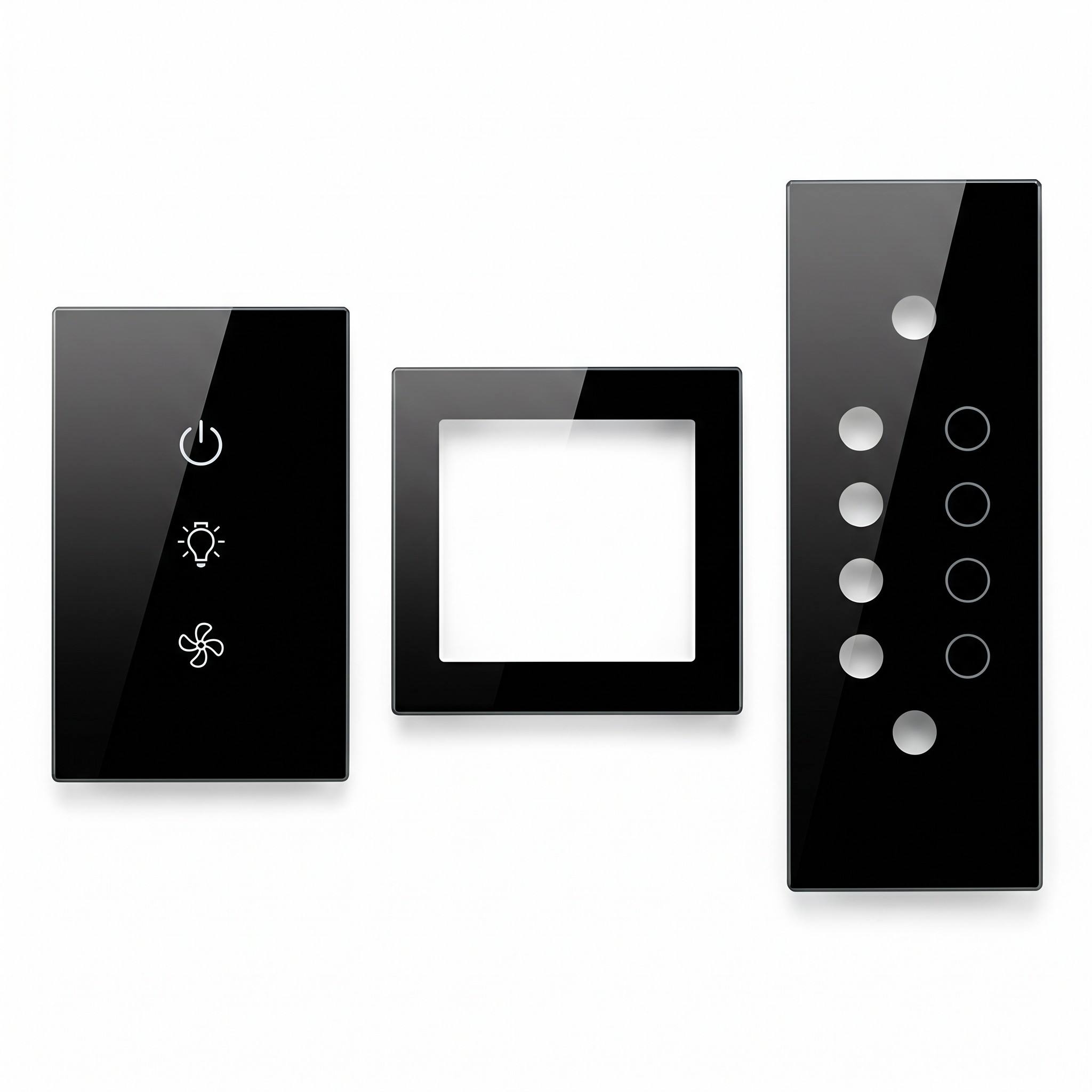
Tempered Glass Front Shield Cover Panel for Smart Devices
Custom-size front shield for electronic display protection and smart-device enclosures, including Konshen KS GB002-style projects. Tempered glass, printed borders and adhesive bonding options support a clean integrated assembly.
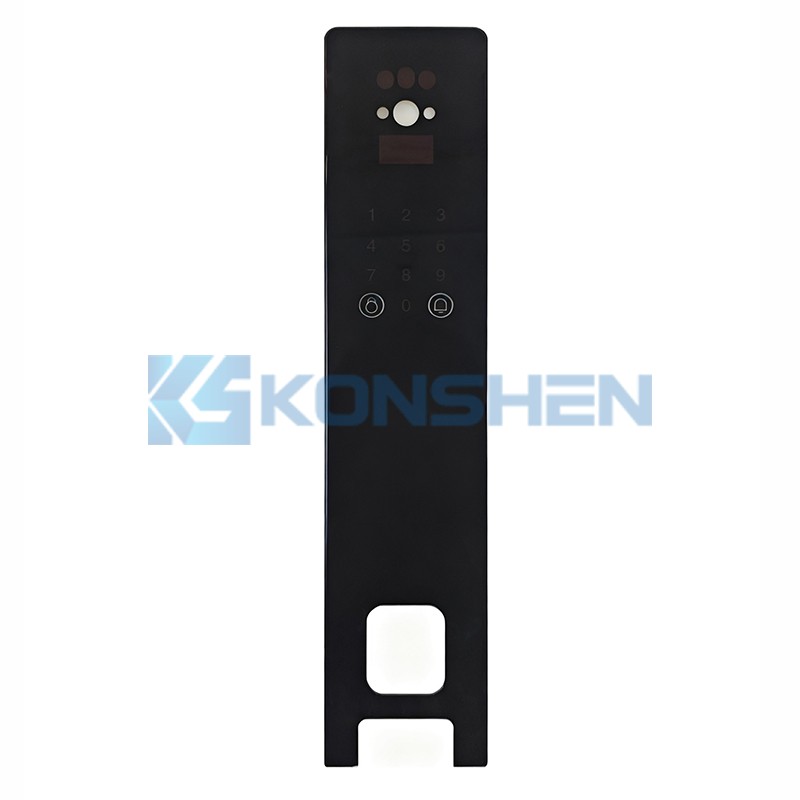
Printed Tempered Glass Keypad Panel for Smart Door Locks
Rectangular electronic glass film with custom print for digital keypads and access-control interfaces. The surface is suited to high-touch entry points such as multifamily, hospitality and smart-building installations.

Anti-Glare Tempered Glass Panel for Electronic Displays
AG coating for daylight-readable screens, kiosks and industrial HMI. The surface diffuses reflections rather than washing out the image, and haze and gloss can be matched to the viewing environment.
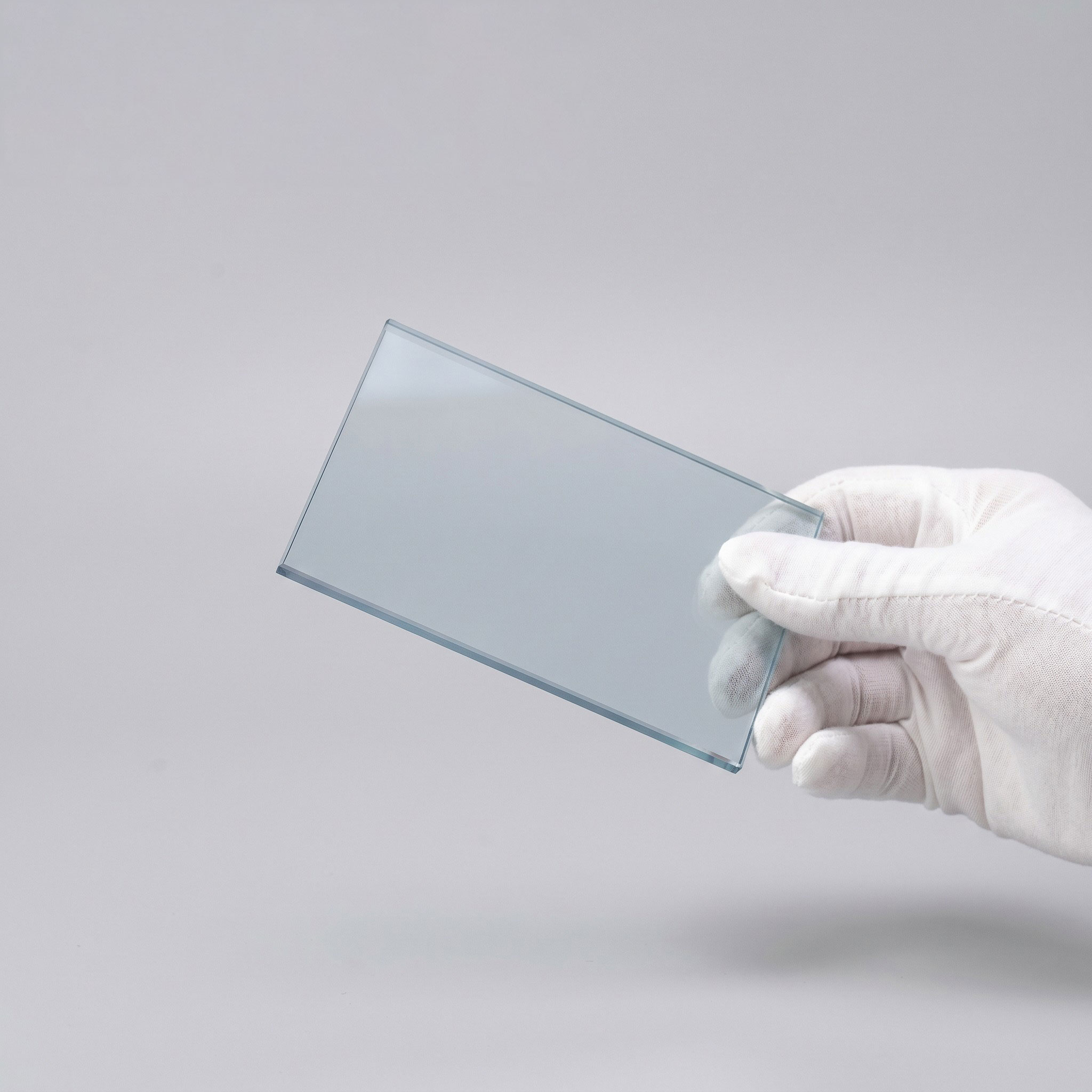
FTO Conductive Glass for Solar Cells and Perovskite Research
Fluorine-doped tin oxide glass for thin-film solar, DSSC, perovskite and laboratory research where transparent conductivity and thermal stability matter. Available with controlled sheet resistance and transmittance.
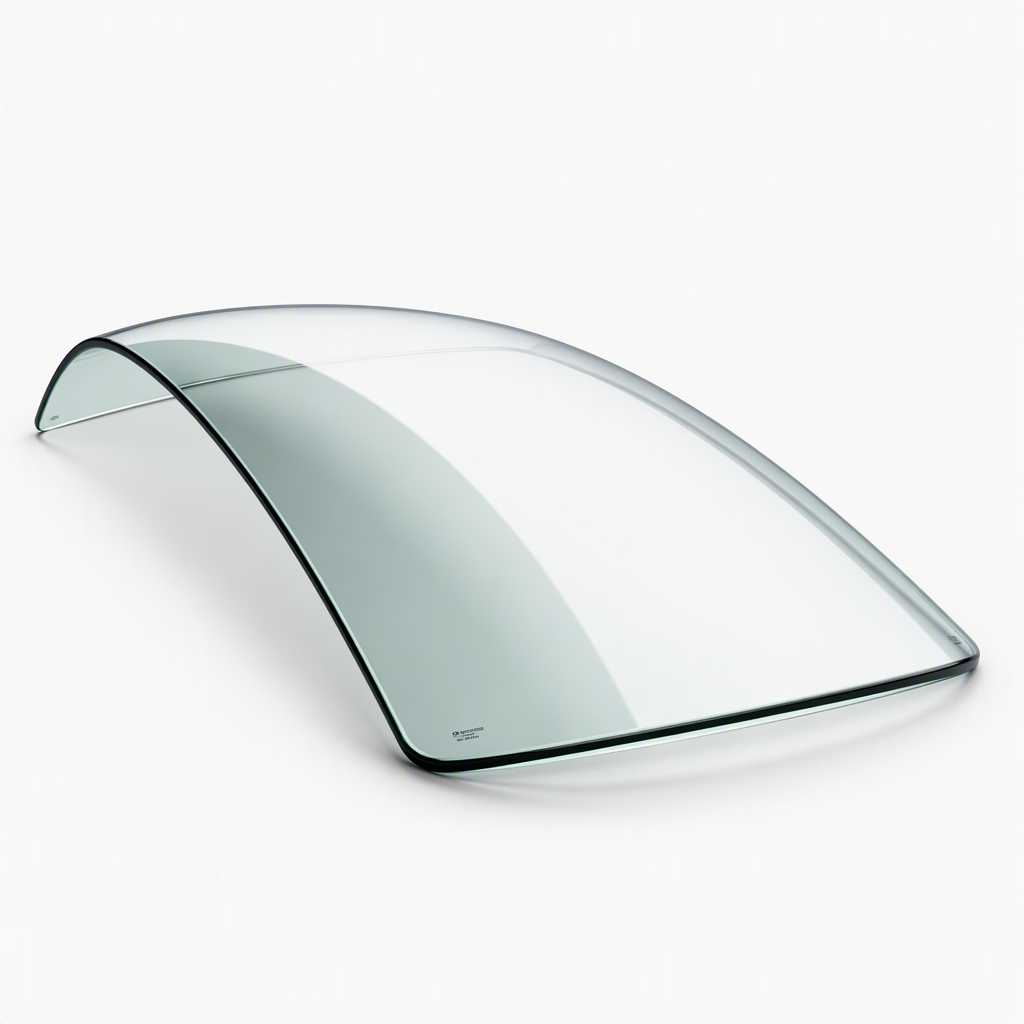
Hot-Bent Curved Tempered Glass for Automotive Displays
Small-radius curved glass for automotive display stacks, instrument covers and console surfaces. Hot-bent forming helps the cover follow 2.5D or 3D enclosures where a flat panel cannot meet the design intent.
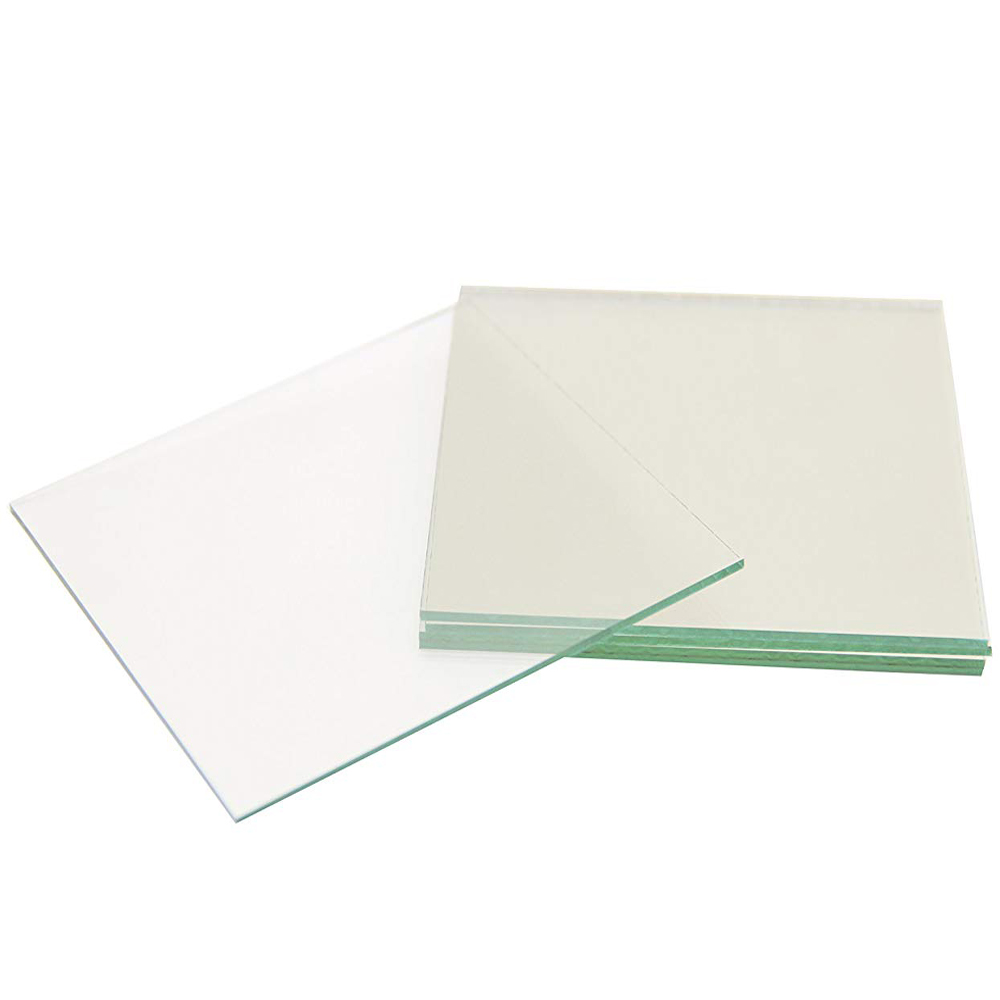
ITO/FTO Conductive Toughened Glass for Anti-Fog Heaters
A compact conductive glass platform for anti-fog heating, bathroom display windows, solar experiments and small sensor windows. ITO or FTO coating is selected according to electrical and environmental requirements.

Waterproof AR Coated Curved Tempered Glass Panel
Curved AR glass for instrument windows, bathroom control panels and sealed display assemblies. Anti-reflective coating increases transmission and reduces ghost reflections, while the curved form supports smooth integration.
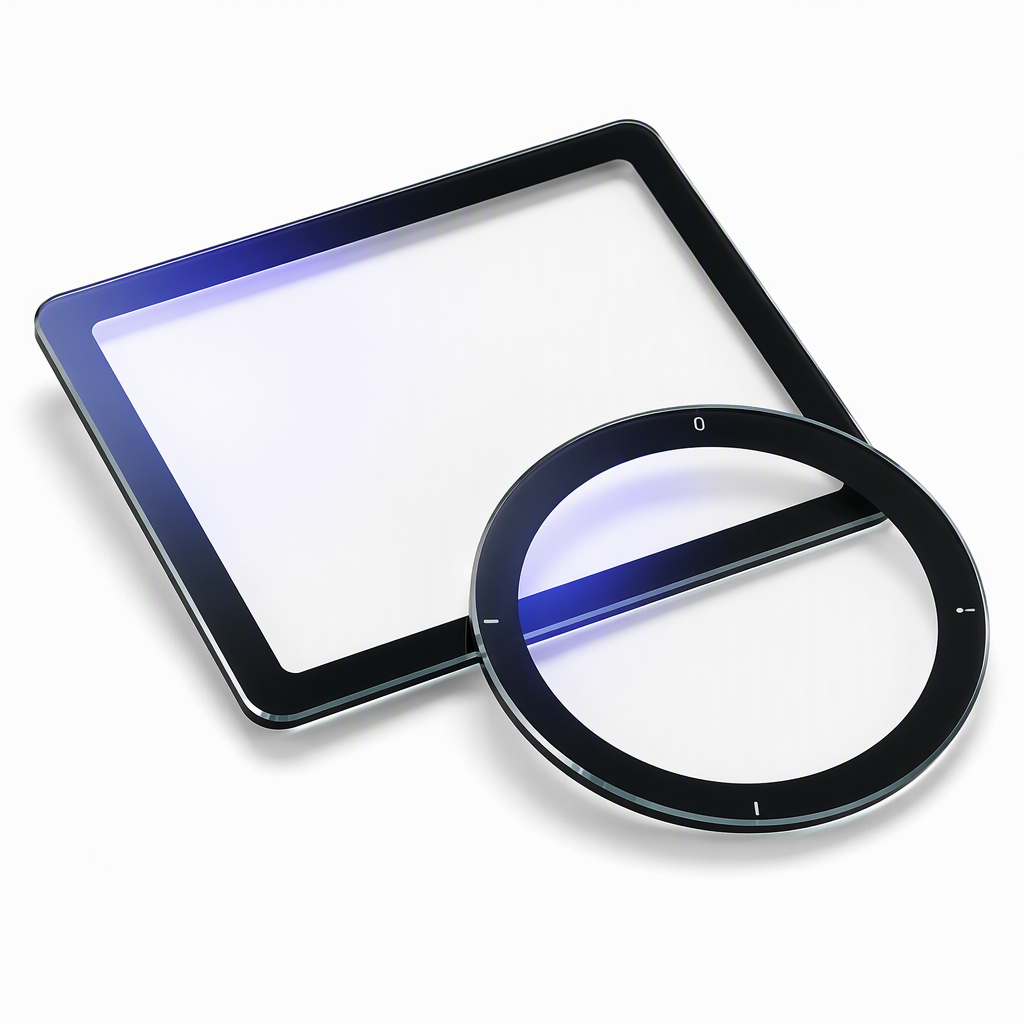
Low-Iron AR Coated Tempered Display Cover Glass
Low-iron tempered glass with AR coating for display covers where color neutrality and clarity are important. Factory supply with custom size, edge treatment and coating selection for premium signage or instrument housings.
Where Tempered Glass Creates Value in Columbus and Central Ohio
Columbus is not a single-industry market. A supplier that understands the surrounding use conditions can recommend the correct substrate, coating and quality gate instead of forcing one product into every enclosure.
Smart Building & HVAC Controls
Thermostats, access panels and building-automation interfaces in Columbus offices and multifamily buildings benefit from anti-fingerprint glass, controlled reflection and printed graphics that remain crisp after repeated cleaning.
Medical & Life-Science Instruments
Instrument windows, laboratory display covers and diagnostic equipment benefit from high transmission, precise edges and consistent inspection. Our range includes AR-coated glass plus quartz, sapphire, borosilicate and other specialty materials.
Automotive & EV Interior Displays
Ohio’s automotive and mobility supply chain uses 2.5D and 3D curved cover glass for center stacks, dashboards, instrument clusters and charging interfaces. Hot-bent forming helps match interior styling with durable surfaces.
Outdoor Kiosks, EV Charging & Digital Signage
Sunlight can make an uncoated display illegible. AG-coated glass, or an AR+AG stack, improves readability for curbside kiosks, charging stations and signage in bright Columbus parking lots and streetscapes.
Solar, Energy Research & Lab Prototyping
FTO glass is commonly used for thin-film solar, perovskite and DSSC research, while ITO glass supports sensors and displays. Central Ohio research teams can specify sheet resistance, transmittance and size before sampling.
Smart Locks, Appliances & Hospitality Bathrooms
Printed keypad glass, waterproof curved panels and anti-fingerprint smart-lock covers suit high-touch environments. Hotels, multifamily projects and appliance brands often request clean printing, sealed edges and easy-clean surfaces.
What Columbus Buyers Are Asking for in Tempered Glass Specifications
The buying conversation has shifted from “Can you cut this size?” to “Can you prove that this surface will perform in our environment?” That change favors manufacturers with in-house coating, inspection and export packing.
Sunlight readability is becoming a requirement
Outdoor kiosks, EV charging stations and digital signage in Central Ohio must remain legible through strong seasonal light. Buyers increasingly specify both haze and gloss targets for AG glass, or an AR+AG combination.
Touch is moving into building products
Smart-home controls, bathroom panels, appliance interfaces and access-control keypads now use glass as a visible design surface. AF coating, printed graphics and low reflection are requested together, not as optional add-ons.
Curved cover glass is entering mainstream design
2.5D and 3D forming is no longer limited to automotive displays. Instrument enclosures, premium appliances and control panels use curved tempered glass to create flush, edge-to-edge surfaces with fewer seams.
Conductive glass is part of the energy-research stack
FTO substrates are frequently evaluated for perovskite, DSSC and thin-film solar work; ITO remains important for touch sensors and displays. Universities and technical teams want verifiable optical and electrical data before committing to a batch.

Why KELO Glass Is a Defensible Supplier Choice for Columbus Programs
Huizhou KELO Glass Co., Ltd. is a factory-direct manufacturer located in Huizhou, Guangdong, within China’s Greater Bay Area electronics supply chain. We produce touch screen cover glass, display cover glass and optical coated glass, with surface treatment as a core capability. The factory operates with 101–200 employees, 21–30 R&D engineers, an annual output value of US$50–100 million and touch cover glass capacity of 20–25 million pieces per year.
Keeping every critical process in-house reduces handling damage, finger-pointing and schedule surprises. Raw glass moves through cutting, CNC machining, edge polishing, printing, tempering, coating, curved forming and bonding before final inspection. That connected workflow is valuable for Columbus buyers who need a sample validated quickly and then repeated in volume.
In-house surface engineering
AR, AG, AF, ITO and FTO coating are controlled inside the factory, not outsourced to an unknown third party.
Drawing-led customization
Size, shape, holes, color, logo, 2.5D/3D forming and 3M adhesive bonding are produced to drawing or sample.
Export-ready quality and packing
IQC, IPQC and FQC/OQC are combined with honeycomb cartons, blister trays and partition packing for fragile glass.
Verification and response
The official profile shows a 4.9/5 store rating, 98.18% reply rate and Trade Assurance support, with typical response within one working hour.
We also process Gorilla glass, borosilicate glass, quartz glass, sapphire glass, ceramic glass, lead shielding glass and laminated safety glass. For Columbus engineering teams, these specialty materials expand the options beyond standard display glass when optical, thermal or mechanical requirements are unusual.
Coating Performance Data Columbus Engineers Can Put Directly Into an RFQ
Surface treatment is the difference between a glass panel that merely fits and one that performs in the final product. The performance windows below are typical production capabilities and should be confirmed against your drawing during engineering review.
| Coating system | Key performance | Typical use |
|---|---|---|
| ARAnti-reflective | Reflectance <1.0% per side · Transmittance >99% at 400–700 nm · single or multi-layer | Automotive touch displays, medical monitors, display windows and instrument covers |
| AGAnti-glare | Controllable haze 5–60% · gloss 0.5–8 GU | Outdoor kiosks, industrial HMI, sunlight-readable screens and signage |
| AFAnti-fingerprint | Water contact angle >110° · pencil hardness >3H · transmittance >98% · durability >10,000 cycles | Touch panels, smart-home controls, appliance glass and access-control interfaces |
| ITOIndium tin oxide | Sheet resistance 1–20 Ω/sq · transmittance >85% · haze <2% | Capacitive touch sensors, displays and EMI shielding |
| FTOFluorine-doped tin oxide | Sheet resistance 1–20 Ω/sq · transmittance >85% · haze <2% | Thin-film solar cells, perovskite/DSSC research and high-temperature processes |
| CombinedAR+AG / AG+AF | Stacked functions on one substrate · cosmetic grade per 60/40 scratch-dig | Premium in-vehicle interfaces, outdoor touch systems and high-end appliances |
How to use this data in a Columbus RFQ
State the failure mode you need to prevent. A display that becomes unreadable outdoors needs an AG or AR+AG target. A control panel that looks smudged after cleaning needs an AF top coat. A thin-film solar experiment needs FTO thermal stability, not a generic transparent conductor.
From an Ohio Drawing to a Production Release
A clear workflow matters when the buyer is thousands of miles from the factory. KELO keeps engineering review, sampling, production and packing in a sequence that Columbus procurement teams can follow and audit.
Share the requirement
Provide a drawing, sample, target coating performance, annual volume and delivery destination in Ohio.
Engineering review
We assess thickness, tolerance, edge quality, coating stack, printing, curved forming and packing risk.
Sample validation
Sample orders can start from 1–2 pieces so fit, optics and surface performance can be checked before volume.
Mass production
Typical bulk lead time is 21–31 days after approval, followed by custom packing and export shipment.
Quality Controls That Protect Columbus Receiving Teams
Glass can look acceptable in a photo and still fail at incoming inspection. KELO controls quality at three defined gates, with 100% appearance inspection and targeted reliability checks.
Incoming inspection
Raw glass and consumables are checked before production begins.
- Thickness and flatness checks
- Surface defect screening
- Ink and coating material verification
In-process control
Critical dimensions and coating results are inspected at each station.
- CNC dimensions and hole position
- Tempering and strength tests
- Coating adhesion and abrasion
Final inspection
Finished pieces are checked before protective packing and export.
- 100% appearance inspection
- Salt spray reliability testing
- Honeycomb, blister and partition packing

Export packing is part of the specification
For a Columbus receiving team, damaged corners and surface scratches create delays that a low unit price cannot recover. KELO uses custom honeycomb cartons, blister trays and partition packing to reduce transit risk. The packing method can be discussed alongside the drawing, adhesive choice and inspection plan.
Trade terms include FOB, CFR, CIF, EXW and DDP. Payment methods include T/T, L/C, PayPal and Western Union, and orders placed through Alibaba.com can be protected by Trade Assurance.
Questions Columbus Buyers Ask Before Ordering Custom Tempered Glass
These are the practical purchasing questions that arise before a first sample or a repeat production order. The answers below use the factory’s current production ranges and export practices.
Can you ship tempered glass to Columbus, Ohio, and which trade terms do you support?
Yes. We ship custom glass products internationally, including to Columbus and Central Ohio. Supported trade terms are FOB, CFR, CIF, EXW and DDP. The best term depends on whether your team wants to control freight, insurance and customs entry or prefers a delivered arrangement. Share the destination ZIP code during inquiry so the export team can quote the correct route.
What is the minimum order for a Columbus prototype or pilot build?
Sample orders can start from 1–2 pieces so you can validate fit, optics, coating performance and adhesive before committing to volume. Bulk quantities are quoted per drawing and depend on size, coating stack, printing, curved forming and packing requirements.
How long does production take before shipment to Ohio?
Typical mass-production lead time is 21–31 days after sample approval. The final schedule depends on panel size, coating type, curved forming, printing complexity and order quantity. Freight transit time to Columbus is separate and should be confirmed with the chosen shipping method and Incoterm.
Which glass should we choose for outdoor kiosks, EV charging or digital signage in Columbus?
For bright outdoor conditions, start with AG anti-glare glass or an AR+AG stack. AG diffuses reflections and can be tuned by haze and gloss; AR increases transmission and reduces ghost reflections. If the enclosure is sealed, discuss edge treatment, adhesive and packing together because the glass often cannot be reworked after assembly.
Do you supply ITO and FTO conductive glass for solar and laboratory research?
Yes. ITO glass is commonly used for capacitive touch sensors, displays and EMI shielding. FTO glass offers greater thermal and chemical stability for thin-film solar cells, perovskite research and high-temperature processes. Both can be supplied with sheet resistance of 1–20 Ω/sq, transmittance above 85% and haze below 2%, subject to drawing review.
What thickness, sizes, shapes and materials can you produce?
Glass thickness ranges from 0.1 mm to 19 mm. Size, shape, holes, color, logo printing, 2.5D/3D curved forming and 3M adhesive bonding are customized to your drawing or sample. Materials include Gorilla glass, borosilicate glass, quartz glass, sapphire glass, ceramic glass, lead shielding glass and laminated safety glass.
How is quality controlled before the shipment leaves the factory?
Quality is controlled through incoming inspection, in-process inspection and final inspection, including 100% appearance checking plus tempering, adhesion, abrasion and salt spray tests where applicable. Custom honeycomb cartons, blister trays and partition packing help reduce transit damage before the shipment moves to Columbus.
How can we verify the factory before placing an order?
The official Alibaba.com profile provides third-party verification information, buyer ratings and transaction records. KELO Glass has a 4.9/5 store rating, a 98.18% reply rate, six years of verified exporter status and Trade Assurance support. Buyers can review the verified assessment, ratings and reviews, factory video, trade capacity and credit profile before ordering.
Send Your Drawing or Target Specification for a Columbus-Ready Quote
If your Columbus team is evaluating a custom tempered glass cover, AR/AG/AF coated panel, 2.5D/3D curved cover, or ITO/FTO conductive substrate, send the drawing, operating environment, annual volume and delivery destination. KELO’s engineering and export team will review feasibility and recommend a practical manufacturing route.