Factory-Direct Thermally Tempered Glass Products for United States Sourcing
Each product below is engineered for a different U.S. application: smart bathroom controls, anti-fog conductive glass, ITO heating substrates, display protection, anti-glare panels, elevator touch interfaces, lighting conductive glass and Gorilla glass solar display covers. Specify the drawing, coating, thickness and annual volume; our engineering team will review feasibility before quotation.
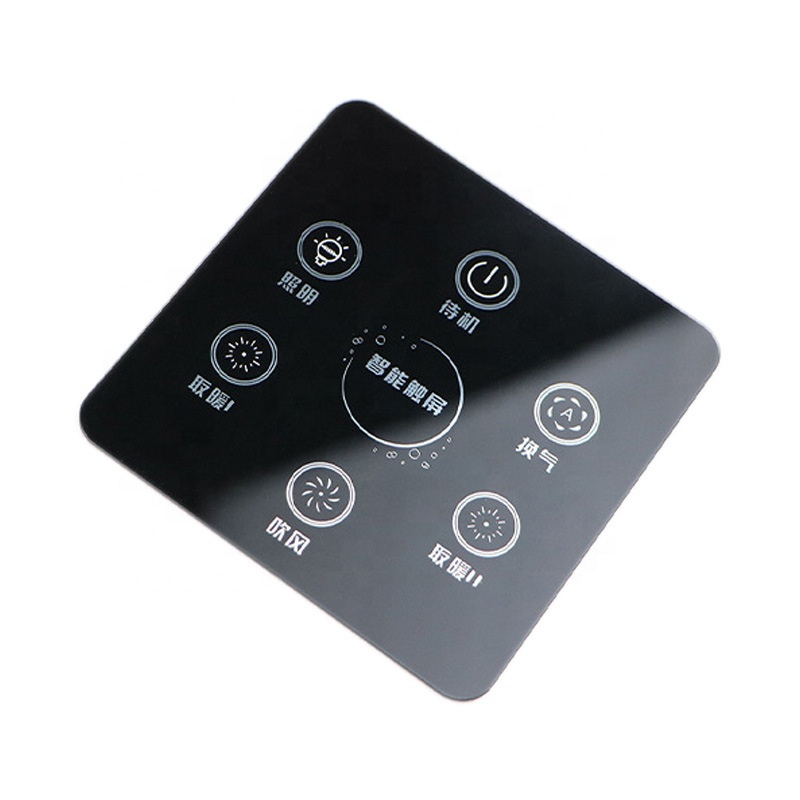
Bathroom Solid & Hollow Tempered Glass Intelligent Touch Shower Control Switch Panel Silk Screen Printed with 4-Year Warranty
Recommended for U.S. bathroom, hotel and smart-home control panels that need a premium glass face, printed graphics and reliable touch operation.
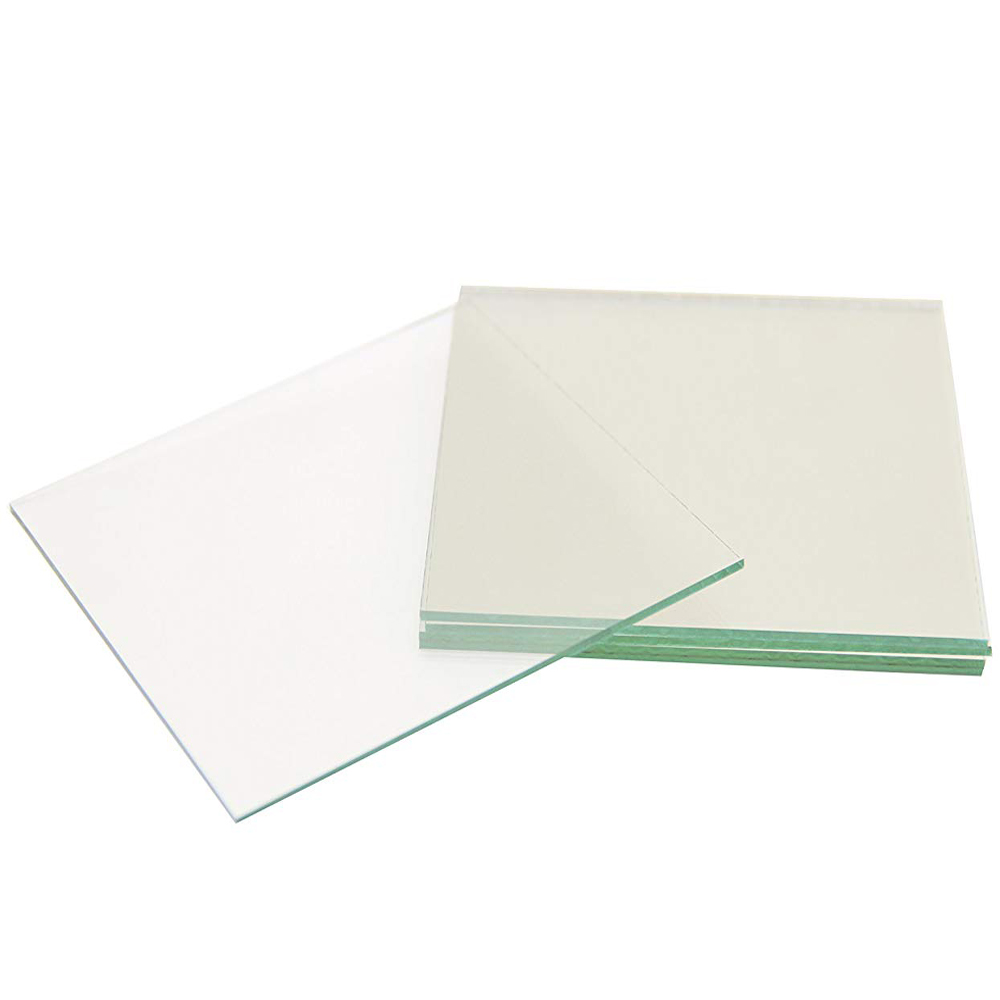
Custom 25x25x1.1mm ITO/FTO Coated Toughened Glass for LAB Display Anti-Fog Heating Conductive Glass Bathroom Solar Applications
A compact coated glass option for lab fixtures, display windows, anti-fog mirrors and projects that require conductive heating in humid environments.
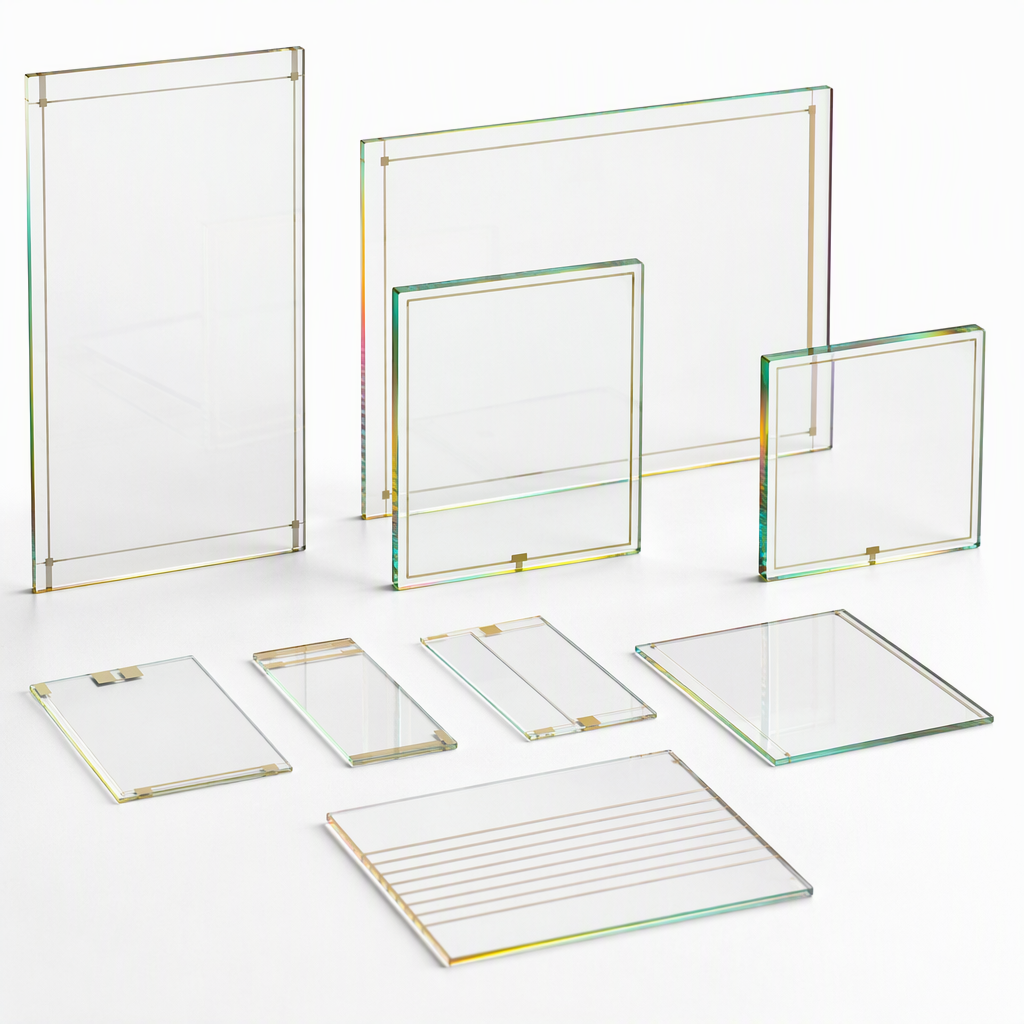
ITO Coated Glass Conductive Glass Sheet 6 To 8 Ohm Per Square Custom Size Touch Panel Heating Substrate Supplier
Designed for touch sensing, transparent heating and display integration where sheet resistance and optical transmission must be tightly balanced.
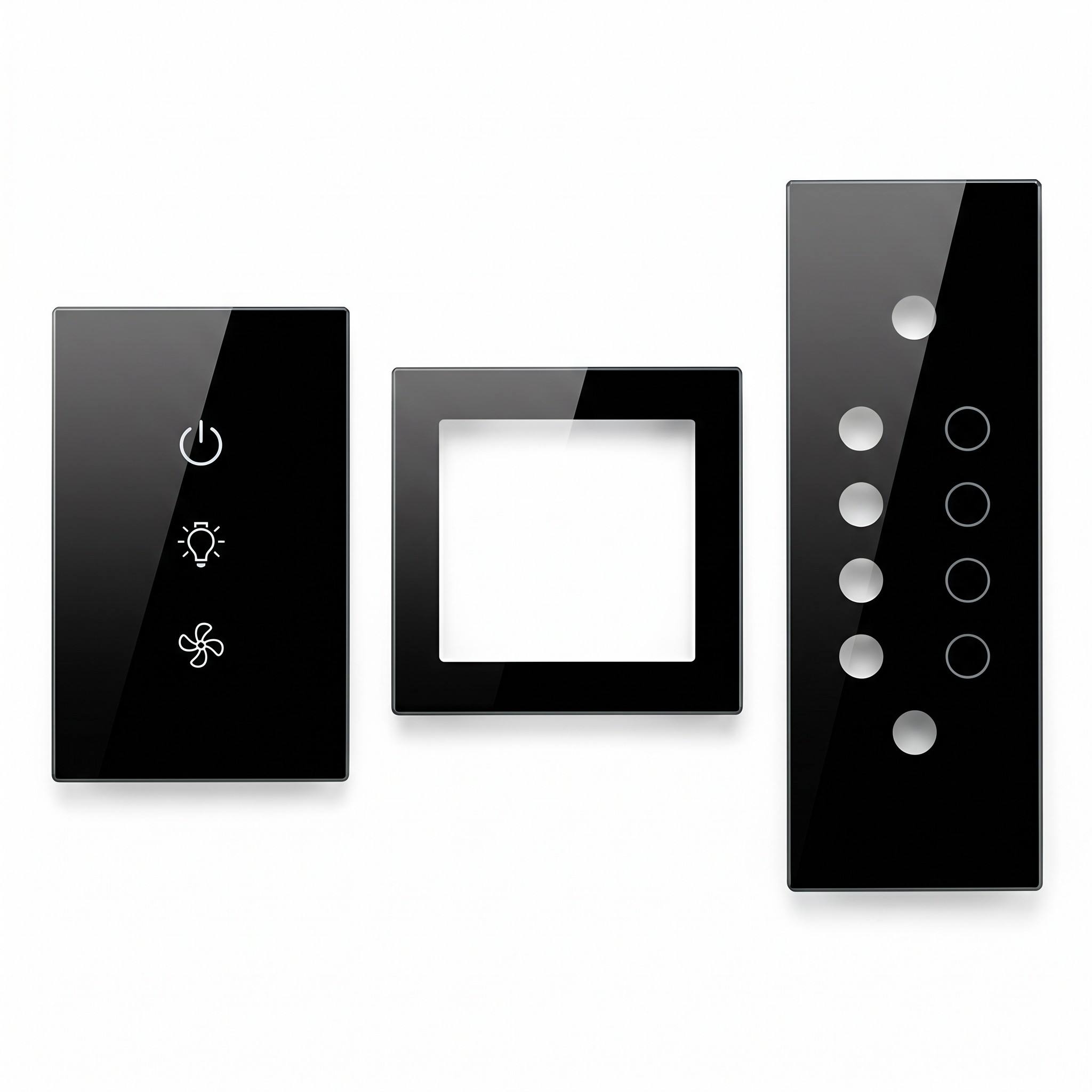
Tempered Glass Front Shield Cover Panel Custom Size Electronic Display Protection Sheet for Smart Device Konshen KS GB002
A display protection cover for smart devices and control interfaces that need impact resistance, edge quality and a clean optical surface.

KS AG002 Custom Size AG Coating Anti-Glare Tempered Glass Panel High Transmittance Cover Sheet for Electronic Display Screen
Built for outdoor touch screens, kiosks and electronic displays where glare, fingerprint visibility and readability under sunlight are key concerns.

Customized Cutting Elevator Indicator Arrow Printing Touch Smart Control Elevator Panel Use Electronics Screen Glass Instrument
For U.S. elevator modernization, destination panels and building control interfaces that require precise printing and durable touch surfaces.
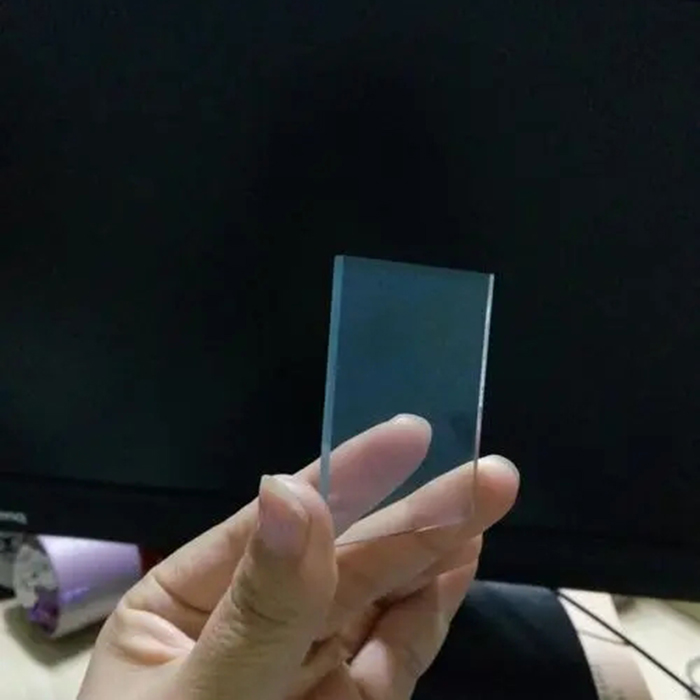
1.1 2.2mm Solid Flat Square Indium Tin Oxide (ITO) Coated Conductive Glass and FTO Conductive Glass for Lighting Applications
Suitable for lighting products, transparent electrodes, lab development and conductive glass projects requiring consistent coating uniformity.
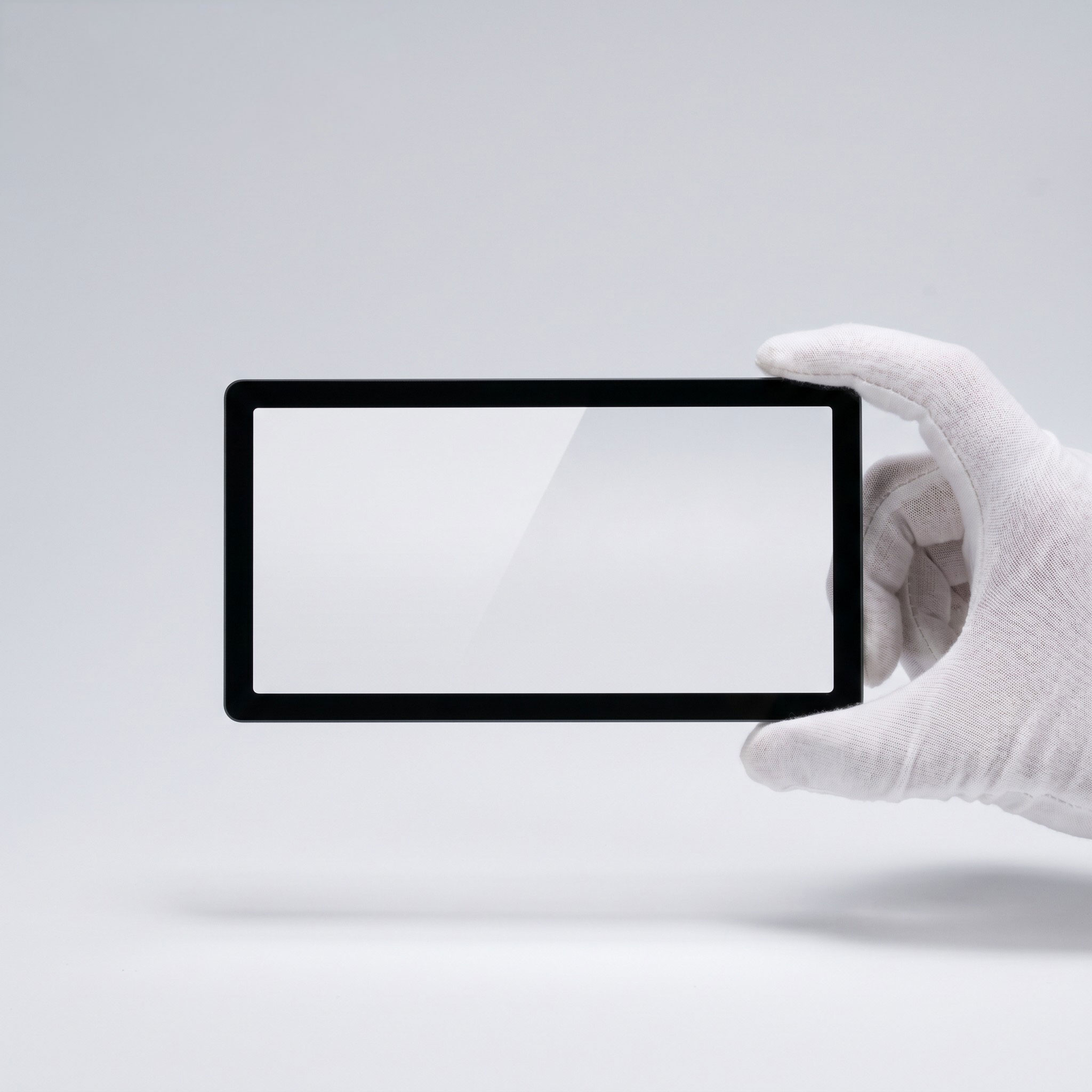
Custom Size Gorilla Glass Front Panel Panda Cover Sheet CNC Cut Silk Printed Tempered Glass Solar Display Screen Cover
A high-strength cover option for solar display covers, smart devices and premium front-panel assemblies that need CNC cutting and printed graphics.
Where Thermally Tempered Glass Earns Its Place in U.S. Products
United States buyers rarely purchase “glass” as a commodity. They specify a finished interface or protective component that must survive cleaning agents, sunlight, humidity, impact, touch wear and field service. The right thermally tempered glass supplier connects those local operating conditions to a practical substrate, coating stack, printing method and packing plan.
Commercial kitchen and appliance controls
U.S. foodservice, hotel and multifamily appliance panels need heat resistance, grease resistance, clear graphics and a surface that wipes clean. Tempered glass with AF coating and silk-screen printing is often a better long-term choice than plastic lenses.
Smart bathrooms and shower controls
Humidity, soap residue and temperature cycling make bathroom touch panels demanding. ITO/FTO anti-fog heating glass, tempered cover glass and sealed edge finishing help maintain visibility and reliable touch performance in U.S. residential and hospitality projects.
EV charging and automotive displays
Outdoor charging stations and in-vehicle displays face sun load, fingerprints and impact risk. AR coating improves clarity, AG coating reduces glare, and thermally tempered glass gives the front lens the mechanical confidence expected by U.S. automotive and infrastructure buyers.
Outdoor kiosks, lockers and pickup points
U.S. retail and logistics networks deploy self-service screens in parking lots, sidewalks and building lobbies. Anti-glare tempered glass, high-transmission cover sheets and robust edge treatment keep screens readable while resisting public use and cleaning routines.
Elevator and building control panels
Elevator modernization projects in the U.S. require durable touch surfaces, precise symbol printing and consistent fit across multiple cab designs. Custom-cut tempered glass panels with arrow printing and anti-fingerprint treatment support high-traffic building environments.
Solar and energy-related products
FTO conductive glass is commonly specified where thermal and chemical stability matter, such as thin-film solar research and high-temperature processing. U.S. solar and lab buyers can compare ITO versus FTO performance before locking a drawing.
Medical, lab and analytical instrumentation
Medical device and laboratory equipment teams often need optical windows, anti-scratch front panels and anti-fog viewing areas. Coating performance, cleaning-agent compatibility and documentation expectations should be confirmed during engineering review.
Industrial HMI and gaming peripherals
Factory automation panels and gaming products both depend on surface feel and durability. Tempered cover glass, glass mouse pads and skate feet can be customized with edge profiles, texture, logos and protective coatings.
Why United States Buyers Choose KELO as a Thermally Tempered Glass Supplier
KELO Glass is a factory-direct manufacturer in Huizhou, Guangdong, inside China’s Greater Bay Area electronics supply chain. We are not a trading intermediary. Our value to U.S. buyers is control: in-house processing, engineering feedback before tooling, measured coating performance, documented inspection and export packing that reduces transit damage.
Verified manufacturer, not a trader
Production, coating, printing, tempering, bonding and inspection are managed under one factory system. Buyers get one accountable supplier for tolerances, lead time and corrective action.
Proof points: 6 years verified exporter, on-site assessment, trade history and credit profile available for review.Engineering drawing review and DFM
Before quotation, we review thickness, edge condition, hole spacing, printing registration, coating stack, bend radius and packing. Early DFM feedback prevents a sample that looks correct but cannot be produced economically at volume.
In-house surface engineering
AR, AG, AF, ITO and FTO coatings are core capabilities, not outsourced afterthoughts. That matters when a U.S. buyer needs reflectance, haze, contact angle or sheet resistance to remain stable from prototype to mass production.
Rapid prototyping from 1–2 pcs
Sample orders can start from 1–2 pieces so product teams in the U.S. can validate fit, optics, touch response and assembly before committing to volume. Bulk lead time is typically 21–31 days after sample approval.
Three inspection gates and 100% appearance check
IQC verifies raw glass and consumables. IPQC checks CNC dimensions, tempering, printing and coating. FQC/OQC performs 100% appearance inspection plus adhesion, abrasion and salt-spray testing as applicable.
Export packing and U.S. trade terms
Custom honeycomb cartons, blister trays and partition packing help protect coated and printed glass during ocean or air freight. We support FOB, CFR, CIF, EXW and DDP terms, plus T/T, L/C, PayPal and Western Union, with Alibaba Trade Assurance available on eligible orders.
What “Supplier Qualification” Means for a U.S. Glass Project
For a U.S. buyer, the difference between a capable thermally tempered glass supplier and a low-cost source often appears after the first container: color consistency, coating durability, edge chipping, print registration, packaging damage and response time. KELO approaches supplier qualification as a manufacturing conversation, not a catalogue transaction.
We ask for the drawing, the target coating performance, the cleaning chemicals, the annual volume and the destination. If the project involves curved glass, we review the 2.5D or 3D radius and the assembly fixture. If the project uses ITO or FTO glass, we confirm sheet resistance, transmission and haze targets. If the panel is visible to consumers, we review printing color, gloss, dot texture and edge appearance before sampling.
This review reduces hidden costs. A factory-direct glass supplier should tell you when a tolerance is unnecessarily tight, when a coating is over-specified for the environment and when packaging must change to survive U.S. parcel or LTL handling. Our process is built around that practical feedback loop.

Coating, Conductive Glass and Tempered Substrate Selection Data
Use these production windows as a starting point for your RFQ. Final targets are confirmed against your drawing and application environment. For U.S. projects, document the expected cleaning method, outdoor exposure, touch frequency and assembly process so the supplier can recommend the right stack instead of the most expensive one.
AR for optical clarity
AR anti-reflective glass is recommended for medical displays, camera windows, automotive touch screens and showcase glass where reflection reduces contrast. Our production target is reflectance below 1.0% per side and transmittance above 99% across 400–700 nm.
Best fit: AR or AR+AG tempered cover glassAG for outdoor readability
AG anti-glare glass diffuses reflections instead of allowing a sharp image of the sun or overhead lighting. Controllable haze from 5–60% and gloss from 0.5–8 GU let U.S. kiosk and industrial HMI buyers balance readability against image sharpness.
Best fit: AG tempered glass for outdoor touch screensAF for high-touch surfaces
AF anti-fingerprint coating keeps control panels, appliance glass and public interfaces cleaner. Typical target values include water contact angle above 110°, pencil hardness above 3H, transmittance above 98% and durability beyond 10,000 cycles.
Best fit: AF or AG+AF control panel glass| Glass / coating | Performance window | Typical U.S. application |
|---|---|---|
| Thermally temperedToughened cover glass | Thickness 0.1–19 mm; flat, 2.5D and 3D forming; silk-screen, holes and edge polishing customized | Appliance control panels, elevator touch glass, display protection, industrial HMI |
| ARAnti-reflective | Reflectance <1.0% per side; transmittance >99%; single or multi-layer | Medical monitors, automotive displays, camera windows, premium kiosk screens |
| AGAnti-glare | Haze 5–60%; gloss 0.5–8 GU | Outdoor kiosks, EV chargers, sunlight-readable industrial terminals |
| AFAnti-fingerprint | Contact angle >110°; pencil hardness >3H; transmittance >98%; >10,000 cycles | Smart bathroom panels, appliance interfaces, public touch screens |
| ITOIndium tin oxide | Sheet resistance 1–20 Ω/sq; transmittance >85%; haze <2% | Capacitive touch sensors, transparent heaters, EMI shielding |
| FTOFluorine-doped tin oxide | Sheet resistance 1–20 Ω/sq; transmittance >85%; haze <2%; stronger thermal and chemical stability | Thin-film solar, high-temperature processing, laboratory substrates |
Coating performance at a glance
Bars are proportional to published production windows, not a comparative score against other suppliers.
For U.S. projects, send the operating environment and cleaning-agent list with your drawing so coating durability can be reviewed before sample approval.

Localized Trends Shaping Thermally Tempered Glass Demand in the U.S.
U.S. buyers are balancing cost, supply continuity, compliance and user experience. That mix is changing what they ask a tempered glass supplier to provide. The strongest suppliers are not simply quoting square meters; they are supporting specification decisions, packaging validation and documentation readiness.
High-mix, low-volume customization
Smart-home, medical, elevator and industrial projects increasingly need smaller batches with custom printing, holes, edge profiles and coatings. Flexible factory-direct production helps U.S. brands avoid large obsolete inventories.
Supply diversification without losing specialty capability
U.S. procurement teams continue to diversify suppliers, but specialty coated glass and conductive substrates still require deep process capability. A supplier that controls coating, tempering and inspection reduces the risk of splitting responsibility across multiple vendors.
Documentation and traceability expectations
U.S. importers increasingly ask for inspection records, packing lists, commercial invoices, material declarations and project-specific compliance documents. Confirm the required file package during quotation so shipping and customs review do not delay production.
Outdoor, electrification and public-interface durability
EV charging, pickup lockers, outdoor kiosks, solar equipment and building controls are pushing demand for AG readability, AR clarity, AF cleanability, tempered strength and packaging that survives long-distance logistics.

Cost Drivers U.S. Buyers Should Compare Before Choosing a Supplier
The lowest unit price is not always the lowest landed cost. In thermally tempered glass, cost is driven by thickness, glass type, cutting yield, hole count, edge polishing, printing colors and registration, coating stack, curved forming, cleaning requirements and packaging. A U.S. buyer comparing quotations should normalize every line item before deciding.
Ask whether the quotation includes tooling, samples, coating measurement reports, custom packing, carton drop testing, DDP freight or only FOB. Ask how the supplier handles color approval for printed glass and how it protects coated surfaces during transit. A supplier with in-house coating and tempering can usually identify these cost drivers earlier, which shortens the path from drawing to a validated production part.
KELO supports FOB, CFR, CIF, EXW and DDP terms, with T/T, L/C, PayPal and Western Union payment options. For U.S. importers, we recommend confirming HTS classification and duty treatment with your customs broker while we prepare the commercial invoice, packing list and agreed inspection documents.
From Drawing Review to Damage-Resistant U.S. Delivery
A reliable tempered glass supplier makes the project predictable. Our OEM/ODM workflow is designed to validate fit, optics, touch performance and packing before mass production. Every critical process stays under one factory system, so issues are corrected at the source rather than negotiated between multiple subcontractors.
Share requirements
Send the drawing, sample or target specification, plus annual volume, destination and any compliance documents required by your U.S. team.
Engineering review
We review thickness, edge condition, printing, coating, tolerance, curved forming and packaging assumptions before quoting.
Rapid prototype
Samples can start from 1–2 pieces so your team can check fit, appearance, touch response and assembly.
Validation
You approve optics, printed graphics, durability and packing. Changes are documented before mass production.
Mass production
Typical bulk lead time is 21–31 days after sample approval, depending on size, coating stack, curved forming and printing complexity.
Packing and shipping
Custom honeycomb cartons, blister trays and partition packing are selected to reduce transit damage for U.S. delivery.
Quality Gates Built for Repeat Production
Incoming inspection verifies raw glass thickness, flatness, surface quality and consumables. In-process control checks CNC dimensions, hole positions, tempering, printing registration and coating adhesion. Final inspection performs 100% appearance checking, plus tempering, adhesion, abrasion and salt-spray testing as applicable to the project.
This quality structure matters for U.S. buyers because a first article can pass while a third production lot drifts. By controlling the process at each gate, KELO can compare production data against the approved sample and respond before nonconforming parts reach packing.

What to Send a Thermally Tempered Glass Supplier for a Faster U.S. Quote
For an accurate quote, send a drawing or sample photo, the target glass type and thickness, the coating requirement, printing colors, edge and hole details, annual volume, destination and any compliance documents required by your U.S. customer. If the drawing is still in development, send the operating environment and let our engineers recommend the substrate and coating stack.
FAQ: What U.S. Procurement Teams Ask Tempered Glass Suppliers
These are the questions that commonly arise before a first sample order, especially when U.S. buyers compare factory-direct suppliers for thermally tempered glass, coated glass and conductive substrates.
Are you a manufacturer or a trading company?
Do you support United States buyers with custom thermally tempered glass?
What is the minimum order quantity and sample policy?
What lead time should a U.S. buyer expect?
Can you produce thermally tempered glass to my drawing, including holes and printed graphics?
Which glass should I choose for a bright outdoor display in the U.S.?
Should I choose ITO or FTO conductive glass?
What documents can accompany a U.S. shipment?
How is the glass packed to reduce damage during U.S. transit?
Which trade terms and payment methods do you accept?
How do you control quality from sample to mass production?
Request a U.S.-Ready Thermally Tempered Glass Quote
Send your drawing, target coating performance, annual volume and destination. Our engineering team will review the project and recommend a practical glass, coating, printing and packing solution for your United States supply chain.