Appliance Control Panels
Glass faces for ovens, refrigerators, coffee machines and kitchen appliances that need easy cleaning.
Oleophobic surface engineering for clearer, cleaner high-touch displays, appliance panels and smart device cover glass.
Huizhou KELO Glass Co., Ltd. supplies factory-direct AF anti-fingerprint coating glass for international buyers who need cleaner surfaces, stable optical clarity and repeatable production quality. The AF treatment is applied to the glass surface to reduce oil adhesion, fingerprint visibility and smudging during daily use.
For commercial projects, AF performance should not be judged by a single visual sample. Buyers should request measurable data for contact angle, abrasion resistance, adhesion, transmittance and appearance under the agreed inspection conditions. Our engineering team reviews the drawing, touch surface, cleaning method, printing and assembly process before confirming the coating route.
AF coated glass is suitable for appliance control panels, smart home interfaces, bathroom control mirrors, industrial HMI, automotive displays, medical equipment windows, point-of-sale terminals and other frequently touched glass surfaces.
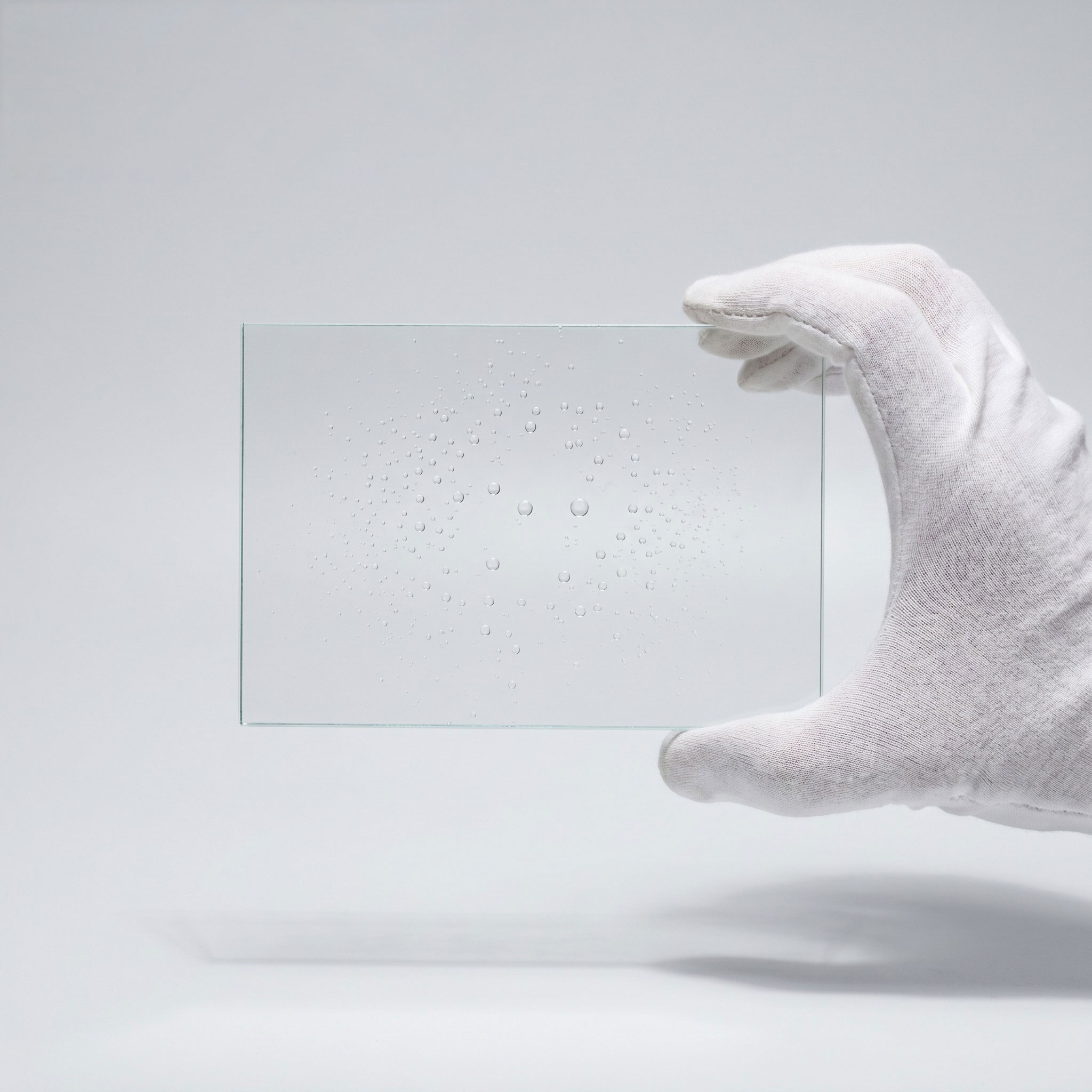
Use the following production capability as a starting point for your RFQ. Final acceptance criteria are confirmed against the approved sample, drawing, test method and application environment.
| Parameter | Typical Capability | Buyer Qualification Note |
|---|---|---|
| AF Contact Angle | Water contact angle target >110° | Measured on the approved surface condition; report before and after cleaning can be requested for qualified projects. |
| Pencil Hardness | >3H surface hardness target | Test method to be agreed with the drawing; suitable for high-touch appliance and display panels. |
| Transmittance | >98% | Optical clarity for display windows and control panels; final value depends on substrate, printing and coating stack. |
| Durability | >10,000 cycles abrasion or wiping target | Cleaning agent, load and cycle definition should be confirmed before mass production. |
| Glass Thickness | 0.1–19 mm | Thickness is selected according to strength, weight, edge profile and assembly design. |
| Size & Shape | Custom by drawing or sample | Cutouts, holes, CNC contour, edge polishing and logo printing are reviewed during DFM. |
| Material Options | Gorilla, borosilicate, quartz, sapphire, ceramic, lead shielding and laminated safety glass | Material availability and coating compatibility are confirmed during engineering review. |
| Combined Function | AG+AF available; other stacks reviewed individually | Combined haze, gloss, cosmetic grade and scratch-dig targets are agreed before quotation. |
Values shown are typical production capability, not a guarantee for every size, thickness or environment. Please share your drawing, target performance and annual volume for a project-specific recommendation.
AF treatment is most valuable where the glass surface is touched often, cleaned frequently and expected to maintain a premium appearance.
Glass faces for ovens, refrigerators, coffee machines and kitchen appliances that need easy cleaning.
Touch panels, switch plates and smart control surfaces that must stay clear under daily handling.
Mirror controls and wet-area interfaces where water, soap and fingerprints are part of daily use.
Center console and dashboard glass where glare, smudges and cleaning marks can affect perceived quality.
Operator terminals and factory control screens that require repeated wiping and clear visibility.
Equipment windows and control covers where cleanliness, clarity and repeatable surface performance matter.
Kiosks, payment terminals and self-service screens that are touched by many users every day.
Hotel room controls, lighting glass panels and decorative interfaces that need a clean premium finish.
Each step is controlled in-house so the approved sample, cosmetic appearance and surface performance can be repeated in mass production.
Confirm substrate, touch side, coated area and cleaning method.
Cut, machine, drill and edge-profile the glass to drawing.
Silk-screen printing, flat or curved strengthening as required.
Apply and cure the oleophobic coating on the approved surface.
Check contact angle, appearance, transmittance and adhesion.
Protect the coated face and minimize transit damage.
Raw glass, printing ink and coating materials are checked before production release.
Critical dimensional and coating parameters are checked at defined production stages.
Finished parts are checked before protective packing and shipment.
A reliable AF glass project is built on agreed drawings, measurable sample data and export-ready packing, not only a visual appearance sample.
Define which side receives the AF coating and how the glass will be assembled, cleaned and handled during production.
Specify contact angle, abrasion cycles, cleaning agent, transmittance and cosmetic acceptance criteria in the RFQ.
Review fit, optical appearance, printed graphics, edge quality and surface performance before releasing volume.
Choose packing suitable for glass size, coating side, shipping route and handling conditions to reduce damage risk.
Practical answers for procurement teams comparing AF coated glass suppliers, samples and production requirements.
Share your glass size, thickness, coating side, target contact angle, abrasion requirement and annual volume. Our team will review the specification and recommend the most practical AF coated glass solution for your market.